

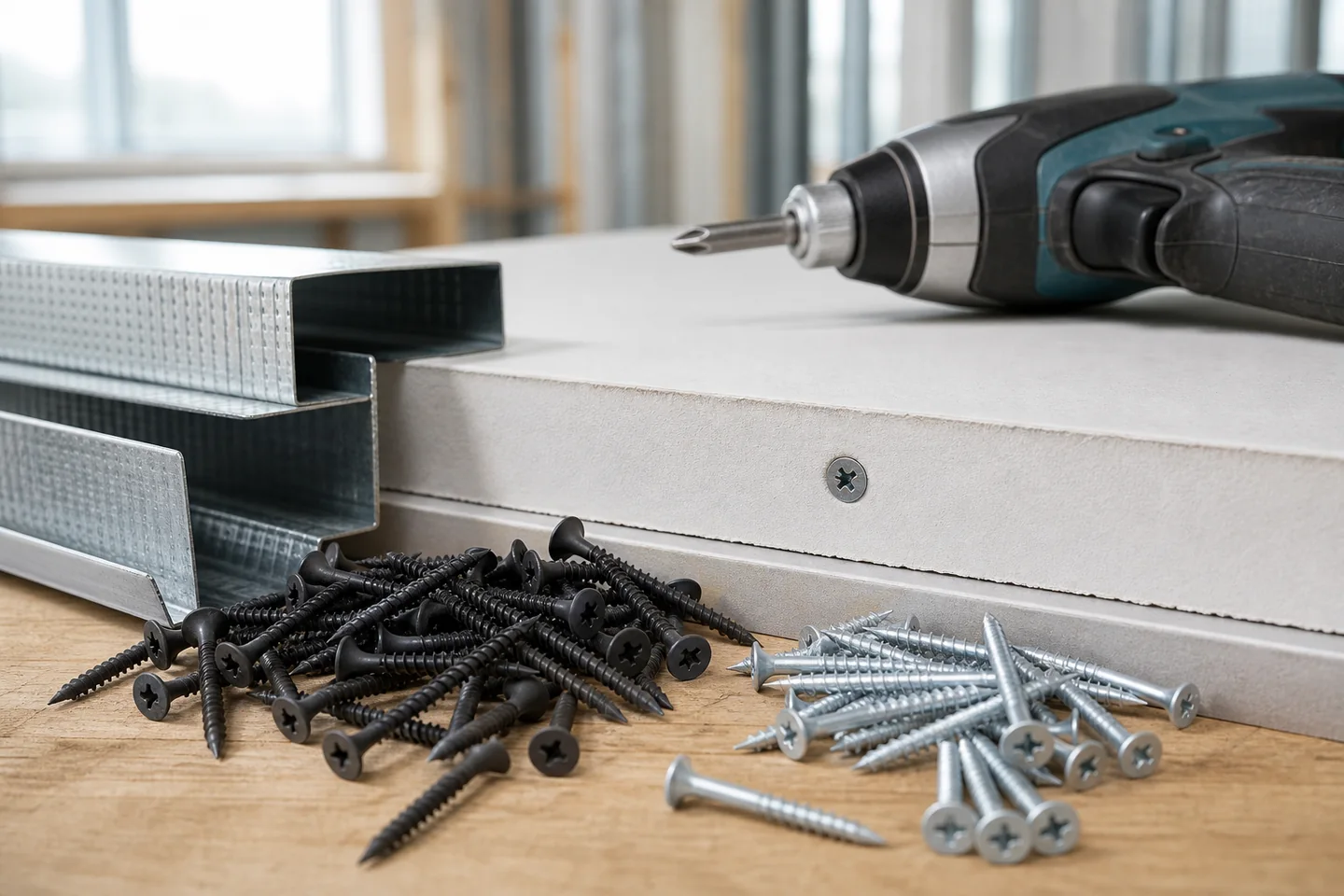
A drywall screw has only a few seconds to prove itself. It needs to start cleanly, pull the board into position, seat the head without tearing the face, and release from the driver so the installer can move on. When that sequence repeats all day, small differences in the screw become large differences in productivity.
Galvanized drywall screws add a coating consideration to the usual decisions about thread, point, length, head, and recess. The coating may support a particular storage or service need, but it cannot compensate for a screw that does not match the board and framing.
The substrate comes before the finish
Wood framing and light-gauge metal studs interact with threads differently. Coarse and fine thread patterns are commonly associated with different substrates, but buyers should follow the wall system, tool, and applicable market requirements rather than choosing from a name alone.
A suitable point should start without excessive pressure. The screw should drive smoothly and seat with enough control to protect the paper face of the gypsum board.
Why installers care about the recess and head
A clean recess helps the driver bit stay engaged. If the recess strips or the bit slips repeatedly, the installer loses time and damaged screws accumulate around the work area. Head shape also affects how the screw seats and how easily the surface can be finished afterward.
These are small features, but they shape the user's impression of the entire carton. Reliable driving is one of the clearest ways a fastener brand earns repeat business.
Galvanized drywall screws need a defined purpose
The word galvanized should lead to a practical conversation: What exposure is expected? How will the cartons be stored? Is there a specified coating requirement? Which approvals or building documents apply in the destination market?
No general coating claim can answer every project. Buyers should identify the required specification and confirm that the selected product is suitable for the intended use. The ICC Evaluation Service is one source of construction product evaluation information, while local codes and project documents remain essential.
A real test uses board, frame, driver, and production speed
Loose screws can look excellent under office lighting. What matters is how they behave in the actual assembly. A short trial should use the intended board, framing, driver bit, depth setting, and working pace. Buyers can then observe starting, seating, breakage, recess wear, board damage, and consistency across more than one inner box.
How ProAirNails builds confidence beyond the sample
ProAirNails supplies galvanized drywall screws, other drywall and chipboard screws, pneumatic nails, staples, and fastening tools to B2B customers. We support conversations about product specifications, packing, private labels, samples, and repeat-order control so the second shipment is judged against the same reference as the first.
Explore Drywall Screw, compare Chipboard Screw, or learn more at About ProAirNails.
FAQ
Does a galvanized coating determine where a drywall screw can be used?
No. Coating is one part of the specification; substrate, thread, dimensions, head, point, project requirements, and environment also matter.
Why should samples be tested in the actual wall system?
The real board, framing, driver, and pace reveal starting, seating, breakage, and surface issues that a visual check cannot show.
What information helps with a bulk quotation?
Share the substrate, thread, diameter, length, head, recess, point, coating requirement, quantity, packing, and destination market.
Send your project requirements through the ProAirNails inquiry page.