
Air Staple Pins: What Buyers Compare Before They Place a Bulk Order
Choosing an air staple pins manufacturer is rarely just a price exercise. For furniture shops, upholstery lines, and light assembly plants, the real question is whether the fastener will feed cleanly, hold consistently, and keep pace with a pneumatic tool without stoppages. That is where the difference between a reliable production supply and a bargain box shows up fast. If you are comparing an air staple pins manufacturer against a more general staple pins supplier, the trade-offs usually come down to consistency, packaging, and how well the product is matched to pneumatic stapling work.
The product itself is straightforward on paper: long, narrow metal staples packaged in stacked strips for use in air staplers. In practice, the details matter. A small variation in strip collation, wire finish, or forming quality can create feed problems, misfires, or ugly fastening marks. For anyone running upholstery tables or cabinet assembly benches, those interruptions are not minor. They slow a line, waste labor, and force operators to keep checking the tool instead of working.
Pneumatic Staple Pins Versus General Fasteners
There is a difference between buying general-purpose staples and sourcing pneumatic staple pins for industrial use. Hand-stapled fasteners and tool-fed collated strips are not interchangeable in the real world, even when they look similar at a glance. Pneumatic fasteners are designed to move through the magazine, seat properly in the tool, and drive at production speed. That means the strip shape, the spacing, and the uniformity of the bundle all matter just as much as the wire itself.
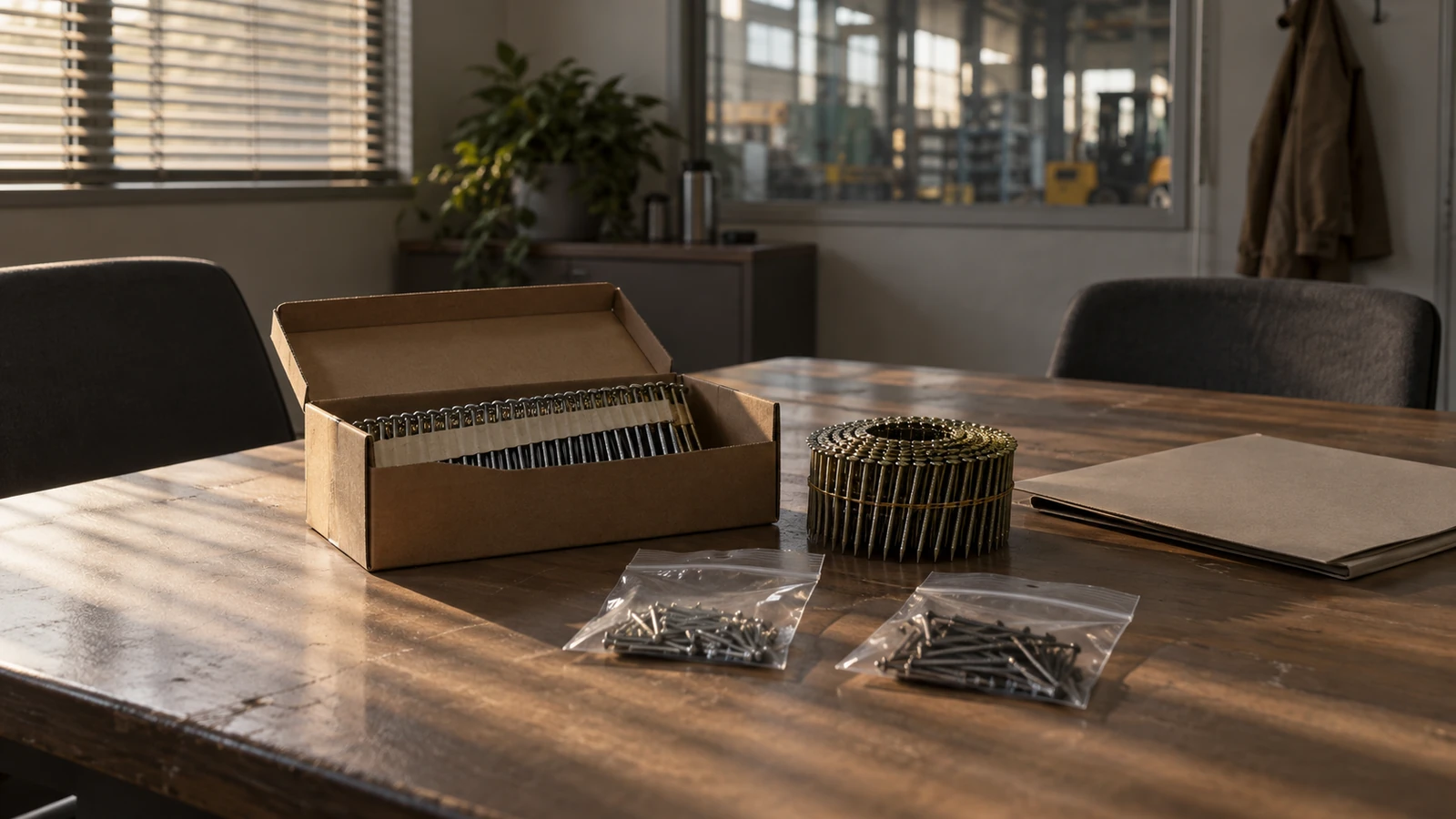
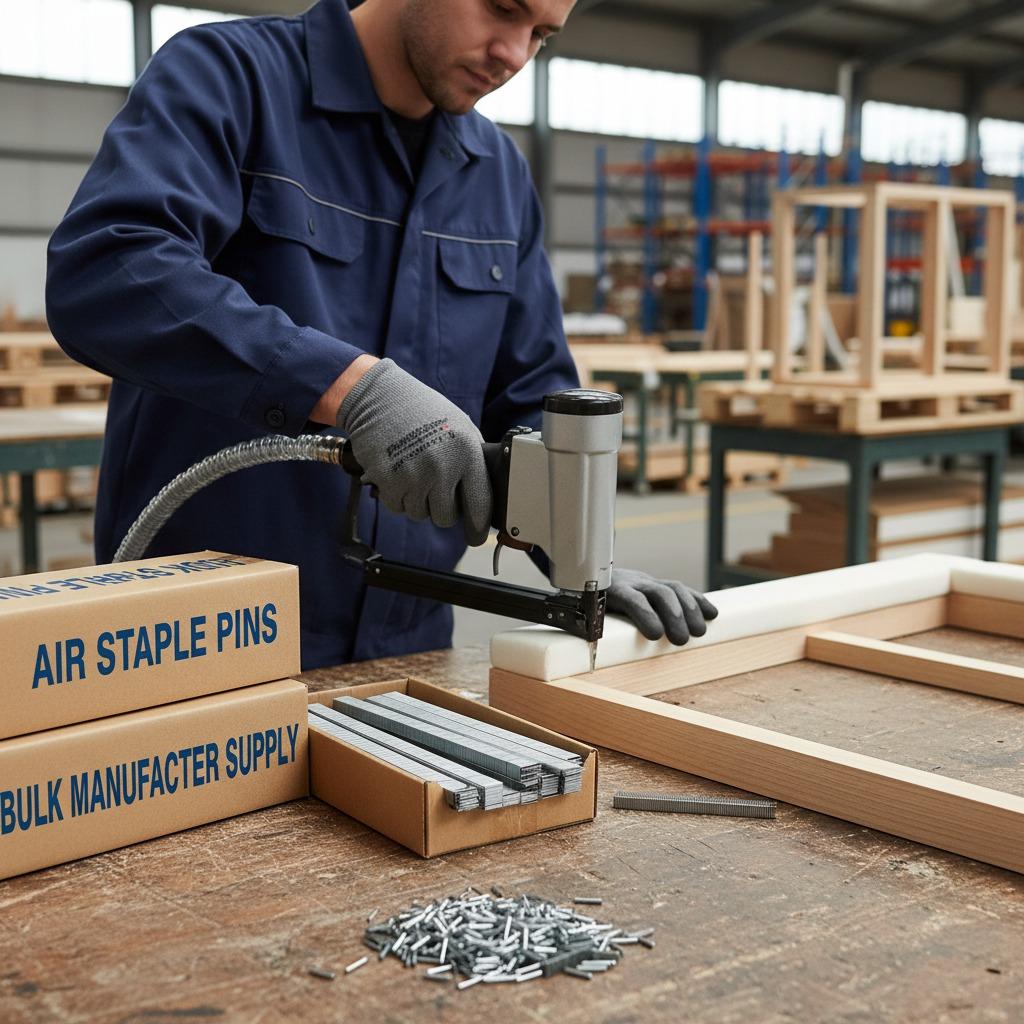
In the image context provided, the staples are shown in bulk cardboard boxes labeled for manufacturer supply, which is the kind of packaging buyers usually want when they are feeding a workshop, not a hobby bench. Bulk supply makes more sense for regular production demand, but it also raises the stakes: if one box is inconsistent, the problem repeats across an entire lot.
What a Good Supplier Usually Helps You Control
Feed reliability
For air staplers, smooth feeding is the first test. Staples that hang up in the magazine or deform during loading can turn a simple fastening operation into stop-and-start work. Engineers and sourcing managers tend to focus on this after the first production trial, because a staple that seems acceptable in a sample pack can behave differently over a full shift.
Application fit
These fasteners are commonly used in furniture manufacturing, upholstery, carpentry, packaging, and light assembly. That range sounds broad, but the material stack changes the requirement. Fabric and foam call for a different fastening feel than thin wood or webbing. A practical buyer should always define the substrate first, then ask the supplier how the staple is intended to perform in that stack-up.
Packing and handling
Bulk boxes are useful, but only if the strips stay organized and protected enough for warehouse handling. For high-volume users, packaging quality is not cosmetic. Bent strips, crushed corners, and mixed bundles can create avoidable waste before the fastener even reaches the tool.
Where Buyers Often Get Caught Out
One common mistake is treating all staple pins as if they are the same as long as the box fits the tool cabinet. That is risky. Exact dimensions, crown width, leg length, gauge, and finish are all important, yet none of those details should be guessed if they are not supplied. Another frequent problem is buying only on cost per box and ignoring the real cost of feed issues. A cheap fastener that jams a pneumatic stapler is expensive by the time labor, downtime, and rework are counted.
It is also worth being careful with finish assumptions. From a visual reference alone, the staples appear silver-gray and metallic, but that does not tell you whether they are galvanized, stainless, coated, or something else. If corrosion resistance matters in the final product, the buyer needs written confirmation, not an optimistic reading of the sample photo.
How to Compare an Air Staple Pins Manufacturer
When you compare suppliers, look beyond the catalog picture. Ask how the fasteners are collated, how they are boxed, and whether the product is intended for pneumatic stapling tools used in production settings. A capable staple pins supplier should be able to discuss tool feeding, application fit, and bulk supply consistency without drifting into vague sales talk.
For sourcing teams, a sensible comparison usually includes three questions: does the staple run reliably, does it suit the material being fastened, and can the supplier support repeat orders without changing the product behavior? Those are more useful questions than a generic request for “the cheapest option.”
Practical Buyer Advice Before You Commit
If you are preparing a trial order, keep the test conditions close to production reality. Use the same pneumatic stapler, the same operator, and the same substrate stack you plan to run on the line. A fastener that works in a quiet sample test may behave differently in a real shop with speed, dust, and mixed operators. That is normal, and it is why production trials exist.
For teams building furniture or handling upholstery work, the safest approach is to define the fastener first by application, then by tool compatibility, then by packaging format. That sequence saves more trouble than chasing price early.
FAQ
Are air staple pins only for furniture shops?
No. They are common in furniture and upholstery, but they also show up in carpentry, packaging, and other light assembly work where a pneumatic stapler is the right tool.
Can I choose a staple just by looking at the photo?
Not reliably. The photo can show overall form and bulk packaging, but not the dimensions, finish, or tool fit that actually determine performance.
What should I ask a manufacturer before ordering?
Ask about application fit, packaging, strip consistency, and compatibility with pneumatic stapling tools. If your process depends on corrosion resistance or a particular metal grade, request written confirmation.
Next Step
If your production line depends on clean, repeatable fastening, start with a sample trial and compare how the staple feeds, drives, and holds in your actual material stack. That is the quickest way to separate a dependable industrial supply from a box that only looks right on paper.