
Why buying staple pins is not as simple as it looks
An air staple pins manufacturer may seem like a narrow search term, but the buying decision behind it is wider than many sourcing teams expect. The staple itself is a small part, yet it affects feed reliability, assembly speed, and the quality of the finished joint. If a strip jams in the tool, bends on impact, or arrives in inconsistent lengths, the problem shows up on the production floor fast.
That is why buyers comparing industrial staple pins should look beyond the headline dimensions on a box. The real question is whether the staple pins for air stapler use will run cleanly in the intended tool, hold the substrate properly, and arrive in a format that suits the line or workshop. For packaging, upholstery, light wood fastening, or shop assembly, the wrong staple can waste more time than money.

What a pneumatic staple pin has to do well
At a basic level, air staple pins are simple wire fasteners formed into a U shape with two legs and a crown. In practice, the requirements are less simple. The strip must stay straight enough for machine feeding, the legs need to drive consistently, and the surface finish should not create friction or clogging in the stapler.
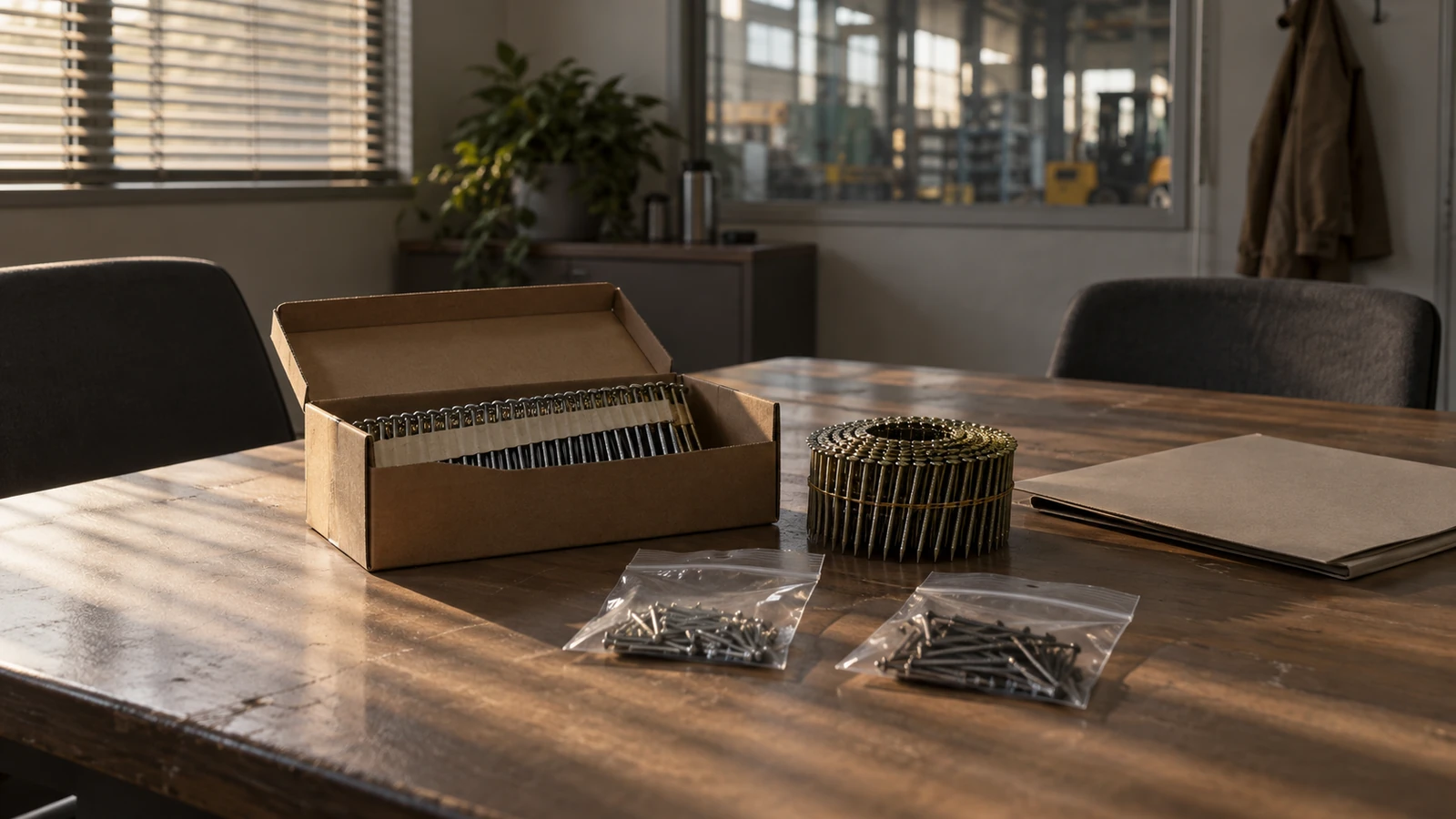
The product category here is wire staples, shown in straight collated strips and bundled packaging for bulk use. That tells a buyer two things. First, these are intended for pneumatic staplers or stapling machines rather than loose hand-fed use. Second, the supply format is clearly aimed at industrial handling, not random retail replenishment.
Comparison: what matters more than the label on the box
When sourcing from an air staple pins manufacturer, the most useful comparison is not simply price versus price. It is compatibility versus consistency. A low-cost staple that works only part of the time is usually more expensive by the end of a shift.
Industrial staple pins versus general-purpose staples
Industrial staple pins are typically supplied in collated strips for faster feeding and repeatable driving. General-purpose staples may look similar, but packaging format, strip alignment, and tool compatibility can differ. For a buyer, that difference matters more than it sounds. A staple that is nominally the right shape can still create feed issues if the strip geometry is not aligned with the machine.
Multiple sizes versus one fixed format
The visual information suggests multiple staple lengths or sizes are available. That is useful for buyers serving more than one application, such as carton closing in one area and upholstery or light timber fastening in another. The caution is obvious: more size options help only if the supplier can keep the formatting, packaging, and repeatability steady across the range.
Materials and finish: what can be said safely
These staples appear to be metallic silver steel wire staples, likely with a galvanized or zinc-plated type finish, although that cannot be confirmed from the image. That is a practical clue, not a specification. Buyers should not treat appearance as proof of corrosion resistance or wire grade. In real procurement, the coating, wire gauge, and point profile need confirmation through supplier documentation or sample testing.
For indoor assembly, carton closing, or short-run workshop use, finish may be less critical than feed consistency. For longer storage, humid environments, or repeat handling, it becomes more important. It is a common mistake to focus on one attribute and ignore the others. Staples are small, but the failure modes are annoyingly complete.
How to evaluate a supplier before placing bulk orders
Start with the tool, not the fastener. The staple pins must match the pneumatic stapler or stapling machine in the plant. Then check how the supplier presents the product: boxed or tray-packed bulk inventory is often a sign that the product is meant for industrial distribution and warehouse handling.
Next, ask for the details that are missing from the picture but matter in practice: crown width, leg length, wire gauge, point type, coating, and intended compatibility. If the supplier cannot confirm these clearly, that is a warning sign. It may still be a usable product, but it should be treated as unverified until samples are run.
Common buyer mistakes
The first mistake is assuming all staple strips feed the same way. They do not. Even small variations in strip shape or stiffness can change how a stapler performs. The second mistake is buying by size description alone without checking the tool model or production use case. The third is ordering for a single application and then discovering that packaging, inventory, and replenishment patterns do not fit the actual line.
Another practical issue: buyers sometimes underestimate how much a uniform collated strip format contributes to uptime. It sounds minor until a batch arrives with inconsistent strip alignment and a line operator spends the afternoon clearing jams.
Quick buyer checklist
If you are comparing suppliers, keep the checklist short and direct. Confirm tool compatibility. Verify the staple format is collated for pneumatic feeding. Ask whether the product is available in the sizes your operation actually uses. Check whether the packaging suits bulk storage and warehouse handling. And if corrosion resistance matters, do not guess from the shine of the metal.
Where this product fits best
This type of staple pin fits OEM supply for staple gun and pneumatic stapler users, packaging and carton closing, furniture and upholstery assembly, and light industrial fastening work. It is the kind of component that disappears into the workflow when it is right, which is exactly what buyers want. It should feed cleanly, drive cleanly, and keep the operation moving.
If you are evaluating an air staple pins manufacturer for a repeat purchase, ask for product data, sample strips, and a clear statement of compatible tools and sizes. That is usually the fastest path to separating a practical supplier from a merely plausible one.
FAQ
Are these staples only for air tools?
They are shown as air staple pins used with pneumatic staplers or stapling machines, so that is the safest way to describe them. Compatibility with a specific tool should always be confirmed.
Can the finish be assumed from the image?
No. The staples appear metallic and possibly plated, but the exact surface treatment is not visible and should be verified before purchase.
What matters most in a bulk order?
Consistent strip formation, correct size for the tool, and packaging that suits industrial handling. For many buyers, those three items matter more than a small price difference.