
Why the choice of air staple pins manufacturer matters
If your line depends on an air staple pins manufacturer, the decision is not just about buying a box of metal fasteners. It is about keeping a pneumatic stapler running smoothly, avoiding feed jams, and making sure the staple actually lands cleanly in wood, upholstery, or packaging material. That sounds basic, but anyone who has stopped a production line because the staples were inconsistent knows how quickly a small consumable becomes a real cost.
In practice, buyers are usually comparing more than one role at once: staple performance, bulk supply consistency, and whether the supplier can support high-volume use without changing the strip format or finish from batch to batch. For engineers and sourcing managers, the real question is not “Can they sell staple pins?” It is “Can this staple pins supplier keep the fastening process stable enough for our application?”
Bulk supply versus job-site convenience
Air staple pins are typically supplied in long collated strips for use with an air-powered staple gun or stapler. That format is what makes them suitable for production settings. The strip loading helps maintain a steady feed, which matters when the work is repetitive, whether that is upholstery assembly, furniture frames, light construction, or packaging.
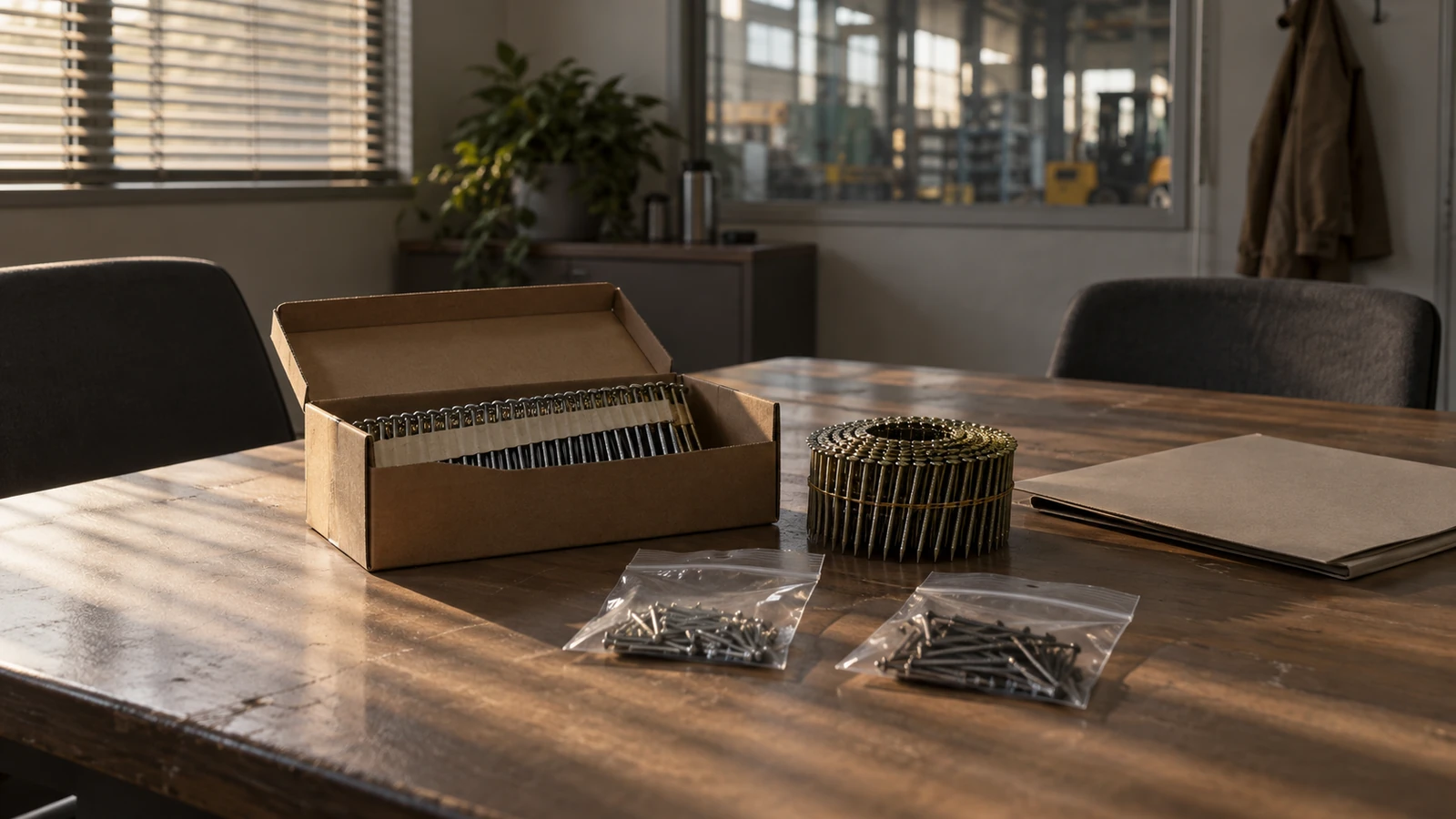
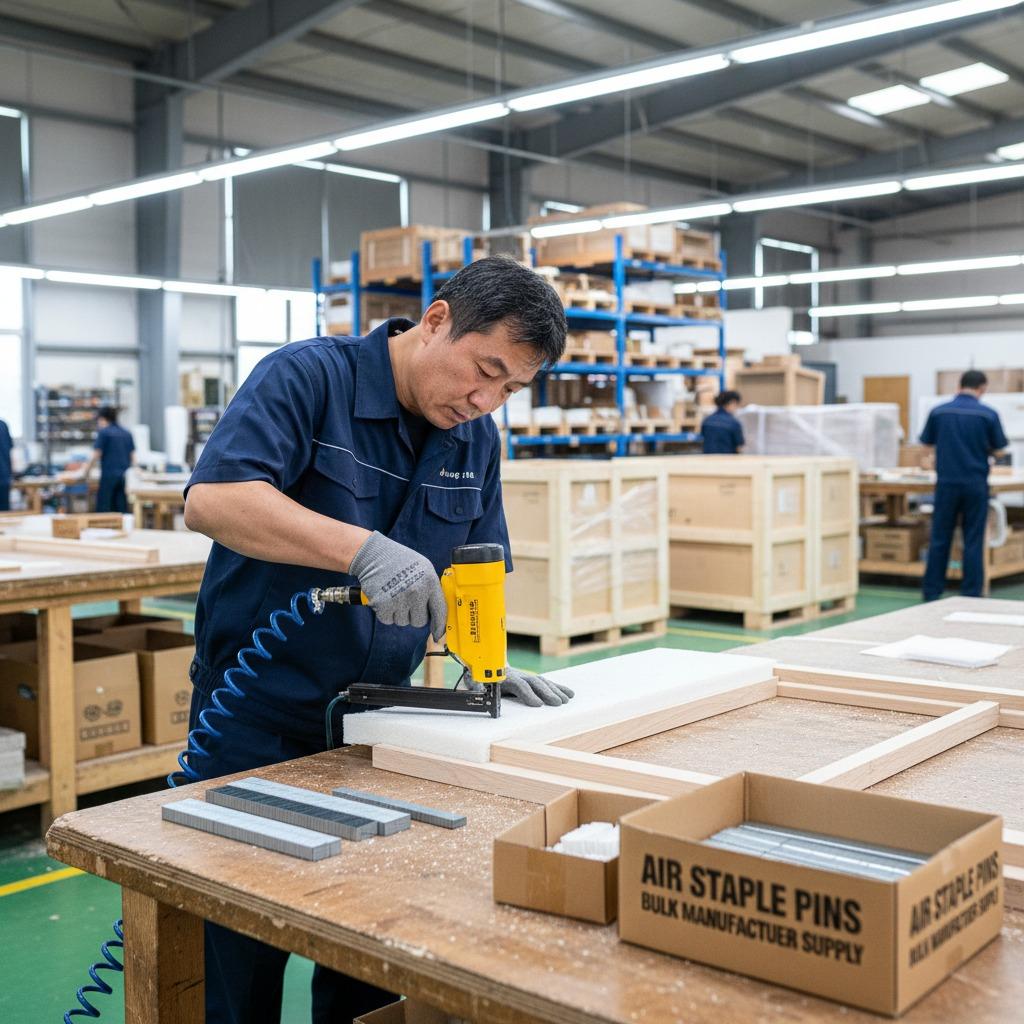
By contrast, smaller retail packs may be fine for occasional use, but they are not built around uninterrupted throughput. Bulk packaging is the more relevant option when the fastening point is part of a repeatable process. The image reference here suggests exactly that kind of supply: boxes marked “AIR STAPLE PINS” and “BULK MANUFACTURER SUPPLY,” with staples arranged in collated bundles.
What to compare when evaluating suppliers
Most buyers start with the obvious questions: will the staple fit the gun, and will it penetrate the material stack reliably? That is only the beginning. A good comparison between suppliers usually comes down to four practical areas.
1. Strip consistency
Pneumatic staple pins need to stay aligned in strips. If the collation varies, the feed can slip or misfire. That may sound like a minor issue until it starts interrupting a line operator every few minutes.
2. Material and finish
The visible product is a small metal staple, likely steel, with a metallic gray or silver surface. The exact coating is not confirmed, so buyers should not assume corrosion behavior from appearance alone. If the staple is going into upholstered furniture, framed wood, or other indoor applications, finish still matters because it can affect handling, appearance, and storage stability.
3. Compatibility with the tool and application
Narrow crown, straight legs, and a U-shaped profile are common in these products, but the specific dimensions are what make or break compatibility. This is where sourcing teams should be careful: never buy on visual similarity alone. A staple that looks close may still jam, sit proud, or fail to drive correctly in a particular stapler.
4. Supply stability
For production buyers, the best supplier is often the one that can keep the same format available over time. Changing the staple strip shape, packaging method, or collation quality can disrupt the process even if the part “looks the same.”
Where these fasteners are used most often
Bulk air staple pins are commonly associated with upholstery assembly and furniture manufacturing, but they also show up in wood framing, packaging, and light construction. The shared requirement is high-volume fastening with minimal manual effort. That is why pneumatic stapling fasteners are attractive on assembly benches and line stations: they save time, but they also demand more discipline from the supplier.
One practical point is often overlooked. If the staple is being used on a padded wooden frame or similar substrate, the fastening job is not just about holding power. It is about clean entry, repeatable placement, and avoiding visible damage to the material around the staple. A bargain fastener that works “most of the time” may still create scrap.
Common mistakes buyers make
The first mistake is treating all staples as interchangeable. They are not. The second is buying only on price per box and ignoring feed performance. A slightly cheaper staple can become expensive if it causes stoppages or rework. The third is assuming that a metallic silver finish means a particular coating or corrosion level. Unless the supplier states it clearly, that should be treated as unknown.
Another common issue is mismatched terminology. Some teams ask for “staples,” others for “air staple pins,” and others for “pneumatic staple pins.” A supplier should understand the application, but the buyer still needs to confirm the exact tool model, strip format, and intended material stack.
What a sensible buyer asks before placing an order
Before committing to a bulk order, ask for the staple dimensions, the collation style, the compatible tool type, and the material/specification details that are actually available. If the supplier cannot confirm a coating type or steel grade, that is not necessarily a deal-breaker, but it should be stated clearly in the purchasing file. Engineering teams hate mystery fasteners for good reason.
For repeat buyers, sample testing is still the most practical checkpoint. Run the staple in the real tool, on the real substrate, at line speed if possible. Paper specs are useful, but the stapler tells the truth faster than a catalog.
Comparison takeaway for sourcing teams
If you are choosing between suppliers, compare them on consistency, compatibility, and bulk supply reliability first. Price matters, of course, but pneumatic fastening is one of those areas where the low-cost option can cost more in labor and downtime. A dependable air staple pins manufacturer should be able to supply collated strips that feed cleanly, fit the application, and hold up across repeated production runs.
If your team is reviewing a new staple source, start with the tool model, the strip format, and the material stack, then request a sample for line testing. That is usually the fastest path to a better purchasing decision.