
Choosing an Air Staple Pins Manufacturer: Why the Difference Matters
If you are sourcing from an air staple pins manufacturer, the real question is usually not whether the pins look the same. It is whether they feed cleanly, hold under load, and match the stapling equipment on your line. For buyers comparing industrial staple pins, small differences in wire forming, collation, and finish can mean the difference between smooth production and constant stoppages.
That matters in packaging, furniture, woodworking, upholstery, and light assembly, where staple pins for air stapler use are often consumed in volume. A cheap batch that jams in the magazine or bends at the wrong moment can slow an entire operation. On the other hand, a well-made fastener may look ordinary in a box, but it performs predictably and saves labor across thousands of cycles.
What the Product Actually Is
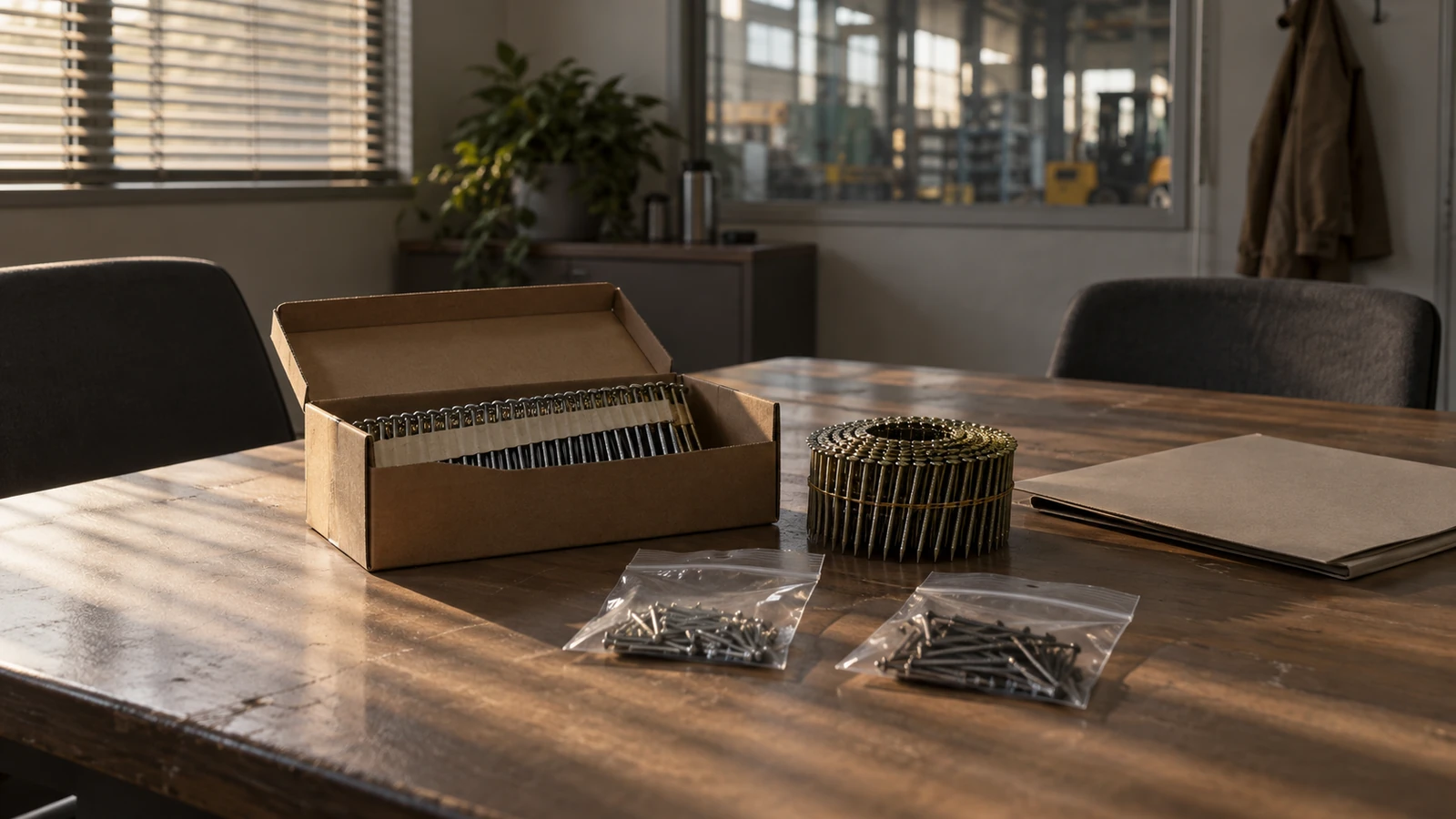
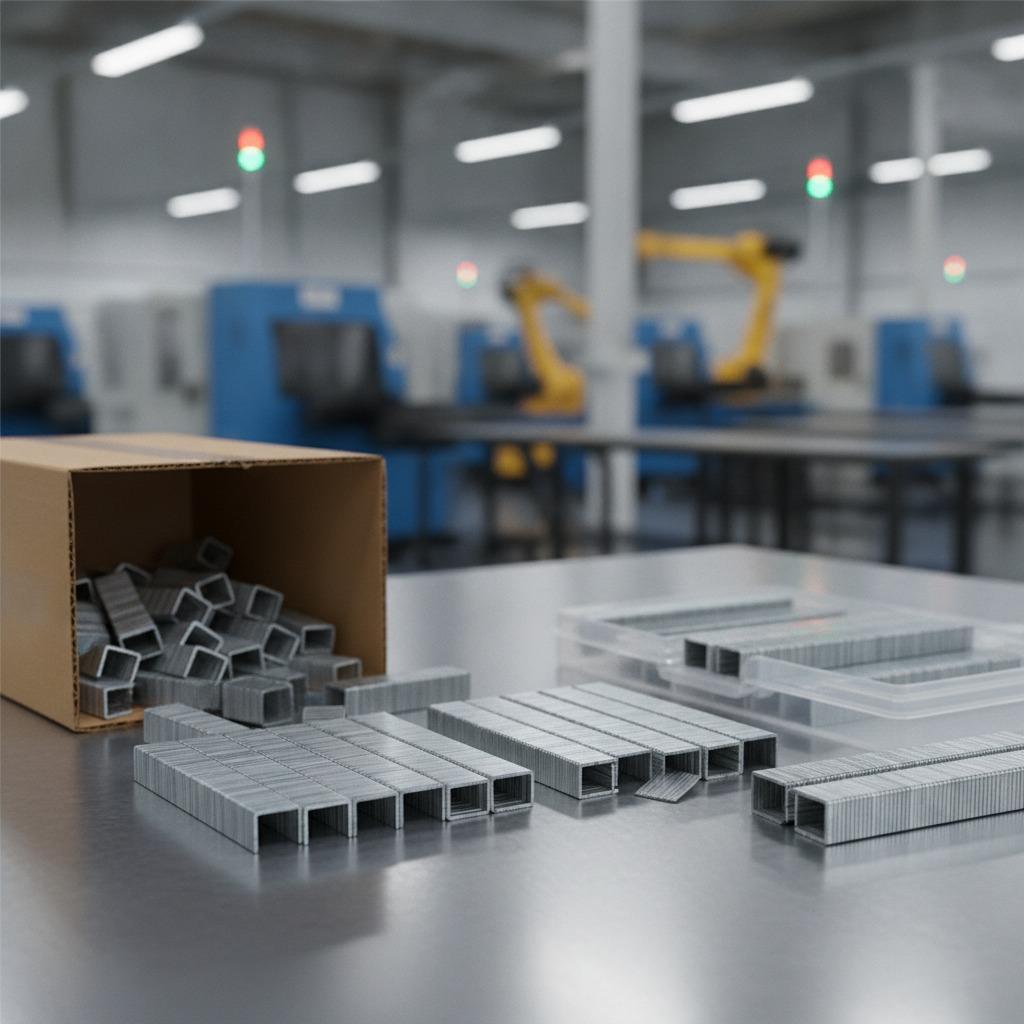
The product category here is straightforward: metal staple pins supplied in collated strips for pneumatic staplers or staple guns. Visually, these are U-shaped wire fasteners with two legs and a crown, packed in uniform bundles so they can load into a magazine and feed repeatedly. That strip format is not a minor detail; it is the reason the product can be used efficiently in production settings rather than as a hand-applied fastener.
From a buyer’s perspective, the visible box-and-tray packaging also hints at volume handling. These are consumables meant to move through storage, distribution, and line-side use without much fuss. The likely base material is steel wire, with a bright metallic appearance that may be uncoated or zinc-plated, though that cannot be confirmed from appearance alone.
Manufacturer Comparison: What To Look For Beyond the Spec Sheet
1. Feeding consistency
Some staple suppliers focus on dimensions alone. Others pay closer attention to strip uniformity, which is what keeps the magazine feeding smoothly. If the collation is uneven or the strips vary slightly, operators usually notice before purchasing does. Jams, double-feeds, and damaged fasteners are common symptoms.
2. Material and finish
Industrial staple pins must do more than penetrate material. They also need enough stiffness to drive cleanly and enough surface quality to avoid unnecessary friction in the tool. A bright finish may simply indicate a basic metallic surface or a protective treatment, but the exact coating should always be confirmed with the supplier. For buyers in humid environments, this detail is not cosmetic; it affects storage and service life.
3. Size range and compatibility
One practical challenge is that different staplers accept different series and dimensions. The image suggests multiple staple lengths or sizes may be present, but exact dimensions are not visible. That is where a careful buyer asks for clear compatibility data rather than assuming a near-match will work. In production, “close enough” can become expensive very quickly.
Comparing Supplier Types
There is a difference between a trading company that moves boxes and a true air staple pins manufacturer that controls the forming and collation process. Traders can be useful when you need mixed sourcing or flexible shipment options. Manufacturers, however, are usually better positioned to control consistency across batches, adjust strip formation, and support repeat orders with fewer surprises.
For standard industrial staple pins, that process control matters more than flashy packaging. A production manager usually wants dependable strip geometry, sensible carton handling, and clear identification of the product series. A sourcing manager, meanwhile, wants less variation between deliveries and fewer complaints from the shop floor.
Common Buying Mistakes
The most common mistake is treating all staple pins as interchangeable. They are not. Even when the difference is subtle, crown width, leg length, wire gauge, and collation style can change performance. Another mistake is over-focusing on price while ignoring whether the pins are suitable for the specific pneumatic tool in use.
There is also a packaging oversight that shows up in real warehouses: buyers order the right fastener but the wrong pack format. If the line needs fast, repeated magazine loading, the strip presentation matters as much as the pin itself. It sounds minor until operators spend time sorting and rechecking boxes.
Practical Questions To Ask a Supplier
Before placing volume orders, ask for the staple series, dimensions, wire material, surface treatment, and tool compatibility. If the supplier is the actual manufacturer, ask how the strips are formed and collated. You do not need a laboratory report for every purchase, but you do need enough information to avoid mismatches. For critical operations, it is also reasonable to request sample packs for tool testing before committing to a larger order.
FAQ
Are all staple pins for air staplers the same? No. The geometry and strip format must match the tool.
What industries use them most? Packaging, woodworking, upholstery, furniture, and light industrial assembly are common uses.
What should I verify first? Tool compatibility, strip feeding, and the exact staple size series.
Next Step for Buyers
If you are comparing suppliers, start by separating manufacturers from resellers and then test a few sample strips in the actual pneumatic stapler. That simple step catches more problems than a polished product page ever will. For recurring demand, a reliable air staple pins manufacturer is not just a source of consumables; it becomes part of your production stability.