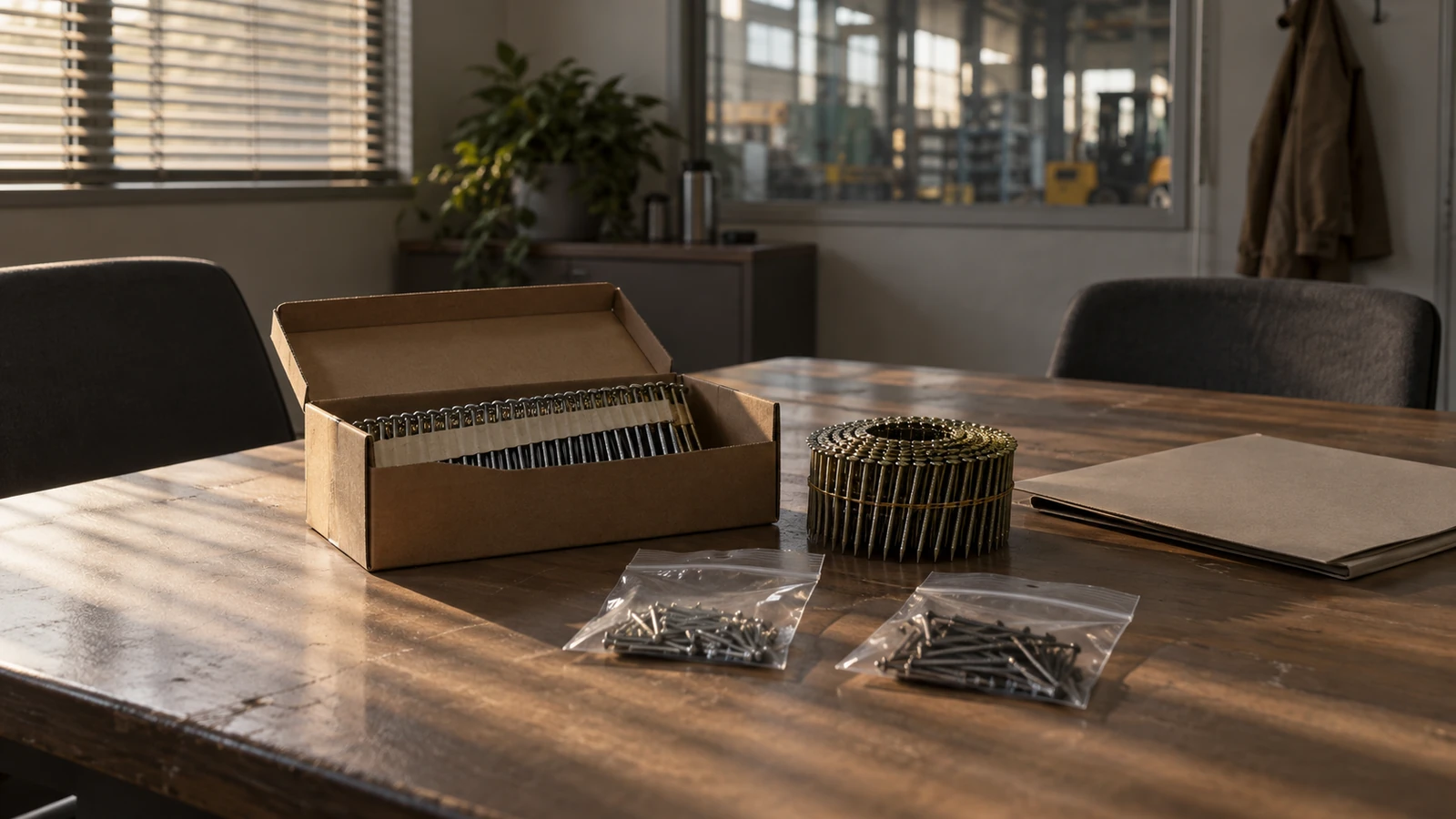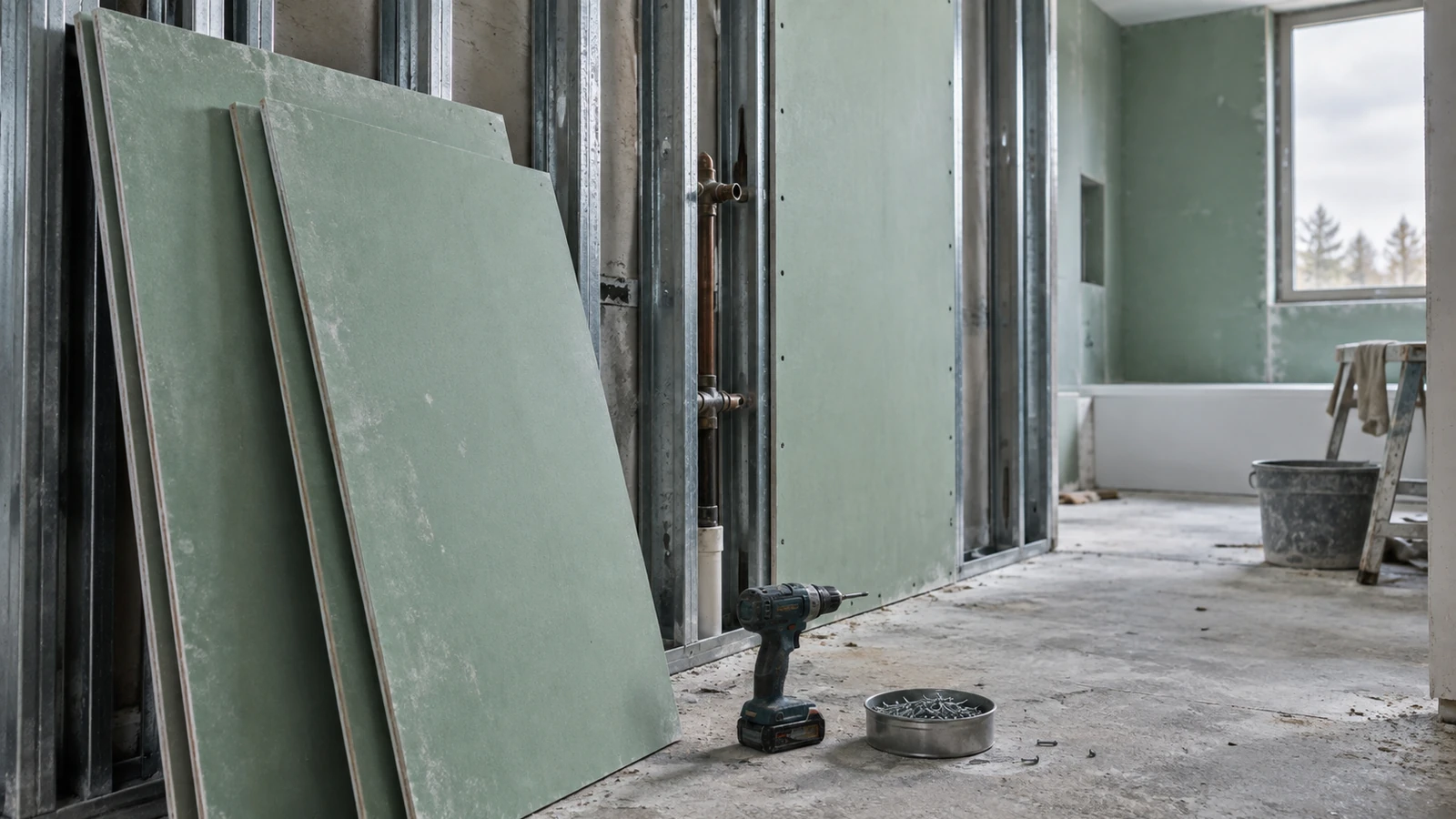

Black phosphate drywall screws can be a sensible choice for defined interior board applications, but the coating name alone does not approve the job. Buyers still need to check board type, framing, thread form, head seating, driver fit, storage, and the exposure expected after installation.
The most useful question is not “Are black screws good?” It is “What exposure and installation result does this specification need to control?” That change in wording keeps the purchase decision connected to a real application.
Separate the coating from the application
Black phosphate describes a surface treatment commonly associated with drywall and interior construction fasteners. It should not be treated as a universal outdoor, wet-room, or chemically resistant finish. Moisture, condensation, treated materials, joint compound, paint, cleaning chemicals, and storage humidity can all change the risk.
That limitation is important for black phosphate drywall screws because a product can look correct while its environment has changed. Keep the exposure decision visible in the purchase specification and repeat it during receiving.
Write the approved environment next to the product code. “Interior dry wallboard to steel stud” is more useful than “general construction.” If the fastener will see damp storage, exterior sheathing, treated timber, or repeated washing, the buyer should compare a different coating or material rather than stretching the label.
For black phosphate drywall screws, the approved environment should be part of the item description rather than a note held only by one salesperson. That makes receiving, installation, and reorder checks more consistent when the order moves between teams.
Use a coating decision table
| Situation | What to verify | Decision direction |
|---|---|---|
| Dry interior board | Thread, point, head seating, drive fit | May be suitable after application trial |
| Damp storage | Package barrier, humidity history, surface condition | Require storage controls or reconsider finish |
| Exterior or treated material | Exposure, chemical contact, declared corrosion requirement | Do not approve from color alone |
| Visible finished surface | Head depth, board damage, compound response | Test the complete finishing sequence |
Check the screw geometry before the coating
Thread form should match the framing or board assembly. Coarse thread and fine thread serve different material combinations, and the point, flute, head, and driver recess affect installation. A coating cannot correct a wrong geometry.
Ask for the diameter, length, thread description, point type, head style, drive type, coating description, and packing quantity. Confirm whether the supplier uses a declared standard or a private drawing. Keep the reference sample with the specification so a dark finish does not become the only visual identifier.
Use the black phosphate drywall screws label carefully
The label black phosphate drywall screws identifies a product family, not every performance outcome. The buyer should still connect the exact screw to the board, framing, driver, storage, and finish conditions that define acceptance.
Run a seating and finish trial
Install the screw with the planned bit, driver, speed, and pressure. Record cam-out, bit engagement, head seating, board paper tear, proud heads, and overdriving. Then apply the planned joint compound, sanding, paint, or texture. A screw that looks acceptable before finishing can create a visible ring or a weak patch after finishing.
- Use the same board and framing used in production.
- Mark each driver setting and record the bit condition.
- Photograph the head after installation and after finishing.
- Retain screws from the approved lot and carton.
Storage is part of the coating decision
Drywall screws can arrive with a surface condition that is different from the condition at packing if cartons are exposed to humidity or condensation. Ask how inner boxes are sealed, whether the carton includes a lot code, and what storage range the supplier recommends. Inspect dark marks, powder, red corrosion, damaged cartons, and mixed packaging at receiving.
| Receiving check | Record | Reason |
|---|---|---|
| Carton | Dryness, crush, seal, label, lot | Protects traceability and surface condition |
| Fastener | Thread, point, head, drive, visible coating | Separates product variation from storage damage |
| Installation | Bit fit, seating, board damage | Confirms the coating is not hiding a geometry issue |
Use standards as boundaries, not shortcuts
ASTM C1002 covers steel self-piercing tapping screws for application of gypsum panel products or metal plaster bases to wood or steel studs; the ASTM C1002 page helps define the type of product and application under discussion. The ISO 9001 overview is useful for documenting repeatable release checks. The buyer still needs to match the actual board, framing, tool, and environment.
ProAirNails treats the coating name as one field in the application record, not as a standalone performance promise. This keeps the recommendation aligned with the board, framing, storage, and finishing conditions.
ProAirNails can help buyers compare drywall screws, review related chipboard screws, select pneumatic fasteners, and organize a project question through Contact Us.
FAQ
What are black phosphate drywall screws used for?
They are commonly considered for defined interior board fastening applications where the geometry, tool, and exposure fit the specification.
Are black phosphate screws suitable outdoors?
Do not assume that. Exterior exposure, moisture, chemicals, and treated materials require a separate corrosion and application review.
Does the black color prove coating quality?
No. Color is only a visual clue; buyers should verify the declared coating, surface condition, and application performance.
Should I test the complete finishing sequence?
Yes. Compound, sanding, paint, texture, and lighting can reveal head or board damage that is not obvious on an unfinished panel.
How do I choose coarse or fine thread?
Match the thread to the framing and board assembly described in the drawing or application specification.
What should a receiving inspection record?
Record carton condition, lot, label, visible surface state, dimensions, drive, and a small installation check where risk justifies it.
Can damp storage damage a black phosphate finish?
Humidity and condensation can change surface condition or create corrosion evidence, so packaging and storage controls matter.
What causes a proud drywall screw head?
Possible causes include driver setting, bit wear, screw geometry, board condition, framing variation, or an installation angle problem.
Is ASTM C1002 a complete approval test?
No. It provides a reference boundary, but the buyer still needs a representative tool, board, framing, finish, and exposure trial.
What does ProAirNails need for a screw recommendation?
Provide the board, framing, environment, length, tool, finish schedule, packaging, and acceptance concern so the recommendation stays application-specific.