
Why a brad nails bulk supplier matters more than people think
If you buy brad nails bulk supplier stock for a shop, factory, or installation crew, you are not just buying a consumable. You are deciding how smoothly trim work runs, how often nailers jam, and whether finishing operations stay consistent from one job to the next. In light-wood fastening, the difference between the right bulk format and a poorly matched box shows up quickly: split pieces, misfires, wasted labor, and a lot of small frustrations that are never really small once a production line is waiting.
That is especially true for 18 gauge brad nails in bulk supply. They are the kind of fastener people barely notice when things go right. Yet for woodworking shops, cabinet makers, and finishing crews, they can be the quiet factor that keeps assembly moving without telegraphing damage through thin trim or molding.
What bulk brad nails are actually doing on the shop floor
Brad nails are thin finishing nails used with a brad nailer or finish nailer. Their job is straightforward: hold light wood components in place while minimizing splitting and leaving a small fastening mark. They are common in trim installation, paneling, cabinet parts, casework, and furniture assembly where appearance matters and heavy fastening would be overkill.
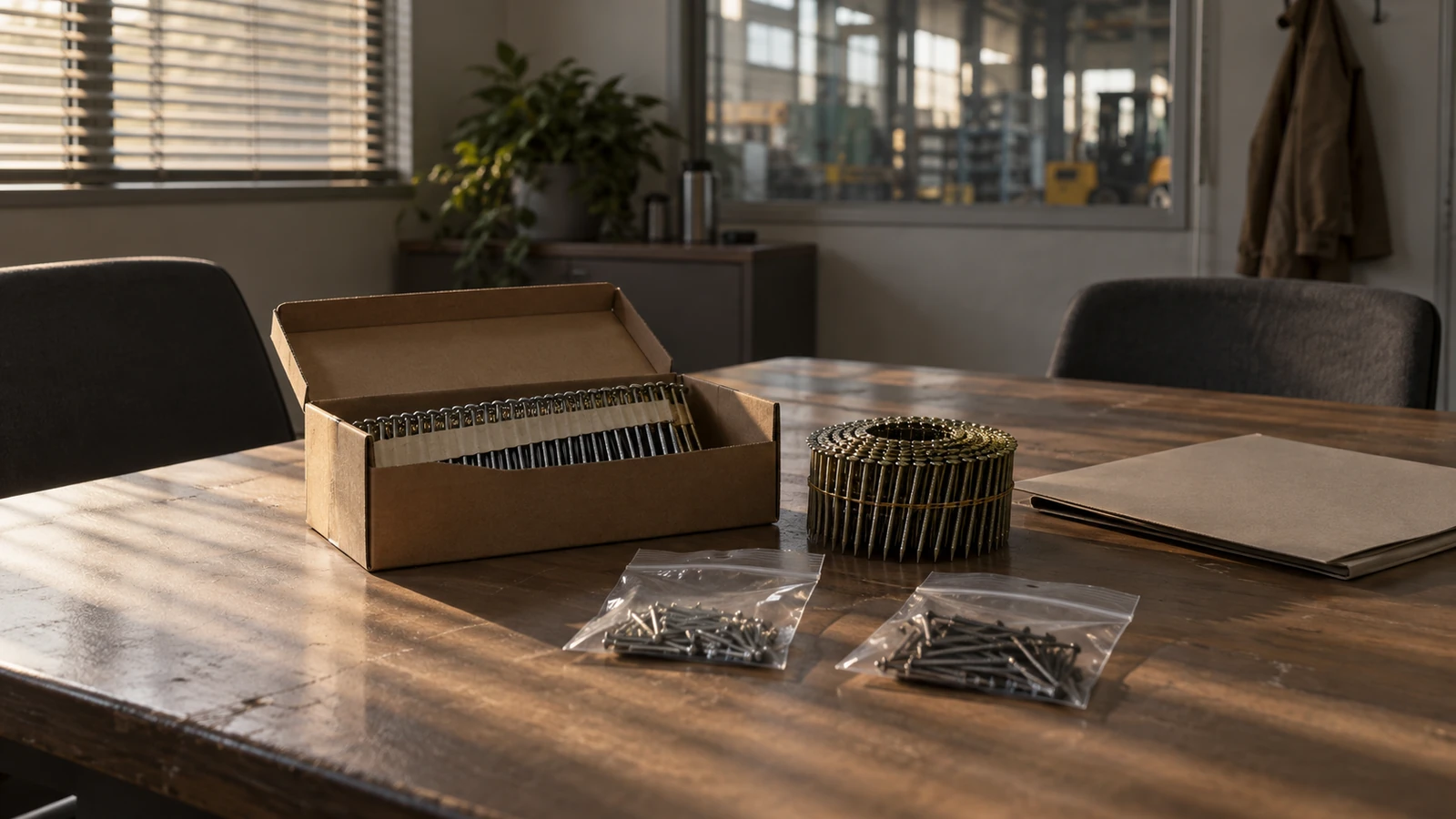
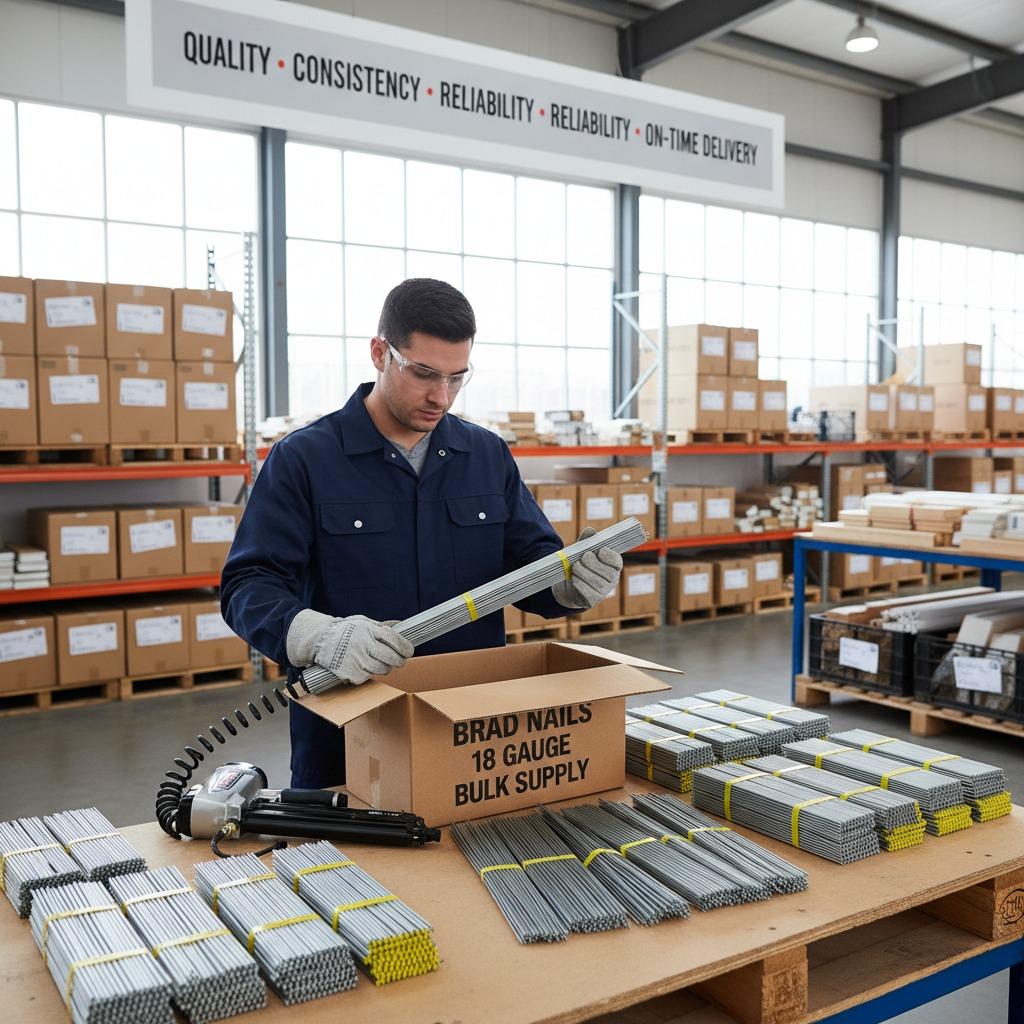
The product format matters as much as the nail itself. In bulk supply, the nails are typically collated in long strips or bundles for pneumatic nailers. That helps crews keep pace, especially when the same fastener is used repeatedly across a production run or on repeat installation work. The carton labeling shown here identifies the product as 18 gauge bulk supply, which is the key buying detail available from the provided information.
Quick takeaways for buyers comparing bulk brad nails
For sourcing managers and production leads, the basic question is not “Are these nails thin?” It is “Will these nails run reliably in our tools and suit the material we fasten most often?”
18 gauge is a practical middle ground for many finishing jobs. It is fine enough to reduce splitting in light stock, yet sturdy enough for common interior finishing tasks. The collated-strip format supports pneumatic feeding, which is important if you are trying to keep cycle times steady. If your team is moving between trim, cabinet parts, and general light-duty fastening, bulk brad nails often make more sense than small retail packs that disappear too quickly and create reordering noise.
Material and finish: what you can tell, and what you should verify
The visible nails appear metallic, likely steel, with a silver or gray surface. They may be galvanized or zinc-coated, but that cannot be confirmed from the information provided. That caution matters. Coating affects storage behavior and corrosion resistance, and those details should never be assumed from appearance alone.
For indoor woodworking and interior finishing, many buyers focus first on feed reliability and clean penetration. For areas with moisture exposure or long-term environmental stress, coating and base material become more important. A brad nails bulk supplier should be able to clarify those points before you commit to a recurring purchase. If they cannot, treat that as a warning sign rather than a minor omission.
How to evaluate a supplier for bulk brad nails wholesale
When buyers compare bulk brad nails or brad nails wholesale offers, the obvious price discussion tends to crowd out the practical questions. That is a mistake. The cheapest carton is not a bargain if the strips feed poorly or if the nails are inconsistent enough to interrupt work.
Check compatibility first
The nails need to match the nailer your crew actually uses. Gauge, collation style, strip format, and intended tool type all matter. If the supply does not align with your brad nailer, the fasteners become inventory instead of productivity.
Look for consistency in collated strips
Uniform strips and stacked bundles are a sign that the forming and packaging process is controlled well enough for bulk distribution. In a production environment, uneven collation can create feed problems that waste far more money than the initial savings on the carton.
Ask for the missing specifications
Length, point type, head style, coating, and quantity per box are all important, but they are not visible in the provided product description. A serious buyer should request those details before approving the item for standard use. That is especially important if the nails will be used across multiple work cells or by different subcontractor crews.
Common buying mistakes that cause real trouble later
One common mistake is assuming all 18 gauge brads behave the same. They do not. Differences in finish, strip quality, and nail length can change how a tool feeds and how the fastener performs in thin stock.
Another mistake is buying in bulk without confirming storage conditions. Fasteners can sit in a warehouse for a long time, and packaging that looks fine on arrival may not protect against moisture or rough handling. Even indoor products benefit from sensible inventory control. A bulk carton is efficient only if the contents arrive ready to use months later, not just on day one.
Who benefits most from bulk supply
Woodworking shops, furniture assembly operations, cabinet manufacturing, trim installers, and general interior finishing teams are the most obvious users. These are the buyers who feel the cost of downtime, tool misfeeds, and inconsistent fastening most sharply. For them, bulk supply is less about stocking up and more about reducing friction.
There is also a procurement advantage. Buying from a brad nails bulk supplier can make replenishment more predictable, especially if your operation consumes the same fastener repeatedly. That steadiness is useful in production planning, even when the fastener itself is a relatively low-cost item.
What a practical next step looks like
If you are comparing suppliers, start with a simple request: confirm gauge, collation type, finish/coating, quantity per carton, and tool compatibility. Then ask for packaging details and any available material specification. Those basics will tell you far more than a glossy product page ever will.
If your current supplier cannot answer those questions cleanly, it may be time to move to a more reliable source of brad nails wholesale supply. In fastener buying, quiet consistency is usually worth more than a small discount.