

Chipboard screws for retail display fixtures should be approved for changeovers, not just for one assembled box. A display unit may be built in a factory, flat-packed, installed under time pressure, moved between stores, and reconfigured around new merchandise. The fastener must fit the joint while preserving edge condition, appearance, service access, and kit control.
ProAirNails recommends a fixture map with a code for every joint. Mark which connections are permanent, which are expected to be removed, and which are visible to customers. That simple separation prevents a screw selected for a hidden first build from being reused in a visible service location.
Classify the fixture before choosing the screw
| Fixture role | Joint requirement | Changeover question |
|---|---|---|
| Fixed carcass | Square the box and hold the main structure | Will the joint stay stable during transport? |
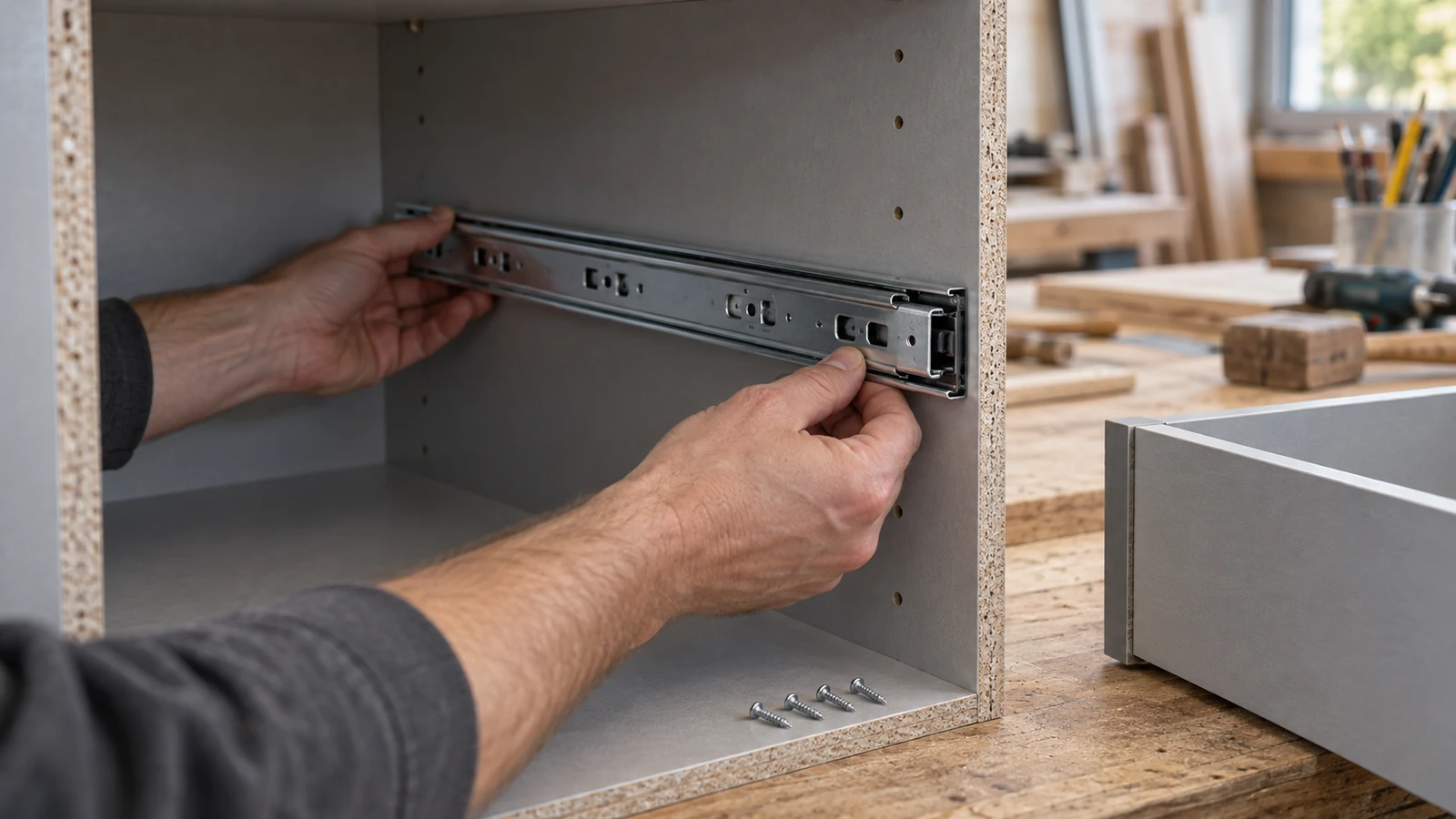
| Adjustable shelf | Support repeated repositioning | Does hardware access stay clear? |
| Display face | Preserve the visible surface | Can service occur without a new mark? |
| Removable panel | Allow controlled removal and return | How many service cycles are required? |
Do not use one “display screw” label for all four roles. The correct length, head, recess, point, and pilot-hole route can change with the panel and the service expectation.
Map chipboard screws for retail display fixtures to the panel edges
Retail fixtures often use decorative laminate, painted chipboard, edge banding, or mixed panel materials. Record the finished face, edge treatment, panel thickness, grain or surface direction, and distance from the edge. A joint that is hidden in the workshop may become visible after a planogram change.
The AWI architectural wood casework scope is a useful reference for casework drawings, aesthetic expectations, and cabinet hardware context. It does not select a screw for a particular retail fixture; the shop drawing and physical sample still control.
Run a first-build and a changeover sample
Build one fixture using the planned jig, driver, bit, pilot-hole process, and kit. Then remove the joints that the store team is expected to service and rebuild them using the actual field method. Record hole condition, joint closure, squareness, surface damage, and hardware clearance after each planned cycle.
- Mark every joint code on the drawing and on the kit.
- Use the real panel edge, laminate, backing, and hardware.
- Measure diagonals and reveals before judging driver feel.
- Test the service tool and access position, not only the factory fixture.
- Retain an unopened kit beside the assembled sample.
For chipboard screws for retail display fixtures, the changeover sample is often the commercial proof. It tells the buyer whether a cheaper first assembly creates a service problem when the store team moves a shelf or panel. Keep that same chipboard screws for retail display fixtures sample with the joint map.
Separate torque from geometry
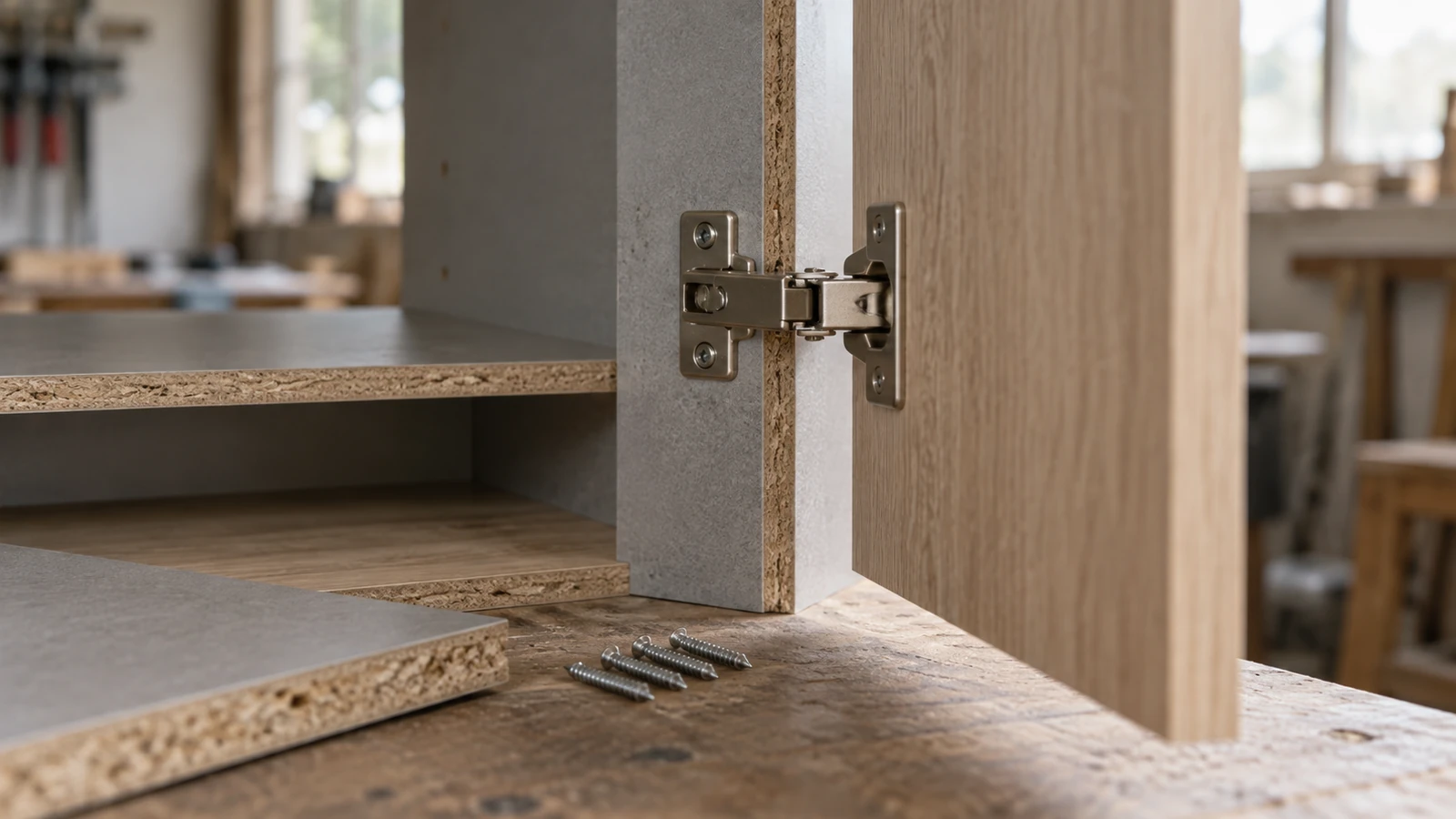
A driver may show a useful seating event, but a high torque reading can also indicate a blocked path, chip packing, misalignment, a damaged bit, or an edge that is too close. Inspect the joint square, the panel face, the recess, and the edge after driving.
| Checkpoint | Pass evidence | Reorder note |
|---|---|---|
| Access | Bit reaches the joint without forcing the panel | Keep the same tool and clearance requirement |
| Seating | Head is controlled and the face remains clean | Match head, recess, bit, and depth |
| Squareness | Diagonals and reveals stay inside project tolerance | Retain the joint map and fixture sample |
| Service | Defined removal and replacement do not strip the hole | State the permitted cycle or replacement rule |
The Composite Panel Association's particleboard reference shows why panel grade and screw-holding information belong in the approval. A retail fixture can change panel supplier or surface while the outside dimensions remain the same.
Control the kit as carefully as the fastener
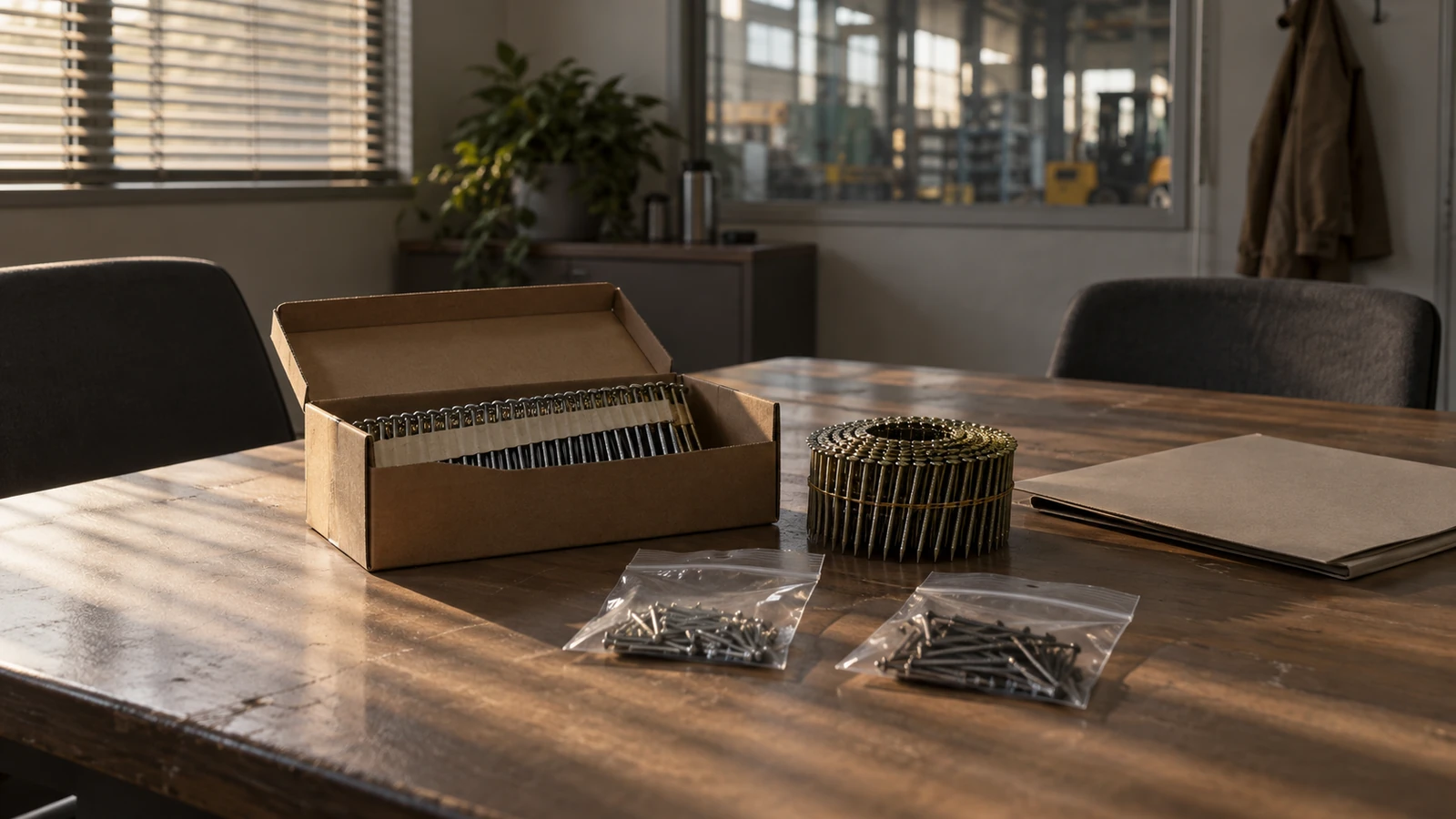
Pack each joint code separately when the fixture uses multiple lengths or heads. Labels should identify the product, quantity, lot, compatible bit, and assembly position. Protect the kit from loose screws rubbing against finished laminate or migrating into a neighboring compartment.
At receiving, count the inner packs and compare them with the shop drawing. A fixture can fail commercially when the screws are technically correct but the installer cannot identify which bag belongs to the adjustable shelf or service panel.
Decide what reuse really means
“Reusable” can mean one planned changeover, several store refits, or repeated service by a technician. Define the required cycle and test it. A screw may be acceptable for one removal and replacement but not for indefinite reuse in a particleboard edge.
Keep the limitation visible in the product code or instruction. Do not promise unlimited service life from a bench sample, and do not hide a replacement insert or alternate joint method when the panel has reached its permitted limit.
Send a complete fixture RFQ
ProAirNails can help buyers compare chipboard screws, review related screws, coordinate visible-face brad nails, and submit a joint schedule through Contact Us. Include shop drawings, panel grades, edge distances, joint codes, service cycles, tool and bit, kit format, quantity, destination, and rollout timing.
At reorder, compare material declaration, thread, length, head, recess, point, finish, packing, label, lot identity, and change notice. The approval for chipboard screws for retail display fixtures should connect every item code to a joint and a service boundary. ProAirNails can keep the changeover sample tied to that item code.
FAQ
Why are retail display fixtures different from ordinary cabinets?
They can be moved, flat-packed, reconfigured, serviced, and exposed to customers, so access, appearance, and reuse need evidence.
Should every fixture joint use the same screw?
No. Permanent, adjustable, visible, and removable joints can require different dimensions, access, and service rules.
What should be on a joint map?
Record panel, edge distance, direction, item code, head, length, pilot-hole method, tool access, visibility, and reuse status.
Can torque alone approve the fixture?
No. Inspect seating, squareness, face damage, edge condition, hardware clearance, and service behavior as well.
How many reuse cycles should be tested?
Test the number required by the store or service plan and state the limit; do not assume unlimited reuse in particleboard.
Why keep kits separate?
Multiple lengths or heads can look similar, and a mixed kit creates installation errors even when every screw is technically correct.
What panel information matters?
Record supplier, grade or declaration, thickness, surface, edge treatment, moisture context, and sample identity.
What should be in the RFQ?
Send drawings, panel data, joint codes, service cycles, tool and bit, quantities, kit format, destination, and rollout schedule.
What changes trigger a fresh sample?
Review changes to screw geometry, panel, edge, joint, hardware, pilot hole, tool, service cycle, packing, or supplier process.
What is the final release question?
Ask whether the fixture assembles square, looks clean, can be serviced as planned, and can be replenished from a traceable kit.