
Why coarse-thread drywall screws still matter in ceiling work
A coarse thread drywall screw is one of those fastening parts people tend to notice only when it fails to bite, strips out, or slows down an installation. In wallboard work, the screw looks simple enough. In practice, the thread form, point style, coating, and head shape all affect whether the board seats cleanly and whether a crew can keep moving without rework. That matters even more overhead, where a worker is driving screws upward into suspended ceiling framing and every stripped fastener costs time twice: once to remove it and again to patch the mistake.
For engineers, sourcing managers, and product teams, the real decision is not “which screw is cheapest?” It is which fastening profile matches the substrate, the board, and the installation method. Coarse-thread drywall screws are commonly chosen for wood framing, while metal-framing jobs often call for different self-drilling or fine-thread solutions. That said, the fastening landscape is not always neat on site, especially in renovation work where framing conditions vary and installers rely on the screw that actually performs in the moment.
What the product image suggests
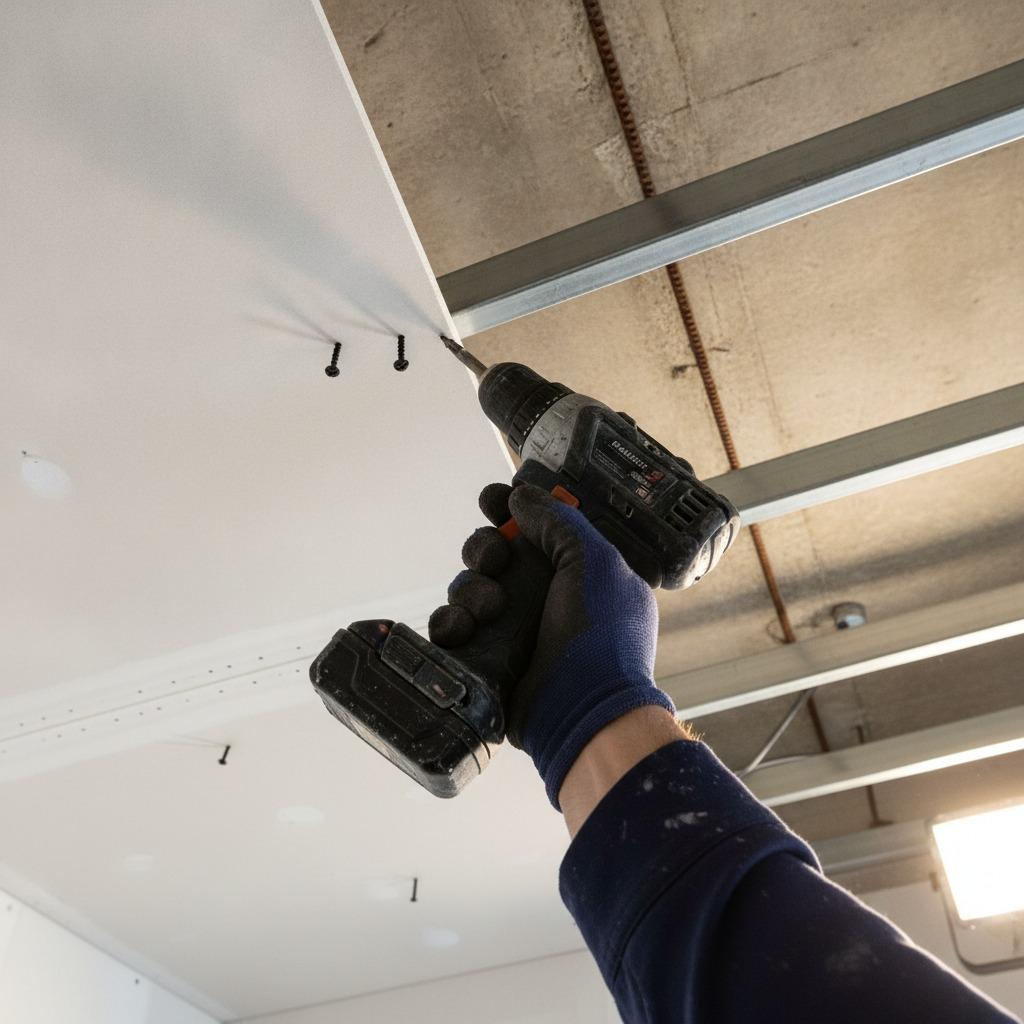
The visible application here is ceiling drywall installation on galvanized steel hat channel. The framing has a light silver finish and a rectangular profile, with parallel channels running across the ceiling. The screws appear dark-coated, with a sharp point and a visible threaded shank. A power driver is being used overhead, which tells you a few practical things: the crew needs fast thread engagement, the screw must seat cleanly without tearing paper, and the head must pull the board tight enough to avoid proud fasteners.
One caution: from a photo alone, it is not possible to confirm exact screw dimensions, tip geometry, coating specification, or whether the fastener is truly a coarse-thread drywall screw versus another drywall-fastening type. On real projects, that distinction matters.
Coarse thread vs. other drywall screw options
Where coarse thread fits
Coarse-thread drywall screws are typically associated with wood studs and wood backing because the wider thread pitch can dig in quickly and hold well in fibrous material. They are valued for speedy driving and reliable grip in soft substrates.
Where they are not the first choice
When the framing is metal, buyers usually look more carefully at thread form and point design. Thin-gauge steel, hat channel, and light-gauge stud assemblies often demand screws designed to cut or drill into metal. Using the wrong screw can lead to spinning, weak seating, or premature failure under service conditions. In other words, the label on the box matters less than the actual substrate on the jobsite.
What buyers should evaluate before placing an order
If you are sourcing coarse thread drywall screws or related drywall fasteners, start with the real installation environment:
First, confirm whether the assembly is wood framing, metal studs, or hat channel. Second, match the screw to the board type and thickness specified for the application. Third, check the head style and drive recess for compatibility with the tools in use. Fourth, consider coating selection for indoor use, especially where dark phosphate-style finishes are common and where surface appearance or corrosion resistance may matter.
For ceiling work, installation speed is only part of the story. Overhead fastening also rewards a screw that starts cleanly, avoids wobble in the bit, and sits flush without crushing the board face. A screw that saves two seconds per drive can still lose the job if it produces enough strip-outs to slow the whole crew.
Common mistakes on drywall fastening jobs
One frequent mistake is treating all drywall screws as interchangeable. They are not. Another is assuming that a screw that works in wall framing will automatically behave the same way overhead or in metal channel. Site conditions, board weight, and framing gauge all change the equation. A third mistake is overlooking driver control; too much torque can break paper, while too little leaves the head proud and invites callbacks.
There is also a procurement trap: buying by name alone instead of by application. A drywall screw manufacturer can produce multiple fastener families that look similar on a shelf but perform differently in the field. The cut sheet or product specification should be read as carefully as the price list.
Practical advice for sourcing teams
If your project involves suspended ceiling assemblies, ask for samples or clear product data before locking the PO. Confirm whether the screw is intended for wood, metal, or mixed substrates. If the job is interior commercial construction, renovation, or new-build ceiling work, it is worth aligning the screw choice with the framing system rather than forcing one fastener to do every task.
For teams comparing coarse thread drywall screws with other drywall fasteners, the best buying decision usually comes down to fit-for-purpose, not headline specs. That is especially true when overhead labor is expensive and site tolerance for rework is low.
FAQ
Are coarse-thread drywall screws always the right choice for ceilings?
Not always. They are common in drywall work, but ceiling assemblies with metal hat channel may need a different fastener type.
What should a buyer confirm first?
Confirm the framing material, board type, and intended installation method before comparing screw options.
Why does finish matter?
Finish can influence corrosion behavior, appearance, and sometimes drive feel. Indoor drywall work often uses dark-coated screws, but the right choice depends on the application and environment.
Next step
If you are sourcing screws for ceiling drywall, metal framing, or interior fit-out work, start with the substrate and the install method, then narrow the fastener spec from there. That approach prevents a lot of small problems that turn into expensive site delays later.