
Choosing the Right Drywall Fastener for Metal Ceiling Framing
When a ceiling job depends on a coarse thread drywall screw, the first question is not style but compatibility. Drywall over metal framing is unforgiving overhead work: the board must stay flat, the screw must bite cleanly, and the installer needs enough holding power without tearing the paper face. That sounds simple until you get into suspended ceilings, hat channel, and renovation work where the framing is metal rather than wood.
For sourcing teams and contractors, the real decision is whether the fastener matches the substrate and the installation method. A screw that performs well in wood can be a poor choice in thin-gauge metal, especially above your head where rework is slow, messy, and expensive. If you are comparing coarse thread drywall screws with other drywall screw options, the point is to avoid selecting by habit. Select by framing type, board thickness, and the way the screw is being driven.
What the installed assembly is telling you
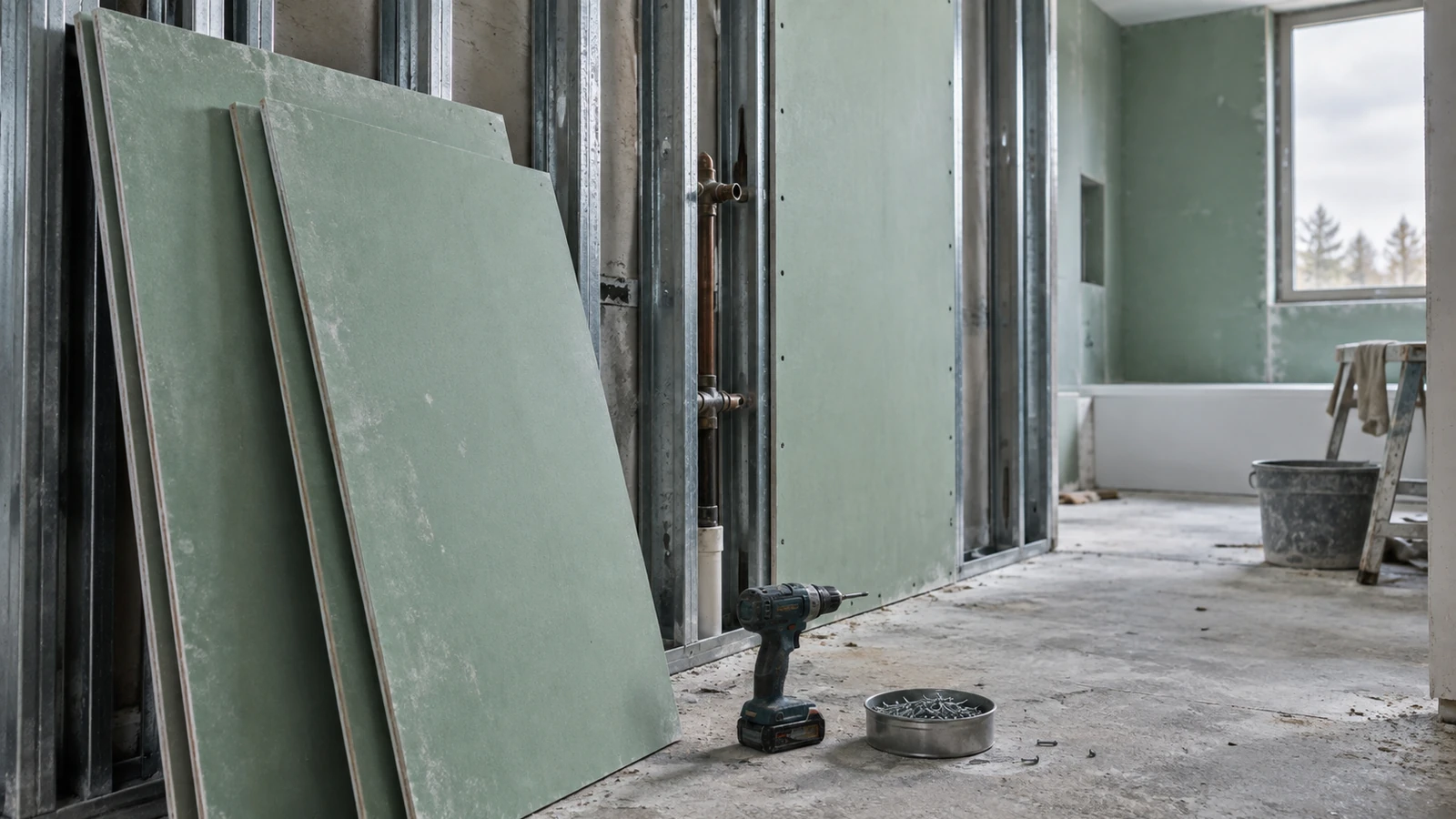
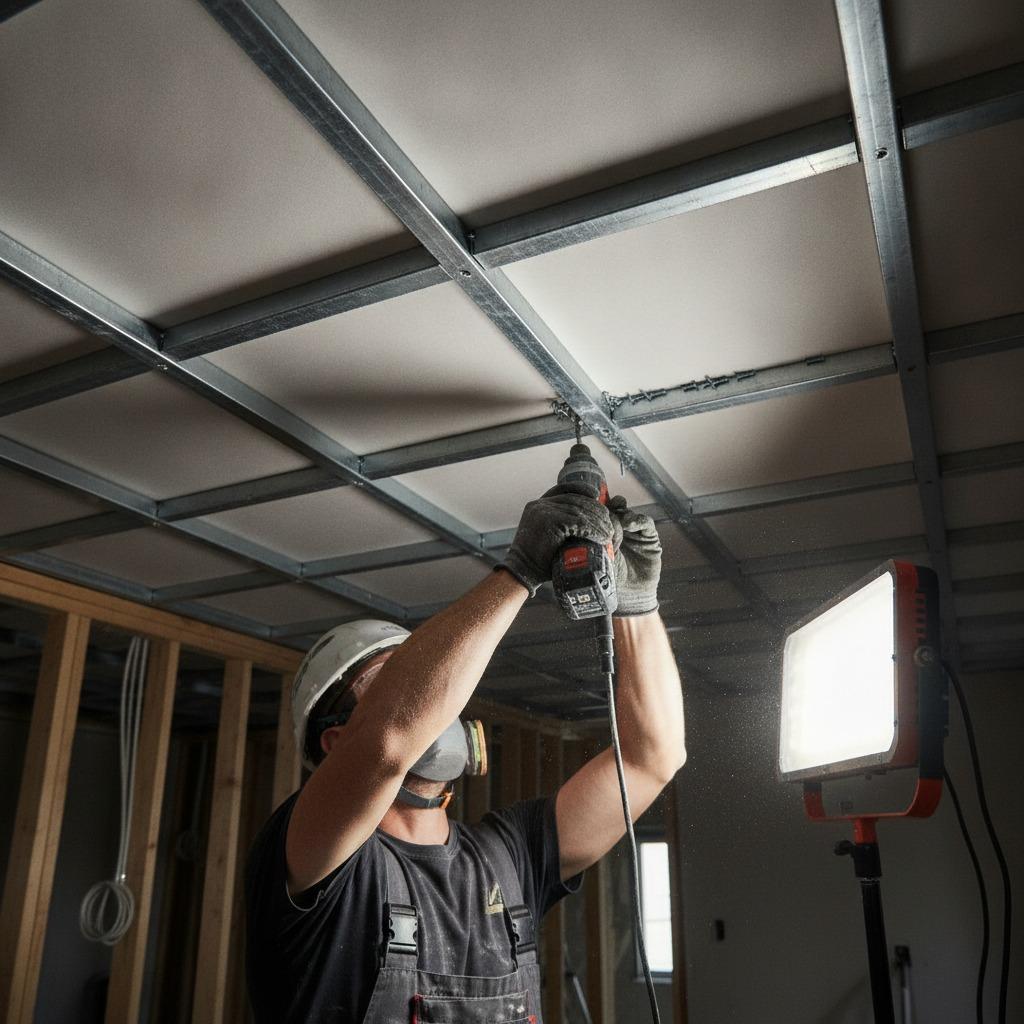
The application here is clear enough: drywall sheet secured to the underside of a metal hat channel or suspended ceiling substructure. The visible hardware shows dark-coated screws with bugle heads driven into white gypsum board, with a galvanized-looking metal support behind it. That is a common ceiling assembly in interior construction and renovation, especially where services need to pass above the ceiling plane.
In this kind of work, the screw is doing more than “holding board.” It has to pull the gypsum tight to the framing, resist loosening over time, and allow the installer to work overhead with a powered driver without stripping the head. That is why finish, point geometry, and thread form matter as much as raw length.
Coarse thread versus other drywall screw styles
For buyers, the name can be a little confusing. Coarse thread drywall screws are widely associated with wood framing because the deeper thread profile grabs wood fibers well. In metal framing, installers often use thread patterns intended for steel studs or light-gauge framing, which may be different from the standard coarse-thread wood version. The image alone does not confirm the exact thread pattern, so it is safer to treat the fastener as a drywall screw intended for metal framing rather than assume one specific thread design.
That caution matters. On a ceiling, a mismatched screw can cam out, wobble during drive-in, or fail to seat the board properly. Overhead, even minor fastening issues become visible later as board movement, popped heads, or uneven finishing work. Nobody wants to patch a ceiling twice.
What to ask a drywall screw manufacturer before you buy
If you are dealing with a drywall screw manufacturer or distributor, ask for the exact data that affects your job, not just the product family name. The important checks are straightforward:
Whether the screw is intended for metal framing or wood framing.
Whether the thread form is suited to the gauge of the hat channel or steel support.
Whether the coating is appropriate for interior corrosion resistance in a ceiling assembly.
Whether the head style is designed for clean paper penetration and flush seating.
Whether the packaging clearly identifies the intended drywall application.
That last point sounds minor, but it saves time on the jobsite. Mixed fastener bins and vague product labels are a common source of errors, especially when multiple contractors are sharing materials.
Practical buying criteria for ceiling drywall work
1. Match the fastener to the framing
Metal hat channel and light-gauge framing call for a screw that can bite consistently into steel. If the screw is specified too broadly, installers may have to compensate with extra driving force, which is not what you want on a finished ceiling.
2. Look for clean drive performance
Because overhead installation is slower by nature, a screw that seats predictably is worth more than a small unit-price difference. A stable bugle head and a point that starts cleanly can save real labor.
3. Consider the coating, but do not over-claim it
The product shown appears to be a dark-coated steel screw, but the exact coating specification is not identifiable from the image. In practice, buyers should confirm that the finish is suitable for the intended interior environment rather than assuming all dark screws are interchangeable.
Common mistakes on suspended ceiling drywall jobs
The most common mistake is treating all drywall screws as equivalent. They are not. Another frequent problem is using the wrong driver setting, which either strips the head or leaves the screw proud of the surface. On ceilings, a proud head can telegraph through finishing layers and create extra sanding and touch-up work later.
There is also a procurement mistake that shows up often: buying by description only. If the spec says “drywall screw” without naming the framing material, thread type, or intended assembly, the field crew may receive a product that is technically close but operationally wrong.
Buyer takeaway
If your project involves drywall attachment to metal hat channel, the fastener choice should be driven by ceiling performance, not just catalog language. A coarse thread drywall screw may be familiar shorthand in some shops, but the real requirement is a screw that is verified for the substrate, the driving tool, and the overhead application. Ask the supplier for the exact screw type and intended use before ordering in volume.
For sourcing managers, that is the cleanest way to reduce returns and jobsite confusion. For installers, it means fewer stripped heads and fewer callbacks. For product teams, it is a reminder that small fasteners can control the quality of the entire ceiling finish.
FAQ
Can I use the same drywall screw for wood and metal framing?
Not safely as a blanket rule. The screw needs to suit the framing material, especially in overhead assemblies.
Why does ceiling drywall need extra attention?
Because gravity exposes every fastening mistake. Poor seating, weak bite, or the wrong screw type tends to show up faster on a ceiling than on a wall.
Should I rely on color or coating to identify the screw type?
No. Visual cues help, but they do not replace a confirmed product specification from the supplier.