
Why the right coil nails manufacturer matters on the jobsite
When buyers search for a coil nails manufacturer, they are usually not comparing brochures for fun. They are trying to solve a practical problem: how to keep fastening lines moving without jams, waste, or inconsistent holding power. In framing, subfloor work, timber assembly, and other repetitive wood-fastening tasks, the nail itself is only part of the story. The coil format, the wire or plastic collation, the finish, and the compatibility with an air nailer all affect how smoothly production goes.
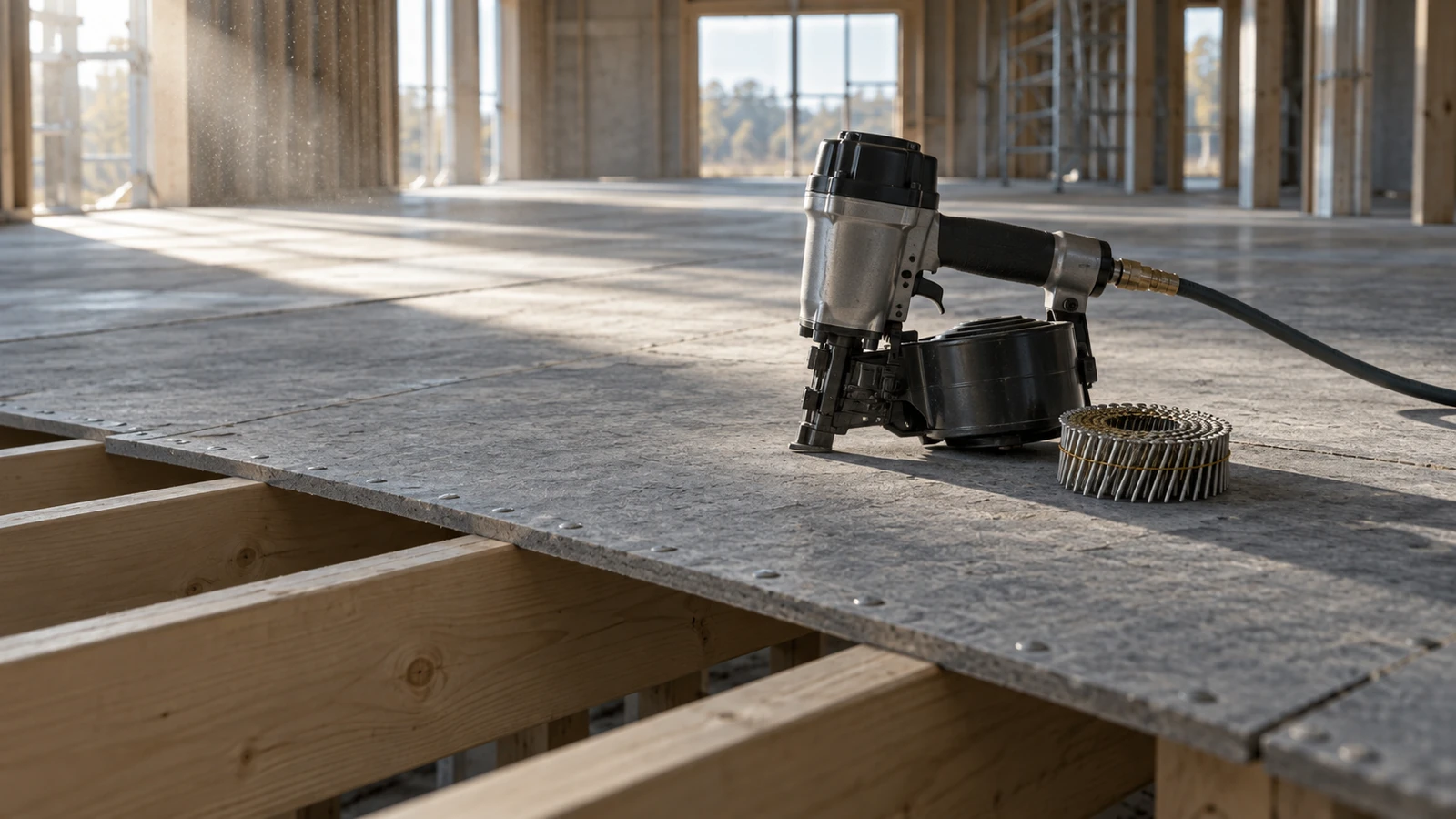
That matters even more when the tool in use is a pneumatic nail gun such as the F30M-type air nailer shown in the supplied product information. A tool like that depends on consistent feeding from the strip or coil, clean drive performance, and nails that match the magazine and nose geometry. A mismatch can slow a crew down fast. The wrong choice may not fail dramatically; it just creates small annoyances that add up across a shift.
What buyers should understand before comparing suppliers
Not every coil nails supplier is focused on the same end use. Some serve light interior carpentry, some target framing and structural timber work, and others build volume business around construction-site consumables. The first decision is not price. It is fit.
For air-powered nailers, compatibility comes first. The nail strip or coil must align with the tool’s feed path, drive angle, and nail form. The supplied product notes mention an F30M marking and a pneumatic tool used with compressed air, but they do not confirm exact nail size range or firing specifications. That is important. Buyers should ask for the exact nail type, length range, shank style, and collation format before placing a production order.
Where coil nails fit in real production work
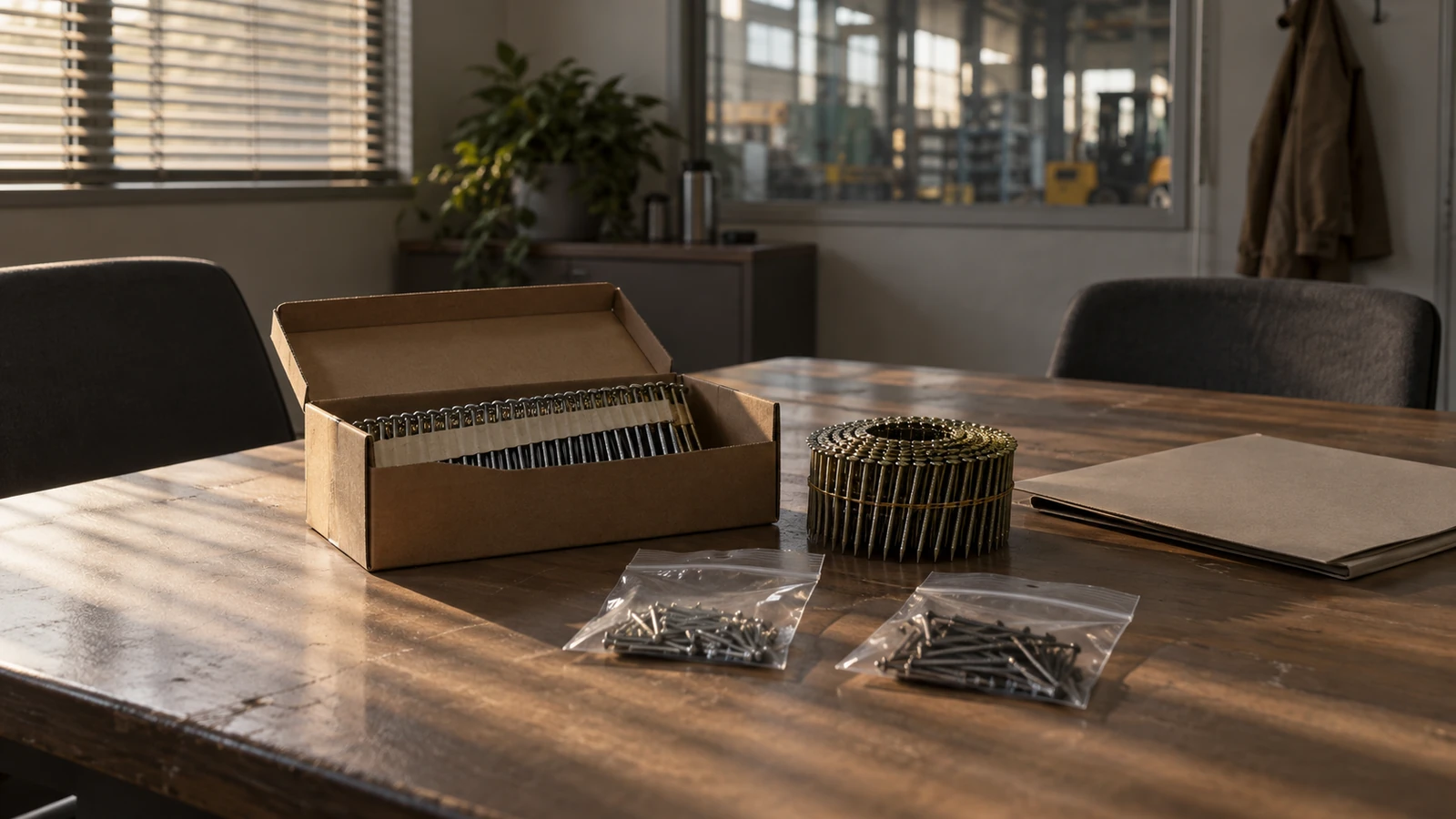
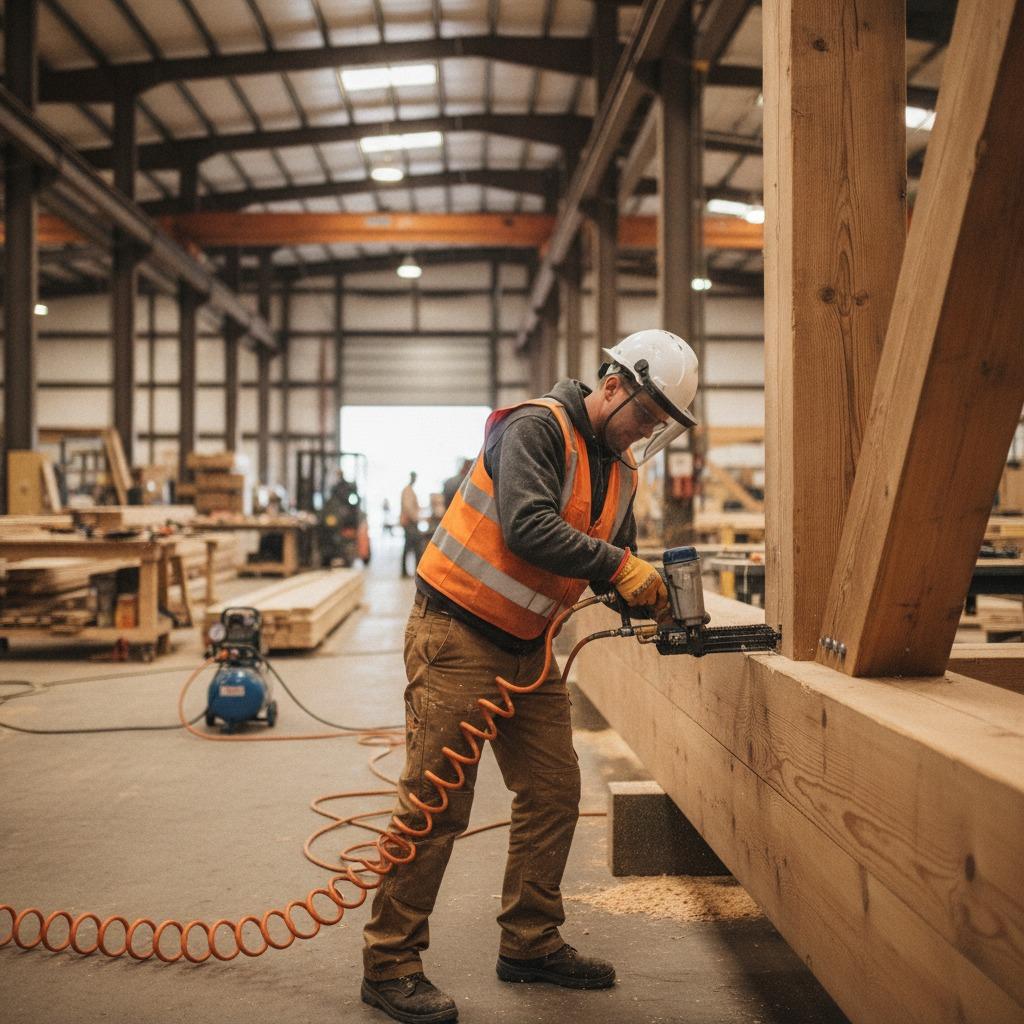
Coil nails are favored where fastening needs to be fast and repetitive. A crew building timber frames does not want to reload after every small burst of work. A coil-fed system gives better run time and supports higher throughput, especially on larger surfaces or long runs of material. That is why these nails show up in wood framing, subfloor fastening, board installation, and general construction fastening.
There is also a quieter benefit: better consistency. If a supplier maintains stable forming and collation, operators spend less time clearing feed issues and more time driving nails. In practice, that can matter more than a small difference in unit cost. Buyers in sourcing roles usually know this already, though it is easy to forget when comparing quotes line by line.
Key features to review with a coil nails factory
When speaking with a coil nails factory, it helps to move beyond the product title and into the details that affect daily use.
1. Nail compatibility
Confirm that the nails match the intended pneumatic nail gun. The shape, angle, and collation method must suit the feed system. If the tool is designed for a specific nail family, ask for samples before approving volume shipment.
2. Holding performance in wood
For wood fastening, the nail should drive cleanly and hold securely without bending excessively or splitting material more than expected. The exact performance depends on wood species, moisture content, and nail geometry, so buyers should avoid overpromising one-size-fits-all results.
3. Surface finish and handling
Different finishes are used in construction consumables depending on the application and exposure conditions. Since the supplied data does not specify finish type, this is a point to clarify rather than assume. A good supplier should explain what finish is used and why.
4. Packaging and feed reliability
Poor packaging can deform collated nails before they reach the site. That is a common but under-discussed issue. A nail may be correctly manufactured and still perform badly if the packaging allows bending or contamination during transport.
Common mistakes buyers still make
One common mistake is treating all coil nails as interchangeable. They are not. Another is ordering based on visual similarity alone. A nail that looks close enough in a catalog may fail in the gun or create feeding friction that only appears after the first few boxes are opened.
A second mistake is neglecting the actual tool on site. The supplied product information shows an air-powered nail gun with a long magazine, angled nose, and hose connection. That tells us the user environment is a real production setting, not a bench-top test. In that setting, even small inconsistencies in collation or dimensions become annoying very quickly.
Practical buying advice for sourcing teams
If you are vetting a coil nails manufacturer, ask for the exact product specification sheet, a sample pack, and clear notes on compatibility with the intended nailer model. If the supplier cannot clearly describe the intended use, that is a warning sign. You do not need a dramatic promise; you need repeatable supply and straightforward technical communication.
It is also worth asking whether the supplier has experience with construction-site fastening rather than only general hardware distribution. A manufacturer that understands framing and timber work is more likely to anticipate the issues that matter on the floor: feed consistency, packaging stability, and sensible product labeling.
FAQ buyers tend to ask
Are coil nails always better than stick nails?
Not always. Coil nails are often preferred for longer run time and faster reloading, but the best format depends on the tool and the work pattern.
Can one nail supplier fit every air nailer?
No. Compatibility depends on the specific nail gun design, angle, size range, and collation style. Always confirm before ordering at scale.
Should price be the main selection factor?
Usually not. In repetitive fastening, feed reliability and compatibility often have a larger impact on total cost than a small unit-price difference.
What a good next step looks like
For engineers, sourcing managers, and product teams, the next move is simple: narrow the choice to suppliers that can speak clearly about product fit, nailer compatibility, and packaging control. If your application uses a pneumatic nail gun for wood fastening, ask the manufacturer for a sample set and verify it against the actual tool before committing to volume. That small check can prevent a lot of wasted labor later, and in this part of the market, that is usually where the real money is saved.