
How to Evaluate a Coil Nails Supplier Before Bulk Ordering
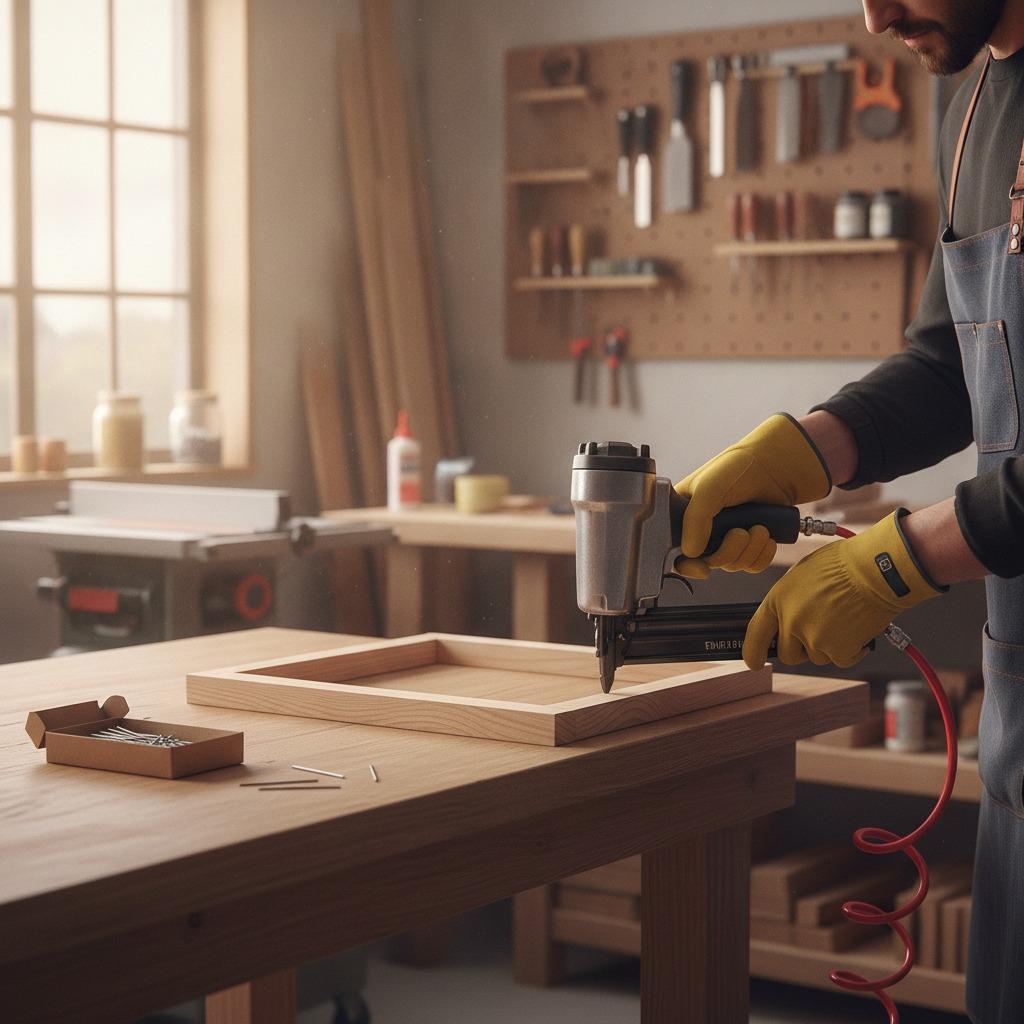 Choosing a coil nails supplier is rarely just a matter of finding the lowest number on a quotation sheet. In cabinet production, furniture assembly, trim installation, and light joinery work, the real cost of a poor fastener appears later—inside the nail gun, on the workbench, or in the pile of parts that need to be fixed again.
A pneumatic nailer depends on more than air pressure. It needs fasteners that feed correctly, drive cleanly, and stay consistent from one batch to the next. When the wrong nails arrive, the problems are usually familiar: tool jams, weak driving, split wood, damaged collation, or a shipment that does not behave like the approved sample.
That is why many buyers compare a coil nails factory, a trading company, and a spiral coil nails manufacturer with one practical question in mind: who can keep production steady?
Start with the nail gun, not the price
Price matters, of course. But it should not be the first filter.
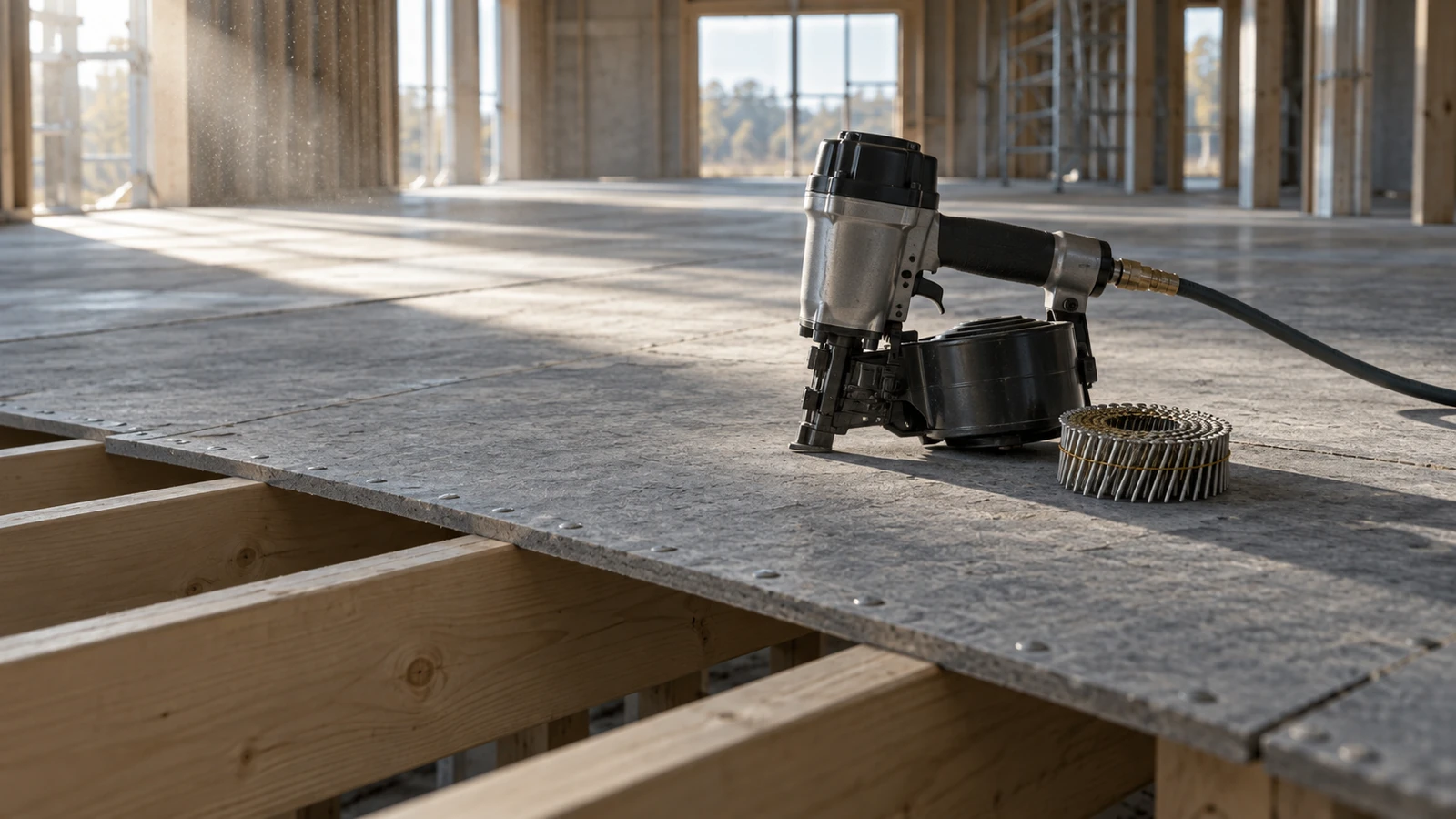
The first question is whether the coil nails match the pneumatic nailer already used in your workshop. These tools can be sensitive to nail length, wire collation, coil angle, shank type, head style, and diameter. A fastener may look close enough in a photo, yet still feed badly once it reaches the bench.
Ask the supplier to confirm compatibility in clear language. Do not rely only on a product code or a general “standard size” answer. A useful supplier should be able to explain whether the fastener fits your tool type and why it suits the application.
For cabinet shops and furniture builders, this step can prevent a lot of wasted testing. One wrong specification may turn a normal production task into an afternoon of clearing jams.
Match the fastener to the real application
A coil nails supplier should understand where the nails will be used. Cabinet carcasses, drawer boxes, wooden frames, trim boards, crates, and light assembly work do not always need the same fastener.
Some applications care most about clean driving and reduced splitting. Others need stronger holding power. In certain environments, coating and corrosion resistance become more important. For interior woodworking, appearance and stable tool feeding may matter more than aggressive holding strength.
A supplier who only says “this is our best seller” is not giving you enough information. Ask how the nail finish, shank style, and size relate to your actual material. If you work with softwood, plywood, MDF, hardwood, or mixed substrates, say so early. The more specific the application, the better the recommendation should be.
Check whether the supplier can keep batches consistent
A good sample is helpful. A consistent repeat order is better.
In production, small changes can cause large interruptions. If the coil shape changes, the tool may misfeed. If the coating is uneven, driving performance may shift. If the collation becomes loose during transport, the operator notices before anyone in purchasing does.
A reliable supplier should be able to explain how they manage basic consistency across batches. You do not need exaggerated claims. You need practical confidence.
| What to Check | Why It Matters |
|---|---|
| Nail dimension stability | Helps prevent tool misfeeds |
| Collation quality | Keeps the feed path smooth |
| Coating consistency | Supports stable driving performance |
| Carton labeling | Reduces warehouse and workshop mistakes |
| Repeat-order control | Keeps approved products from changing silently |
For repeated cabinet, trim, furniture, or light construction work, this kind of stability is often worth more than a small price difference.
Treat packaging as part of the product
Packaging is easy to overlook because it does not feel technical. But for coil nails, poor packaging can damage the product before it is ever used.
Bent coils, crushed cartons, loose collation, moisture exposure, and mixed specifications can all create problems at the workshop level. Once the feed path is affected, the nailer may jam even if the fastener itself was manufactured correctly.
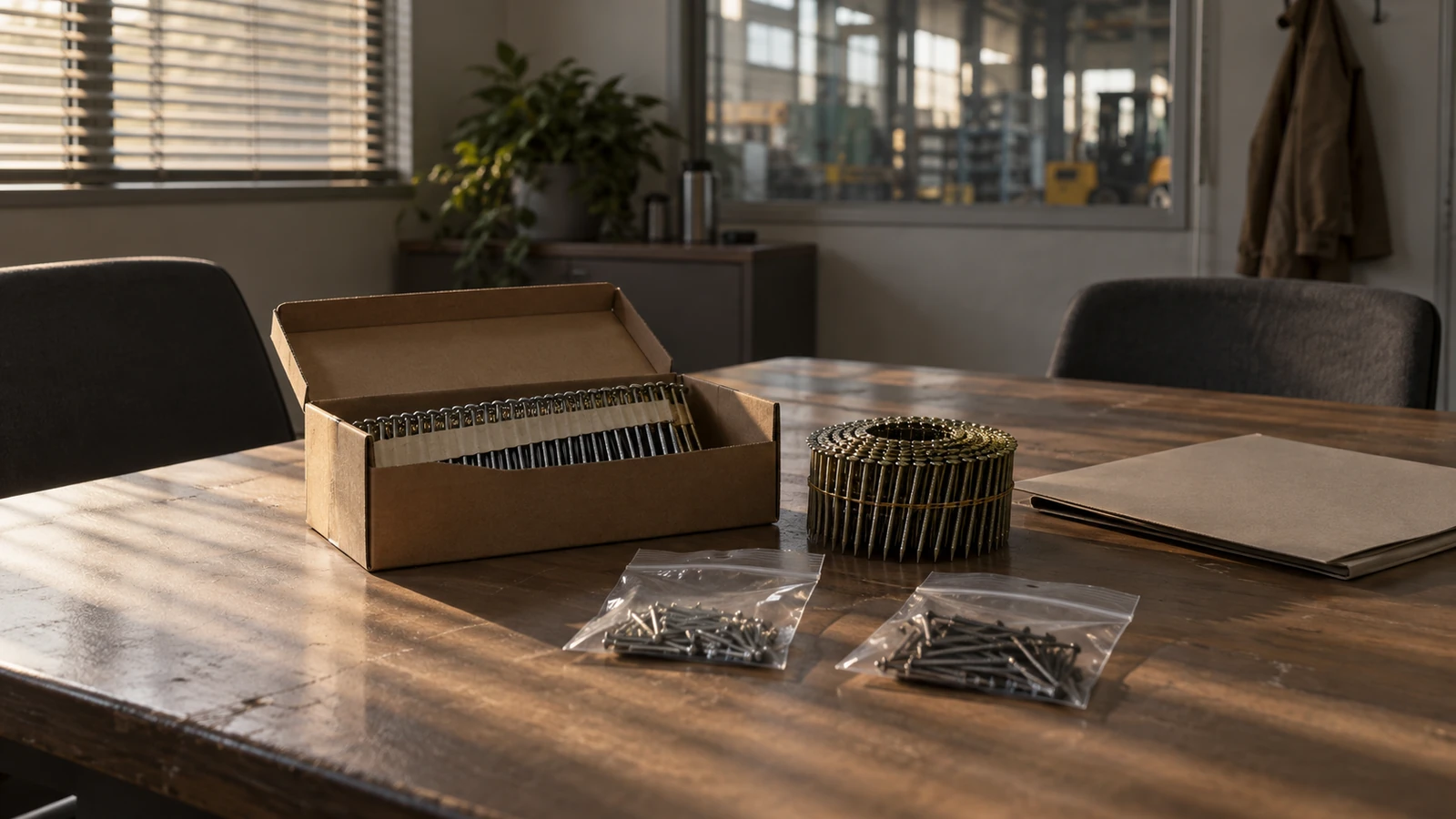
Before placing a bulk order, ask how the supplier protects the coils during shipping and storage. Check whether inner packaging keeps the nails organized. Confirm that carton labels clearly show size, finish, quantity, and specification.
Good packaging does not just make the shipment look professional. It helps the fastener arrive ready for use.
Understand what kind of supplier you actually need
A direct coil nails factory may be suitable if you want steady replenishment, clearer production control, and fewer communication layers. A spiral coil nails manufacturer may be a better fit when you need more technical discussion about coil format, collation, coating, or custom requirements.
A trading company can also be useful, especially if you need several related fastener products in one shipment or if your order mix is complex. The key is not the label. The key is whether the supplier can answer technical questions, control quality, and support repeat orders without confusion.
Buyers should not assume one sourcing model is always better. Instead, compare suppliers based on what your business actually needs: volume, response speed, specification control, packaging, documentation, and after-sales support.
Do sample testing with your own material
Skipping samples may save a few days at the beginning, then cost more later.
Even familiar fasteners should be tested in the real working environment. A coil nail that performs well in one wood material may behave differently in another. Tool settings also matter. So does the operator’s normal working speed.
During sample testing, watch the practical details:
Does the nail feed smoothly through the pneumatic nailer?
Does it drive cleanly without excessive splitting?
Does the head sit properly after firing?
Does the coil remain stable during handling?
Does the tool require unusual adjustment?
These small observations are more valuable than a perfect-looking product photo. A good supplier will welcome this process because it reduces the risk of later disputes.
Watch the small mistakes that create big costs
Most fastener sourcing problems do not start with one dramatic failure. They usually begin with ordinary oversights.
A buyer orders by product name but does not confirm exact size. A supplier sends a coating option that looks acceptable but does not suit the working environment. Cartons arrive with unclear labels. The nailer runs well during a short test but fails under repeated production use. Someone chooses the cheapest offer, then loses the saving through downtime and rework.
These mistakes are avoidable.
Before confirming an order, slow down and check the details that affect the bench, not just the invoice. Fasteners are small, but they sit directly inside the production flow. When they fail, they interrupt people, tools, materials, and deadlines at the same time.
Send a clear supplier brief before asking for the final quote
A better quote usually starts with a better brief.
When contacting a coil nails supplier, include the application, tool type, nail size, preferred finish, shank style, packaging needs, order volume, destination market, and any known restrictions. If you already use a fastener that works well, share the specification or sample reference.
A clear brief helps suppliers quote on the same basis. It also makes it easier to compare a factory, manufacturer, and trading company fairly.
| Information to Provide | Example |
|---|---|
| Application | Cabinet frame assembly, trim fixing, furniture production |
| Tool type | Pneumatic coil nailer model or magazine requirement |
| Nail specification | Length, diameter, head style, collation type |
| Finish requirement | Bright, coated, galvanized, or other option |
| Packaging need | Bulk cartons, pallet packing, export labeling |
| Order plan | Trial order, monthly volume, repeat shipment schedule |
This saves time on both sides. More importantly, it reduces the chance of receiving a product that is “close” but not correct.
Practical buyer questions
Can one supplier support several woodworking applications?
Often, yes. But the supplier must understand that different jobs may need different nail formats, finishes, or shank styles. Cabinet assembly, furniture framing, and trim installation should not automatically be treated as one identical use case.
Is the cheapest coil nails supplier usually the best choice?
Not usually. The lowest unit price may become expensive if the nails cause jams, damaged wood, poor drive quality, or inconsistent production. For regular workshop use, stable performance is often the better value.
What should I ask in the first conversation?
Start with tool compatibility, application, sample availability, batch consistency, packaging, and repeat-order support. If the supplier struggles to discuss these points clearly, the relationship may become difficult later.
Should I request samples before placing a bulk order?
Yes. Samples help confirm real tool performance and material suitability. They also show how the supplier communicates before money and volume are involved.
Final takeaway
The right coil nails supplier does more than ship cartons. It helps keep pneumatic nailers running, operators working, and finished parts moving through production with fewer interruptions.
Before comparing prices, confirm compatibility. Before approving bulk supply, test samples. Before trusting a repeat order, check whether the supplier can maintain the same specification, packaging standard, and communication quality over time.
For cabinet shops, furniture producers, trim installers, and small-batch wood fabricators, that approach usually leads to a better buying decision. A few careful questions at the beginning can prevent many costly surprises once the nails reach the shop floor.