
How to Choose a Coil Nails Supplier for Real Workshop Use
A coil nails supplier may look like a small purchasing choice on paper. In a busy cabinet shop or furniture workshop, it can quietly decide how the whole afternoon goes. One batch feeds smoothly through the pneumatic nail gun. Another batch jams, bends, or leaves the operator tapping the magazine instead of building frames.
That difference is not minor.
For cabinet makers, trim installers, furniture builders, pallet shops, and small-batch wood fabricators, coil nails are part of the production rhythm. They affect joint cleanliness, tool stability, assembly speed, and rework. When several wood parts are waiting on the bench and the air hose is already stretched across the floor, poor fasteners become visible very quickly.
This guide is written for buyers who need more than a low catalog price. It will help you judge whether a supplier can support practical woodworking, light assembly, cabinet framing, fixture work, and repeated shop use.
 Start with the application before asking for a quotation
Many buyers begin with price. That is understandable, but it is not always the best first question.
Before comparing suppliers, define where the nails will be used. Are they for cabinet boxes? Wooden frames? Trim strips? Furniture subassemblies? Packaging crates? Each job puts different pressure on the fastener. Some applications need clean appearance. Others need stronger holding power. Some require smoother feeding because operators are working through repeated cycles all day.
A reliable coil nails supplier should ask about the actual use case, not only the order quantity. If the supplier understands your workshop environment, they can help narrow the nail length, shank type, finish, collation style, and packaging format. If they only send a price sheet, you may still get product, but not necessarily the right product.
For small and medium workshops, this matters. Waste does not always come from the nail price itself. It often comes from slow assembly, broken wood edges, tool stoppages, and inconsistent results.
Know whether you are buying from a coil nails factory or a trading company
A trading company is not automatically a bad choice. Some traders are organized, responsive, and technically capable. Still, buyers should know who is behind the product.
A direct coil nails factory usually has a closer view of production control, material sourcing, coating, collation, packing, and batch stability. That can be useful when you need repeat orders with the same basic performance. It also matters when you are comparing galvanized finishes, smooth shank versus ring shank options, or specific coil formats for your tools.
If a company calls itself a spiral coil nails manufacturer, ask practical questions:
| What to Ask | Why It Matters |
|---|---|
| Can you confirm the compatible nail gun type? | Reduces trial-and-error testing |
| How are nail dimensions controlled? | Helps prevent misfeeds and inconsistent driving |
| What packaging protects the coils during transit? | Avoids crushed or loose coils before use |
| Can you support repeat orders with the same specification? | Keeps workshop production stable |
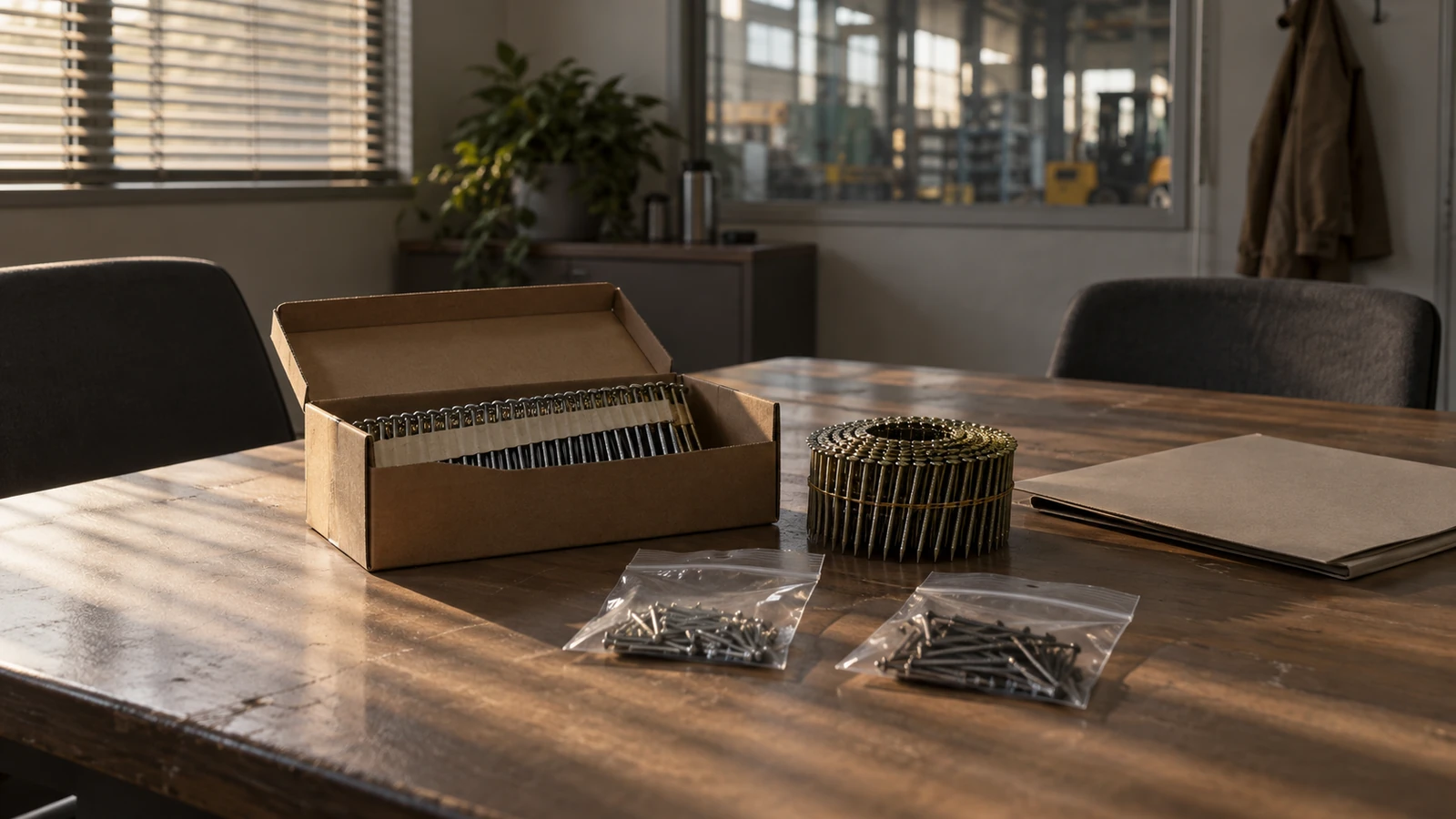
| Do you provide samples before bulk purchase? | Allows tool and material testing |
You do not need complicated technical talk. You need clear, steady answers. A serious manufacturer can usually explain the product in plain language.
Check nail gun compatibility before everything else
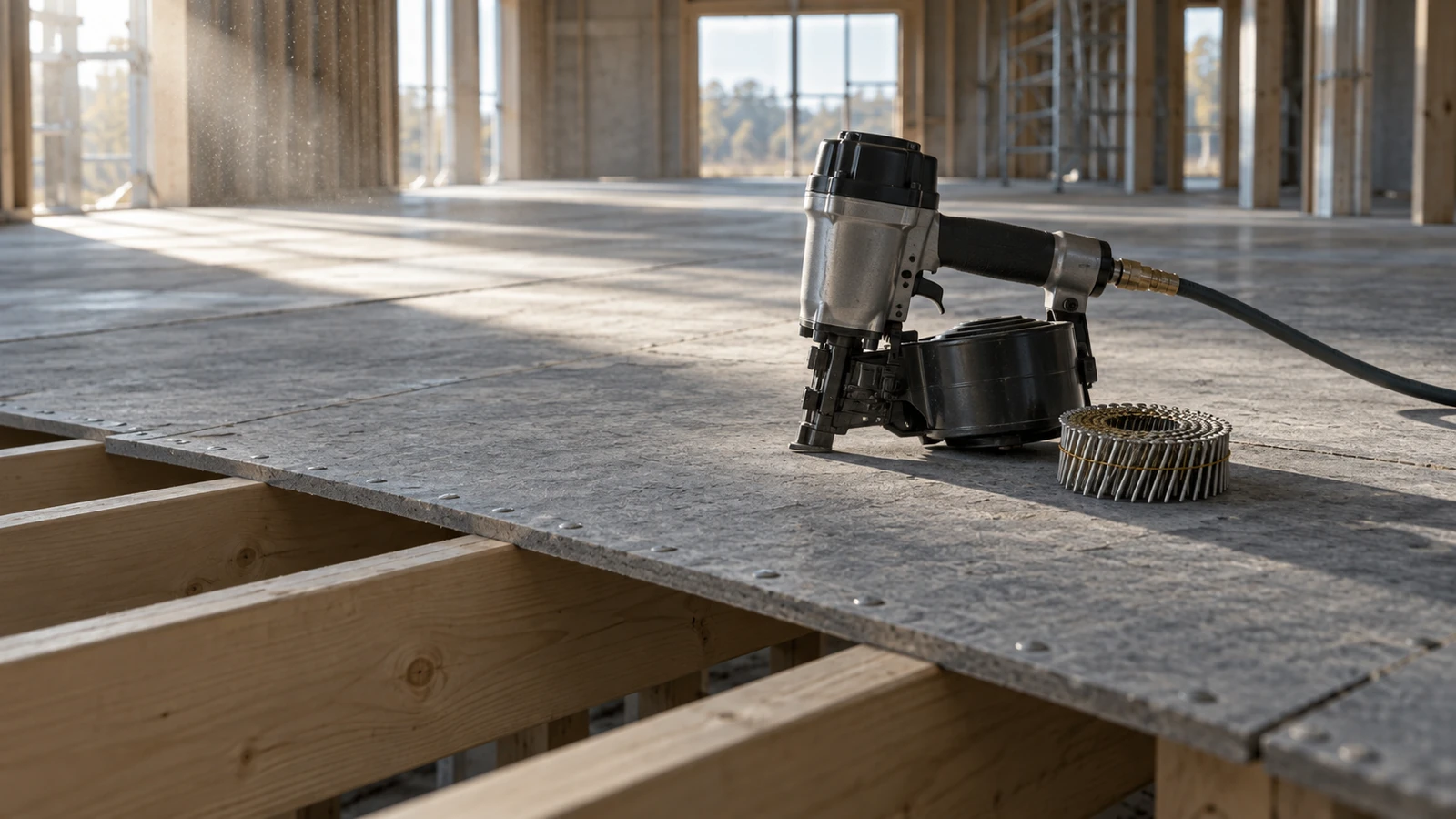
The pneumatic nail gun is not just an accessory. It is the system that decides whether the fastener works in real production.
A coil nail must match the tool magazine, feed angle, wire or plastic collation type, nail diameter, and length range. If the nail does not sit properly, the result may be misfeeding, double firing, weak driving, or extra wear on the tool. In some cases, the nail may technically “fit” but still perform poorly during repeated use.
That is why tool compatibility should be confirmed before price negotiation becomes serious.
Send the supplier your tool model, nail size, current fastener sample, or application photo if available. A useful supplier will respond with a specific recommendation instead of a vague “yes, it works.” In woodworking shops where several pneumatic tools are used—brad nailers, finish nailers, staplers, and coil nailers—this step prevents a common mistake: assuming one fastener format fits every job.
Do not judge a supplier only by the lowest price
Low pricing feels attractive when fasteners are bought in cartons or pallets. But with coil nails, inconsistency can become more expensive than the saving.
Uneven coil winding may cause feeding problems. Poor coating control may affect appearance or corrosion resistance. Slight dimensional drift can make a nail gun less stable. Weak packaging may allow the coils to deform during shipping. None of these problems looks dramatic in a quotation sheet, but they show up during actual assembly.
For cabinet and trim work, the damage is even more annoying. A split edge, visible mark, or loose joint can slow finishing work and affect the final look of the product. Operators may begin adjusting their technique to compensate for poor fasteners, which only hides the problem for a while.
A dependable coil nails supplier should be able to discuss consistency clearly. Ask how they manage batch control, how they inspect finished products, and whether they can keep the same specification for repeat orders. The answer does not need to be fancy. It simply needs to be direct.
Use samples to test the supplier, not only the product
Samples are more than a few nails in a small box. They are a test of communication.
A good sample process tells you how the supplier handles technical questions, small details, shipping arrangements, and follow-up. If they are slow, vague, or careless before the first order, the situation rarely improves after payment.
When testing coil nails, pay attention to four points:
- Do the nails feed smoothly through your pneumatic nail gun?
- Do they drive cleanly into your actual wood material?
- Does the collation remain stable during handling?
- Does the supplier explain the result and suggest adjustments when needed?
For cabinet assembly, trim work, and general shop joinery, this is often more useful than a polished brochure. The right supplier should help you avoid unnecessary guesswork.
Packaging is part of product quality
Coil nails are compact, but they are not impossible to damage. Poor packing can bend the coil, loosen the collation, crush cartons, or create storage problems in the workshop.
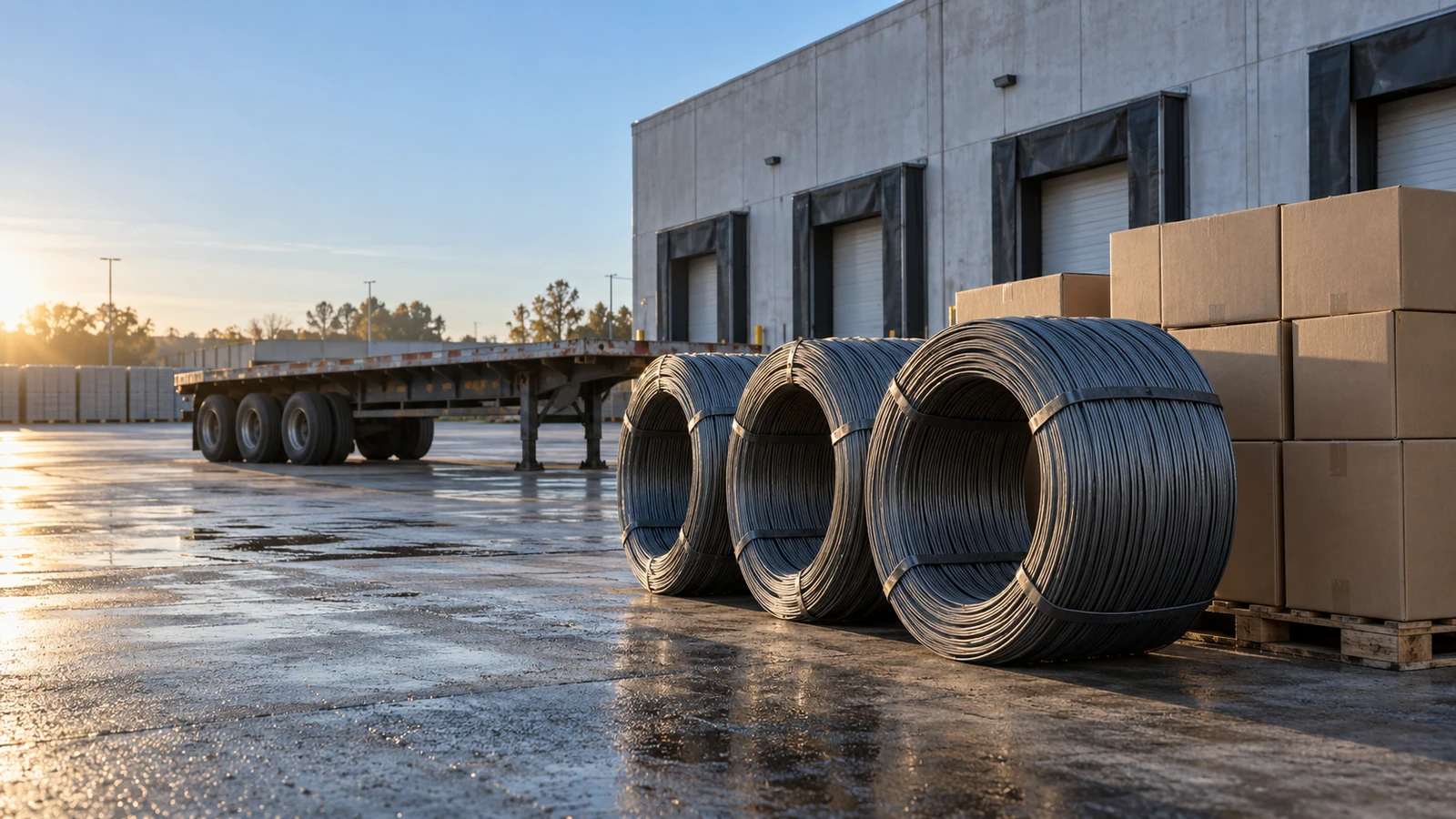
This is especially important for buyers who import bulk quantities. A product may leave the factory in good condition but arrive poorly if carton strength, palletizing, moisture protection, or internal arrangement is weak. Once the coil shape is damaged, the nail gun may not feed properly. At that point, the problem is no longer cosmetic—it affects production.
Ask your supplier how they pack the product for export, warehouse storage, and workshop handling. Clear labeling also matters. Workers should be able to identify nail length, diameter, finish, and quantity without opening every carton.
A strong packaging system usually suggests better operational discipline. It shows the supplier understands that the product has to survive the journey before it can perform on the bench.
Match finish and shank style to the woodworking task
Not every woodworking job needs the same nail.
Some cabinet or trim applications focus on neat appearance and reduced wood splitting. Other jobs need stronger withdrawal resistance or better holding power. Outdoor or semi-exposed uses may require a finish that offers better corrosion resistance. General indoor assembly may place more importance on smooth feeding and cost control.
A supplier who offers only one “best” option for every job may not be thinking carefully enough.
Before ordering, explain the wood type, part thickness, final use environment, and expected holding requirement. Then ask why a certain nail style is recommended. A helpful supplier will explain the tradeoff instead of overselling one universal answer.
Review documentation before approving the invoice
Documentation does not need to be complicated, but it should be clear.
At minimum, product information should identify the nail type, size, finish, collation method, carton quantity, and suitable application range. For repeat purchasing, this helps prevent quiet specification changes. It also gives your purchasing and production teams the same reference point.
For a buyer working with a spiral coil nails manufacturer, documentation is even more useful because small product differences may not be obvious in photos. Two nails can look similar but behave differently in a tool or wood material.
Before placing a bulk order, review:
| Document or Information | Buyer Benefit |
|---|---|
| Product specification sheet | Confirms size, finish, and type |
| Packing details | Helps plan storage and logistics |
| Sample confirmation | Reduces mismatch risk |
| Quality control notes | Shows how consistency is managed |
| Application guidance | Helps match fastener to real use |
Good documentation protects both sides. It reduces confusion when orders are repeated months later.
Choose a supplier who understands production pressure
A fastener is small. The delay it causes may not be.
When operators are assembling cabinet frames, wooden crates, furniture parts, or trim sections, every interruption breaks the pace. A jammed tool, a bent nail, or a damaged coil can slow the line and frustrate the worker. The supplier who understands this will care about more than shipping boxes.
They will answer questions carefully. They will explain product limits. They will not quietly change specifications. They will help you identify the right fastener before the purchase becomes a problem.
That is the kind of coil nails supplier worth keeping.
Common mistakes buyers should avoid
Some purchasing mistakes repeat again and again.
One is choosing by price before checking tool compatibility. Another is assuming that all coil nails with a similar appearance perform the same. A third is ignoring packaging until the first damaged shipment arrives. Many buyers also forget to test fasteners in the actual wood material used in production.
These mistakes are ordinary, but they are costly. The better approach is simple: confirm the application, test the sample, review packaging, and only then compare the final price.
FAQ
How do I know if a coil nail will fit my pneumatic nail gun?
Share your nail gun model, required nail length, collation type, wire angle, and current fastener sample with the supplier. A responsible supplier should confirm compatibility in specific terms, not only by saying “standard size.”
Is it better to buy from a coil nails factory?
Buying from a coil nails factory can give you clearer control over production details, repeat orders, and customization. However, a technically strong trading company may also work well if it provides accurate specifications and reliable communication.
Why do coil nails jam in a nail gun?
Common reasons include poor coil winding, damaged collation, incorrect nail angle, wrong size, weak packaging, or mismatch with the tool magazine. Testing samples before bulk purchase is the safest way to reduce this risk.
What should I check before placing a bulk order?
Check tool compatibility, nail size, finish, shank type, packaging strength, sample performance, lead time, and repeat-order consistency. Do not rely on catalog images alone.
Are coil nails suitable for cabinet and furniture assembly?
They can be suitable for some assembly tasks, especially where speed and repeated fastening are important. For delicate trim or visible finish work, buyers should confirm whether coil nails, brad nails, or finish nails are the better fit.
Practical buyer takeaway
Choosing a supplier is not only about finding the lowest carton price. For woodworking and light assembly, the better decision comes from checking compatibility, consistency, packaging, documentation, and communication.
When you compare two or three suppliers, look at how they answer practical questions. Can they explain which nail works with your tool? Can they support samples? Can they protect the coils during shipping? Can they keep repeat orders stable?
If you are sourcing for cabinet assembly, trim work, furniture production, or shop joinery, that sequence will usually lead to a better long-term partner than chasing the cheapest first quote. A dependable coil nails supplier helps the pneumatic nail gun stay productive, the workbench stay moving, and the finished product leave the shop with fewer avoidable problems.