
Why buyers still care about collated nails in China
When sourcing collated nails in China, most buyers are not just comparing unit price. They are trying to balance feed reliability, finish quality, packaging consistency, and whether the supplier can keep up with real production schedules. That matters whether you are running a woodworking line, kitting trim-installation jobs, or buying fasteners for resale. A cheap box of nails that jams, bends, or arrives with inconsistent strip bonding can cost more than a slightly higher-priced order from the start.
There is also a practical reason this category gets so much attention: collated nails sit right at the point where tool performance meets production efficiency. If the collated strip does not feed cleanly, the nailer slows down. If the finish is wrong, the fastener can stain, corrode, or show too clearly in the workpiece. Buyers looking for a nails manufacturer China or a nail supplier China usually need more than a factory name; they need a supplier that understands how the nail, the strip, and the tool interact.
What the fastener has to do in the real world
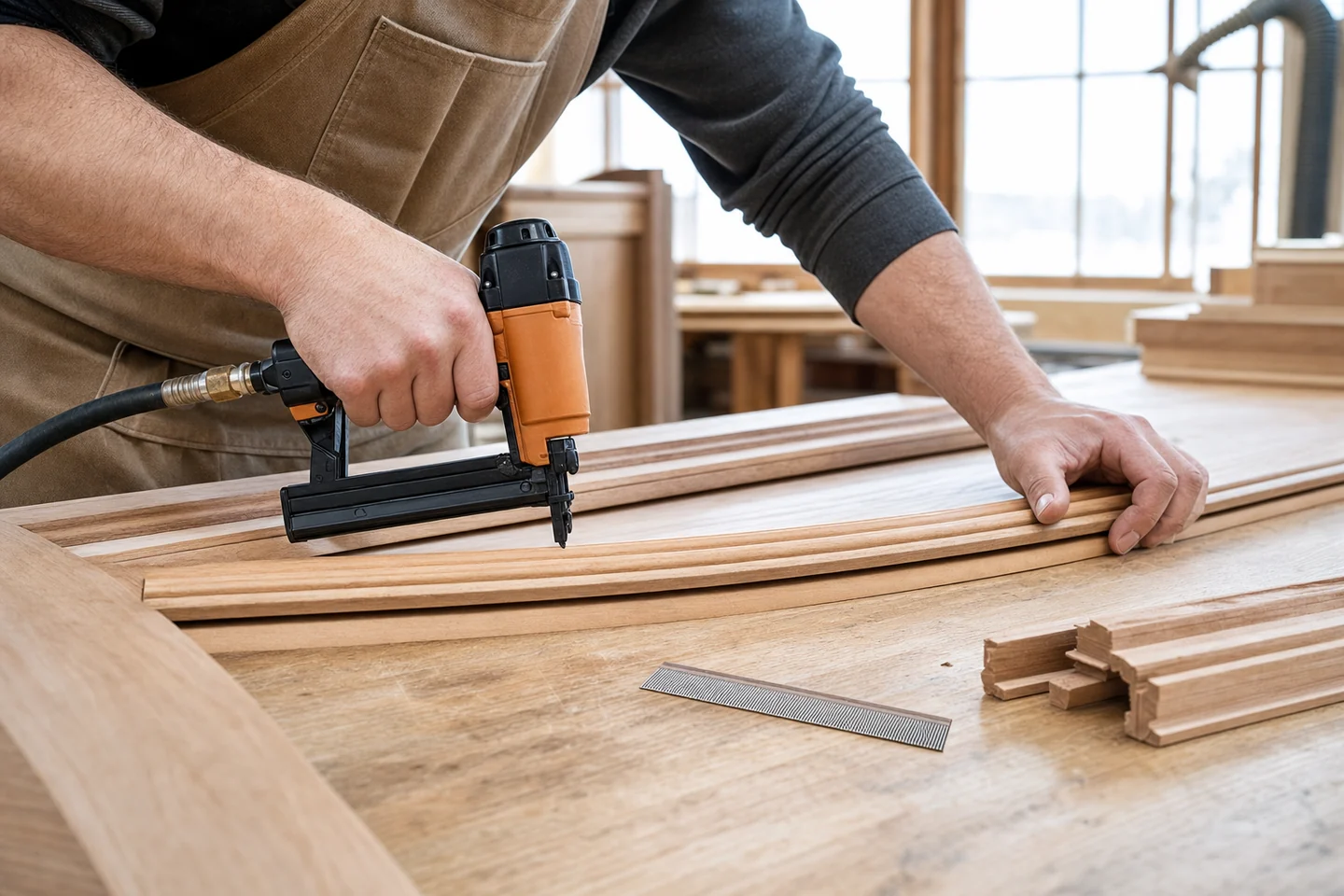
The visible application here is a pneumatic 23-gauge headless pin nailer used for fine woodworking. That is a useful reference point because it shows the kind of job these fasteners are expected to handle: thin trim, delicate moldings, cabinet parts, decorative edging, and other joints where a visible head would be a problem. In those settings, the fastener is less about brute holding power and more about placement, appearance, and repeatable feeding.
Not every buyer needs the same collating style. Some operations want strip nails for framing or finish work. Others need headless pins for light-duty assemblies. The right choice depends on the tool, the substrate, and the amount of visible fastener you can tolerate. That sounds obvious, but it is where many purchasing mistakes begin.
Key points to check before placing an order
1. Nail type and gauge
The supplied product context points to 23-gauge headless pins. That is a narrow fastener used for discreet fastening. Buyers should match gauge to the job instead of assuming a thinner nail is always better. A smaller fastener leaves a cleaner mark, but it also has different holding behavior.
2. Collation quality
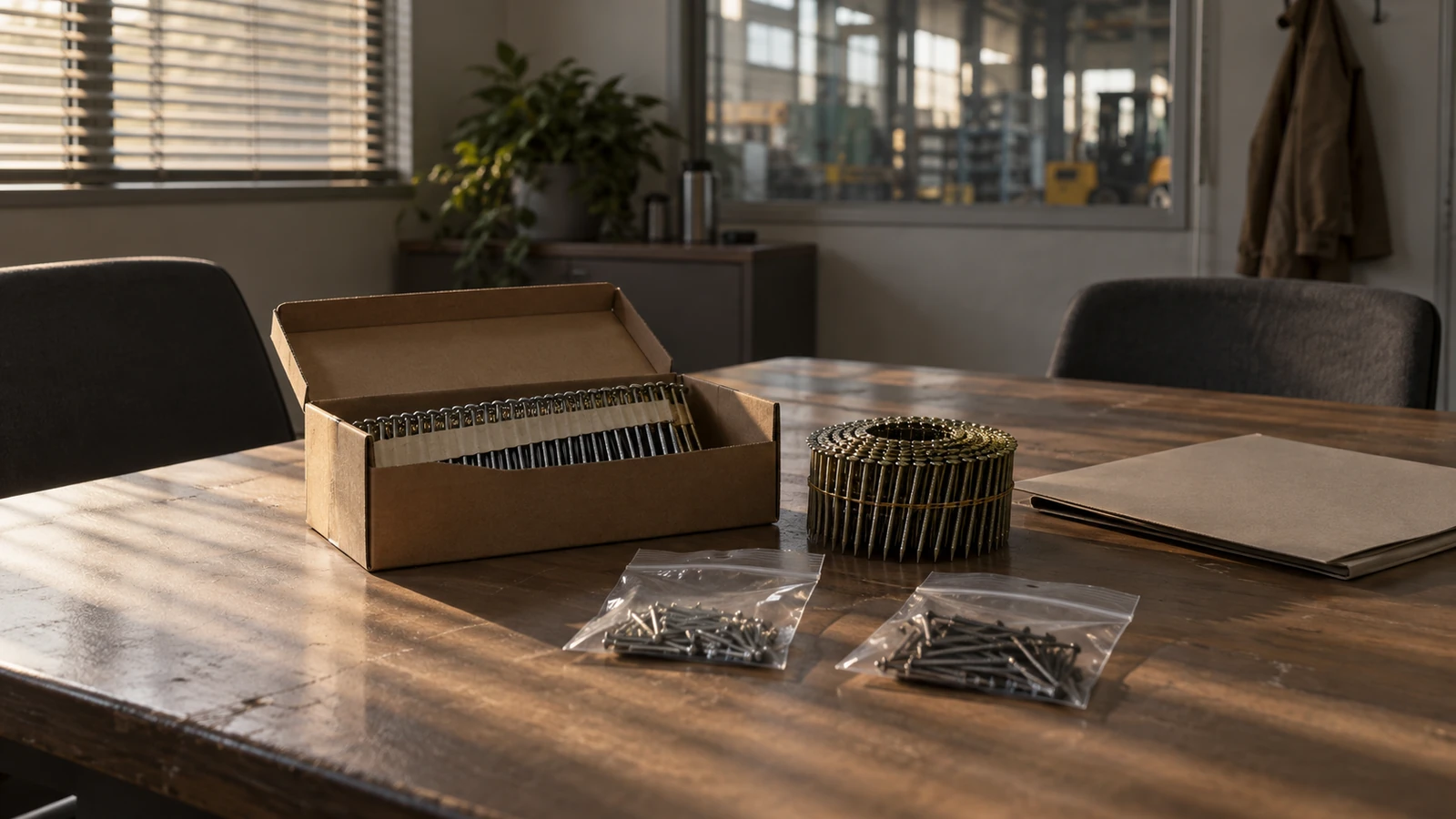
With collated nails, the strip itself is part of the product. Poor collation can lead to feeding issues, broken strips, or partial jams. In practice, a supplier should be able to explain the collating format and the packaging method clearly. If that explanation is vague, treat it as a warning sign.
3. Finish and surface behavior
For interior woodworking, finish matters because it can affect appearance and sometimes compatibility with coatings or adhesives. The exact finish was not supplied here, so buyers should ask for the coating type and application intent rather than assuming all fasteners are interchangeable.
4. Consistency from batch to batch
Manufacturing users care about consistency more than marketing language. Nail length, strip alignment, and coil or strip stability should remain steady across orders. A supplier may look fine on a sample shipment and still struggle on repeat production. That is why documentation and sample approval matter.
How this relates to pneumatic woodworking tools
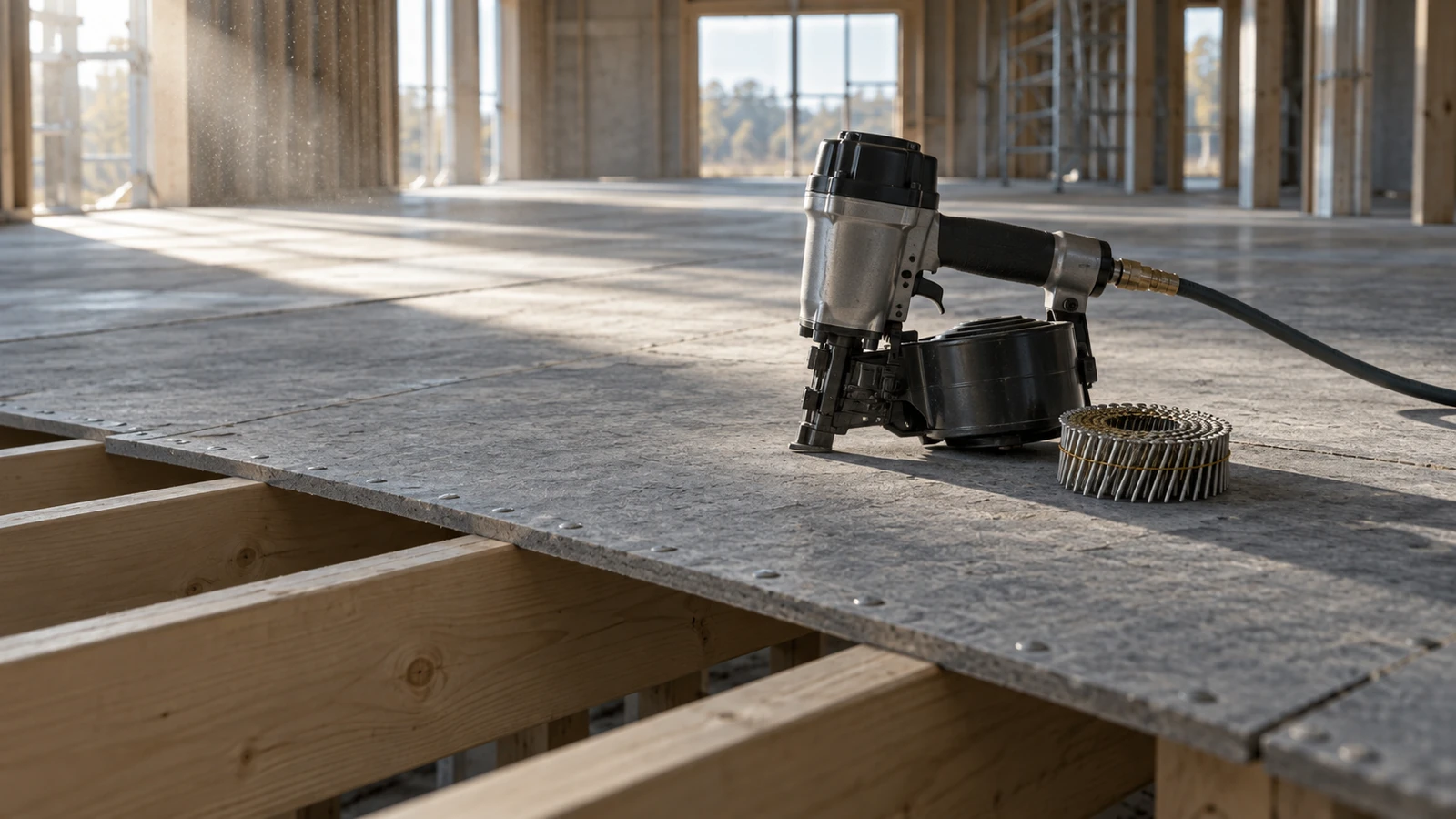
The image context shows a pneumatic pin nailer with a metal magazine and nose connected to an air hose. That setup is common in finish carpentry and cabinetry because air-powered tools can drive fasteners quickly and with good control. For buyers, the takeaway is simple: the nail spec cannot be separated from the tool spec. If the nail and tool are mismatched, even a decent fastener can perform badly.
Woodworkers using thin trim or curved strip wood often want a fastener that disappears visually and holds parts in place while glue cures. That is a narrower requirement than heavy structural fastening, so it makes little sense to overbuy. A buyer who understands the end use can avoid paying for the wrong category of product.
Common sourcing mistakes
One frequent mistake is treating all suppliers as interchangeable once the dimensions look similar. Another is focusing only on the lowest quote and ignoring packaging and feeding performance. A third is failing to confirm whether the product is meant for a specific nailer type. In fastener sourcing, these details are not minor. They determine whether the goods are usable on arrival.
It is also worth being cautious about overclaiming from photos alone. An image may show a neat strip of headless pins and a clean tool setup, but that does not reveal operating pressure, nail length range, or long-run durability. Good buyers ask for the missing data instead of filling in the blanks with assumptions.
Practical buyer advice
If you are comparing suppliers, ask for sample strips, packaging photos, and clear dimensional data. If your use case is cabinetry, trim, picture frames, or light furniture assembly, verify whether the supplier has served similar applications. That does not require a grand customer story; it just means the factory should understand the usage environment.
For sourcing teams, the most useful questions are often the dull ones: How are the strips collated? What finish is used? How is the product packed to prevent damage in transit? Can the supplier keep dimensions consistent across repeat lots? Those answers matter more than a glossy brochure.
FAQ on collated fastener sourcing
Are collated nails only for construction?
No. They are widely used in woodworking, cabinetry, trim, furniture assembly, and other manufacturing settings where speed and feeding reliability matter.
Do headless pins replace every other nail type?
Not at all. They suit delicate, low-visibility work. Heavier jobs need different fasteners.
Should I choose a China supplier only on price?
Price is part of the decision, but feed consistency, packaging, and repeatability usually decide whether the purchase is successful.
Next step for buyers
If you are evaluating collated nails in China, start with the end use, the tool compatibility, and the packaging standard, then move to price. That order saves time and avoids the common trap of buying a product that looks right on paper but performs badly in production. A capable supplier should be able to answer the basic technical questions without making the conversation feel like a guessing game.