
Why collated nails matter in high-volume woodworking
If you are comparing a collated nails manufacturer for pallet lines, framing crews, or crate production, the real question is rarely just price. It is whether the fastener will feed cleanly, drive consistently, and keep your operation moving without tool jams or rework. In plant environments where every second counts, a weak nail spec can slow an entire station.
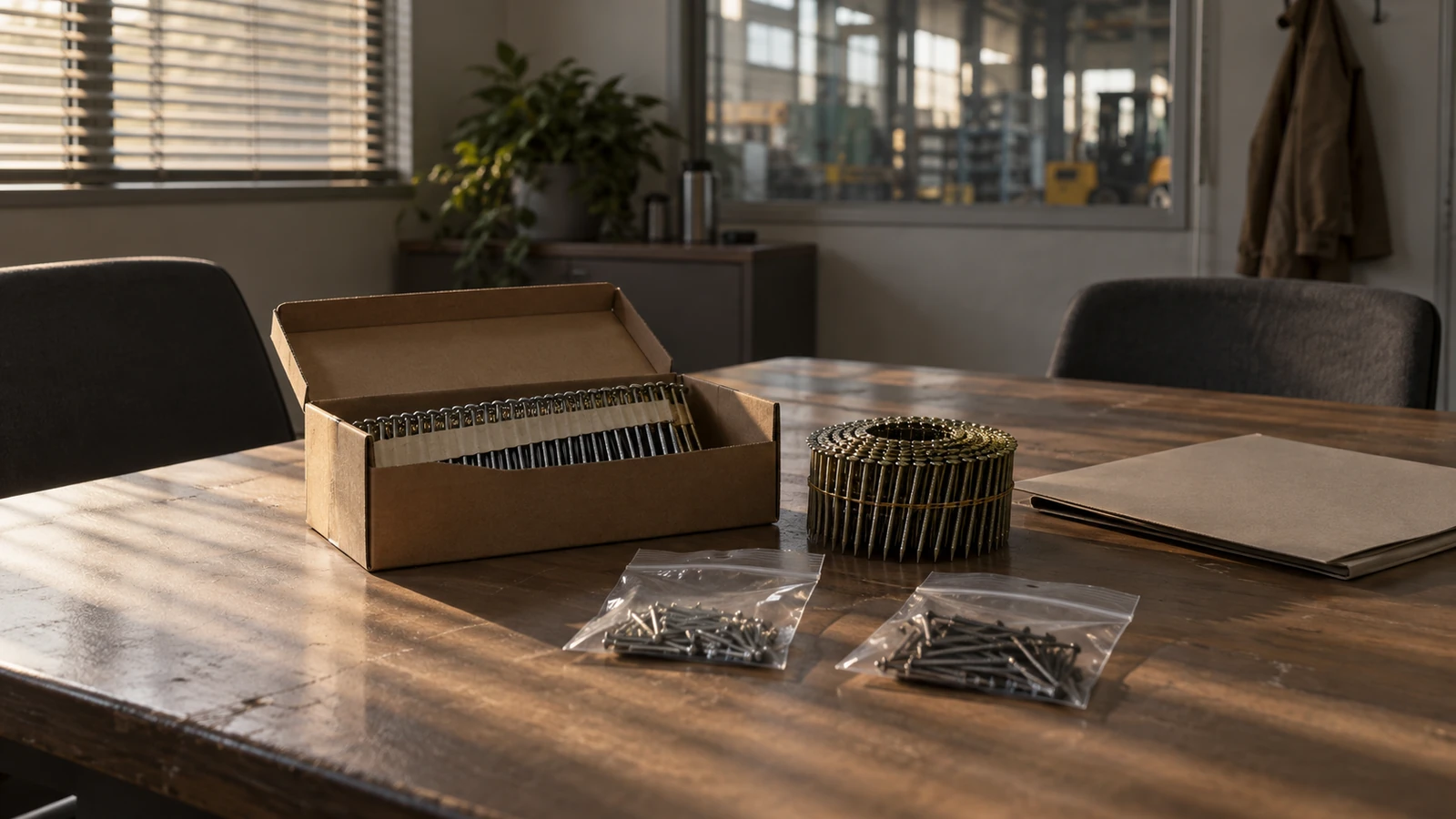
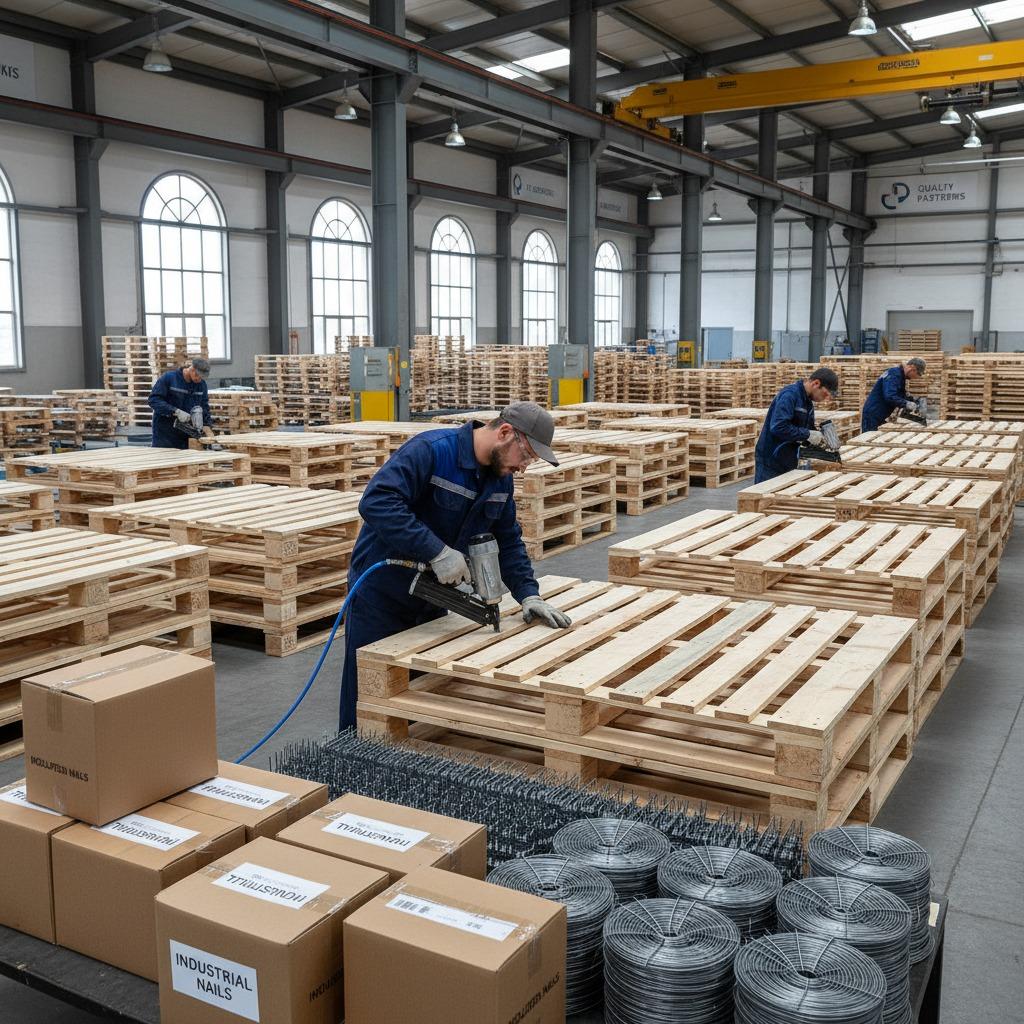
Collated pneumatic nails are built for speed. They are grouped into strips or coils so pneumatic nailers can fire repeatedly with minimal handling. That makes them a practical choice for pallet making, packaging crates, wooden framing, fencing, and other repetitive fastening jobs. The carton markings in the supplied material point to industrial use: “COLLATED NAILS,” “QTY: 7200 PCS,” “SIZE: 2.8x63.5,” and “HOT DIP GALVANIZED.” Those details suggest a product meant for hard service, not casual carpentry.
What buyers usually need from a collated nails supplier
When sourcing from a collated nails supplier, most buyers are trying to solve three problems at once: fit, feed, and finish. Fit means the nails must match the nail gun and the workpiece. Feed means the strips or coils must move through the tool without interruption. Finish means the coating or surface treatment should hold up in storage and in service.
That last point is easy to underplay. In pallet and crate work, the fastener is part of a logistics chain. If nails arrive corroded, poorly collated, or inconsistent in length, the cost shows up later as tool stoppages, split wood, or failed assemblies. A bargain order can become expensive very quickly.
Common collated nail formats and what they imply
Strip-collated nails
Strip-collated nails are organized in rows and are common in framing and general woodworking. They usually suit high-speed nailing where the tool is loaded often and the operator needs predictable feeding. The visible packaging in the provided data appears to show bundled collated strips, though the exact collation material is not fully confirmable from the image alone.
Coil-collated nails
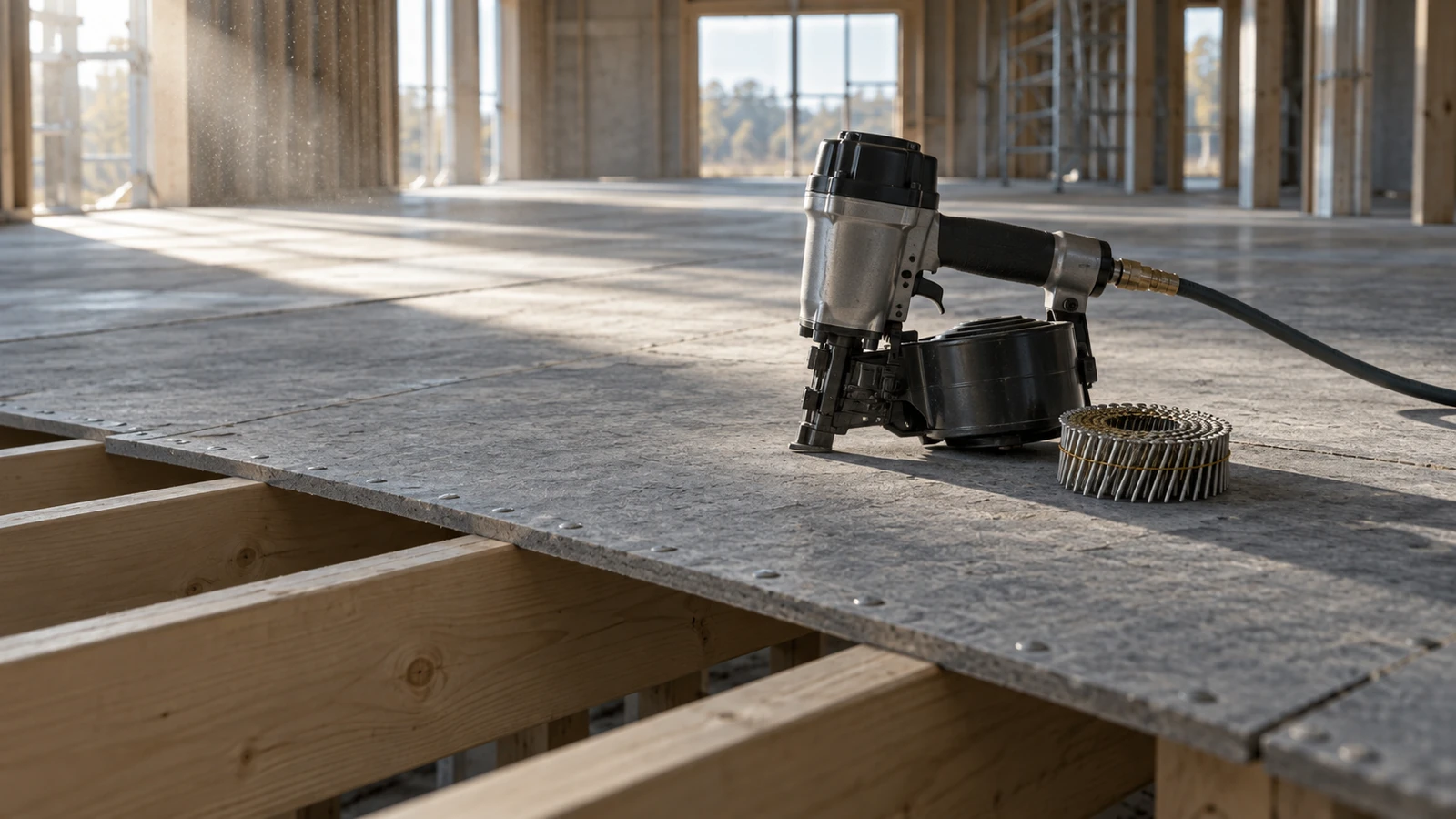
Coil nails are typically used in very high-volume applications such as pallet manufacturing and crate assembly. The coil format can reduce reload frequency, which is useful on production lines. In practice, this can matter as much as nail hardness or coating choice, because downtime from reloading is still downtime.
What to look for in a collated nails factory
Evaluating a collated nails factory is partly about manufacturing discipline and partly about product consistency. A good fastener plant should be able to explain how the wire is formed, cut, coated, and collated, and how it checks for dimensional consistency along the way.
For the buyer, the most useful questions are straightforward: Are the nails properly aligned in the collation? Is the coating compatible with the intended environment? Do the dimensions match the nailer and the substrate? And can the factory keep specification uniform across repeat orders?
The “HOT DIP GALVANIZED” marking is worth noting. In general terms, hot-dip galvanizing is used when corrosion resistance matters more than a bare-metal finish. That does not eliminate rust risk in every setting, but it is a meaningful indicator for outdoor storage, shipping exposure, or humid facilities.
Buying collated nails wholesale without creating shop-floor problems
Collated nails wholesale buying often looks simple on paper: large quantity, lower unit cost, and regular replenishment. But bulk purchasing only pays off if the inventory stays usable and the nailer runs cleanly. A warehouse full of the wrong strip angle or a coating that does not suit the tool can become dead stock.
For sourcing managers, the safest approach is to lock down the specification before you scale volume. Confirm the size format, collation style, finish, and intended tool model. If the order is for pallet production, it may also be worth checking whether the nails are optimized for dense hardwood, softwood, or mixed materials. That detail is often missed until the first production run.
Practical selection criteria for engineers and buyers
Start with the application, not the catalog. Pallet repair, crate building, and framing do not always demand the same fastener profile. Then check the feeding behavior in the actual nailer, because tool compatibility is where many sourcing mistakes begin. Finally, look at corrosion resistance, storage conditions, and packaging quality. Industrial fasteners sit in cartons, warehouses, and containers before they reach the line; they need to survive that trip intact.
One useful caution: do not assume that two collated nails with the same visible size marking will behave the same in production. A change in collation angle, coating, or surface finish can alter feed performance. That is the kind of small variation that procurement teams sometimes overlook and operators notice immediately.
Questions worth asking before placing an order
Ask whether samples are available for tool testing. Ask how the nails are packed for shipment and whether cartons are marked clearly for traceability. Ask if the factory can maintain consistent collated strips across large runs. And if the nails are for pallet or crate work, ask what environment they are meant for: indoor dry storage, mixed indoor-outdoor handling, or harsher exposure.
Those questions may sound basic, but they separate a functional fastener purchase from a disruptive one.
Next step for sourcing teams
If you are shortlisting a collated nails manufacturer, compare not only price but also product marking, finish, and feed reliability. A supplier that can show clean packaging, clear sizing, and a stable industrial spec is usually easier to work with than one that offers a low number and little else. For recurring demand, request samples and test them in the exact nailer and line setup you use today.
That is the quickest way to find out whether the fastener belongs in your production flow or just looks good on paper.