
Why buyers keep coming back to collated nails
A collated nails manufacturer sits in a very practical corner of the fastener market: making it possible to fasten wood quickly, repeatedly, and with less hand fatigue than loose nails ever could. For pallet lines, crate shops, furniture sub-assembly, and general timber work, the question is usually not whether nails are needed, but whether the supply is consistent enough to keep pneumatic tools running without stoppages.
That is where the buying decision gets real. A collated nails supplier is not just selling steel in a box. They are supplying a fastening format that has to feed cleanly through a nail gun, arrive in usable bulk packaging, and hold up in production conditions where dust, vibration, and speed are everyday issues. If the collation fails or the coating is poorly matched to the job, the whole line pays for it.
What the product is doing on the shop floor
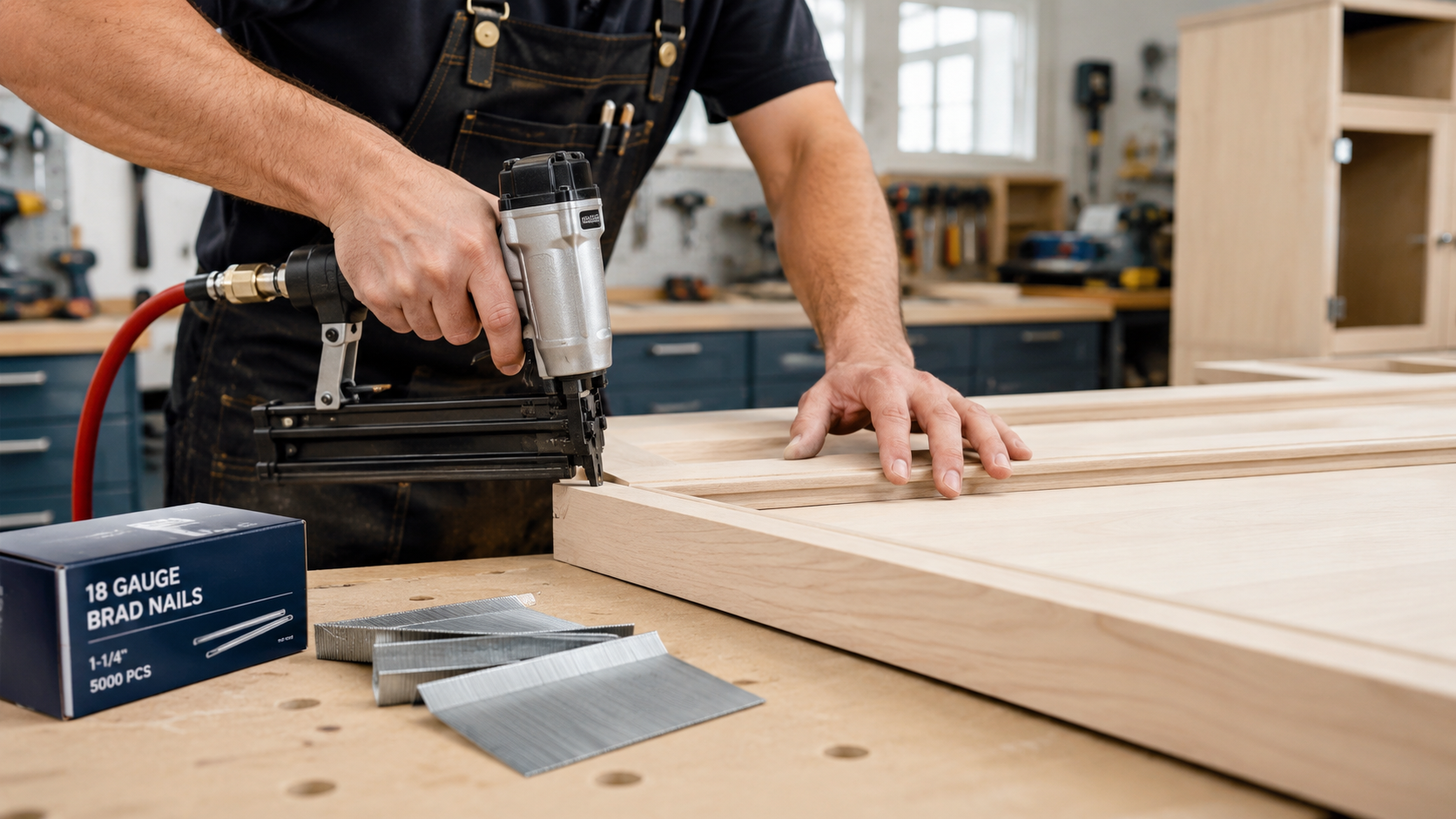
The application is straightforward: collated pneumatic nails are used with pneumatic nailers or nail guns to fasten timber components rapidly. In the kind of pallet or furniture assembly scene often associated with these products, workers are driving nails into slats and frames at speed, one after another, with far less handling than manual nailing would require.
The packaging in this category often signals bulk supply. Boxes marked “COLLATED NAILS” and “INDUSTRIAL NAILS” point to a wholesale format rather than retail convenience packs. One visible box reference shows “QTY: 7200 PCS,” “SIZE: 2.8x63.0…,” and “HOT DIP GALVANIZED,” although that line is only partially visible and should be treated cautiously. Still, it tells a buyer something important: these are being positioned as production fasteners, not occasional hardware.
Strip or coil: what matters more than the label
From the supplied product information, the nails appear in straight collated strips and possibly coils, but the exact collation type is not fully clear. That detail matters because the feeding system must match the tool. A shop that orders by appearance alone can end up with a warehouse full of fasteners that look right and do not run right.
For buyers, the practical check is simple
Confirm the nail format your pneumatic nailer accepts before comparing prices. A collated nails factory may produce multiple formats, and a collated nails wholesale offer only helps if the strips or coils actually match the magazine and feed angle of your equipment. It sounds basic, but this is one of the easiest procurement mistakes to make.
Material, finish, and why the coating matters
The visible nails have a bright silver, galvanized-looking finish, and some collating material or coating appears yellow or orange. The exact base metal cannot be identified from the image alone, so it would be unwise to assume a specific wire grade or performance level.
What can be said with confidence is that surface finish matters in real use. A galvanized or hot-dip galvanized finish is often selected when the nails will see more demanding handling or exposure than a plain interior-only fastener. In pallet making, crate assembly, and many shop-floor woodworking operations, corrosion resistance may not be the headline requirement, but it is still part of the service life equation.
How to evaluate a collated nails manufacturer
The smartest sourcing teams look beyond price per box. They ask how the nails are collated, how consistently they feed, what finishes are available, and whether packaging is designed for production storage as well as transit.
A useful evaluation usually includes these points:
Feed reliability
If the nails jam, split, or misfeed, production slows immediately. This is where collation quality shows up more clearly than any sales sheet.
Dimensional consistency
The supplied information suggests a medium-length, thin-gauge industrial nail, but exact dimensions are not confirmed. Buyers should verify size, head style, and shank details against their tool requirements.
Coating suitability
A finish that looks good on paper may not be the right fit for the environment. Indoor furniture work, pallet repair, and packaging lines do not always need the same corrosion performance.
Packaging clarity
Wholesale fasteners should be labeled in a way that helps receiving teams and line operators avoid mix-ups. Mixed bins create avoidable waste.
Common mistakes when sourcing industrial nails
One frequent error is assuming all collated nails are interchangeable. They are not. Even when the length seems close, the collation angle, strip material, and magazine compatibility can differ.
Another mistake is focusing only on shiny finish. A bright, galvanized-looking nail may look robust, but the buyer still needs to confirm the intended application. For interior-only furniture sub-assembly, over-specifying corrosion resistance can raise cost without much benefit. For pallet and crate use, the opposite may be true.
A third issue is underestimating packaging volume. If a line consumes fasteners quickly, the supply plan should be built around uninterrupted use, not just unit price.
What a good purchasing decision looks like
The right choice is usually the supplier that can explain the nail format clearly, support repeat orders, and keep the product description honest. If a collated nails manufacturer cannot confirm the collation type, finish, or size range with confidence, that is a signal to slow down and request samples or technical details before committing.
For sourcing managers, the real decision is not simply who has the lowest quote. It is who can keep a pneumatic fastening line moving without surprises.
Next step for buyers
If you are comparing a collated nails manufacturer against a collated nails supplier or looking for collated nails wholesale pricing, start with the tool compatibility question, then work outward to finish, packaging, and production volume. That sequence saves more time than arguing over catalog language.
Ask for the exact nail size, collation format, coating specification, and carton quantity before you place a production order. On fastener lines, those are the details that usually decide whether the product is merely acceptable or genuinely useful.