
Why buyers search for a collated nails manufacturer in the first place
If you are sourcing fasteners for pallet lines, crate assembly, or general woodworking, the phrase collated nails manufacturer usually means more than just “who can sell me boxes of nails.” It is really a search for consistency: the right collation format, the right finish, predictable feed behavior in pneumatic nail guns, and a supply chain that can keep up when production ramps.
That matters because collated nails are not a generic commodity once they enter a high-speed line. A slight mismatch in strip angle, coating, length, or head style can turn into jams, missed drives, surface damage, or rework. For engineers and sourcing teams, the decision is less about finding the cheapest box and more about finding a stable industrial fastener source that fits the tool and the job.
What collated nails are used for
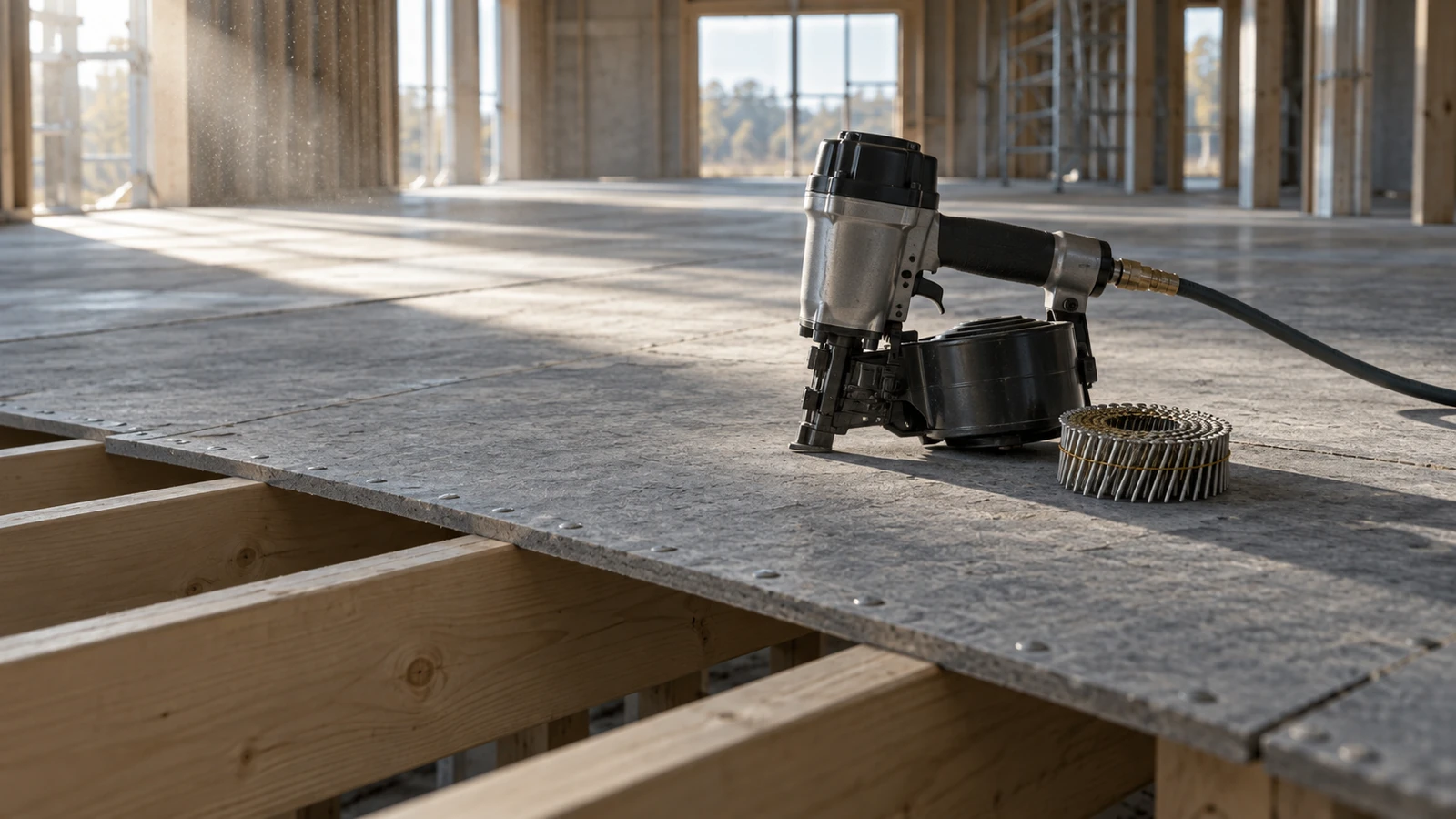
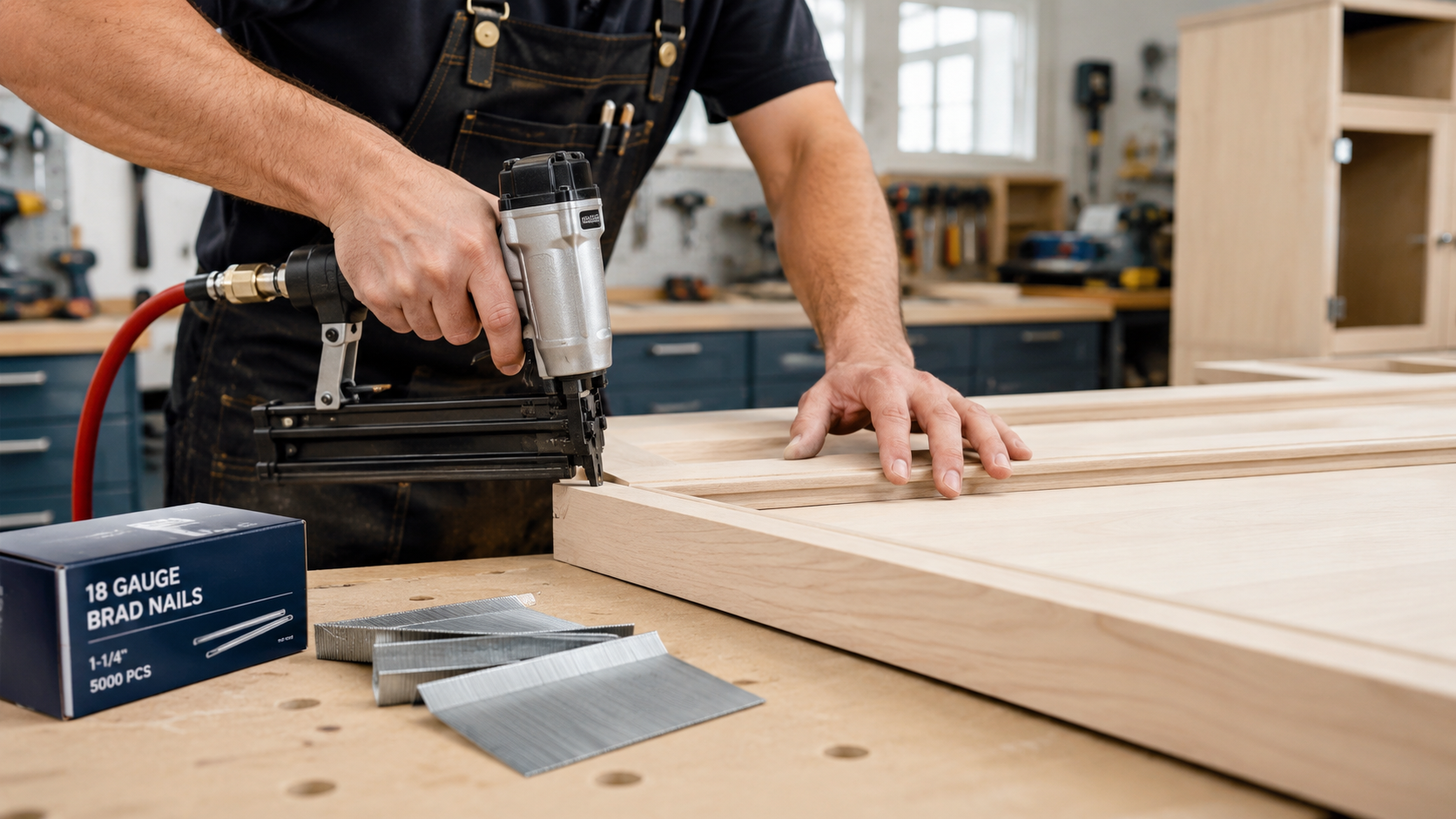
Collated pneumatic nails are designed for powered feeding in nailers and nail guns. In the scene reflected by the product data, the application is straightforward: fastening wooden components in pallet frames and crate structures. That is a common, practical use case, but not the only one. These nails also show up in packaging operations, shop-floor woodworking, and factory joinery where speed and repeatability matter.
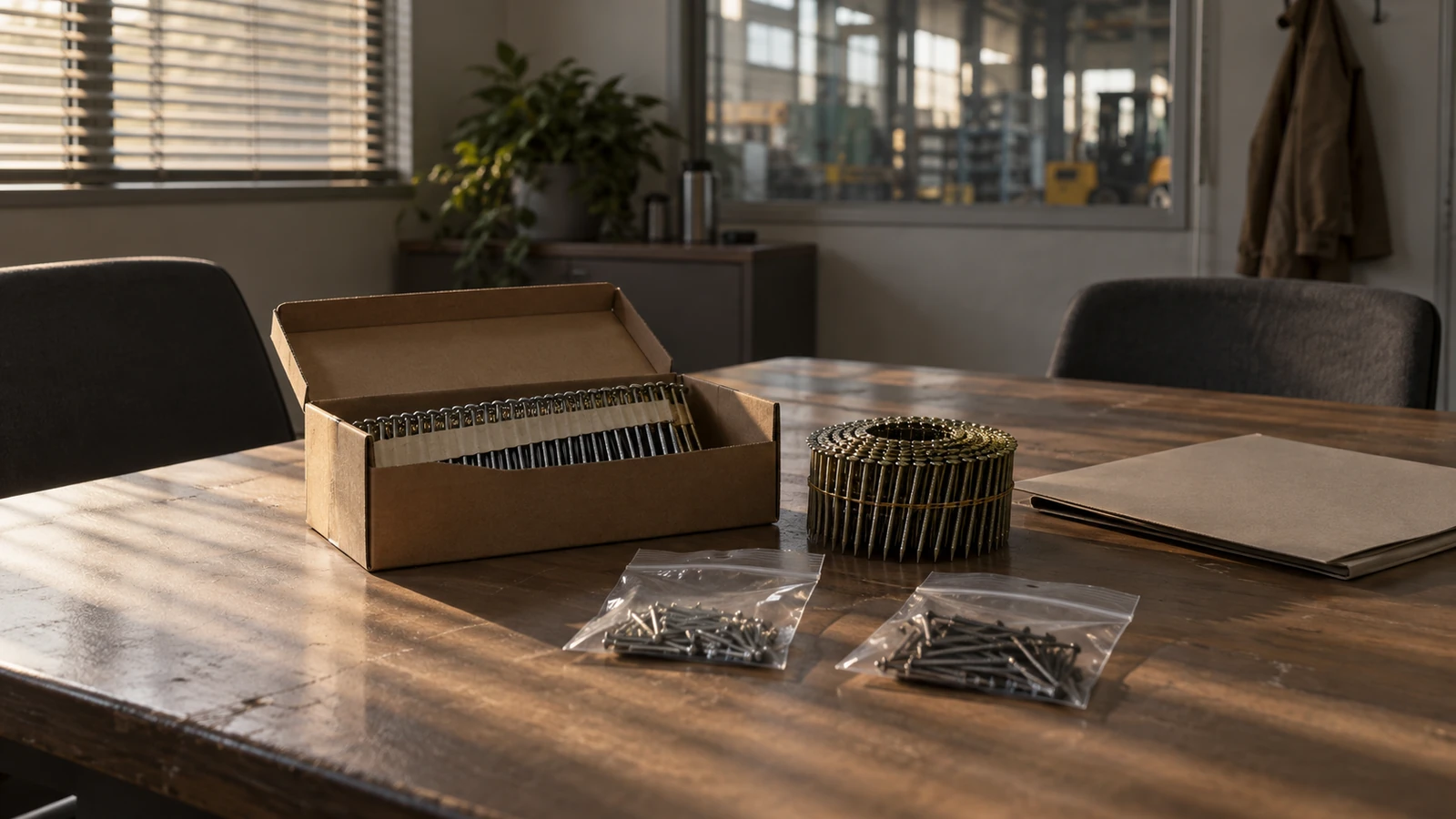
The visible product context suggests industrial supply rather than retail packaging. Boxes labeled “INDUSTRIAL NAILS” and “COLLATED NAILS” point toward bulk handling, and the quantity marking of 7,200 pieces on one carton is consistent with wholesale distribution. One box also appears to reference a size code around 2.8 x 63 and “hot dip galvanized,” though that should be treated cautiously because the image is partially cut off.
Key buying factors to compare
A collated nails supplier can look fine on paper and still be a poor fit on the line. The practical checks are usually these:
1. Collation style and feed reliability
Nails are typically arranged in strips or coils for pneumatic feeding. The strip angle, bonding method, and package layout all affect how smoothly the tool cycles. If the collation is inconsistent, operators feel it immediately in the form of misfeeds and pauses.
2. Material and finish
The product information points to steel nails with a metallic silver appearance, and some strips show yellowish banding or coating. In industrial practice, finish matters because it affects corrosion resistance, appearance, and sometimes drive performance. Hot-dip galvanized nails are often selected where outdoor exposure or moisture is a concern, but the exact coating type should be confirmed before purchase.
3. Dimensions and tool compatibility
Exact gauge, length, head style, and shank profile are not fully readable from the image, which is a reminder to verify the full spec sheet rather than rely on carton markings alone. Tool compatibility is one of those details that gets overlooked until the first production run. That is a costly lesson.
4. Packaging and logistics
For pallet and crate makers, packaging format is not an afterthought. Open cartons, carton labeling, and unit counts influence warehouse handling, line-side replenishment, and inventory control. A collated nails wholesale supply arrangement should make replenishment easier, not harder.
Manufacturer, factory, or wholesaler: what role do you actually need?
Search terms often blur together, but they are not identical.
A collated nails factory is usually the right fit when you need direct production control, custom specifications, or repeated bulk orders.
A collated nails supplier may be better when you need broader sourcing options, lower minimum commitment, or a mix of related fasteners.
A collated nails wholesale channel is often the practical middle ground for buyers who want industrial packaging and price efficiency without managing production directly.
For many procurement teams, the best choice is not purely one category. It depends on whether the project needs standardized replacement stock or a tighter technical spec tied to a specific nailer and assembly process.
Common mistakes buyers make
The biggest mistake is assuming all collated nails are interchangeable. They are not.
Another common error is ordering by a partial carton code and skipping confirmation of the full dimensions. The visible “2.8 x 63” marking may indicate a size class, but it is not enough to lock in a production-critical purchase. Buyers should also ask about finish, shank type, collation angle, and intended tool series.
A quieter problem is overbuying on price alone. Low-cost fasteners that do not feed cleanly can create more labor cost than they save. In high-volume pallet assembly, that tradeoff shows up fast.
What to ask before placing an order
Before you commit to a collated nails manufacturer or distributor, ask for:
- full size and head specification
- collation type and feed format
- coating or finish details
- steel grade or material declaration, if available
- packaging count and carton labeling format
- tool compatibility guidance
If the supplier cannot answer these cleanly, that is usually a warning sign, even if the price looks attractive.
Practical takeaway for sourcing teams
For pallet, crate, and woodworking operations, the best fastener source is the one that keeps the line moving with the fewest surprises. That means confirming the nail geometry, finish, and collation format before you compare price. It also means treating the carton label as a starting point, not the final specification.
If you are evaluating a collated nails manufacturer for ongoing supply, request a detailed spec sheet and a sample pack matched to your nail gun setup. That small step can prevent a lot of stoppages later, and in fastener procurement, stoppages are where the real cost hides.