
Why Buying Nails Wholesale Becomes a Production Decision
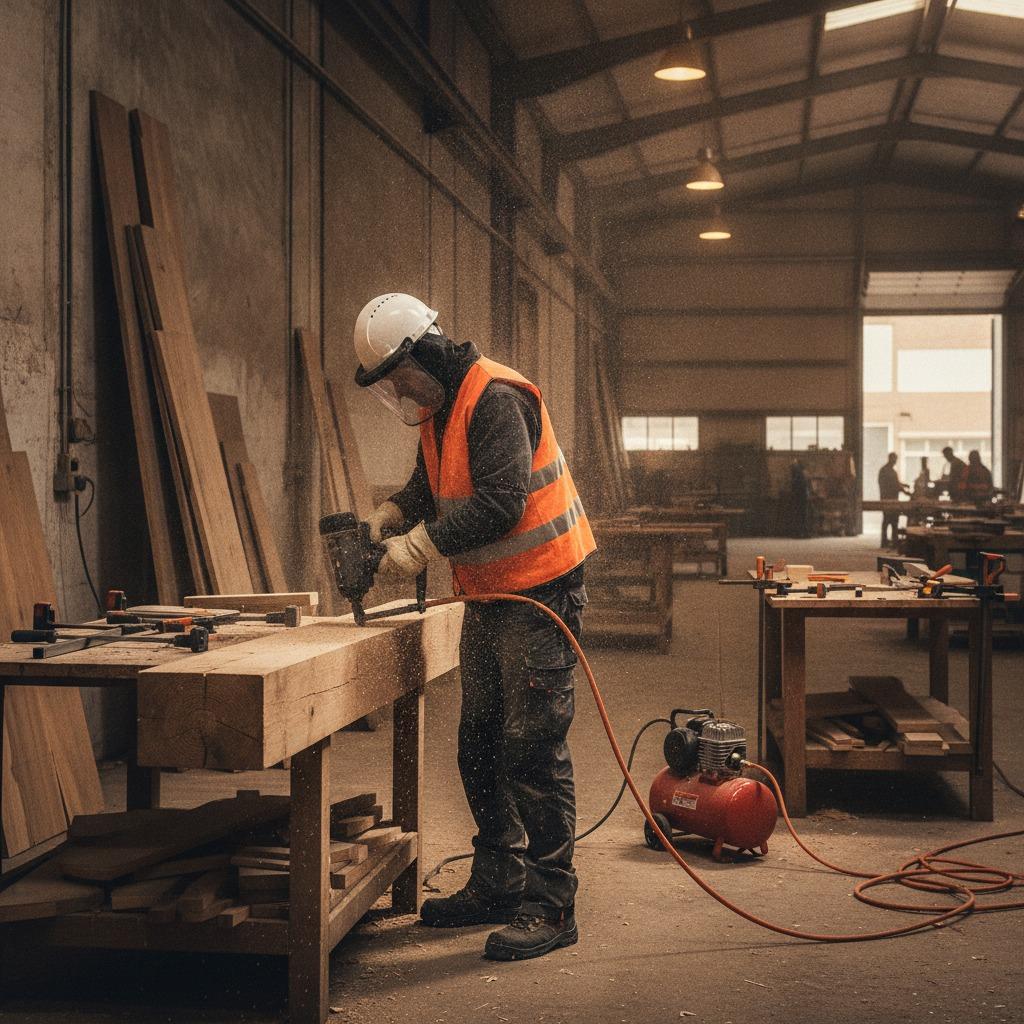
For shops that frame, crate, assemble, or build fixtures at volume, choosing a construction nails wholesale supplier is not just a purchasing task. It affects line speed, rework rates, tool uptime, and even how predictable a job looks when a crew is moving fast with pneumatic nailers. The wrong nail can jam a tool, split timber, or create a mess the crew has to clean up later. The right supply arrangement is quieter: fewer interruptions, fewer substitutions, and fewer surprises when the order volume rises.
That matters most when fastening is repetitive. A framing crew, a pallet builder, or a fabrication shop using air-powered nailers does not need a dramatic sales pitch. It needs nails that feed consistently, match the tool and wood, and arrive in a form that is easy to store, issue, and count. This article is aimed at that decision: how to judge wholesale construction nails without overcomplicating the purchase, and where the practical risks usually show up.
What Buyers Usually Need to Compare
The first question is not price. It is compatibility.
Construction nails are bought for a job, but they are used through a tool. A pneumatic framing nailer, for example, depends on the nail’s collated format, shank style, length, and coating behaving the way the tool expects. If the feed is inconsistent, the cost shows up later in stoppages and bent fasteners rather than on the invoice.
A useful shortlist for buyers usually includes:
- Nail type and intended application: framing, sheathing, pallet work, crate assembly, or general timber fastening.
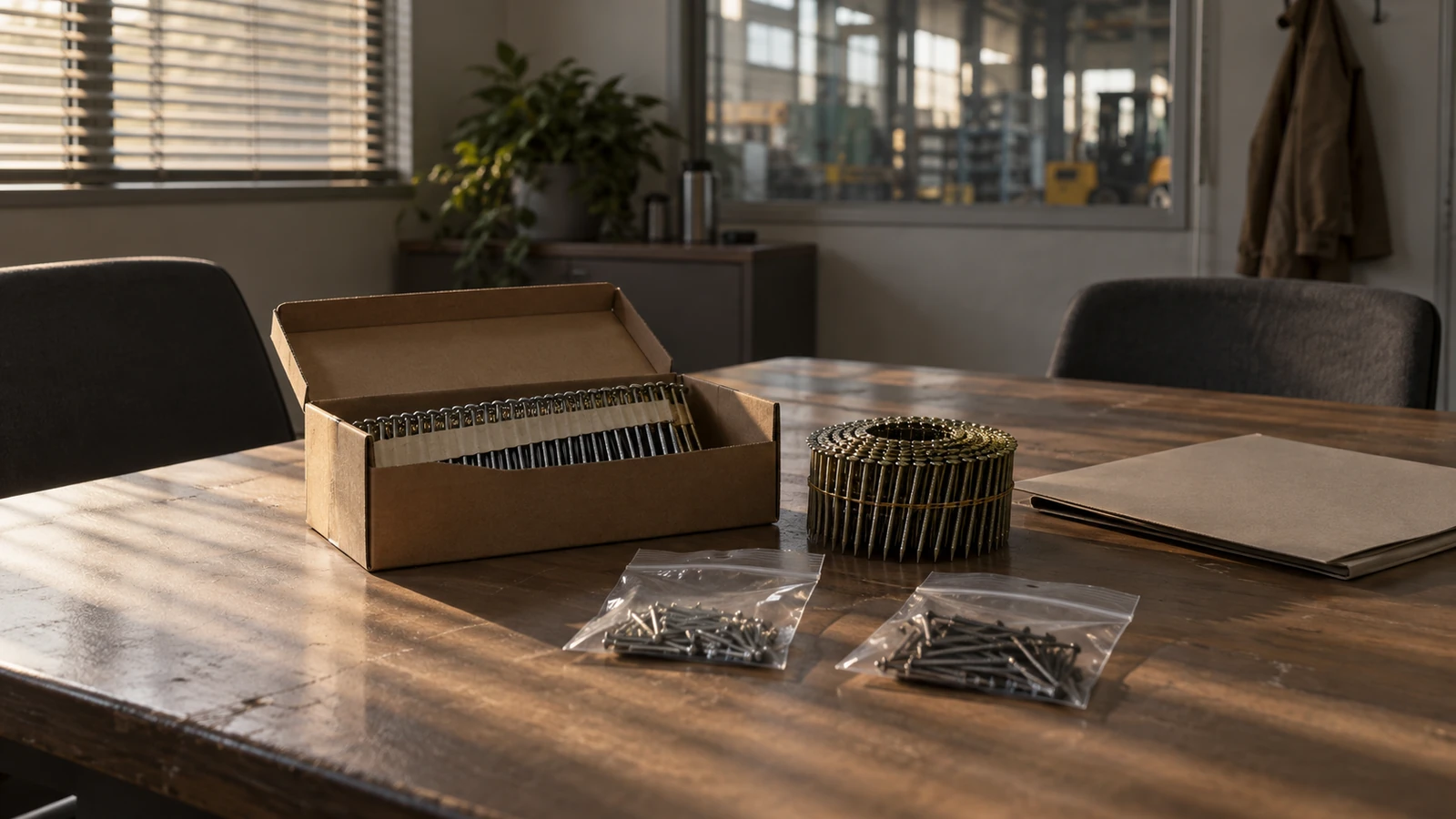
- Collation style: the strip or coil format that matches the nailer.
- Material and finish: especially where corrosion resistance or appearance matters.
- Shank design: smooth, ring, or screw-type profiles, depending on holding needs.
- Packaging and count consistency: important for inventory control and repeat purchasing.
The point is not to spec every job down to the last detail. It is to avoid buying a bulk lot that looks acceptable on paper but runs poorly in the tool or is simply wrong for the timber being fastened.
Why Pneumatic Fastening Changes the Supplier Conversation
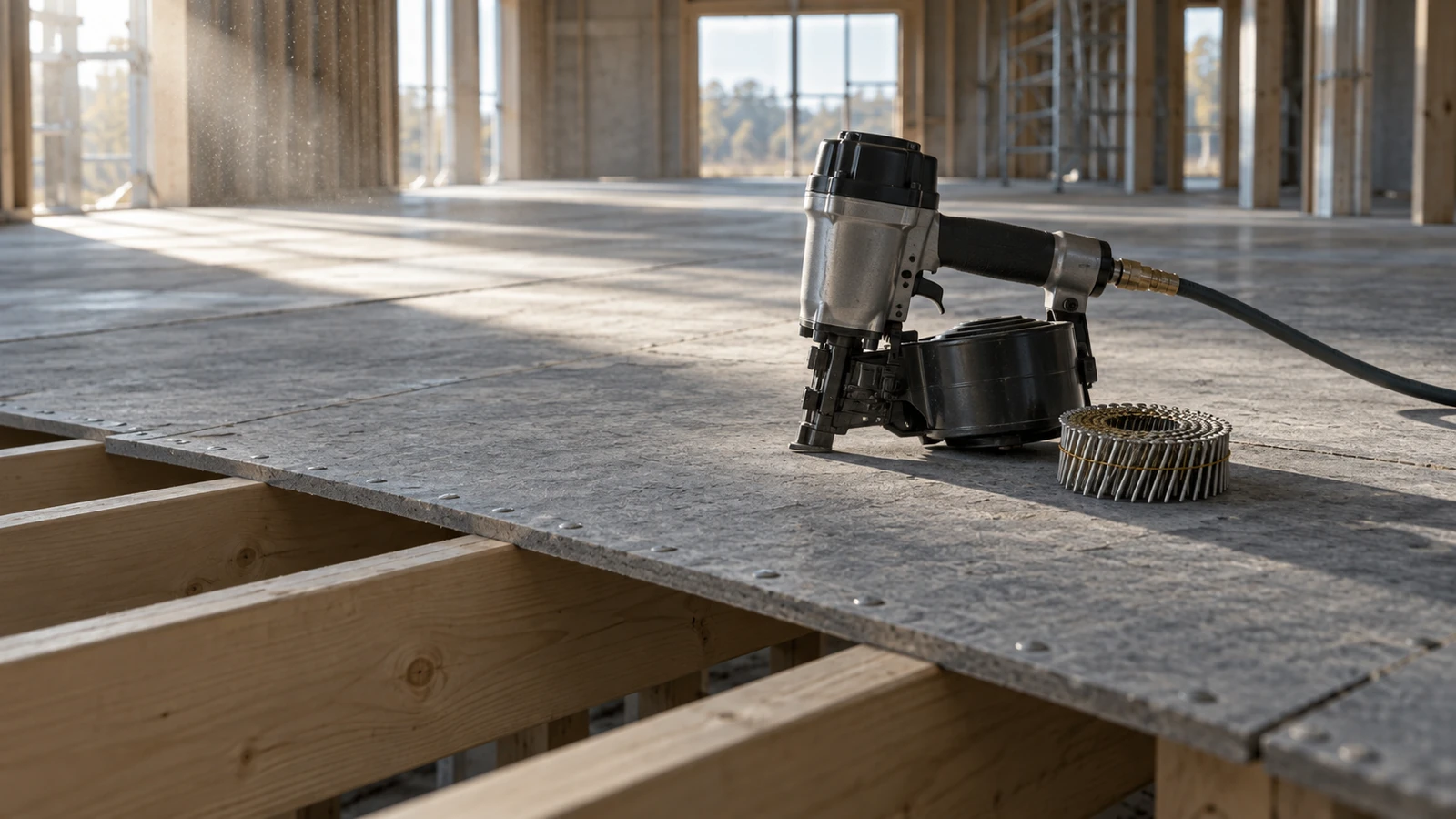
The visible tool in many workshops is a pneumatic framing nailer, which tells you something about the buying environment. These tools are built for speed, but they also make poor fastener quality obvious. A small inconsistency in collated nails can slow a crew down fast. In high-output settings, that matters more than a marginal savings per box.
That is why wholesale construction nails are often judged on repeatability rather than headline cost. If the nails feed smoothly, the crew keeps working. If they do not, operators compensate by clearing jams, checking alignment, or stopping to sort material. That is wasted labor, and it compounds quickly across a shift.
A building nails supplier should therefore be evaluated on whether the product line is stable enough for repeated orders. Shops that run the same fastening routine every day tend to do better with a narrow, dependable spec than with frequent substitutions.
Key Selection Criteria That Actually Affect Production
Timber and job type
Framing into structural lumber is not the same as light assembly or jig building. The timber density, joint design, and expected load all influence the nail choice. In practical terms, a fastener that works well in one workflow may be overkill or underpowered in another.
Coating and corrosion exposure
Indoor dry work is different from exterior framing or any assembly that may see moisture. Buyers should not assume one finish fits every site. If the end use is uncertain, that is a reason to pause and clarify before ordering by the pallet.
Tool feed reliability
This is the detail people regret overlooking. Nails that look similar can behave differently in a magazine. In a pneumatic setup, consistency in collation and shank geometry is part of the manufacturing value, not an accessory detail.
Pack size and replenishment rhythm
Wholesale construction nails are easier to manage when pack sizes match real consumption. Oversized packs can sit too long in storage; undersized packs create frequent reordering. The right answer depends on whether the buyer is feeding one nailer bench or several crews.
Common Purchasing Mistakes
One common mistake is buying only by dimension. Length matters, but it is not enough. The wrong shank or collation can make a technically correct nail a poor fit in the field.
Another is assuming all shops need the same grade. A pallet line, a framing crew, and a furniture or fixture shop may all buy from a construction nails wholesale supplier, but they are not solving the same problem. One needs throughput; another needs joint quality; another may care more about neat fastening and less about raw holding power.
A quieter mistake is forgetting how the nails will be issued and counted. Bulk inventory can be efficient, but only if the store room can keep it organized. Otherwise, labor savings at purchase time are lost in the floor routine.
Practical Buyer Advice
Start with the tool and the timber, then work backward to the purchase. Ask whether the fastener is meant for framing, repetitive shop assembly, or lighter carpentry. Confirm the nail format is suited to the pneumatic nailer in use. If the order is recurring, lock down the spec before volume increases.
For sourcing teams, the best wholesale construction nails supplier is usually the one that reduces friction after the purchase, not the one that simply quotes lowest. Stable product description, clear application guidance, and consistent supply matter more than a small discount that creates field problems later.
Quick FAQ
Are wholesale construction nails all interchangeable?
No. Size, collation, shank style, and finish all affect whether the nail works in a specific tool and application.
What should engineers or product teams check first?
Start with fastening method, timber type, and the nailer being used. That narrows the choice faster than price-only comparison.
When does supplier quality matter most?
When the fastening operation is repetitive. That is where small inconsistencies become real downtime.
Next Step
If you are evaluating a construction nails wholesale supplier, build the comparison around use case first and unit price second. Match the fastener to the nailer, the timber, and the production rhythm. That approach is slower at the start, but it usually pays back in cleaner runs and fewer shop-floor interruptions.