
Why buying through a construction nails wholesale supplier has become a sharper decision
For contractors, prefab shops, and purchasing teams, choosing a construction nails wholesale supplier is no longer just a line-item procurement task. It affects framing speed, tool uptime, labor efficiency, and even how much rework shows up at the end of a shift. In timber framing and other repetitive fastening jobs, the right nail supply has to match the nailer, the substrate, and the pace of the crew. When it does not, the job slows down in ways that are easy to underestimate until a compressed schedule starts slipping.
The trend is clear: more buyers want bulk purchasing, tighter compatibility across tools and consumables, and fewer emergency purchases from local counters. That shift makes sense. Structural timber work and prefab wall fabrication rely on repeatable fastening, often with pneumatic tools that are expected to keep moving. A supplier that understands bulk construction nails and the realities of wholesale nails for construction can help reduce downtime, though the buyer still needs to ask the right questions.
What the working environment is asking for
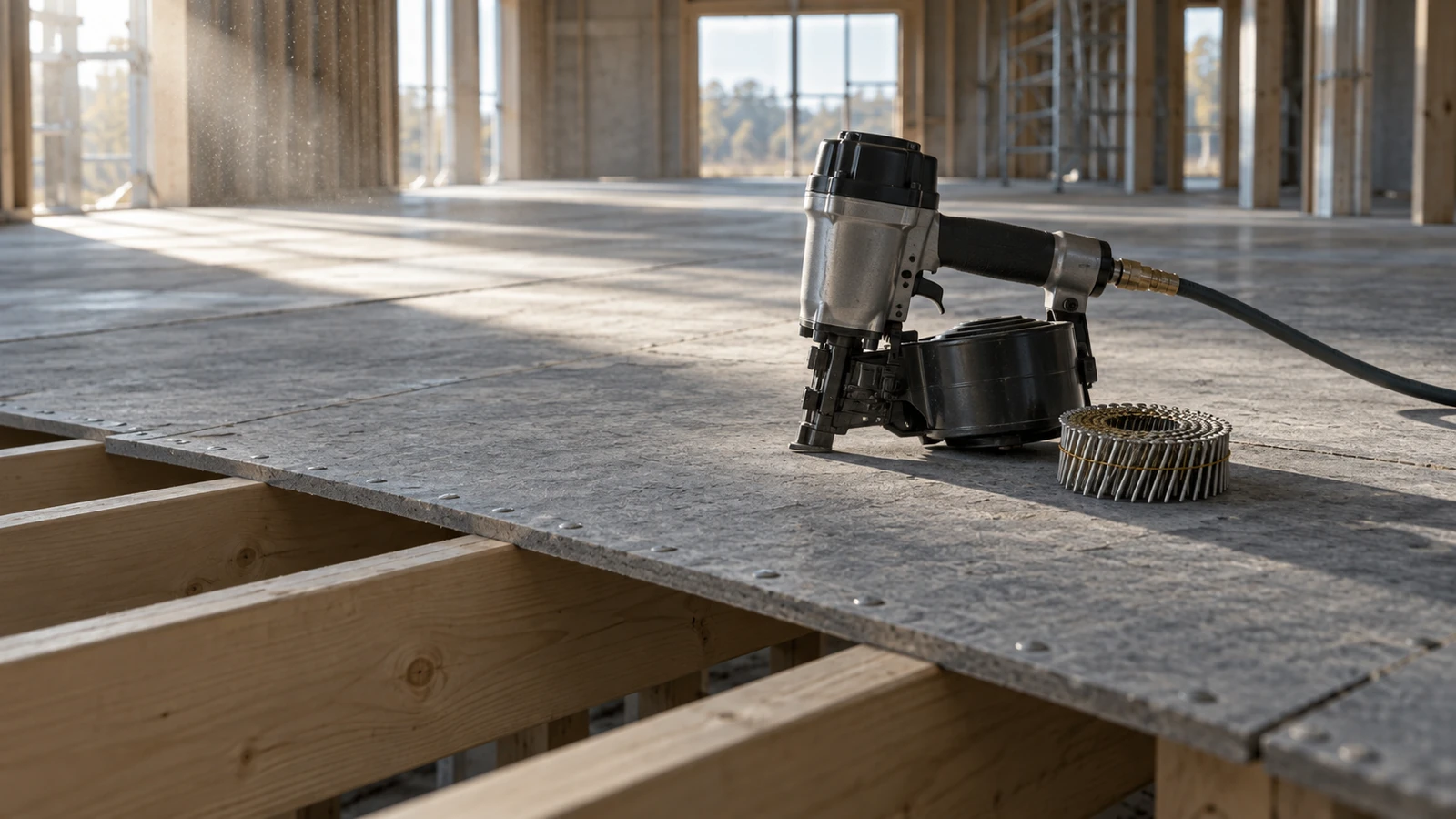
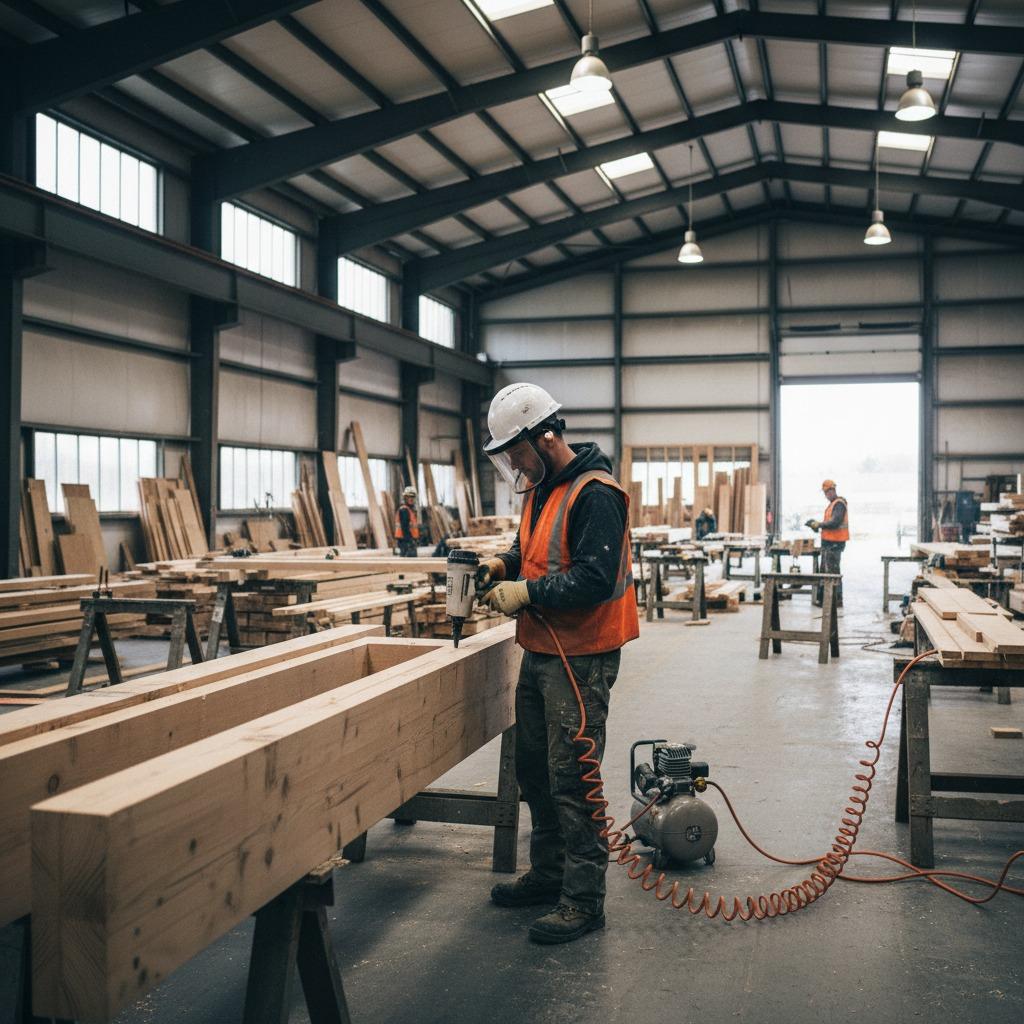
The product context here points to pneumatic framing nailers used in structural timber construction and woodworking assembly. That tells us a lot about the procurement problem. These tools are built for repeated nail driving into large wooden members, whether the task is fastening a heavy beam to a post, assembling prefab wall frames, or carrying out general construction fastening where speed matters.
In that setting, nails are not interchangeable commodities. The crew is working with an air-powered tool, a collated nail format, and large timber members that demand consistent feeding and dependable fastening. If the nail assortment is poorly matched, the result is not just annoyance. It can mean jams, inconsistent drive performance, or extra handling as operators stop to sort through mixed packs.
Quick buyer takeaway: what matters most in wholesale nail sourcing
A practical buying decision usually comes down to four things: compatibility, volume stability, packaging discipline, and application fit.
Compatibility is the starting point. The nail format has to suit the gun’s magazine and feeding system. Volume stability matters because short shipments create avoidable interruptions, especially on framing crews that burn through bulk construction nails quickly. Packaging discipline sounds mundane, but mixed labels and inconsistent lot organization are a real shop-floor nuisance. Application fit is the final check: structural framing, heavy beam assembly, and prefab fabrication do not all behave the same way in production.
How trends are changing nail purchasing
Wholesale buying is moving toward consolidation. Many buyers prefer fewer vendors and more predictable replenishment cycles. That does not mean every project should be bought the same way. Rather, sourcing teams are trying to separate everyday consumables from specialized fastening items, then standardize each category where possible.
For construction nails, the reason is obvious. A framed wall line or timber assembly bench can consume nails at a pace that makes small-pack purchasing inefficient. The cost of repeated reordering is not only freight or admin time. It is also the stop-start effect on the crew. A good supplier relationship helps smooth those spikes, especially when the work involves pneumatic fastening in a workshop or prefabrication setting.
Selection criteria that deserve real attention
Nail type and tool fit
Start with the nailer, not the catalog. A visible long-magazine pneumatic nail gun used for structural timber work suggests the buyer should verify collation style, strip geometry, and the intended nail size range before placing a wholesale order. That may sound basic, but mismatched fasteners are still one of the easiest ways to waste a production hour.
Finish and application environment
On construction jobs, finish choice often reflects exposure conditions, assembly method, and downstream inspection needs. Buyers should not assume every project uses the same nail. Indoor workshop fabrication has different demands from open-site framing, and procurement teams should avoid over-specifying where it adds cost without a real benefit. Equally, under-specifying can be a false economy.
Packaging and handling
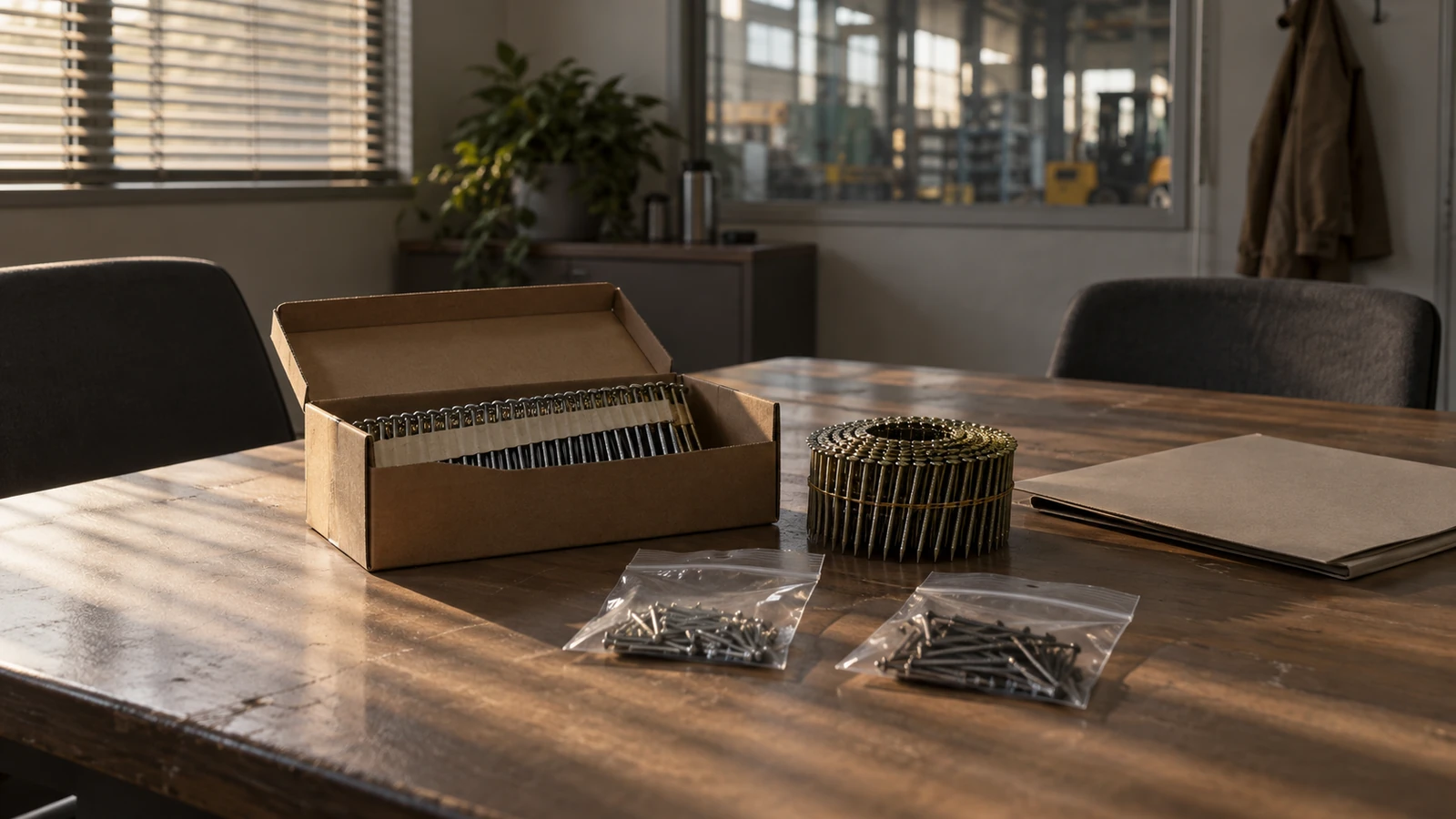
Wholesale buying only pays off if the goods arrive in a form the shop can actually use. Clear carton labeling, consistent counts, and manageable bundle sizes make a practical difference. A pallet may look efficient on paper, but if it creates awkward handling or poor stock rotation, the advantage fades quickly.
Common mistakes buyers still make
The first mistake is buying on price alone. The second is assuming one nail spec covers all framing and assembly jobs. The third is failing to match inventory policy to tool usage. In a fast-moving timber shop, a cheaper nail pack can become expensive once jams, rejects, or line pauses are added in.
Another frequent issue is treating the supplier as a passive seller instead of a working partner. The best wholesale nails for construction arrangements usually involve enough technical back-and-forth to confirm format, volume, and intended use. That conversation is not overhead; it is part of the purchasing job.
Practical advice for sourcing teams and shop managers
If your operation runs pneumatic framing nailers or similar fastening tools, build your buying process around the actual production flow. Ask how the nails will be used, how often the tool runs, and whether the job is structural framing, beam assembly, or prefab wall fabrication. Then check whether the supplier can support repeat ordering without forcing a new specification review every time.
It is also worth keeping a short internal reference sheet for the shop. One page noting approved nail formats, application areas, and any project-specific cautions can save a surprising amount of back-and-forth. Small detail, big effect.
What to ask before placing a wholesale order
Before committing to a supplier, buyers should confirm nail compatibility, available pack sizes, carton consistency, and whether the product range suits the tools already in use. If the supplier supports structural timber fastening and prefab assembly work, ask for product grouping that makes stock control easier. The goal is not just to buy in volume; it is to buy in a way that keeps the line moving.
If you are reviewing options for a construction nails wholesale supplier, start with the tool, the job, and the pace of consumption. That sequence usually leads to better purchasing decisions than chasing the lowest unit cost. For teams balancing site work and workshop production, that is often the difference between an acceptable supply plan and a reliable one.