
Choosing a Construction Nails Wholesale Supplier: what buyers should actually compare
If you are sourcing fasteners for a job site, a contractor yard, or a private-label hardware line, choosing a construction nails wholesale supplier is less about finding the cheapest box and more about keeping crews supplied with the right nail, in the right form, at the right time. That sounds obvious until a framing team is waiting on collated bundles, or a pallet order arrives with packaging that does not survive transit. Nails are a low-ticket item with high operational consequences.
The practical question is not just who can sell nails in bulk. It is who can support your fastening workflow: loose bulk nails for general stock, collated nail coils for pneumatic tools, and consistent packaging that makes receiving, storage, and jobsite issue easier. For buyers comparing a construction nail distributor against a local source, the difference often shows up in the details rather than the headline price.
What the product tells you before the spec sheet does
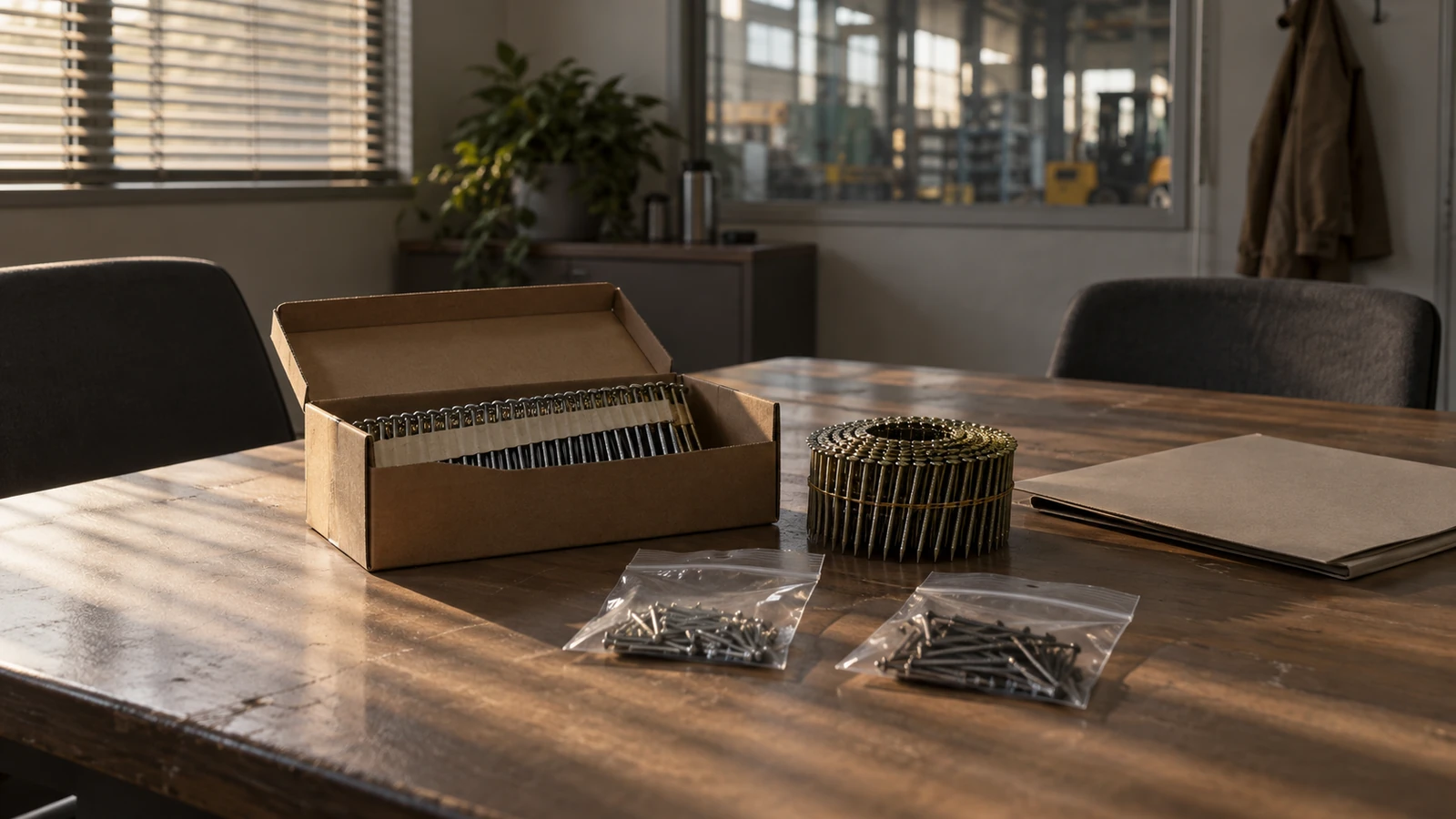
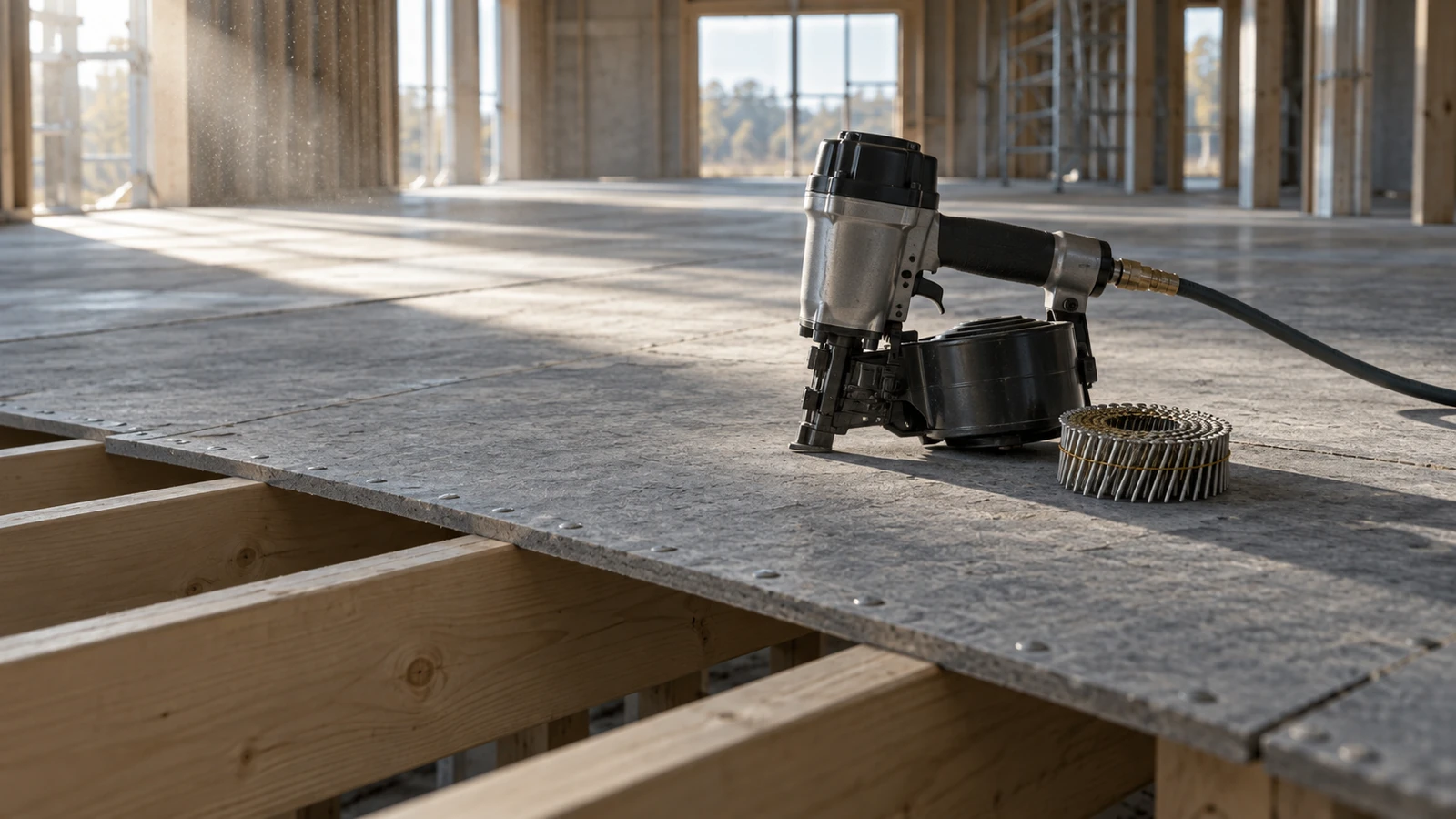
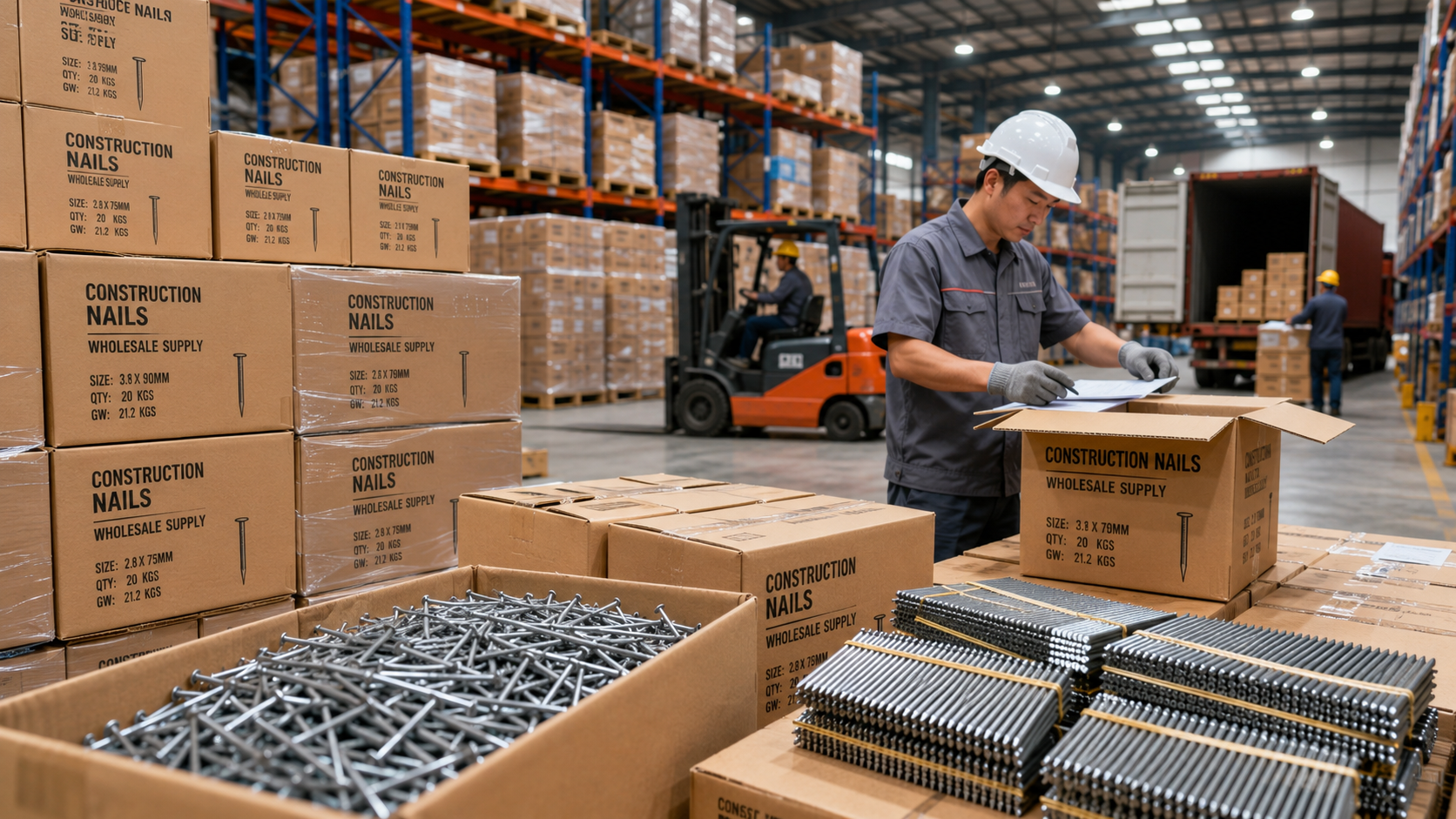
The product images suggest a fairly broad construction nail range: loose metallic nails in cardboard cartons, plus collated coils or rings intended for power nailing tools. That matters because it signals two different buying behaviors. Loose nails are usually selected for general construction, site carpentry, formwork, sheathing, pallet work, and other hand-driven fastening tasks. Collated products are aimed at speed and repeatability, especially when crews are running pneumatic nailers.
There is also a packaging signal here. Wholesale cartons and machine-packed bundles usually indicate industrial fastener supply rather than retail hardware. For many sourcing teams, that is exactly what they want: predictable bulk delivery, simpler stock control, and less time spent repacking product on arrival.
Quick comparison: what buyers usually need from a supplier
Bulk availability
A reliable supplier should be able to handle volume without forcing awkward split shipments. If your demand swings between project peaks and quieter periods, ask how they manage replenishment, pallet quantities, and mixed SKUs.
Form factor
Not all nails serve the same work. Straight shank nails, collated coils, and other construction variants have different handling and tool-compatibility requirements. A supplier that understands these differences is usually easier to work with than one treating nails as a single commodity line.
Packaging quality
This is underrated. A damaged carton can turn a routine delivery into a receiving headache. On-site, poor packaging also means lost count, bent product, and avoidable waste. The box may be simple, but it still has to survive transport and storage.
Consistency
Buyers do not need marketing language; they need repeatable product. With construction nails, even small variations in finish, shank style, or collating can affect tool feeding and installation behavior. If the supplier cannot clearly describe the product, that is a warning sign.
Where a construction nail distributor adds value
A good construction nail distributor does more than move cartons. The best ones help match the nail type to the application. Framing crews, pallet shops, and general contractors do not all want the same thing. In practice, a distributor should be able to separate general construction nails from products intended for pneumatic nailers, and to say when a customer should verify compatibility before ordering in volume.
That caveat matters. The visible product may look straightforward, but exact dimensions, coating, wire gauge, head design, point type, and corrosion protection are not always obvious from a photo. Buyers should not assume. If the application is exterior, moisture-prone, or structural, the fastening choice deserves a more careful review than a quick reorder based on appearance alone.
Common mistakes when sourcing nails wholesale near me
One common mistake is treating “near me” as the deciding factor. Local stock can be useful, especially for urgent replenishment, but proximity does not guarantee assortment or continuity. Another mistake is buying by price alone and discovering that the product is packed for a different tool system or job requirement.
A more subtle problem is overbuying one format. Teams sometimes stock only loose nails and then realize a framing crew needs collated product for speed, or the reverse. If your purchasing covers multiple trades, it is worth mapping the actual use cases before placing a large wholesale order.
Practical buyer checklist
Before you commit to a supplier, ask a few plain questions:
Whether they carry both loose and collated construction nails
Whether product descriptions identify application and tool compatibility clearly
How packaging is handled for bulk shipping
Whether the supplier can support repeat orders without frequent substitution
What information is available on finish, size, and construction grade, if applicable
That last point is especially important when the product details are not fully visible. If the seller cannot confirm the spec, do not let the order move forward on assumption.
FAQ
Are construction nails and framing nails always the same thing?
No. Construction nails is a broader category. Framing nails are one common subtype, but buyers should not assume every construction nail is suitable for framing work or tool use.
Should I buy loose nails or collated nails?
It depends on the job. Loose nails work for general fastening and stock keeping. Collated nails are usually better when crews are using nail guns and speed matters.
What is the safest way to compare suppliers?
Start with product clarity, packaging, availability, and repeatability. Price matters, but only after you know the product matches the application.
What to do next
If you are reviewing a construction nails wholesale supplier, ask for a product breakdown by format and application before you place volume orders. That simple step can prevent mismatched stock, tool issues, and site delays. For procurement teams, the best buying decision is usually the one that keeps the fastening line moving with the fewest surprises.