
Why construction buyers are still watching the fastener aisle
A construction nails wholesale supplier is not just a place to fill a purchase order. For framing crews, timber-frame fabricators, and procurement teams feeding a steady build schedule, nails sit in the same category as blades, abrasives, and fasteners that quietly decide whether production stays smooth or starts slipping. When a nail spec is off, the cost shows up later: split members, rework, gun jams, or a crew waiting on the wrong box of hardware.
That matters more now because wood construction is moving faster in several directions at once. Off-site fabrication, prefabricated wall sections, and repetitive timber assembly all reward suppliers who can deliver consistent product, predictable packaging, and enough volume to avoid line stoppages. In that setting, bulk construction nails are less of a commodity purchase than an operational input.
What buyers are really choosing when they source nails wholesale
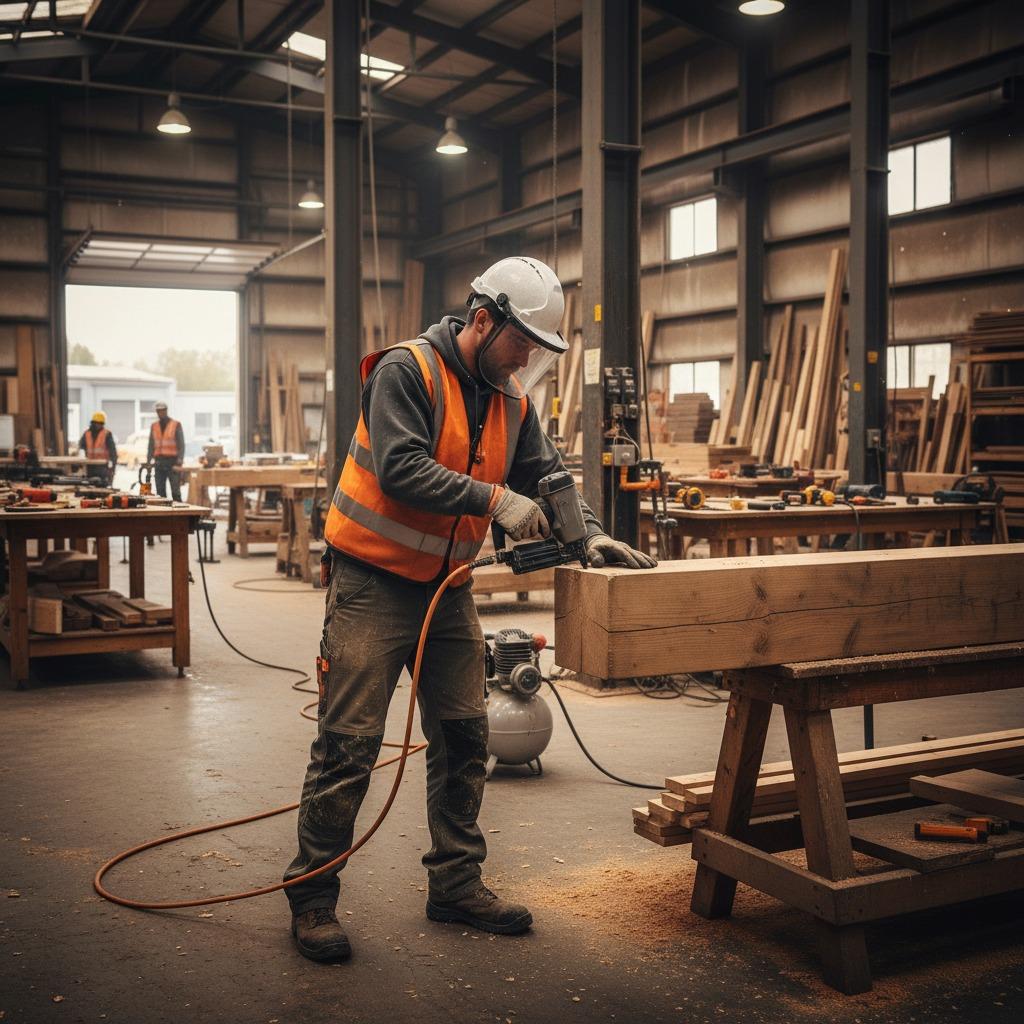
Most purchasing conversations begin with price, but the better question is fit. Wholesale nails for construction have to match the fastening tool, the wood species or section size, the pace of assembly, and the team using them. A framing nailer in a workshop can move through timber quickly, but only if the nails feed correctly and suit the application. The wrong collation or incompatible length can slow an otherwise efficient line.
There is also a practical distinction between on-site framing and workshop-based fabrication. On a jobsite, crews may accept a little more packaging flexibility. In a plant or timber workshop, consistency matters more. One bad batch can interrupt repetitive fastening across multiple assemblies, and that gets expensive in a hurry.
Trend: more prefabrication means tighter fastener purchasing
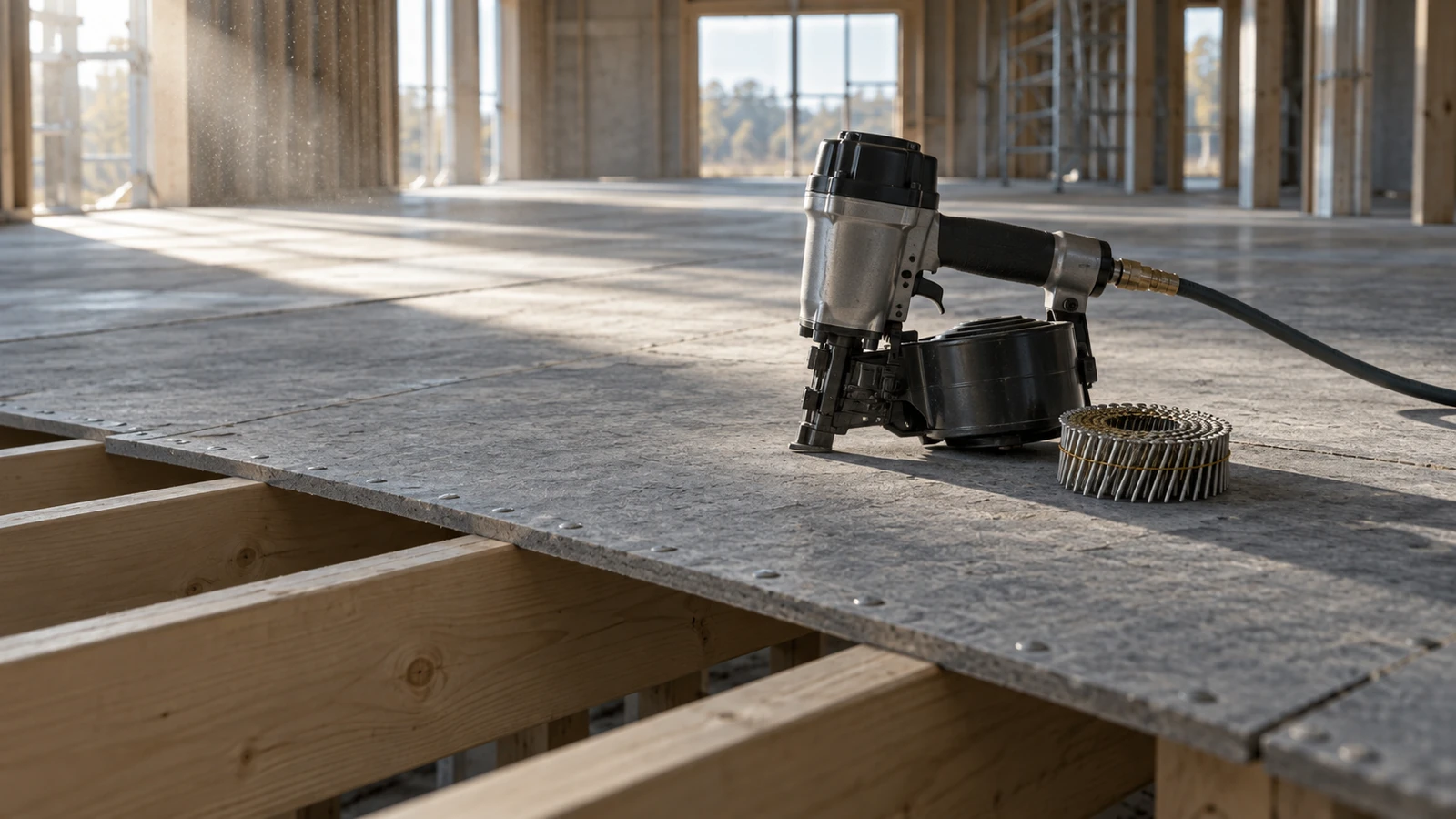
The current trend in wood construction is clear enough: more work is being shifted into controlled environments. That favors pneumatic fastening because the tool can be powered by an air compressor, used one-handed, and driven repeatedly into heavy timber members with little fatigue. The image of a trigger-operated nailer with an air hose attached is familiar for a reason. It reflects the kind of high-cycle fastening that suits framing, joinery, and structural timber assembly.
For buyers, that trend changes the sourcing brief. A construction nails wholesale supplier now has to support not only volume, but also the rhythm of fabrication. Packaging, replenishment timing, and product consistency become part of the value proposition. If the fasteners are going into prefabricated elements, interruptions are harder to absorb than on a conventional site.
Key selection criteria that matter in practice
Compatibility first
Start with the fastening system, not the catalog page. The nailer, the collation format, and the intended timber application all need to line up. Exact tool model and nail size are not always obvious from a shop-floor photo, so buyers should verify compatibility before committing volume.
Application environment
Structural timber assembly is not the same as light trim work. Heavy wood members, repetitive framing, and beam or wall assembly usually need a more robust fastener choice than general carpentry. If the work is taking place in a fabrication workshop, dust, cycle rate, and replenishment ease matter as much as the box price.
Supply continuity
For many manufacturers, the real risk is shortage rather than overpaying by a small margin. A reliable supply of bulk construction nails can prevent tool downtime and keep labor focused on output. That is especially true when a line runs through the same fastener type day after day.
Common mistakes buyers still make
The first mistake is treating all nails as interchangeable. They are not. The second is ordering against a single project rather than a production rhythm. A workshop that builds in batches needs a steadier replenishment plan than a one-off project team. The third is ignoring how the fastening tool behaves with the chosen product. Even a good pneumatic nail gun will underperform if the fasteners are poorly matched or inconsistently supplied.
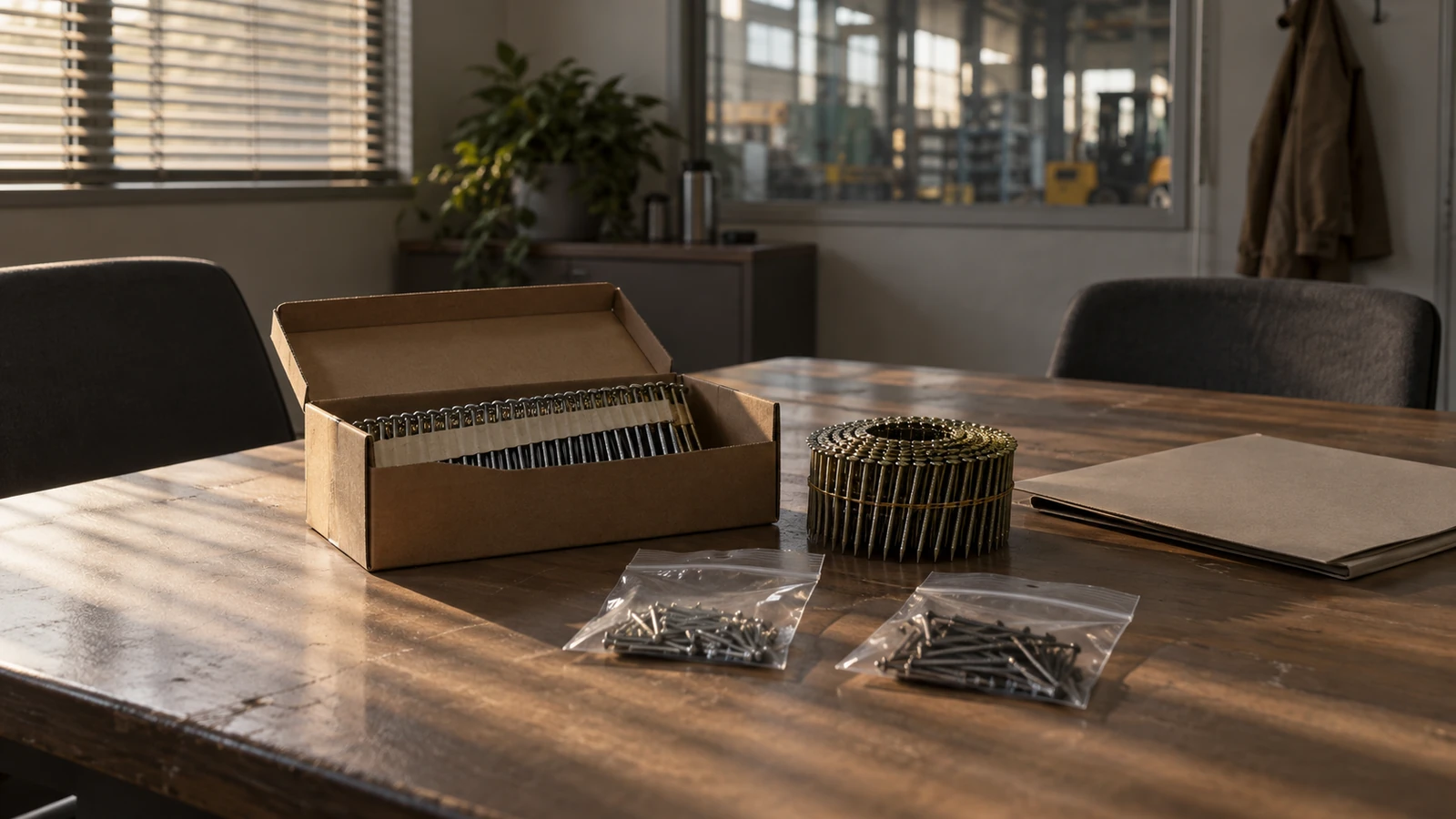
Another small but costly oversight: packaging. Bulk is useful, but only if the shop can store and issue it without damage, moisture exposure, or mix-ups. That sounds mundane until a crew opens the wrong carton at shift start.
What a good supplier should help you confirm
A capable wholesale partner should be able to clarify product format, intended use, and ordering cadence. For sourcing managers, the useful conversation is not “Do you have nails?” but “Do you have the right fastener supply for our fastening system and production pace?” That question saves time.
For engineers and product teams, the purchase decision should also account for how the fastener supports downstream quality. If the assembly is structural, the choice affects holding power, consistency, and the likelihood of rework. If the operation is high-volume, feed reliability and pack size may matter almost as much as mechanical performance.
Quick buyer takeaway
If your operation uses pneumatic fastening in timber fabrication or structural framing, focus on compatibility, volume stability, and packaging discipline before chasing the lowest unit price. The right construction nails wholesale supplier should reduce friction in the shop, not create another variable for production to manage.
FAQ for procurement teams
Are bulk construction nails only for large contractors?
No. Smaller workshops can benefit too if they run repetitive fastening or prefabrication work. The point is steady supply, not company size.
Do all nailers use the same fasteners?
No. Tool and fastener compatibility must be checked carefully. That is one area where a quick assumption causes avoidable downtime.
When does wholesale buying make the most sense?
When usage is predictable, work is repetitive, or the cost of running out is higher than the inconvenience of holding inventory.
Next step for buyers
If you are sourcing for timber frame construction, workshop assembly, or recurring framing work, build your shortlist around suppliers that can support your fastening method, not just your unit price target. Ask for product details, packaging options, and replenishment planning before the next production run begins.