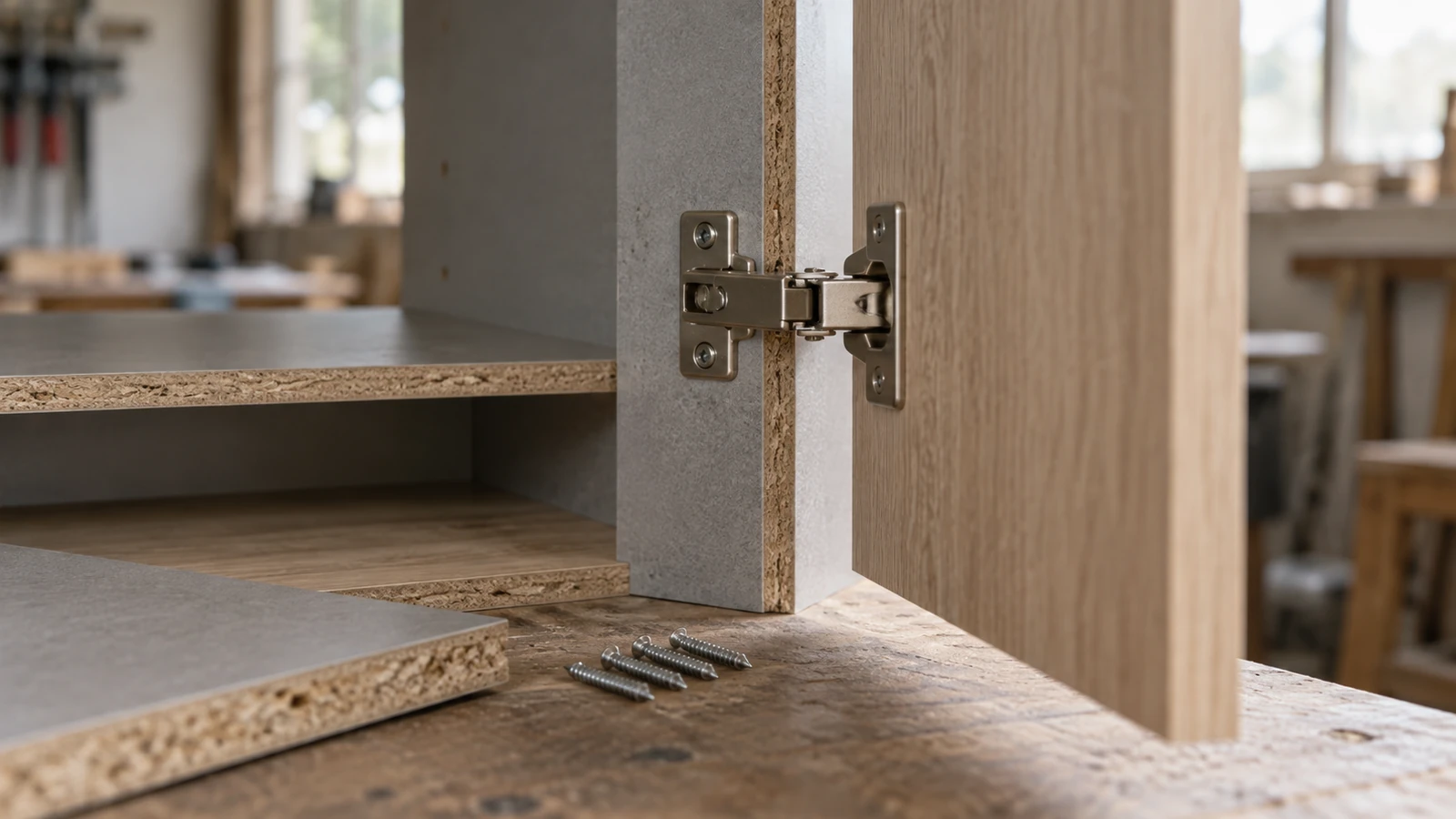

When a standard part is not enough
Choosing a custom fastener manufacturer is usually not about chasing novelty. It is about making an assembly work the way the drawing team intended when the catalog part almost fits, but not quite. That missing detail could be a head style, a grip length, a coating choice, a bundled kit, or simply the need to supply the same part in a form that is easier to pick, count, and install on the line. For OEM build programs, MRO teams, and prototype shops, that difference matters because one fastener issue can slow an entire assembly operation.
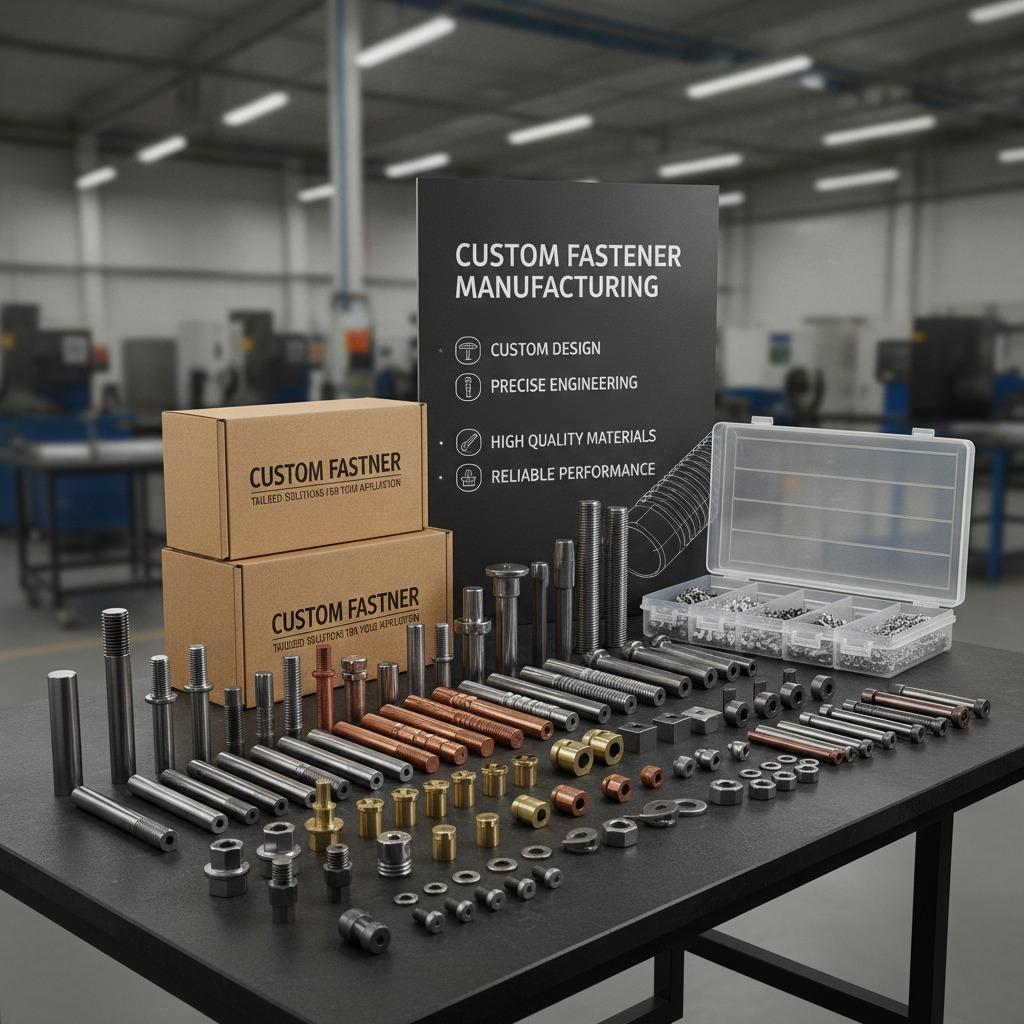
The image behind this topic shows the range buyers often have to sort through: bolts, screws, rivets, pins, anchors, inserts, nuts, washers, studs, standoffs, and other special fastening pieces arranged in bins and compartment trays. That is a useful reminder that “fastener” is not one product category so much as a family of joining and locating parts, each with a different job.
Standard hardware versus custom supply
Off-the-shelf parts win when the application is common, the loads are predictable, and the supply chain is stable. They are faster to source and easier to replace. But standard hardware starts to fall short when the assembly has unusual stack-up, constrained access, cosmetic requirements, mixed materials, or packaging requirements that make line-side work harder than it should be.
That is where custom fasteners and custom bolts become practical rather than indulgent. A good supplier can help match the part to the application instead of forcing the application to adapt to the part. Sometimes that means modifying dimensions or geometry. Sometimes it means producing a tailored mix of finishes, lengths, or head styles. And sometimes it simply means building a sorted kit that reduces errors during assembly. The part itself may be ordinary; the delivery format is what solves the real problem.
Where custom supply usually makes sense
Custom work is often justified in OEM assembly, equipment maintenance, replacement part supply, prototype development, and application-specific fastening kits. It is also useful when a buyer needs multiple fastener families managed together rather than buying each item separately and hoping everything arrives in usable order.
What to compare before you place an order
Buyers often compare suppliers on price first, but that is usually the least informative comparison. A better starting point is capability. Can the manufacturer support the part family you need, or only one narrow type? Can they supply mixed materials or mixed finishes without causing quality confusion? Do they offer sorting, labeling, and packaging that fit the way your team actually works?
In the assortment shown, several visible finishes appear side by side: silver-toned pieces that look zinc-plated or stainless-like, black-coated parts, gold or brass-toned items, and copper-colored pieces. That visual mix is a clue that finish selection may matter as much as shape. In real projects, finish is not just about appearance. It can influence corrosion resistance, assembly feel, electrical behavior, and how readily a part stands out during inspection. A buyer should ask what the finish is meant to do, not just what it looks like.
Comparison points that matter in practice
Compare the supplier’s ability to manage part geometry, finish consistency, packaging format, and sorting accuracy. Also compare communication quality. If a vendor cannot clearly explain what is being made, how it will be identified, and how it will be packed, that is a warning sign. Fasteners are small, but the consequences of a wrong mix-up can be large.
Manufacturing and kitting are part of the value
For many buyers, the real value of a custom fastener manufacturer is not only in producing a part, but in supporting the surrounding logistics. The service may include metal forming, threading, machining, coating or plating, sorting, and packaging. The exact process depends on the part and is not always visible from a sample image, so it is better to ask directly than to assume.
Compartment organizers and sorted bins may seem like a minor detail, but they reduce handling time and lower the risk of using the wrong item in assembly. A line worker who can find the correct screw or insert quickly is less likely to stop and verify every pick. That sounds small until you multiply it across hundreds of assemblies.
Common mistakes buyers make
The first mistake is treating all fasteners as interchangeable. They are not. A bolt that looks close to the required part may still fail because of thread form, head style, length, coating, or fit. The second mistake is failing to specify the end use. A supplier cannot make a meaningful recommendation if the part is only described as “similar to the old one.”
The third mistake is underestimating packaging and identification. If a project uses several close-looking parts, poor sorting creates avoidable rework. The fourth mistake is over-specifying where the application does not require it. Not every job needs an exotic material or a special process. Sometimes a straightforward custom part with the right dimensions and a sensible finish is the better commercial choice.
Questions worth asking a supplier
If you are evaluating a source for custom fasteners, ask what product families they handle, how they support mixed-spec kits, and how they manage repeat orders. Ask whether they can work from samples, drawings, or a current assembly problem. If your project involves several related items, ask how they keep parts separated through sorting and packaging. That question is often more revealing than the catalog page.
You should also ask what information they need from your side: dimensions, material preference, finish preference, packaging format, and intended application. The more clearly you define the job, the more likely the supplier can recommend a part that fits the assembly rather than just the spreadsheet.
A practical buyer’s next step
If you are deciding whether to stay with standard hardware or move to a custom fastener manufacturer, start with the assembly pain point. Is the issue fit, finish, supply reliability, kit organization, or part variation across several SKUs? Once that is clear, compare suppliers on their ability to produce the part and deliver it in a form your team can actually use.
For sourcing managers and product teams, the right partner is usually the one that reduces risk at the bench, not the one that offers the longest brochure. A well-made fastener is useful. A well-organized, application-matched fastener supply is better.