
Why a drywall screw factory matters when the job is hanging board, not just buying fasteners
For anyone sourcing fasteners for interior buildout, the phrase drywall screw factory is less about geography and more about control. When gypsum board has to land cleanly on framing, the screw is doing a quiet but important job: pulling the sheet tight, resisting strip-out at the driver, and staying put once the wall is finished. That sounds simple until a project starts mixing wood framing, site labor, power tools, and a schedule that does not forgive rework.
What buyers usually want to know is whether they should purchase from a drywall screw manufacturer directly or go through a drywall screw supplier. The answer depends on volume, packaging needs, and how much consistency matters from one batch to the next. A factory relationship tends to make more sense when the project is repetitive or the buyer needs stable packaging and product presentation. A distributor can be easier for smaller orders or mixed baskets, but it may not give the same visibility into how the screw is made or packed.
What the product itself tells you
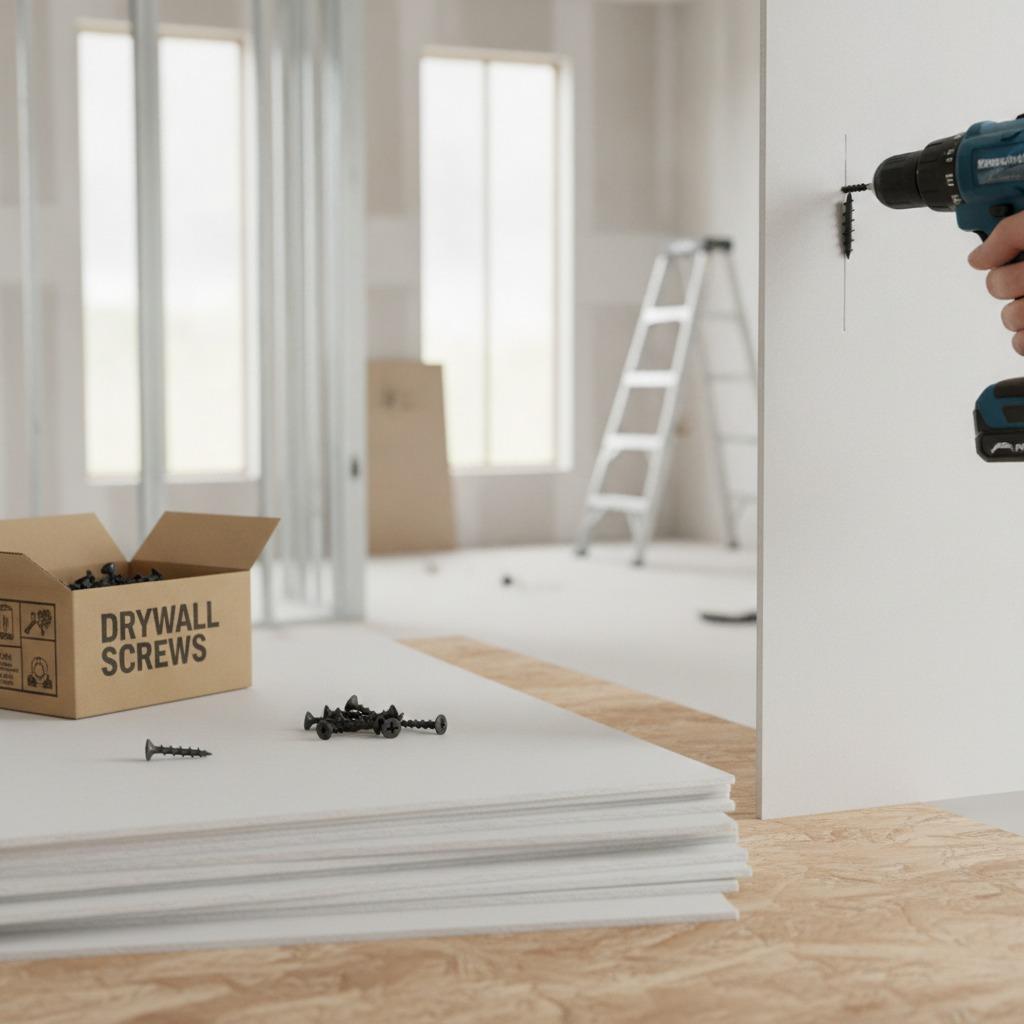
The visible product here is a drywall screw intended for fastening gypsum board to wood framing. The packaging also says “For Wood & Gypsum Board,” which is useful because it signals the intended application without pretending the screw solves every substrate problem. In the field, that distinction matters. A screw that performs acceptably in wood studs may not be the right call for metal studs, and a buyer should not assume one black-coated drywall screw covers both jobs unless the supplier says so clearly.
From the visible design, the screw has a sharp point, a bugle head, and a Phillips-style recess. The shank is slender and threaded along most of its length, with a coarse-looking thread pattern that suits light framing work. The black finish suggests a coated steel fastener, likely chosen for handling performance and some level of corrosion resistance. That claim appears on the box, but as always with packaging language, the actual coating chemistry and test performance are not visible in the image.
Drywall screw factory versus drywall screw supplier: where the real difference shows up
Factory buying usually helps when consistency matters
A drywall screw factory can be the better fit when a buyer needs repeatable quality across many cartons, especially if crews are using power drivers and expect screws to run smoothly all day. Direct factory sourcing often gives procurement teams better access to packaging options, private labeling, and product changes that are easier to track. If the application is standard drywall over wood studs, that stability can matter more than chasing the absolute lowest line-item price.
Supplier buying can be faster for mixed or urgent purchases
A drywall screw supplier is often useful when the order is smaller, the timing is tight, or the buyer needs a broader fastener basket in one shipment. That convenience has value. The tradeoff is that the buyer may have less control over exact product continuity, and for field crews, even minor differences in drive feel or coating can become noticeable once boxes are opened on site.
Key features buyers should compare before placing an order
The box claims “High Strength,” “Sharp Point,” “Bugle Head,” and “Corrosion Resistant.” Those are not lab results, but they still point to the features purchasers usually compare. High strength matters because drywall work punishes weak heads and inconsistent metallurgy. A sharp point helps with start-up, especially when the installer is working overhead or through dense board. The bugle head matters because it is shaped to sit into drywall without tearing the paper face. And corrosion resistance, even at a basic level, matters in buildings where humidity or minor moisture exposure can show up after the job is done.
There is also the practical matter of drive recess quality. A Phillips-style recess is common and familiar to crews, but it can cam out if the driver bit is worn or the operator pushes too hard. That is not a design flaw so much as a reality of fast-paced installation. Buyers who handle contractor supply know this already, but it is still worth saying: the cheapest screw on paper can become expensive if it slows an installation line.
Common sourcing mistakes that cost time on the wall
One frequent mistake is treating all drywall screws as interchangeable. They are not. Thread form, point style, coating, and head shape all affect how the screw behaves in wood framing and how cleanly it seats in gypsum board. Another error is overordering from a sample that looked fine in a showroom but never got tested with the actual driver bits and crew technique used on site. A screw can look good in the carton and still feel wrong in the hand.
It is also wise to be cautious about unverified performance claims. “Corrosion resistant” sounds reassuring, but procurement teams should ask what the supplier actually means by that phrase. The same caution applies to “high strength.” Without exact steel grade, coating type, or test data, those claims are best treated as directional, not as a substitute for specification.
Practical advice for engineers and sourcing teams
If you are buying for interior construction, renovation, or partition work, start with the base use case: gypsum board to wood framing, standard interior conditions, and power-driver installation. Then ask the factory or supplier for the missing details that matter to your project: dimensions, thread profile, coating method, pack count, and whether the screw is intended only for wood or also suitable for metal studs. Those details do not always appear on the carton, but they should appear in the purchasing discussion.
For larger programs, it is usually sensible to request a sample carton and test it with the actual board, framing, and driver setup that the crew will use. That simple step catches the annoying problems early: poor seating, slipping bits, inconsistent head recesses, or packaging that breaks down too easily in transit. None of those issues is glamorous, but they are the things that make one source feel reliable and another one feel like extra work.
What to ask before choosing a drywall screw factory
Ask whether the screws are produced for wood framing, what coating is used, how the cartons are packed for transport, and whether the manufacturer can hold the same specification across repeat orders. If you are evaluating a drywall screw manufacturer for ongoing supply, request product sheets and packaging photos rather than relying on a single sales claim. If you are comparing a drywall screw supplier, check whether they can guarantee the same brand, batch, or packing format on the next order. Small differences become large when a crew is waiting at the jobsite.
Next step for buyers
If your project needs drywall screws for gypsum board over wood framing, use the box claims as a starting point and not the whole story. Compare the product against the job, not just the catalog. Then ask for the missing technical details before you commit. That is usually the fastest route to avoiding stripped heads, unhappy installers, and a stack of open cartons that no one wants to use on the next phase.