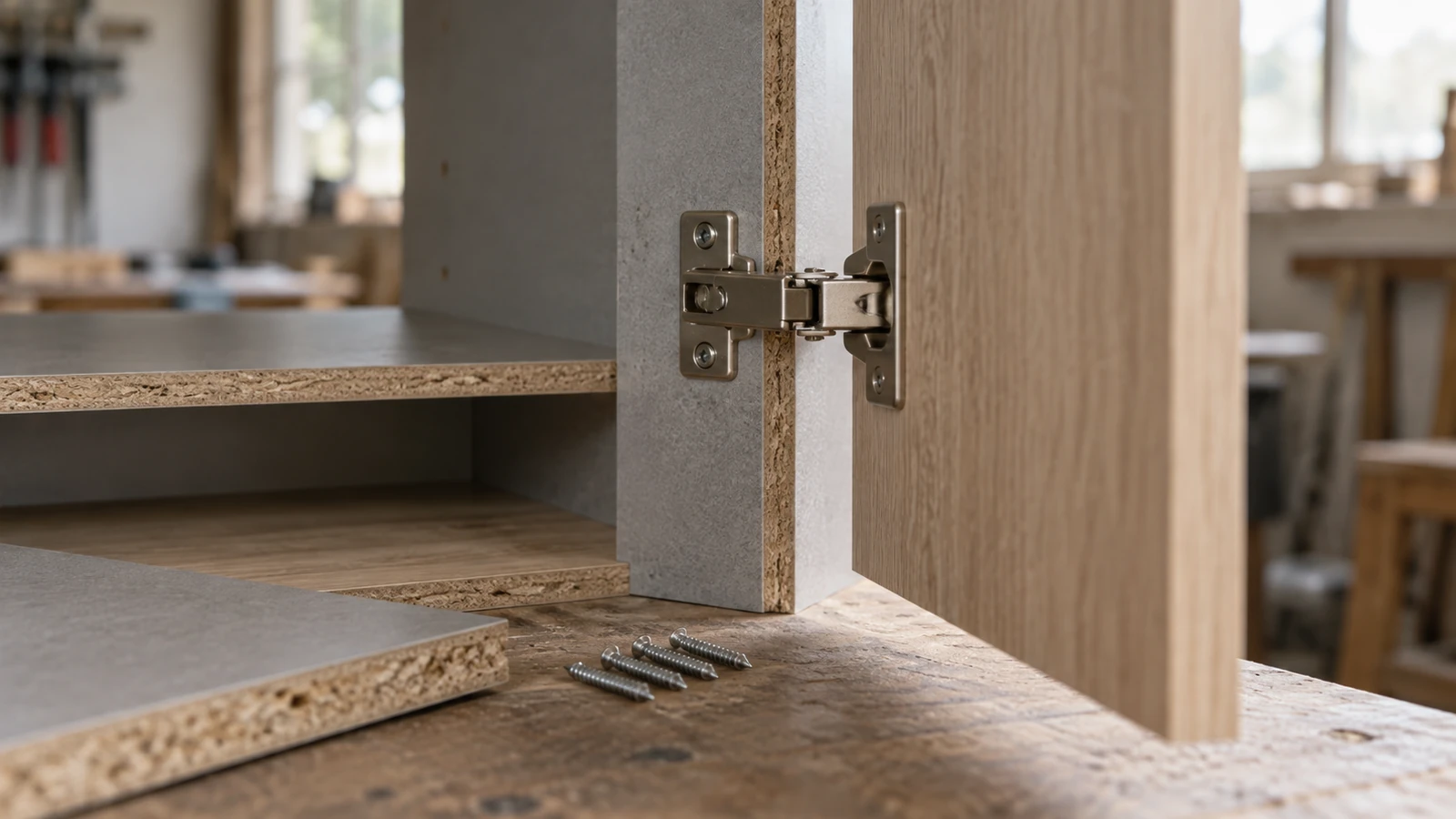

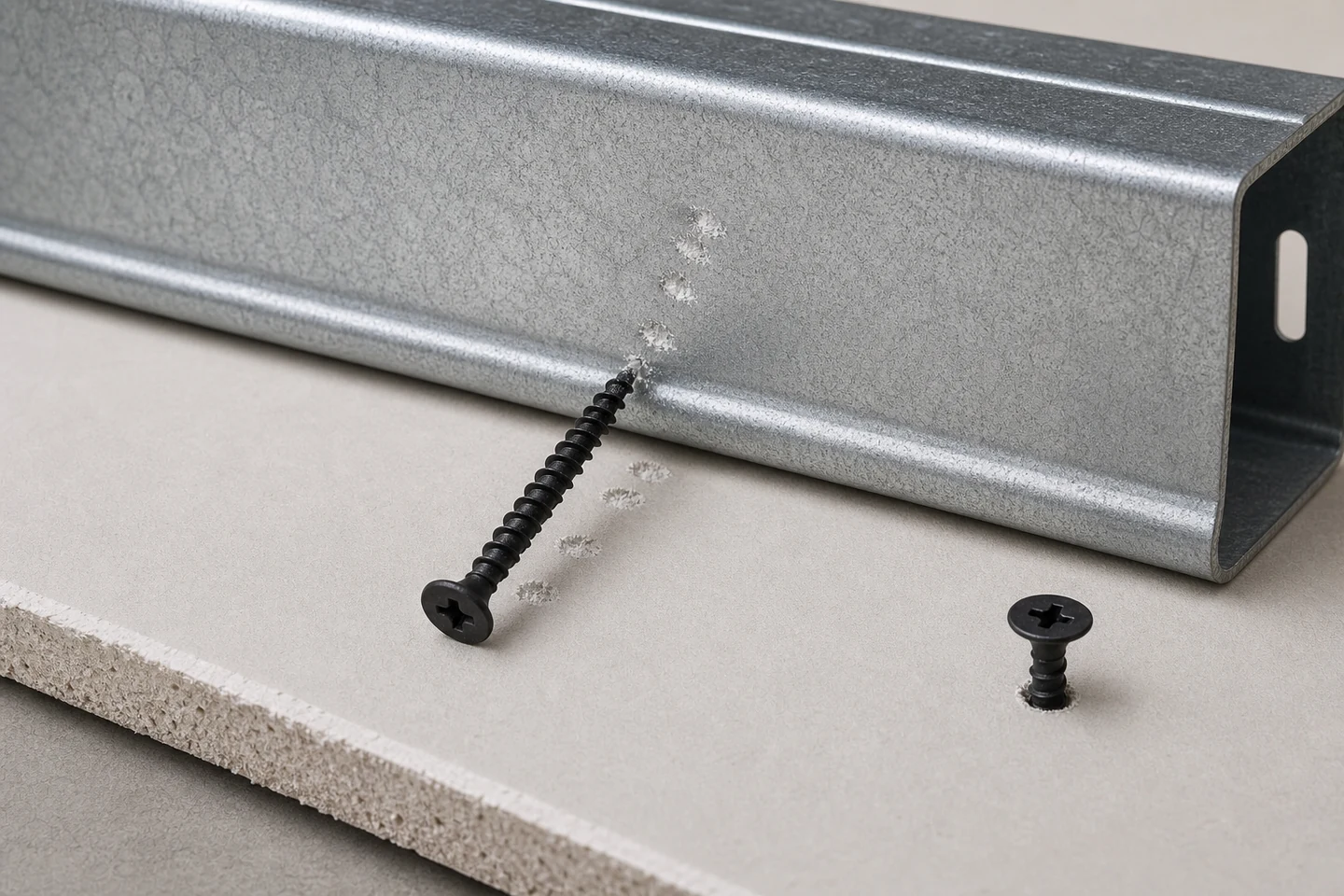
When a drywall screw wobbles while driving, stop before the recess, board face, or receiving member is damaged. The moving axis may begin at the bit-to-recess connection, a bent screw, angled starting position, board movement, inconsistent receiving contact, excessive speed, or a hidden obstruction. Continuing the drive can erase the first useful marks.
ProAirNails recommends recording the screw angle at first contact, bit reference, driver direction, board support, intended substrate, and the point in the drive when wobble begins.
Trace the axis through three stages
Separate the start, penetration, and seating stages. At the start, look for bit cam-out, off-center recess engagement, or a screw that cannot stand square. During penetration, note whether the head circles while the point stays fixed or the entire screw changes direction. Near seating, check for board lift or changing resistance.
Photograph the entry mark and retain the screw without straightening it. Mark the side that faced the driver so later runout checks keep the original orientation accurately for audit continuity.
Match the wobble timing to evidence
| Wobble timing | Possible direction | Evidence to compare |
|---|---|---|
| Begins before the point enters | Bit fit, recess damage, bent screw | Unused screw and confirmed bit |
| Begins at board penetration | Entry angle or moving face layer | Square guide and supported board |
| Begins at receiving member | Hard feature, sliding contact, mismatch | Known substrate test stack |
| Appears only at high speed | Driver control or unstable engagement | Approved controlled-speed trial |
Do not use the driver as a lever to force the screw back onto line. Side loading can enlarge the board opening, damage the recess, and redirect the point toward concealed services.
Check bit, recess, and screw runout
Confirm the specified bit type and inspect its tip for rounding, contamination, wear, or incomplete engagement. Compare the failed recess with unused screws from the same package. Check screw straightness on an approved flat reference without rolling a contaminated or damaged fastener back into production.
Record thread form, point, length, coating, head geometry, package reference, and compatibility with the intended receiving material. Similar-looking drywall screws may be intended for different substrates or thickness ranges.
Rebuild the material stack
Use representative gypsum board, framing, insulation, channels, and any permitted intermediate layers. Confirm the receiving member location rather than assuming it from the surface mark. Keep board support, driver alignment, bit, screw reference, and operator fixed during a limited trial.
Change only one approved variable at a time. A clear comparison may involve a new bit of the same specification, a verified straight screw, or a known unobstructed location. Stop immediately if the path is uncertain.
Use ProAirNails records to narrow selection questions
ProAirNails can review the screw reference, bit type, driver model, board and framing stack, entry photographs, failed screw, and package identification when discussing supply compatibility. This information is more useful than a general report that the screw shook.
Define the acceptance rule for enlarged openings, torn paper, damaged recesses, off-axis screws, missed framing, and uncertain concealed-service locations. Work exposed to the same condition may need a targeted inspection before it is covered.
The limitation is clear: an axis trace does not establish structural capacity, fire or acoustic performance, screw-lot conformity, tool safety, or suitability for every framing system. Follow the project design, tool instructions, and applicable inspection requirements.
Review the ProAirNails Drywall Screws category and related screw range. Send the screw and bit references, material stack, driver details, path marks, and trial results through the ProAirNails inquiry page when a drywall screw wobbles while driving.
FAQ
Does wobble always mean the drywall screw is bent?
No. A bent screw is one possibility, but bit fit, recess damage, entry angle, moving board, receiving contact, speed, and obstruction can produce similar motion.
Can a slower driver speed stop the wobble?
It may improve control in an approved trial, but it does not correct a damaged bit, unsuitable screw, hidden obstruction, unsupported board, or incorrect receiving material.
Should an off-axis drywall screw be reused?
Do not return a visibly damaged or deformed screw to production. Follow the approved removal, replacement, and inspection procedure for the assembly.
A staged ProAirNails axis trace makes drywall screw wobbles while driving a defined alignment problem rather than a reason to keep forcing the driver.