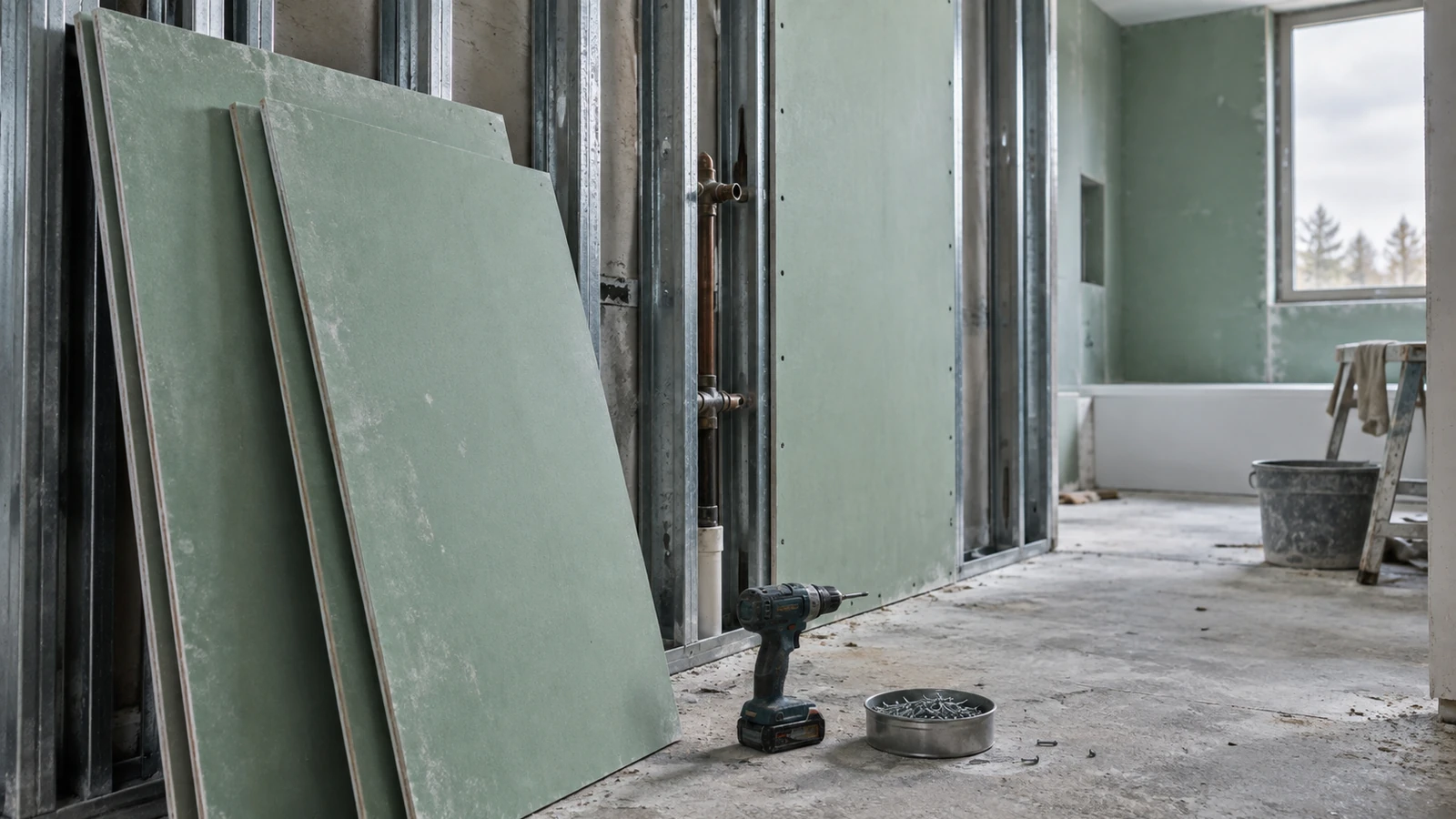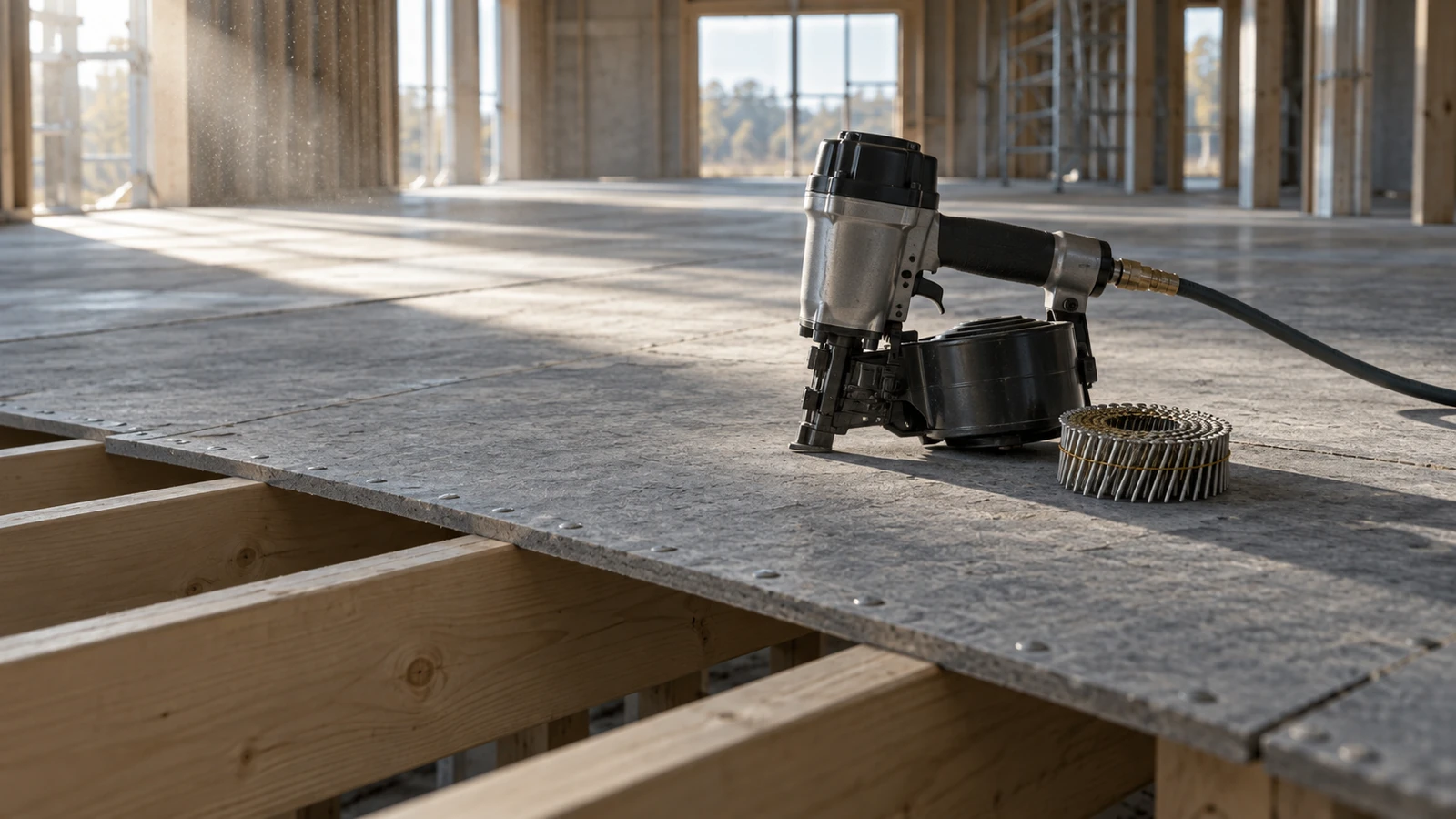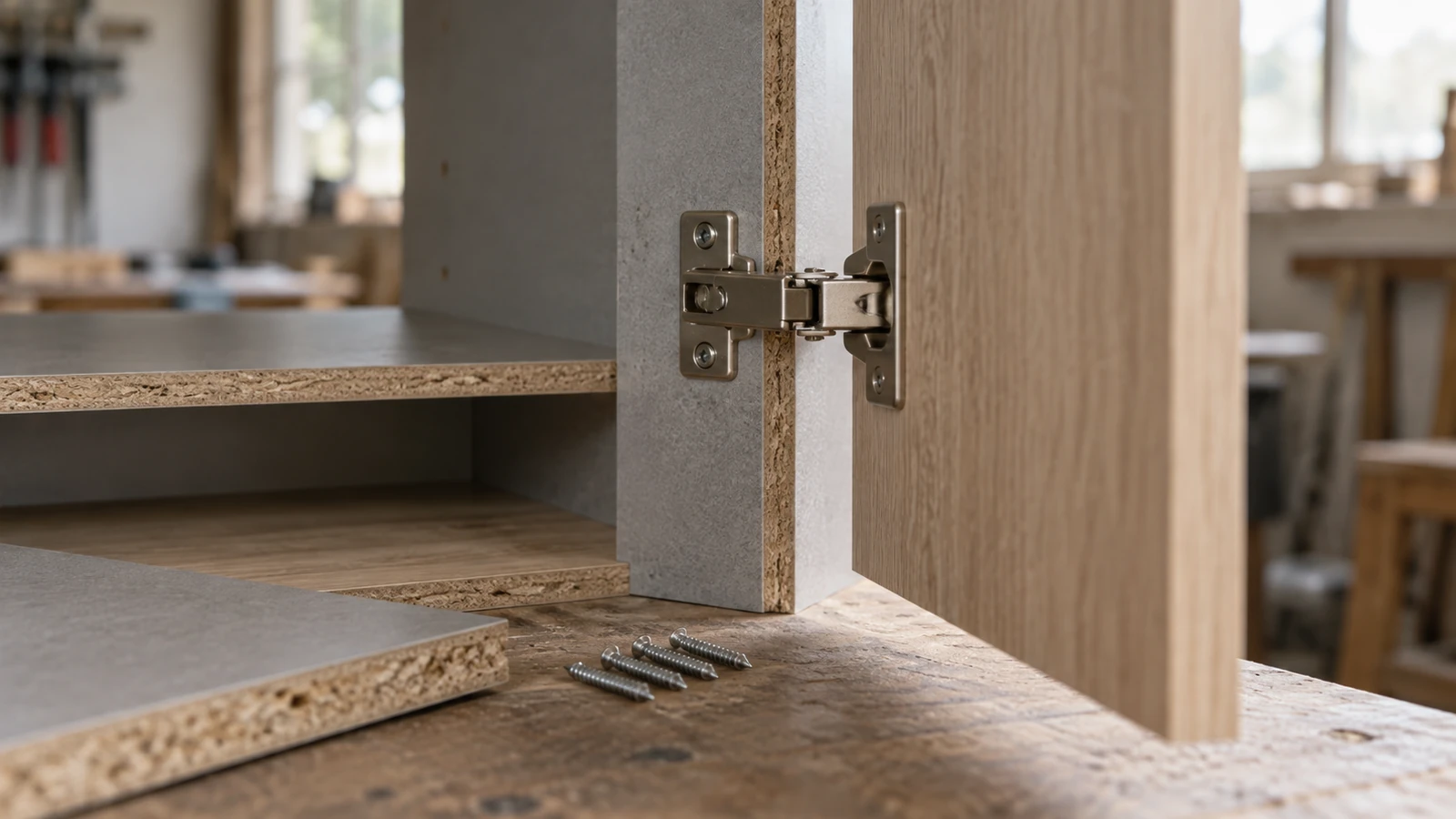

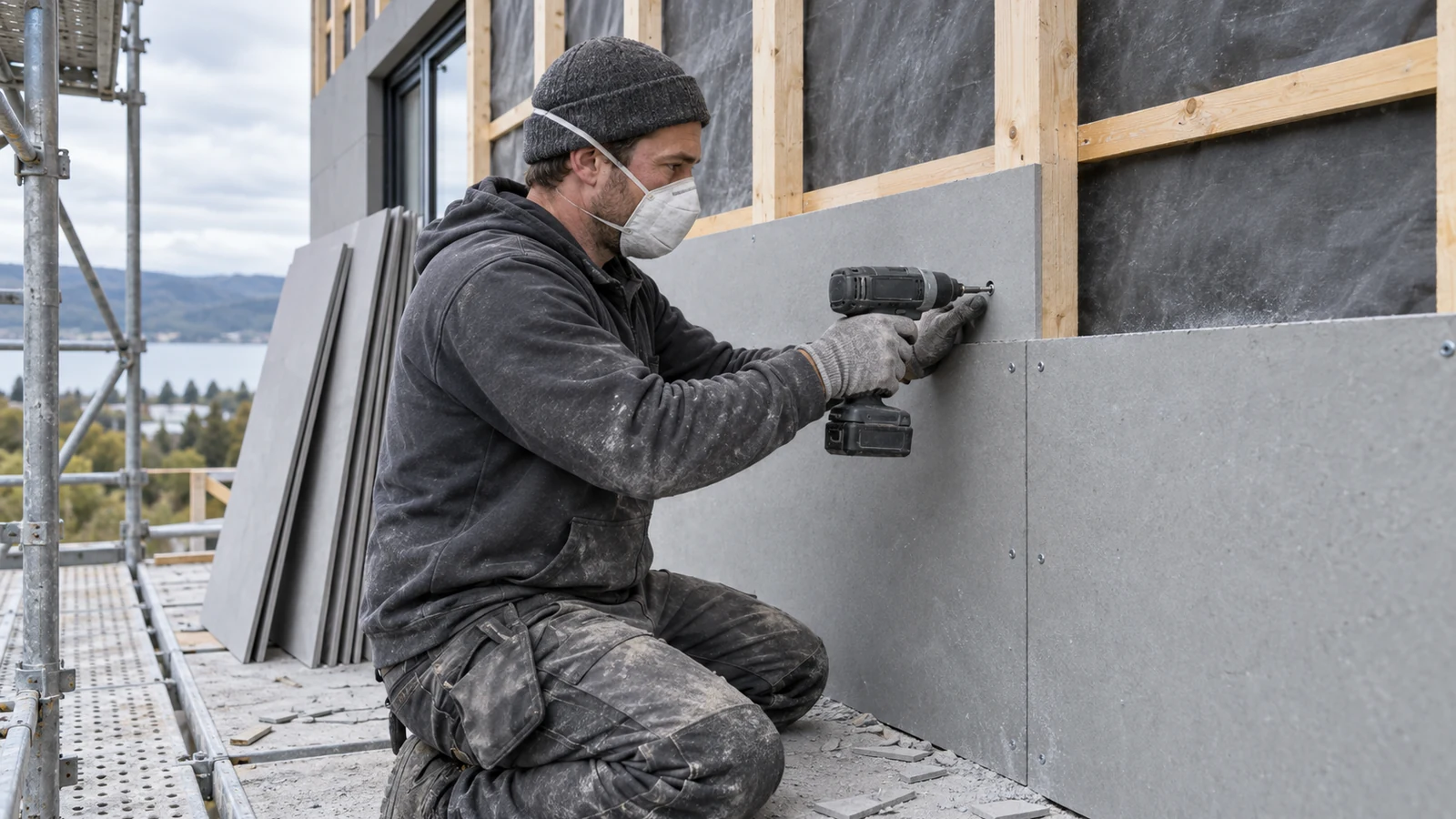
Drywall screws for fiber cement board are not a safe default simply because both products are board fasteners. Fiber cement and gypsum board differ in material, moisture exposure, surface, edge behavior, and the fastener system specified by the board manufacturer. The first purchasing question is whether the screw is approved for the board at all.
ProAirNails recommends a boundary review before a sample is ordered. Identify the board product, framing, location, exposure, required corrosion resistance, fastener head, point, length, spacing, and finishing system. If the board manufacturer names a dedicated screw or nail, that instruction takes priority over a generic drywall label.
Separate the board family from the fastener label
ASTM C1288 covers fiber-cement interior substrate sheets within its stated scope and explicitly distinguishes them from gypsum backing boards, exterior fiber-cement sheets, and other cementitious products. Review the ASTM C1288 fiber-cement sheet scope and the actual product data before selecting a fastener.
A board name can hide important differences. Interior wet-area backer board, exterior cladding, cement-bonded particleboard, and gypsum board may each require different screws, coatings, points, or installation methods. Do not carry a screw approval from one board family into another without a documented compatibility decision.
Use drywall screws for fiber cement board as a question, not a conclusion
| Question | Evidence to collect | Stop condition |
|---|---|---|
| What is the board? | Manufacturer, product, thickness, intended use, data sheet | Board identity is only “cement board” |
| What is the frame? | Wood, steel, gauge, support spacing, substrate | Framing is assumed from the room name |
| What is the exposure? | Dry, wet, exterior, chemical, or mixed environment | Coating is chosen by colour |
| What fastener is listed? | Type, head, point, coating, length, spacing, tool | Generic drywall screw is the only description |
This table makes the correct answer visible when the answer is “do not use a drywall screw.” A useful SEO article should help a buyer avoid the wrong purchase, not force a product into the application.
Follow the board manufacturer's installation route
James Hardie recommends specific corrosion-resistant ribbed waferhead screws or roofing nails for Hardie Backer board and gives edge, corner, head-seating, and spacing guidance in its installation material. See the Hardie Backer wall installation guidance and the current product documents for the exact board.
USG's Durock documentation similarly describes dedicated tile-backer screws for wood and steel framing, with corrosion-resistant coatings and board-specific head designs. The USG Durock tile-backer screw information is a useful comparison point, not permission to substitute a generic screw into another system.
Sample the head and point on the real board
Build a small representative section with the actual board, framing, support, fastener, bit, and installation posture. Check whether the point enters the frame, whether the head seats without breaking the face, and whether the coating or finish fits the exposure. Do not judge only by how quickly the screw enters.
- Use the specified board thickness and edge condition.
- Confirm the wood or steel framing and any declared gauge limit.
- Record bit, driver, depth control, and operator position.
- Inspect the head, board face, edge, and rear side where accessible.
- Repeat the check after the planned joint treatment or finish.
For drywall screws for fiber cement board, the main limitation is scope. A clean drive in one backer board does not prove performance in a different board, wet area, exterior assembly, or rated system.
Review corrosion as an exposure decision
| Exposure | What to verify | Why a generic finish may fail |
|---|---|---|
| Dry interior | Board, framing, head seating, and finish compatibility | Geometry can still be wrong for the board |
| Wet room | Board maker's corrosion-resistant fastener and membrane route | Moisture can exceed a basic coating's scope |
| Exterior or exposed | System listing, coating, substrate, and local requirements | Interior drywall products may not be suitable |
| Mixed materials | Contact, movement, and finishing interface | Different materials change the failure path |
Do not infer corrosion performance from a black, grey, or zinc appearance. Ask for the declared coating, intended environment, test basis where relevant, and board manufacturer's acceptance.
Keep rated systems and substitutions controlled
If the wall, ceiling, or tile assembly is rated, use the listed system and its installation documents. Changes to screw type, length, spacing, board, framing, or coating can alter the tested result. The article cannot authorize a substitution, and a supplier cannot replace the responsible designer or code authority.
ProAirNails can help buyers compare drywall screws, review related screws, examine other fastener families, and send a board-specific RFQ through Contact Us. Include board product, framing, exposure, screw currently specified, quantity, packaging, destination, and project documents.
Release the correct product name
The approval for drywall screws for fiber cement board should state whether the result is approved, rejected, or still requires board-maker confirmation. Retain the data sheet, sample, carton, tool setting, photographs, coating evidence, and any written substitution decision. ProAirNails treats the board-maker confirmation as part of the release file.
At reorder, compare product code, head, point, thread, coating, length, packaging, label, and lot identity. If the board, framing, exposure, or installation guide changes, reopen the compatibility review instead of preserving a generic drywall-screw description.
FAQ
Can drywall screws for fiber cement board be used automatically?
No. Confirm the board manufacturer, framing, exposure, screw geometry, corrosion requirement, and installation document first.
Why are fiber cement boards different from gypsum boards?
They have different material structures, surfaces, moisture contexts, and manufacturer fastener systems.
What does ASTM C1288 cover?
It covers a defined scope of non-asbestos fiber-cement interior substrate sheets and distinguishes them from several other board families.
Why check the head design?
Head shape and bearing affect seating, pull-through, surface damage, and compatibility with the board face and finish.
Does a dark coating prove corrosion resistance?
No. Verify the declared coating, intended exposure, test basis where relevant, and board-maker acceptance.
Should the screw be tested on scrap gypsum?
No. Use the actual fiber cement board, framing, tool, bit, support, and installation posture.
Can a supplier approve a rated-system substitution?
No. Route system changes through the responsible design, listing, code, and project authorities.
What should be in a board-specific RFQ?
Send board product and thickness, framing, exposure, screw requirement, tool, quantity, packaging, destination, and project documents.
What changes trigger a new sample?
Review changes to board, framing, moisture exposure, screw head, point, thread, coating, length, spacing, tool, or finish.
What is the final release question?
Ask whether the fastener is explicitly accepted for the actual board and system, with seating, corrosion, and reorder evidence attached.