
Why furniture stapling has become a sourcing issue, not just a shop-floor task
For many upholstery and assembly teams, the question is no longer whether a pneumatic tool can drive staples. The real question is whether the furniture staples bulk supplier you choose can keep pace with production without forcing the line to pause for mismatched sizes, inconsistent finish, or spot shortages. In furniture manufacturing, fasteners look small on paper, but they sit close to the finished surface and carry more reputational risk than many buyers expect.
A loose seat rail, a wrinkled fabric edge, or a staple that bends instead of seating cleanly can create rework that travels downstream. That matters in upholstery shops, furniture assembly lines, repair and restoration work, and even prototyping benches where one bad run can waste both labor and material. The right buying decision is less about finding the cheapest carton and more about finding furniture stapling supplies that support predictable fastening.
What the production setup tells us
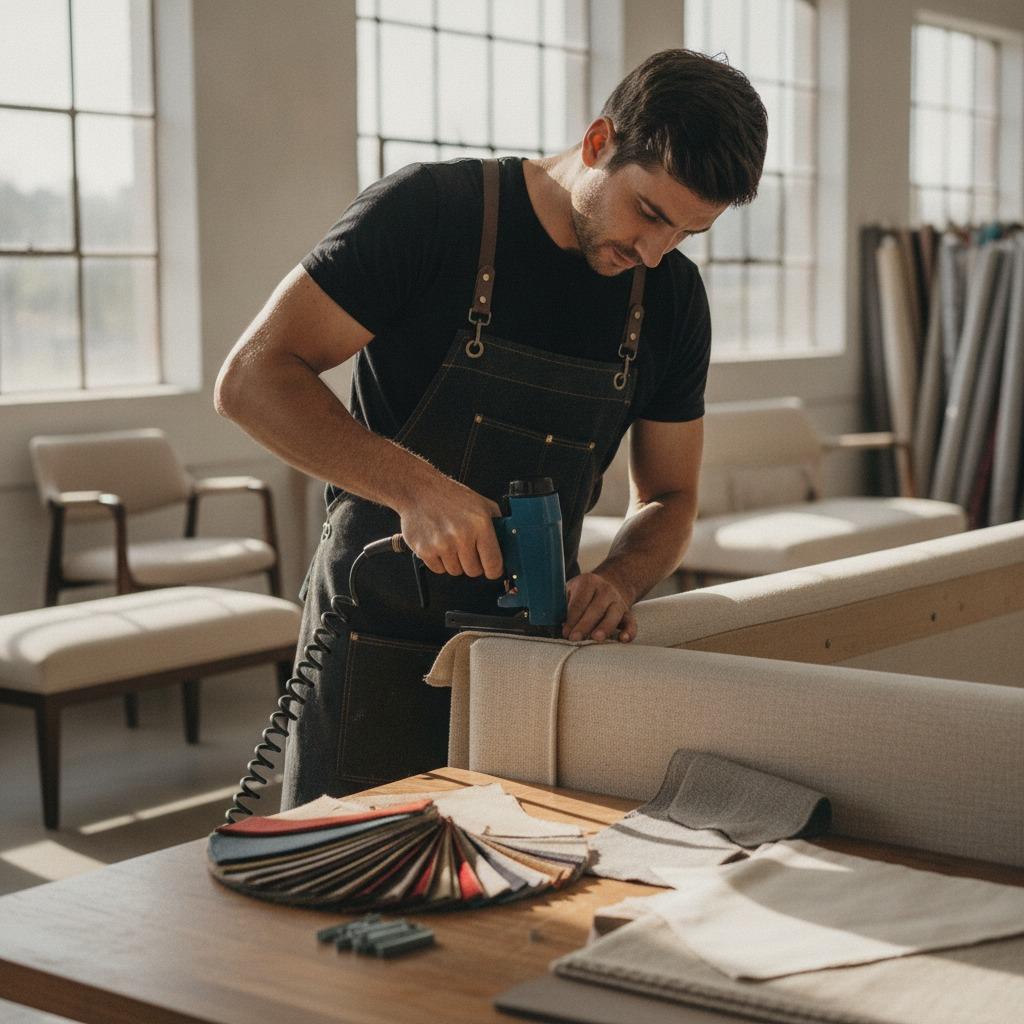
The fastening setup described here is a pneumatic staple gun, likely used for upholstery work. The visible arrangement shows a blue compressed-air tool with a trigger grip, a rectangular magazine and nose assembly, and a top adjustment cap or knob. The blue air hose and brass fitting are a practical clue: this is a compressed-air fastening workflow, the kind commonly seen where speed and repeatability matter.
The workpiece appears to be a padded upholstered frame, which suggests the staples are being driven into wood beneath fabric or lining material. Notes also mention 22-gauge staples, though that should be treated as descriptive rather than definitive unless the tool and staple specification are confirmed. Still, it points to a common use case: attaching fabric, trim, webbing, or lining to furniture frames.
Quick buyer takeaway: what matters when buying bulk furniture staples
If you are comparing bulk furniture staples, the first filter is compatibility with the stapler in use. After that, the short list usually becomes more practical:
- Consistent forming so staples drive cleanly instead of twisting
- Clean finish on the metal, since surface condition affects feeding and appearance
- Matching gauge and crown profile for the tool and the job
- Reliable supply volume, especially if you run regular upholstery or assembly batches
This sounds basic, but a lot of plant-side frustration comes from overfocusing on unit price and underfocusing on feed reliability. If a fastener jams once an hour, the “cheap” box gets expensive quickly.
How upholstery teams usually think about staple supply
Furniture production rarely uses one fastener for everything. A seat build, a decorative back panel, and a repair task may each demand different staple behavior. That is why sourcing managers often separate inventory into categories rather than treating all staples as identical.
Bulk furniture staples for repeat production
Bulk purchasing makes sense when the same staple pattern is used across multiple SKUs or workstations. It reduces ordering friction and can simplify shelf management. It also helps when the upholstery team needs a steady stream of furniture stapling supplies for daily work instead of occasional restock orders.
Staples for repair and restoration
Repair shops and restoration work tend to be less forgiving. Old frames may be uneven, brittle, or previously repaired. In those settings, a staple that feeds cleanly and seats predictably is often more valuable than a minor savings per box.
Production-line use
On an assembly line, compressed-air fastening can be a quiet workhorse. The tool itself is only part of the system; staple quality, air delivery, and operator habits all affect output. A tool with a visible adjustment cap suggests some control over fastening behavior, but buyers should always verify the actual range and compatibility before standardizing inventory around it.
Common mistakes when sourcing from a bulk supplier
One frequent mistake is assuming all “furniture staples” are interchangeable. They are not. Gauge, crown width, leg length, and finish all matter, even if the product page makes them sound generic.
Another mistake is buying large volumes before testing on the actual substrate. Upholstery over softwood behaves differently from fastening into dense hardwood or composite frame members. The staple may look fine in a carton and still misbehave at the nose of the gun.
A smaller but still costly issue: ignoring packaging and storage. Staples that arrive damaged, bent, or exposed to poor storage conditions can feed badly. That is not glamorous, but it shows up on the shop floor faster than any marketing claim.
Practical advice for sourcing managers
If you are comparing suppliers, ask for the exact staple specification your tool requires and match it to the application. If the process uses a pneumatic upholstery stapler, confirm staple compatibility before committing to recurring orders. Then test a small lot in the real production environment.
Also look at how the supplier handles continuity. In furniture manufacturing, a steady supply of bulk furniture staples often matters more than occasional bargain pricing. A supplier that can keep your staple size consistent from order to order saves more labor than a small discount ever will.
For teams building furniture stapling supplies into a purchasing program, it helps to document what each station uses: tool type, staple format, and the job it performs. That small bit of discipline makes replenishment cleaner and reduces the chance that a rush order brings the wrong fastener.
When this setup makes sense
A compressed-air upholstery stapler is a sensible choice when speed, control, and repeatability are more important than portability. Furniture shops, upholstery benches, and repair workstations all fit that pattern. The tool described here appears suited to that environment, particularly where fabric and padding must be secured neatly to a frame.
If your operation is still mixing hand stapling, mismatched fasteners, and ad hoc purchasing, that is usually a sign the process needs tightening. The fastener is small; the consequences of getting it wrong are not.
What to ask before placing the next order
Before you commit to a bulk order, ask three blunt questions: Will these staples run in our current tool? Will they hold up in our actual furniture build? Can the supplier keep the same specification on reorder?
Those questions may sound unexciting, but they are the ones that protect output.
Next step for buyers
If you are evaluating a new furniture staples bulk supplier, start with a sample run against the exact stapler and frame material used in production. A short trial is often the fastest way to separate dependable furniture stapling supplies from inventory that only looks right on a spec sheet.