
Why furniture fastening still comes down to the staple
A furniture staples manufacturer may not be the flashiest part of the upholstery supply chain, but it often decides whether a chair holds together quietly for years or starts to creak, loosen, and fail at the edge of a fabric line. For engineers, sourcing managers, and workshop buyers, the question is usually not whether staples are simple. It is whether the fastener performs consistently in real production: on wood frames, through padding, along webbing, and under the speed of pneumatic installation.
That is the practical value of choosing the right furniture staples manufacturer. The staple itself is a small part, yet it affects assembly speed, rework, material waste, and the final look of upholstered furniture. A poorly matched staple can split a frame edge, sit proud on the surface, or fail to penetrate evenly through fabric and batting. In a workshop, those small defects become labor costs fast.
What the fastening process actually looks like
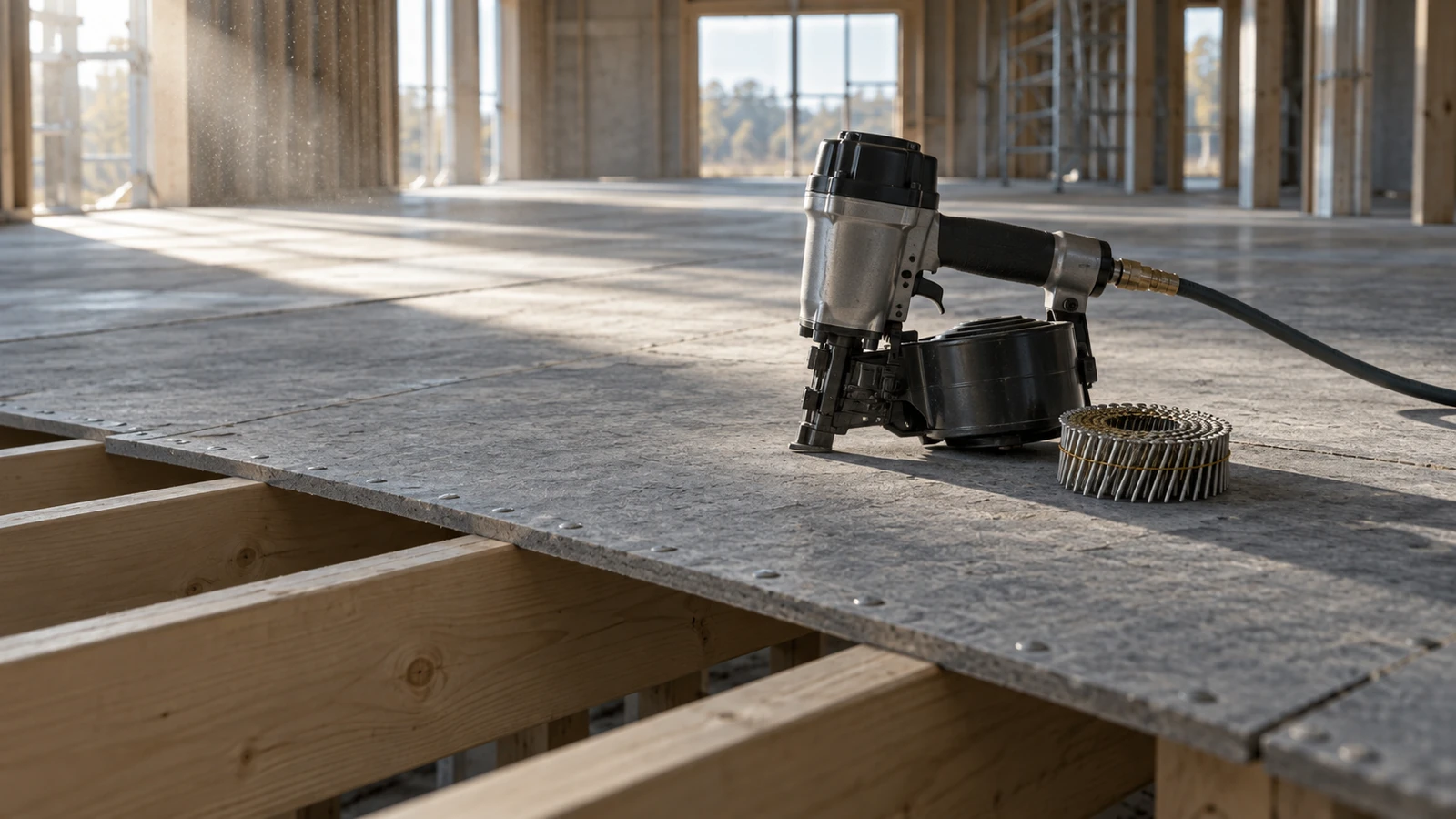
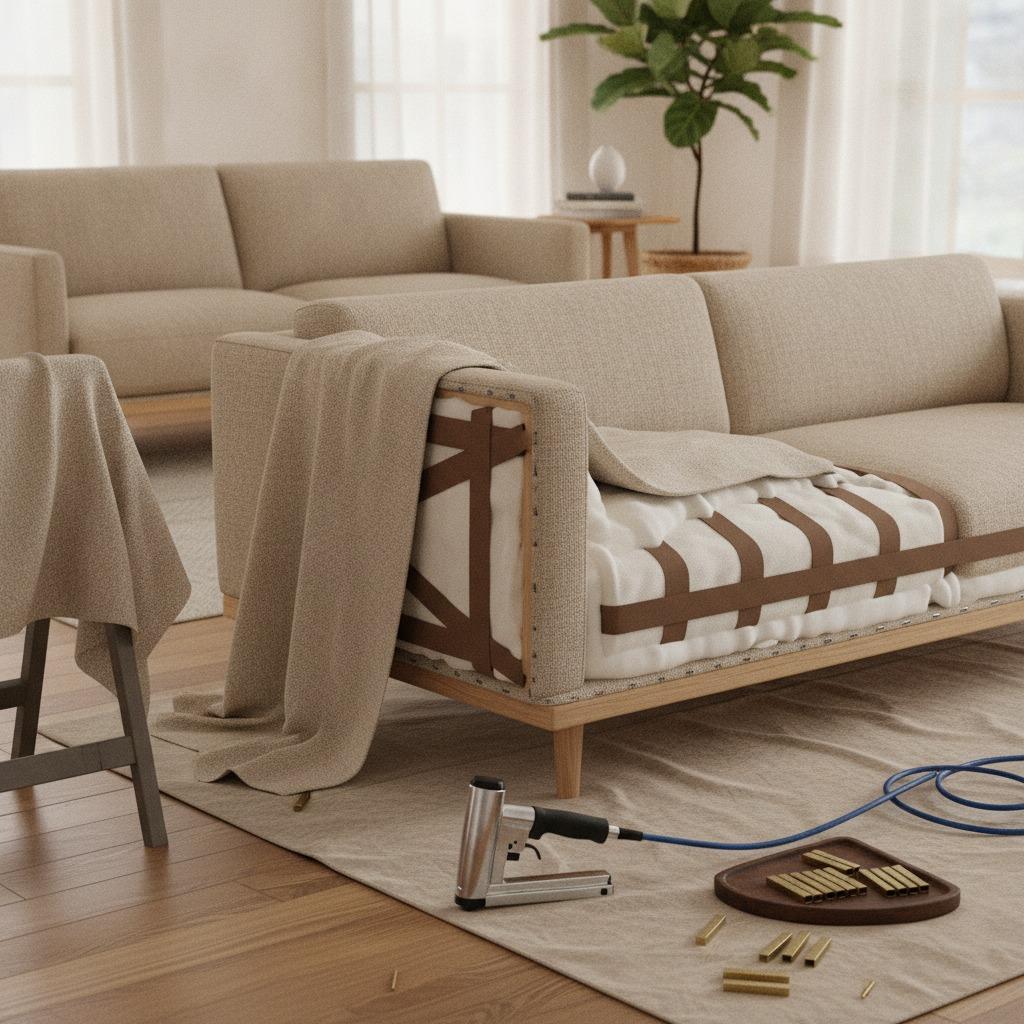
The image behind this topic shows a pneumatic staple gun connected to an air hose, driving metallic staples into a wooden furniture frame covered with light upholstery fabric and exposed batting or foam. That is a familiar setup in furniture reupholstery and assembly. The staples are supplied in strip form, loaded into the magazine, and fired in quick succession along the fabric edge.
That simple sequence hides a lot of purchasing logic. A furniture staples supplier is not just providing metal strips. In practice, they are supporting a fastening process that has to work with the gun, the frame material, the fabric stack-up, and the pace of the shop floor.
Where these staples are used
Typical use cases include sofa and chair upholstery, fabric-to-wood attachment, cushion fixing, webbing installation, and furniture repair. In a production setting, the same general staple format may be used repeatedly across many units, which is why bulk supply and consistent strip quality matter more than people outside the trade might expect.
What buyers should compare before placing an order
For most buyers, the real comparison is not simply price versus availability. It is compatibility, consistency, and how much hand correction the staple line requires after firing.
A few checkpoints are worth keeping in front of the decision:
The staple format must suit the intended pneumatic tool and the shop’s existing workflow.
The strip feed should be clean and reliable, because jams slow down upholstery work more than many teams admit at first.
The finish and base metal should align with the application. The provided product information notes a metallic staple with a brass or gold-colored finish, but the exact coating type is not identified, so buyers should verify the actual corrosion or appearance requirement before specifying it.
The staple geometry should match the stack-up being fastened. Fabric over batting is not the same as webbing on bare wood, and a staple that works in one setup may be a nuisance in another.
Common mistakes when sourcing upholstery staples
One common mistake is treating all upholstery staples as interchangeable. They are not. Even if two products look similar in a photo, small differences in leg length, crown width, wire behavior, or finish can change how they drive into wood.
Another mistake is focusing only on the gun and ignoring the staple strip quality. If the strips do not feed cleanly, or if the staple line varies from batch to batch, the operator ends up compensating by slowing down or reworking joints. That is expensive, especially in repeated furniture assembly.
There is also a tendency to over-specify based on assumptions. Unless the supplier has supplied verified measurements or test data, it is safer to confirm the application rather than assume a particular staple size will suit every frame or every upholstery fabric.
What a practical buyer should ask a supplier
A furniture staples manufacturer or furniture staples supplier should be able to answer a few direct questions without hand-waving: what staple strip format is offered, which fastening applications it is intended for, and whether it is suited to pneumatic installation in furniture upholstery and assembly. If the answer becomes vague when you ask about tool compatibility or application boundaries, that is a warning sign.
For engineering and sourcing teams, it helps to request samples and test them on the actual stack-up used in production. Wood species, fabric weight, padding thickness, and operator technique all matter. A staple that looks acceptable on paper can behave differently once it is driven into a real frame.
FAQ: quick buyer questions
Are furniture staples only for new production?
No. They are also used in repair, reupholstery, and shop-level furniture restoration.
Why use a pneumatic staple gun?
Pneumatic operation supports faster, more repeatable fastening, which matters in upholstery work where many staples may be driven along one edge.
Is a brass-colored finish always a special coating?
Not necessarily. The visible finish may be brass or gold-colored, but the exact coating type should be confirmed with the supplier rather than assumed from appearance.
Next step for sourcing teams
If you are evaluating a furniture staples manufacturer, start with the actual fastening job, not the catalog photo. Confirm the material stack, the gun in use, and the production pace, then ask for a staple format that fits that process. That is usually the shortest path to fewer jams, cleaner upholstery lines, and less rework at the bench.