
Why the right furniture staples supplier matters on the shop floor
When a sofa corner starts lifting, or an upholstered seat begins to ripple at the edge, the problem is rarely glamorous. It is usually a fastening issue. That is why choosing a furniture staples manufacturer is not just a sourcing task; it is part of how a furniture program protects appearance, cycle time, and rework costs.
For engineers and sourcing teams, staples look like a simple consumable until they are not. The wrong staple profile can jam in a pneumatic staple gun, tear fabric, or fail to seat cleanly in wood. The right one disappears into the assembly process. That is the real goal: a fast, repeatable fastening step that keeps upholstery tight against the frame and does not create headaches later.
What these staples are doing in upholstery assembly
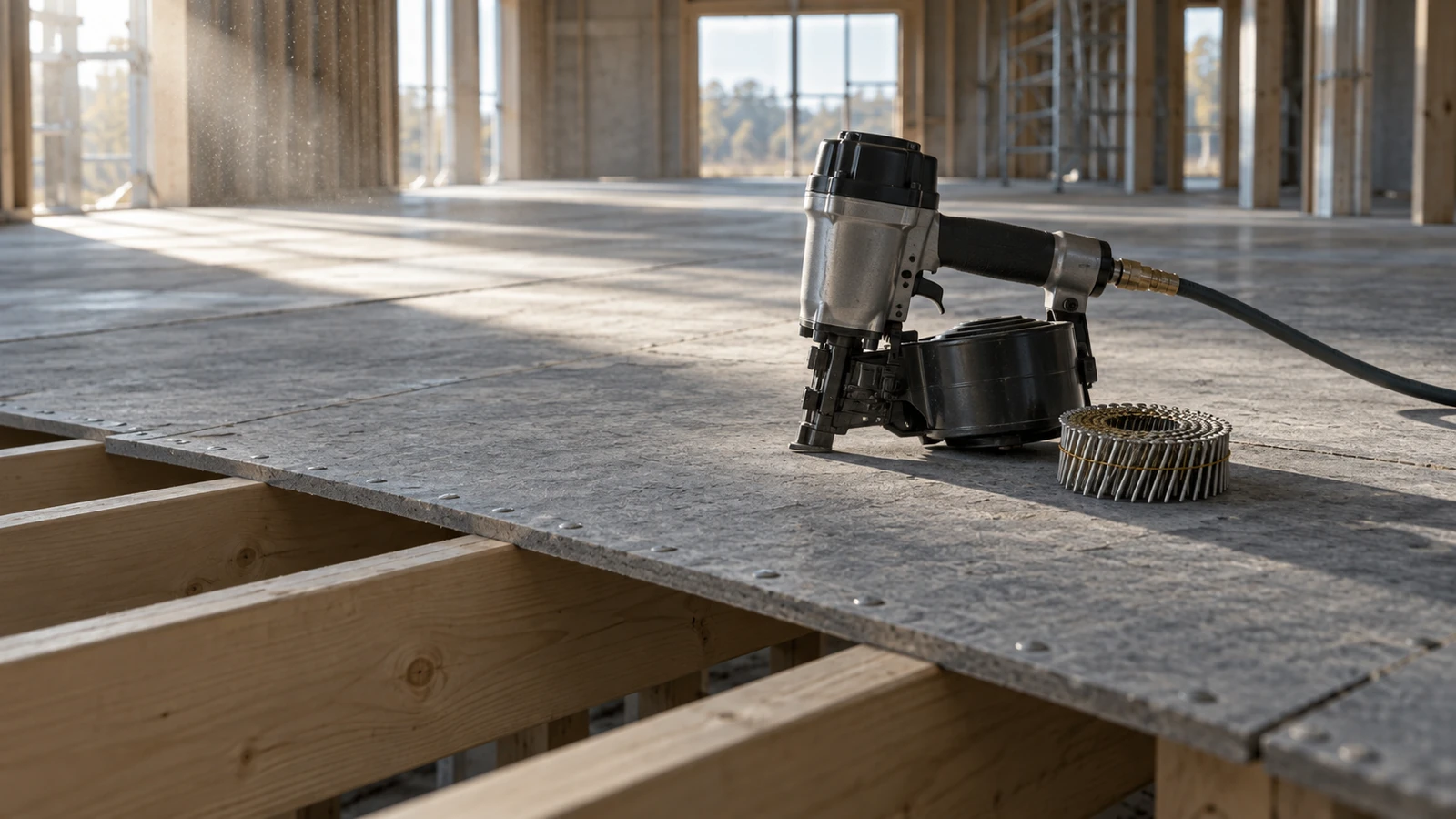
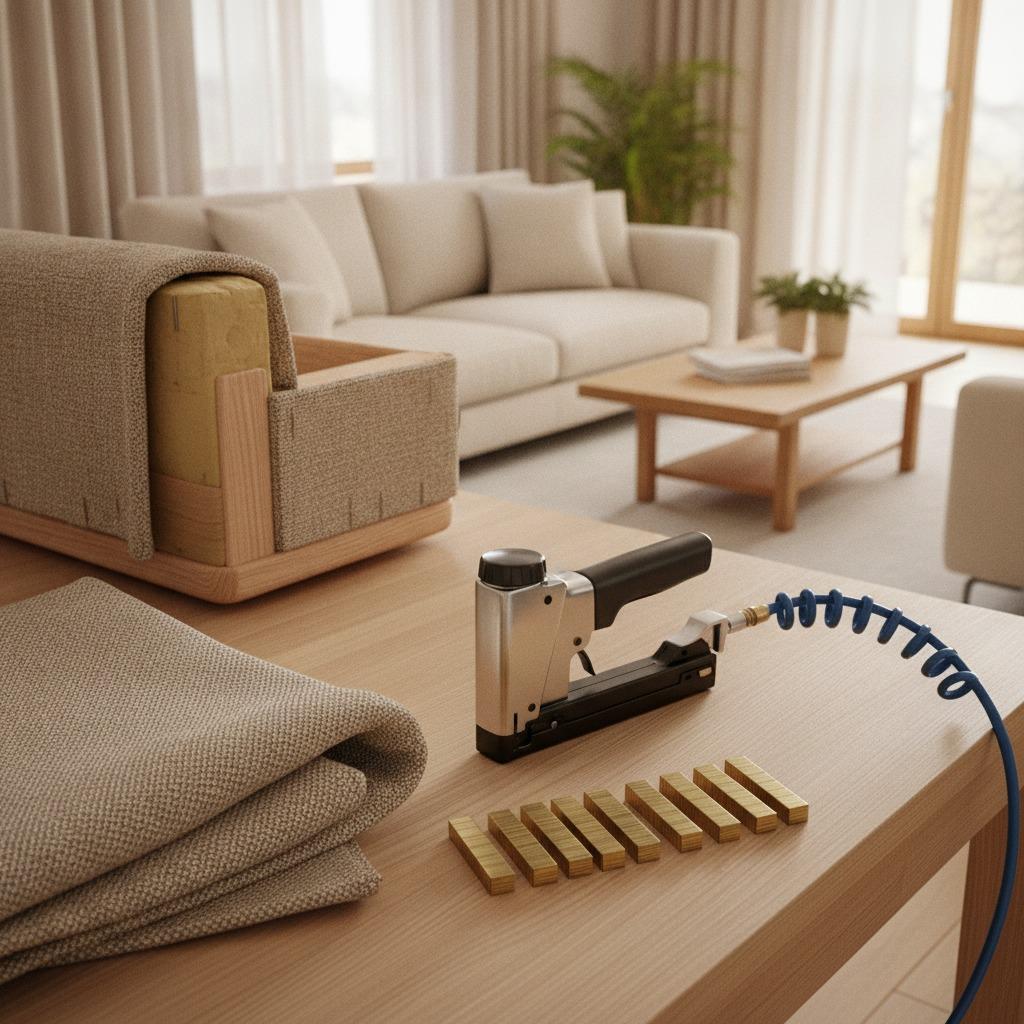
In furniture production and repair, upholstery staples are used to secure fabric, batting, and other soft materials to wooden frames. The visible setup is straightforward: a handheld pneumatic stapler, a hose connection, a long magazine, and collated metal staples feeding into the tool. The fastening action is quick, and that speed matters when a workshop is repeating the same edge wrap, seat pull, or ottoman corner over and over.
The staple itself is a narrow U-shaped fastener supplied in long strips. In the image, the metal finish appears gold or brass-colored, though the exact coating is not identifiable from appearance alone. In practice, the finish can affect appearance, corrosion behavior, and how the staple behaves in storage or use. Buyers should confirm those details with the supplier rather than assuming a visual match means a material match.
Key takeaway: the staple and the tool have to work as one system
A common sourcing mistake is treating staples as a commodity and the staple gun as a separate decision. In a furniture line, they are linked. The magazine geometry, collation, crown width, leg length, and drive performance all have to align with the substrate and the process.
If the staple is too short, it may not hold reliably in the wooden frame. If it is too long, it can create breakthrough or unnecessary waste. If the collation is inconsistent, the tool may jam. None of that is dramatic, but it slows production and invites hand correction, which is expensive in upholstery work.
Typical applications where consistency matters
A furniture staples supplier is usually supporting one or more of these jobs:
sofa and chair upholstery
ottoman assembly
fabric fastening to wooden frames
batting attachment in repair shops
production-line reupholstery and trim work
These applications look similar from a distance, but the demands can shift. A workshop doing occasional repair work may prioritize compatibility across several tools. A production environment usually cares more about repeatability, feed reliability, and whether the staples seat cleanly at speed.
What buyers should ask before placing an order
The best procurement questions are often the least exciting ones. Still, they save more time than a polished brochure ever will.
Ask whether the staples are intended for pneumatic upholstery use and which staple guns they are compatible with. Confirm the crown width, leg length, and strip format before committing. If the supplier cannot state those dimensions clearly, that is a warning sign. Also ask how the staples are packaged for shop handling. Bulk collated strips are efficient, but only if they survive storage and feeding without damage.
If the finish matters to the end product, ask for the exact surface treatment. A gold-toned appearance may be brass-colored or simply a coated steel staple; those are not the same thing. The same caution applies to corrosion performance. In furniture assembly, especially where products may sit in varied storage or shipping environments, the coating can matter more than many buyers expect.
Common mistakes in staple sourcing
One mistake is overfocusing on price per box and ignoring downtime. Another is assuming that all upholstery staples are interchangeable because they look close enough on paper. They are not.
A second common issue is using a staple designed for light trimming in a frame attachment job that needs firmer retention. The result can be loose fabric at the edge, especially on high-use seating. It may not fail immediately, which is exactly why it slips through early checks.
A practical caution: if a workshop is switching between repair work and regular production, keep the staple specification under control. Mixed inventory causes more trouble than people admit, particularly when several pneumatic tools are in circulation.
What a good supplier relationship should support
A capable upholstery staples manufacturer should be able to support repeat orders, clear specification matching, and stable quality from batch to batch. In many cases, the best supplier is not the one with the most polished language. It is the one that answers technical questions directly and keeps the staple feeding smoothly in real use.
For sourcing managers, that means checking whether the supplier can consistently provide the format your team already uses. For engineering teams, it means validating that the staple seats properly in the wood frame and does not interfere with the fabric edge. For product teams, it means avoiding visible fastening defects that can become a customer complaint later.
FAQ for furniture buyers and workshop managers
Are furniture staples only for factory use?
No. They are used in both production and repair settings. The same basic fastening method supports assembly, reupholstery, and trim work.
Do all staple guns accept the same staples?
No, and that assumption causes a lot of jams. Tool compatibility should be verified against the staple dimensions and collated format.
Why does finish matter if the staple is hidden?
Because hidden does not always mean irrelevant. Finish can influence storage behavior, feed consistency, and corrosion resistance.
Next step for buyers
If you are comparing a furniture staples manufacturer or evaluating a furniture staples supplier, start with the basics: staple dimensions, tool compatibility, finish, packaging, and the actual upholstery job you need to support. Keep the conversation tied to the frame, the fabric, and the pneumatic stapling process, not just the catalog description.
That is usually where the real difference shows up: fewer jams, cleaner seating, and less rework at the bench.