
What buyers usually mean by galvanized roofing staples bulk

When sourcing galvanized roofing staples bulk, most buyers are not really hunting for a pretty fastener spec sheet. They are trying to solve a supply problem: keep a stapling line fed, avoid rust-related callbacks, and make sure the staple actually runs cleanly in the tool on the floor. That is especially true in packaging, carton assembly, light industrial joining, and similar repetitive fastening jobs where a small fastening miss can slow a whole shift.
In practice, the buying decision often comes down to a few plain questions. Will the staple strip feed reliably? Does the coating look suitable for the environment it will face? Can the supplier provide the same size and collated format again, not just once? Those are the questions this article helps answer.
What the product looks like in real plant use
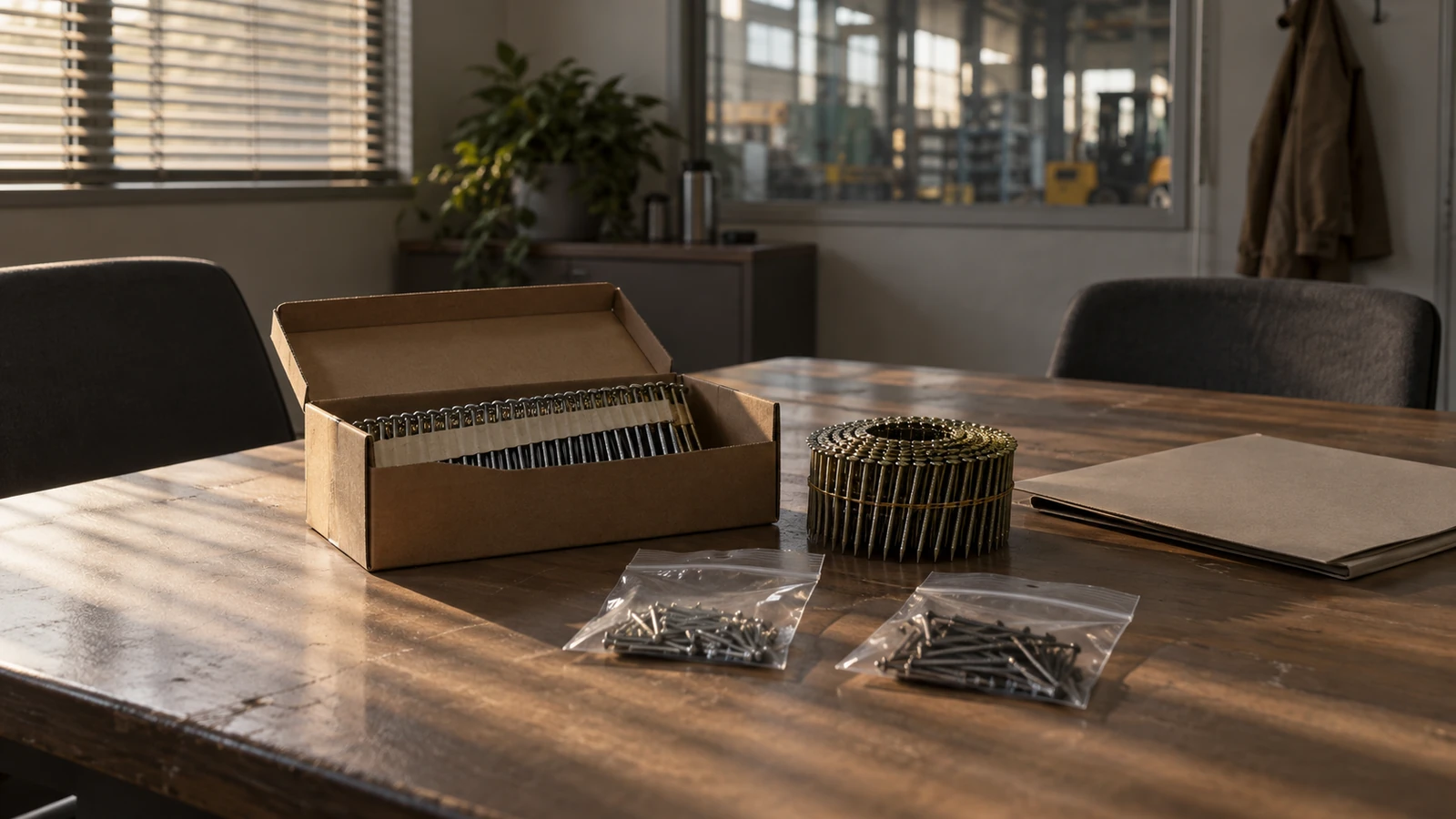
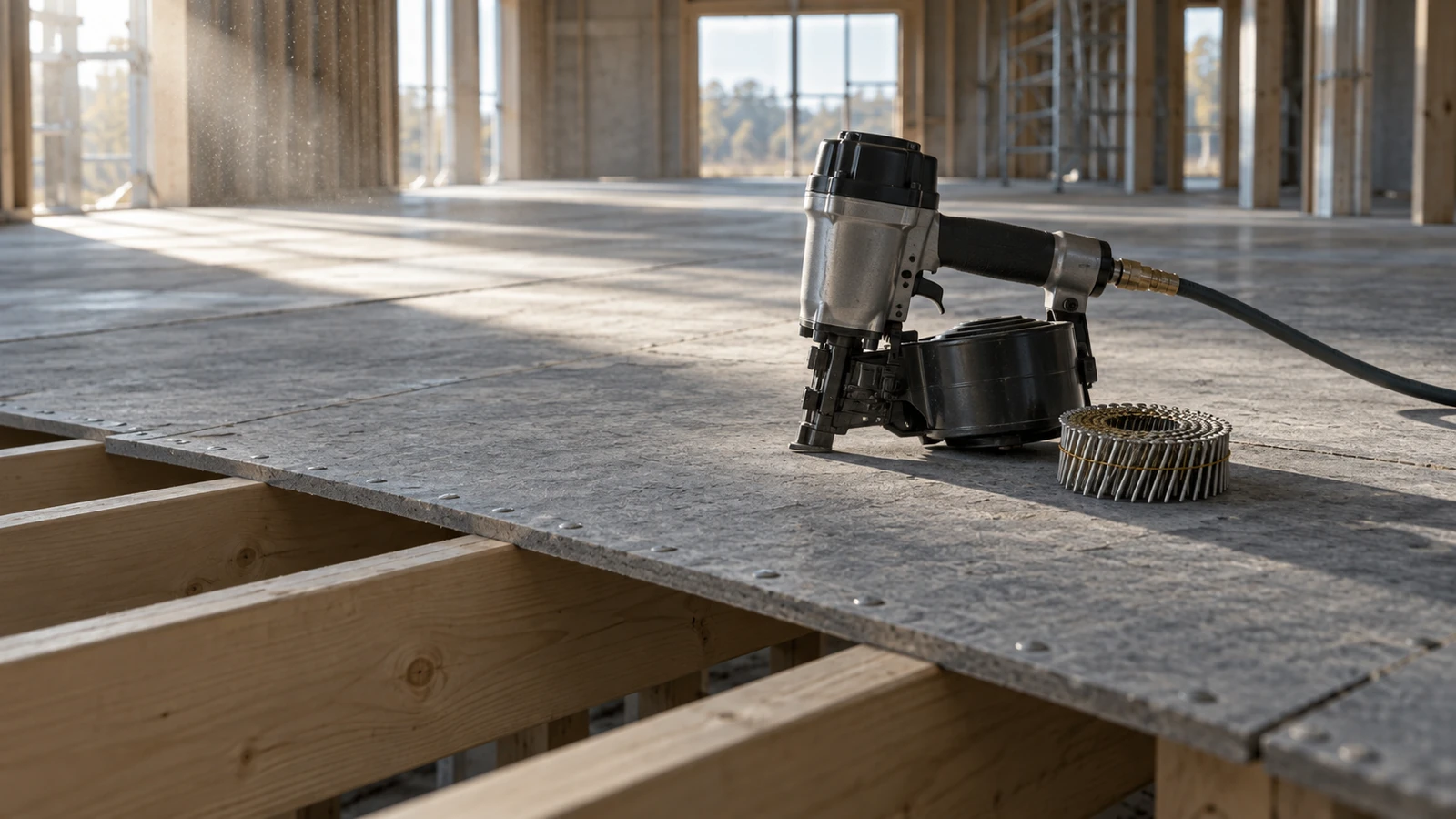
The supplied product information shows multiple trays of collated staple strips and two air-powered stapling tools on a factory worktable. That matters because it tells you this is a production-oriented staple supply, not a loose hardware-store assortment. The staples are arranged in long, uniform strips, which is exactly what you want when the operator is working quickly and the tool needs consistent feeding.
There are also several staple sizes visible in the same supply set. That is useful for buyers comparing runs, testing tool compatibility, or setting up different fastening stations. One tray appears to contain gold-colored staples while most others are silver or gray. I would not overread that color shift without a supplier data sheet, but it does suggest different coating or finish options in the same family.
Interview notes: what a sourcing manager should ask first
If I were sitting across from a production buyer, I would keep the conversation practical.
“What are you fastening?” is the first question. Carton sealing is not the same as light assembly, and neither is the same as roofing or exterior work. Even when a seller uses broad terms like hot dipped galvanized staples wholesale or galvanized staples wholesale, the application still needs to be pinned down.
The second question is compatibility. These staples are clearly intended for pneumatic staplers or staple guns, but tool fit is not something to guess at. Buyers should confirm the strip format, crown style, and any loading geometry before placing a bulk order. A fastener that looks close enough in a photo can still jam or misfeed.
The third question is corrosion exposure. “Galvanized” is often used as a shorthand, but the buyer still needs to know whether the finish is intended for indoor packaging use, warehouse environments, or something more demanding. If the supplier cannot clearly explain the coating, that is a warning sign, not a minor detail.
Why bulk buying makes sense, and when it does not
Bulk purchasing is sensible when staple consumption is steady and the line setup is stable. It reduces changeovers, supports better unit economics, and keeps operators from having to pause for frequent replenishment. For plants running repetitive fastening operations, that alone can justify buying in trays or box cartons.
Still, bulk is not always safer. If you are still validating leg length, crown width, or feed performance, a smaller test lot is usually the smarter move. The visible product set in this case includes multiple sizes and loose sample strips, which is the right kind of setup for pre-buy comparison. I would treat that as a sign to test first, then scale up.
Common mistakes buyers make
One common mistake is assuming all galvanized staples behave the same. They do not. Strip consistency, coating type, and wire quality can affect everything from feeding to appearance at the finished joint.
Another mistake is buying only on finish language. A buyer may ask for hot dipped galvanized staples wholesale, then discover the real issue was not corrosion resistance at all but tool compatibility or strip quality. The staple has to work in the machine before its coating can matter.
A third mistake is skipping a line trial. If the staple will be used in packaging or warehouse fastening, a short run under real conditions is worth more than a generic product description. Operators will spot feed issues quickly, and they usually spot them before the purchasing team does.
Practical buyer checklist
Before placing a bulk order, confirm the following with the supplier:
Application fit
Is the staple for carton assembly, light industrial joining, upholstery-type work, or another specific process?
Tool compatibility
Will it load properly in the pneumatic stapler or staple gun already in use?
Size range
Can the supplier provide the sizes you need, and are the strips collated consistently?
Coating clarity
Is the finish suitable for the service environment, or is the term “galvanized” being used too loosely?
Final buying advice
For sourcing teams comparing galvanized roofing staples bulk against other wholesale staple options, the best path is usually simple: verify the application, test the strip feed, and only then lock in the larger order. The product shown here suggests a standard collated staple supply built for factory use, with multiple sizes available and pneumatic-tool compatibility implied. That is a good starting point, but it is not a substitute for a real production check.
If you are preparing a purchase spec or need a supplier conversation starter, ask for size confirmation, coating details, and sample strips that match your actual tool. That small step can prevent a lot of annoying floor-level problems later.