
Why buyers keep comparing galvanized staples wholesale and brad nails
When sourcing fasteners for trim, cabinetry, or light assembly, buyers often start with galvanized staples wholesale and then end up looking at brads, pins, and other collated options. That comparison is not a distraction. It is usually the real purchasing question: which fastener gives enough holding power, the right surface finish, and a sensible cost per box for the job at hand?
For woodworking shops and finish carpentry crews, the choice matters because a fastener is not just a consumable. It affects cycle time, rework, visible mark quality, and sometimes whether the part survives handling before it is fully assembled. A cheap fastener that jams often or marks the surface too aggressively can erase any savings.
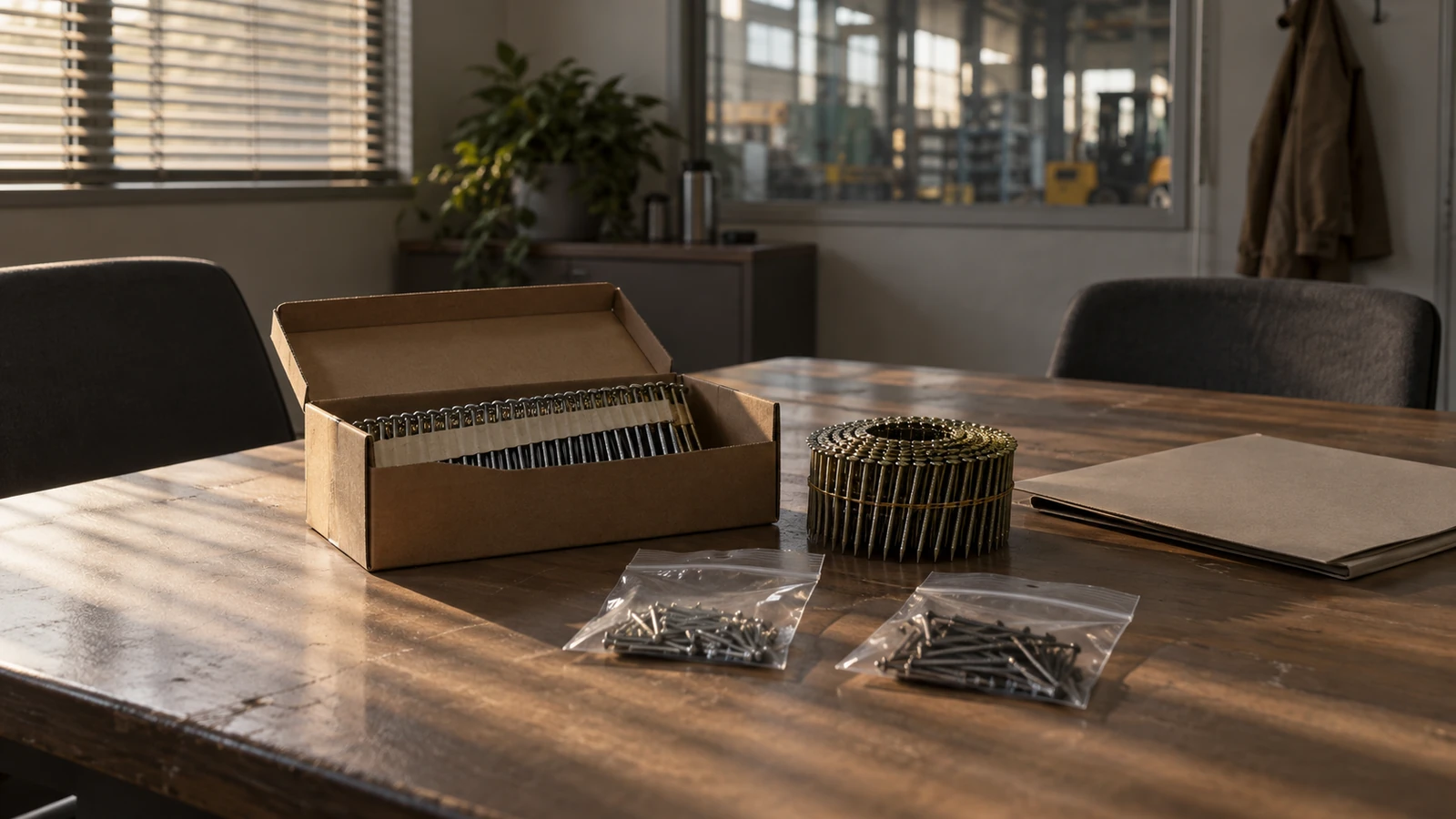
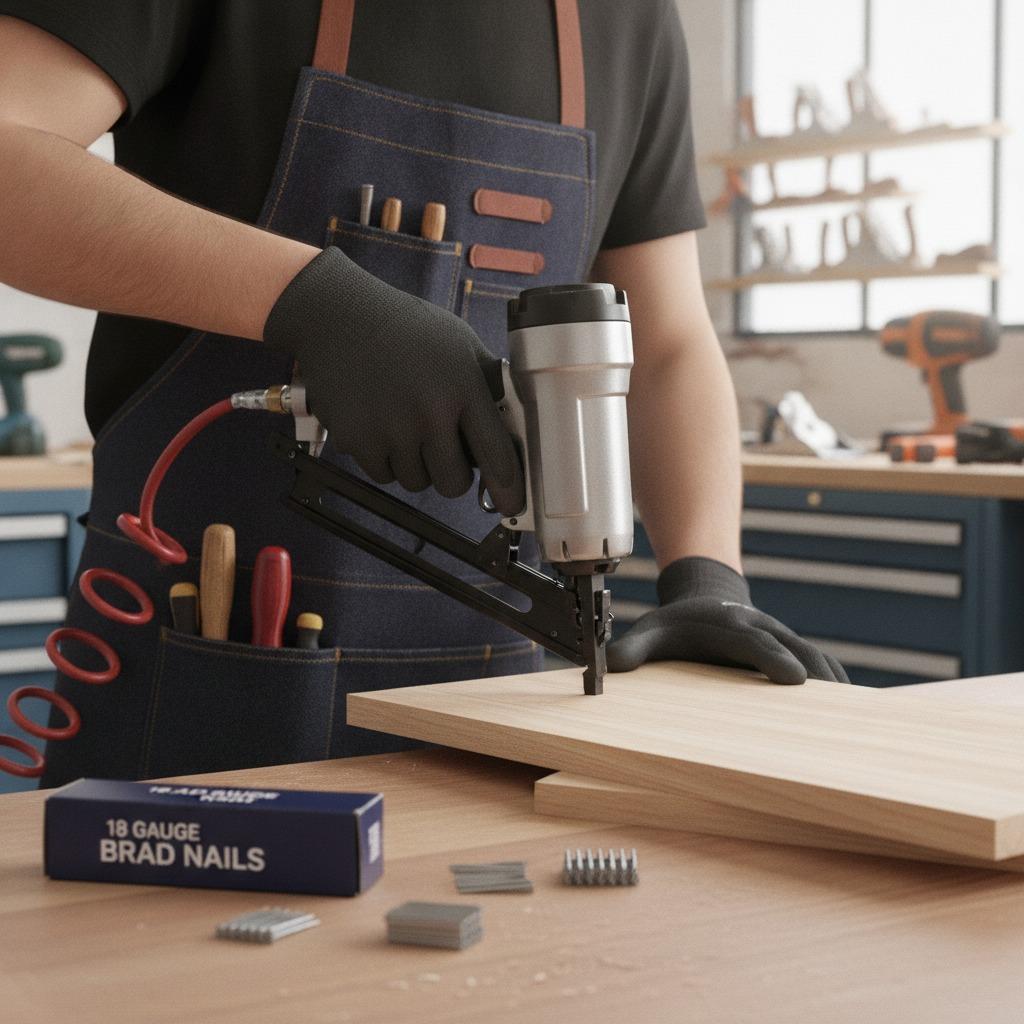
This article is meant as a practical buying guide for teams evaluating wholesale fasteners in bulk, especially when the application sits near the line between stapling and brad nailing. The visible product data here points to 18-gauge collated brad nails, 1-1/4 in. long, packaged 5,000 pieces per box. That is a familiar spec for finish work, and it helps frame the discussion.
Quick takeaways for sourcing teams
If you are comparing wholesale galvanized staples against collated brad nails, start with the substrate and the finish requirement.
Brad nails are usually the better fit when you want a narrow fastener, less splitting in thin stock, and a cleaner visual result on trim or cabinetry parts. Staples can offer strong holding in some materials, but they leave a different footprint and are not always the best choice for visible finish surfaces.
For buyers, the key questions are simple: what material are you fastening, how visible will the fastener be, and what tool is already on the shop floor? The wrong answer to any one of those can make a bulk purchase a nuisance instead of a cost saver.
What the visible product details tell you
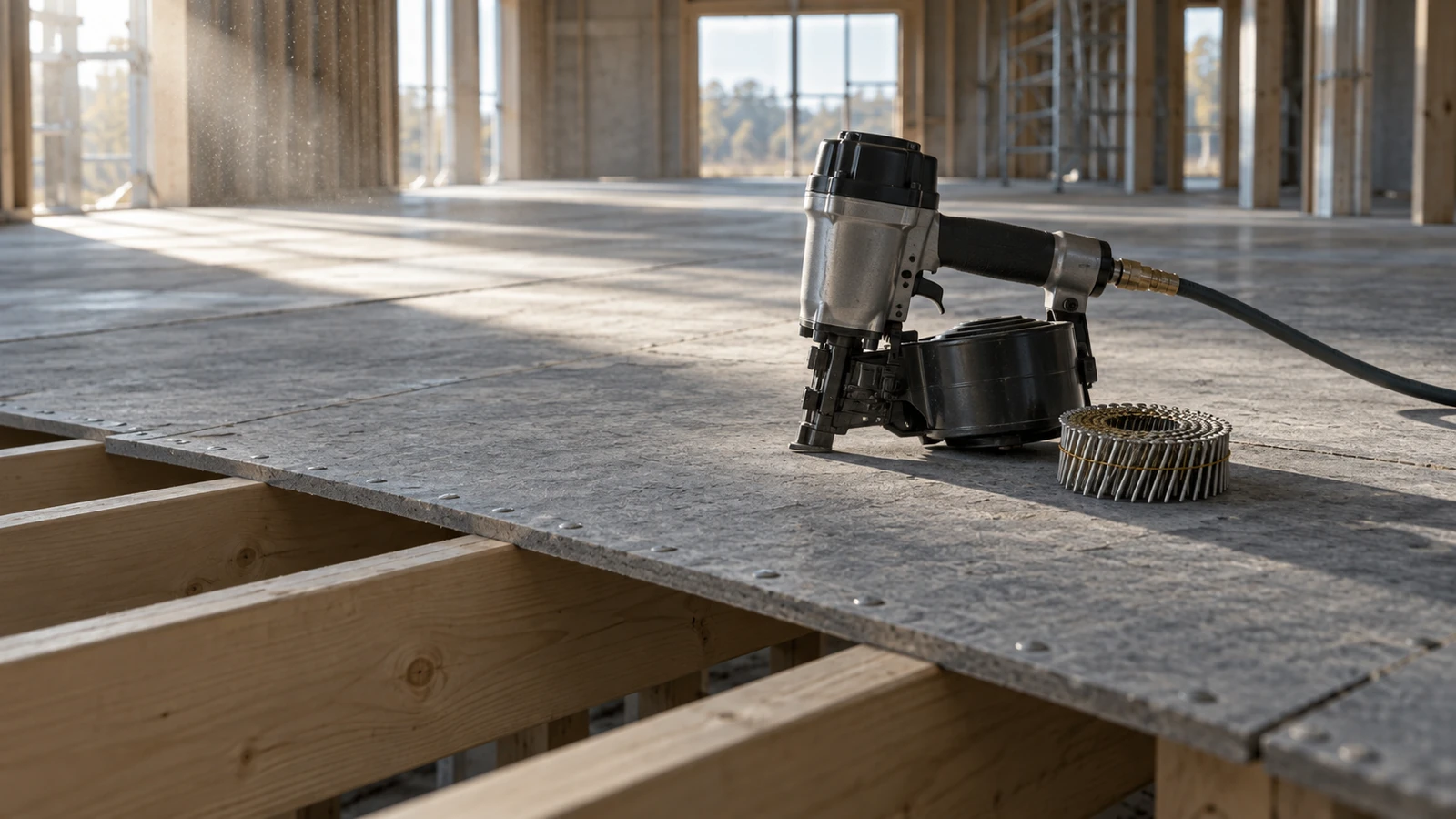
The product data here describes collated brad nails for an 18-gauge brad nailer or pneumatic finishing nailer. That tells you several useful things immediately.
First, the fasteners are thin enough for fine work. Second, the collation format is meant for powered feeding, which matters for production environments where consistency is more valuable than hand-driven flexibility. Third, the 1-1/4 in. length suggests use in thin wood pieces, trim, cabinetry parts, and related finish carpentry tasks where long nails would be excessive.
The packaging also shows 5,000 pieces per box. For a shop that runs through fasteners quickly, bulk packaging can reduce ordering friction and keep the line moving. Still, bulk buying only pays off if the fastener spec actually matches the tool and the job. A warehouse full of the wrong strip angle or wrong gauge is not a bargain.
Where wholesale fasteners make the most sense
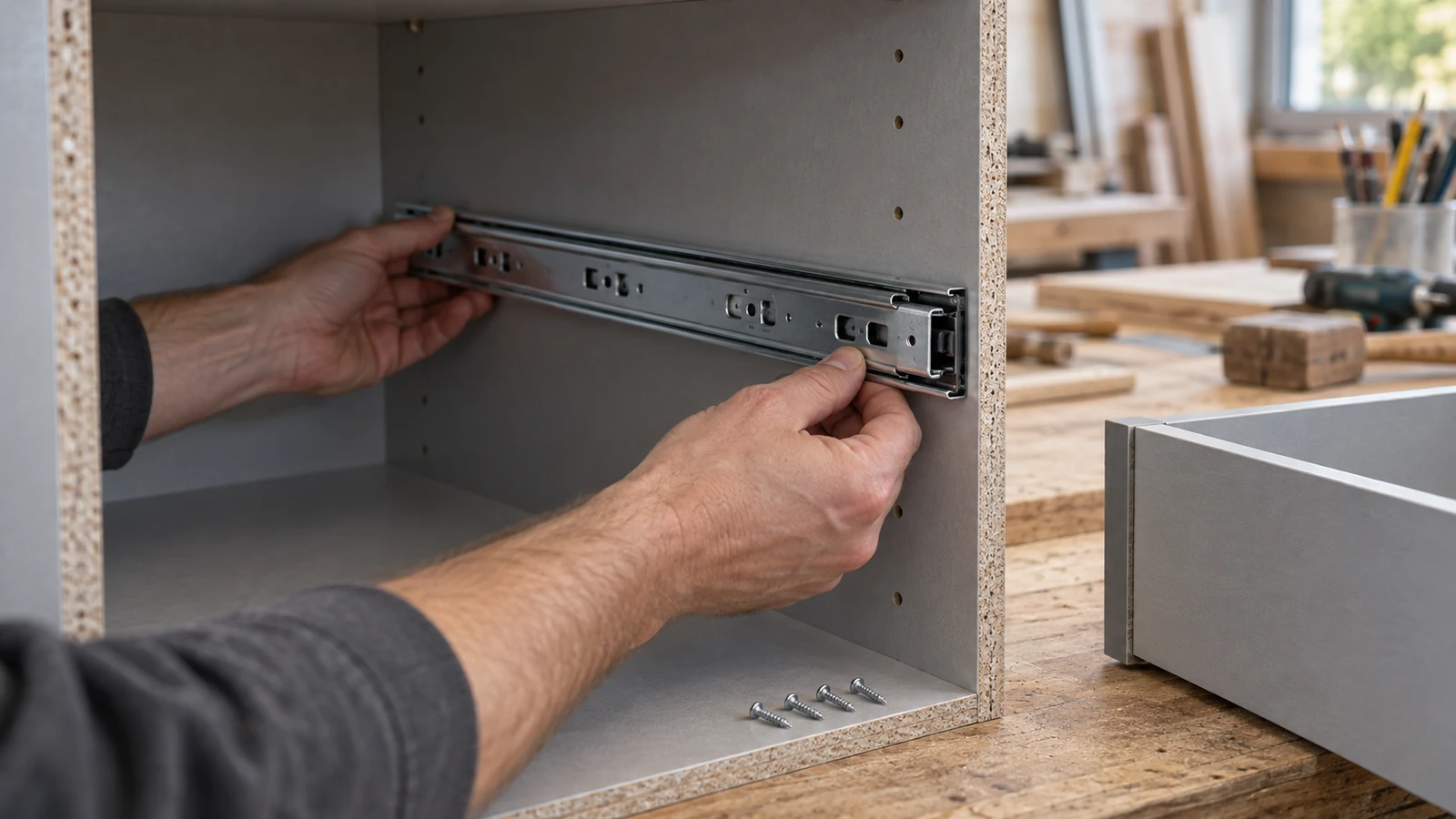
Wholesale purchasing becomes worthwhile when the same fastener is used repeatedly across projects. Cabinet assembly, interior trim installation, furniture manufacturing, sample build-outs, and general woodworking are all typical use cases.
In those environments, consistency matters as much as unit price. A predictable collated nail or staple feeds better, reduces setup trouble, and helps operators move between stations without stopping to sort or adapt hardware. That is one reason procurement teams often standardize around a small set of fastener types rather than trying to cover every possible job with one product.
There is a practical caution here: “wholesale” is only attractive if the fastener quality is stable from box to box. Buyers should ask for clear product dimensions, collated format details, and application guidance. If the supplier cannot state those basics, the order deserves a second look.
How to choose between staples and brad nails
Holding style and visible finish
Staples spread their legs and can grip well in some assemblies, but they also leave a different mark on the workpiece. Brad nails create a smaller entry point and are often preferred where surface appearance matters.
Material thickness
Thin trim and delicate parts generally favor smaller-gauge brads. If the stock is especially fragile, the smaller footprint can help reduce splitting. That said, no fastener fixes poor material prep; end grain and brittle boards still demand care.
Tool compatibility
This is the part buyers sometimes rush. A fastener may look close enough on paper, but if the gauge, collation, or length does not match the nailer, production stops. Match the fastener to the exact tool model before placing a bulk order.
Common buying mistakes
The first mistake is assuming all finish fasteners behave the same. They do not. An 18-gauge brad is not a substitute for every staple job, and a staple is not automatically the cleaner choice for trim.
The second mistake is buying on length alone. A 1-1/4 in. fastener may be ideal for one assembly and excessive for another. The base material, the top layer, and the required holding strength all matter.
The third mistake is overlooking packaging volume. Five thousand pieces per box sounds generous, but if the fastener is used only occasionally, inventory can sit too long and complicate stock control.
Buyer-facing questions worth asking suppliers
Before you approve a bulk purchase, ask for the fastener gauge, length, packaging count, and intended tool compatibility. If you are comparing galvanized staples wholesale with brad nails, also ask how the product is intended to be used in finish carpentry rather than assuming the terms are interchangeable.
If the product is for visible work, request a sample box for feed testing. That small step often catches compatibility issues that product photos cannot show.
What a sensible next step looks like
For sourcing teams, the best next move is usually a short qualification test: confirm the tool, check the gauge and length, run a few sample assemblies, and inspect the surface after fastening. If the result fits the application, then wholesale buying starts to make sense.
That is especially true when your use case sits around trim, cabinet parts, and furniture assembly, where both speed and appearance matter. The cheapest fastener is not always the least expensive choice once labor and rework are counted.
If you are building a fastener purchasing shortlist, start with the exact application, the tool in hand, and the finish you need. The rest follows from there.