
Why buyers compare galvanized staples wholesale with other fastening options
When sourcing fasteners for wood assembly, many teams start with a simple question: how do we keep production moving without creating corrosion problems or tool-feed headaches later? That is where galvanized staples wholesale often enters the discussion. Buyers are usually not shopping for a single box of consumables. They are trying to secure repeat supply for framing, pallet work, crate assembly, furniture production, or shop-floor repair, and they need the fastener to behave the same way every time.
There is a practical reason this matters. A fastener may look like a small line item, but poor feed consistency, wrong collation angle, or a coating mismatch can stop a pneumatic line just as surely as a bigger machine fault. If your operation uses collated fasteners in pneumatic nail guns, the real decision is not only price per box. It is whether the strip format, finish, and head style fit the tool and the job.
What the supplied product information tells us
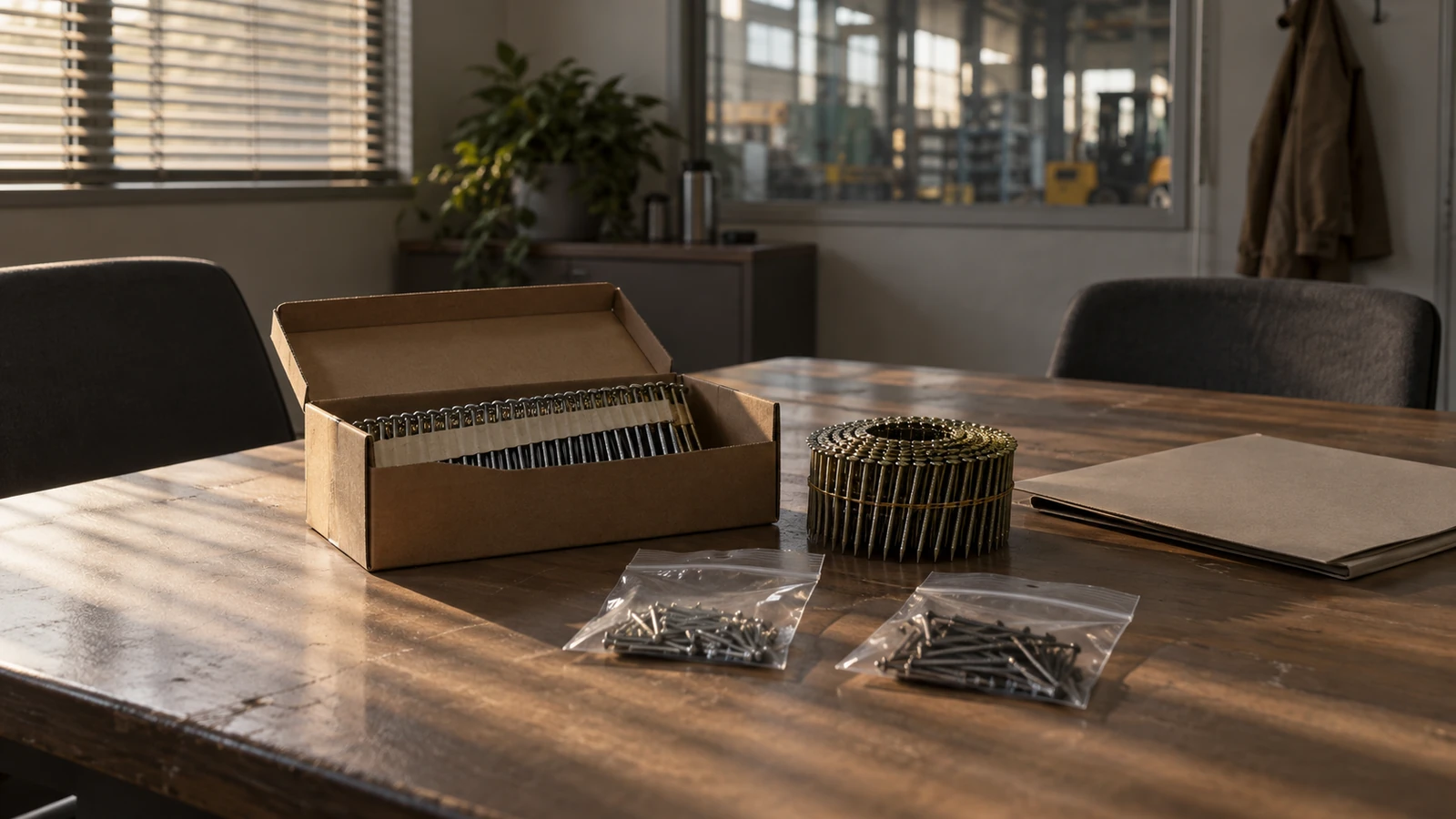
The product data points to collated pneumatic nails or fastener strips used in nail guns, with visible packaging showing a 34° clipped head style. The nails appear in silver/bright and yellow/gold-coated finishes, though the exact coating type is not identifiable from the image. That is worth noting because buyers often assume all shiny fasteners are interchangeable. They are not.
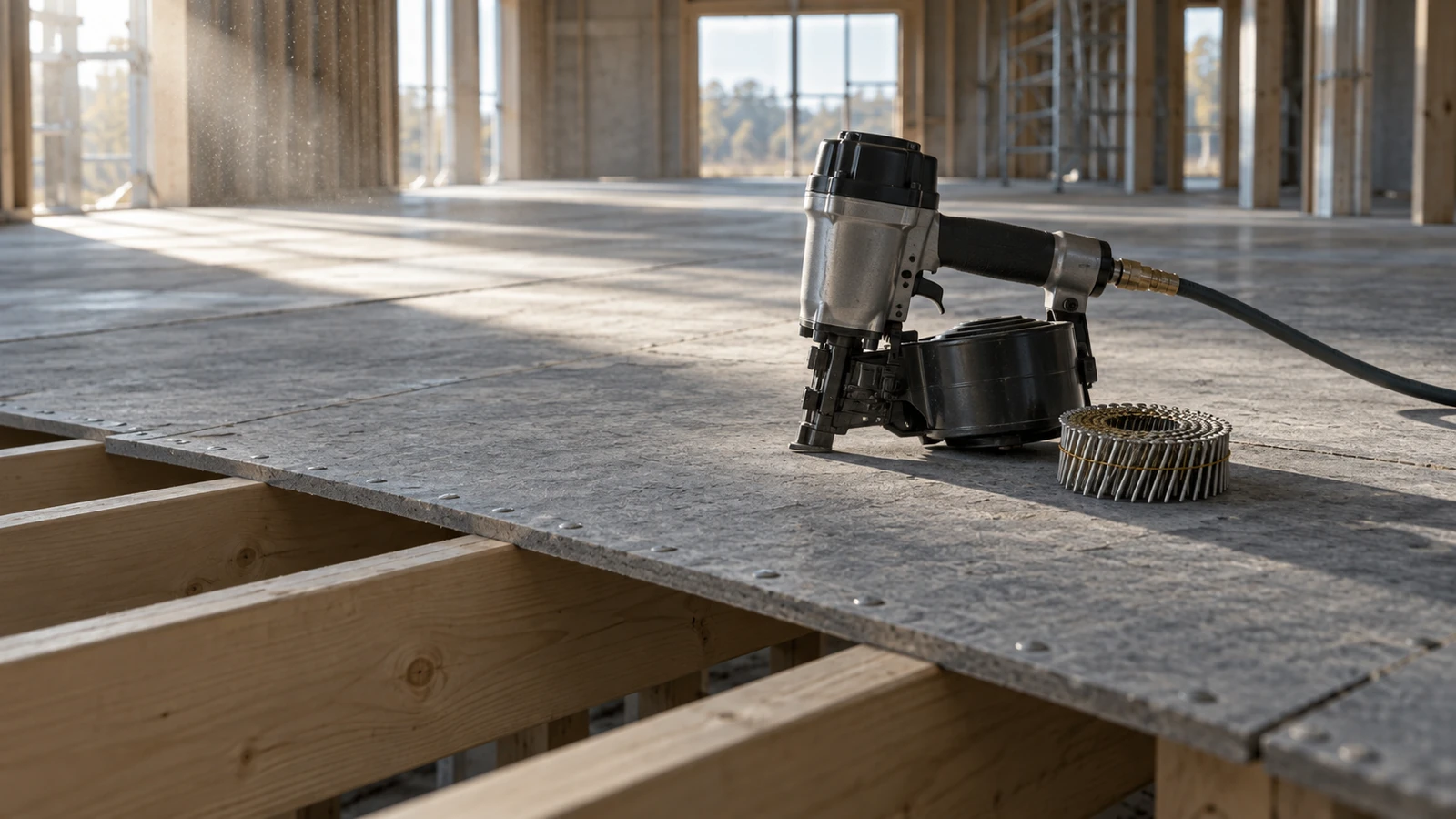
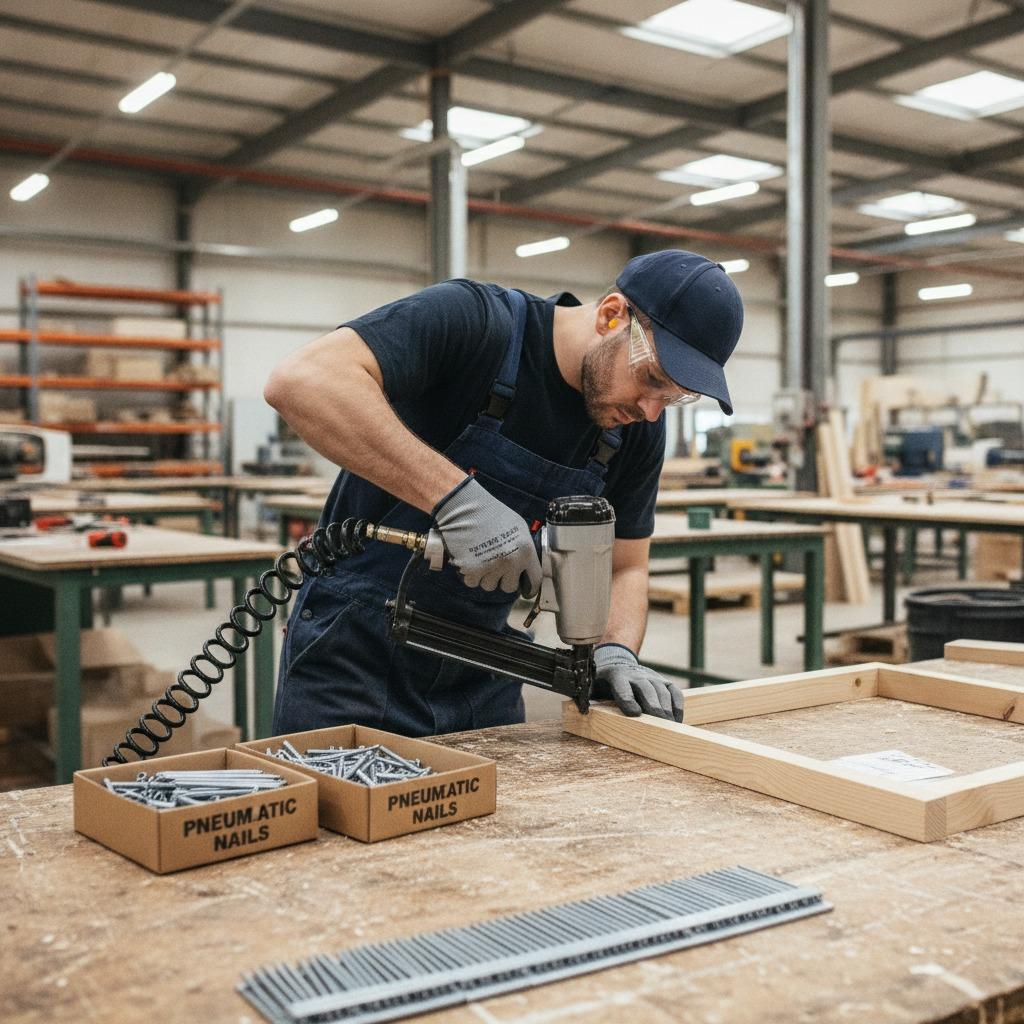
These fasteners are likely used in repeated wood fastening tasks where speed matters: carpentry, framing, pallet and crate assembly, furniture building, and general shop production. The strips are collated for pneumatic fastening tools, which supports fast feeding and less manual handling. Exact diameter, length, and coating specification are not available here, so a buyer should confirm those before placing a production order.
Quick-reference buyer checklist
If you are comparing galvanized staples bulk versus other wholesale fastening hardware, the fastest way to narrow the field is to check the following:
Tool compatibility
A 34° clipped-head strip is a specific format. It may suit certain nailers and not others. The angle, head style, and collation method all have to match the tool’s magazine and feed path.
Finish and environment
“Galvanized” usually signals better corrosion resistance than plain steel, but the level of protection depends on the actual coating process. For indoor shop work, that may be enough. For exterior or moisture-prone use, buyers should verify the coating specification rather than assume.
Production rhythm
In a high-output workshop, strip integrity matters. A fastener that jams, bends, or separates poorly can slow the line and increase scrap. Wholesale purchasing is useful only if the lot quality stays consistent.
How these collated fasteners fit production work
For engineers and sourcing managers, collated nails are less about the fastener itself and more about the process. The strip format enables repetitive fastening with pneumatic tools, which reduces manual hammering and helps maintain uniform assembly speed. That is why these products show up in pallet shops, crate builders, cabinet and furniture lines, and framing crews.
The visible package description suggests a 34° clipped-head configuration. In practice, clipped-head fasteners are chosen because the clipped head allows tighter strip packing, which can improve magazine capacity. The trade-off is that some applications or local codes may prefer a full-round head. That is a decision buyers should not gloss over.
Common mistakes when sourcing wholesale galvanized fasteners
One mistake is assuming finish equals performance. A yellow/gold coating and a bright silver appearance are not the same thing, and neither automatically guarantees the same corrosion behavior.
Another is buying to the wrong tool spec. A fastener can be perfectly good on paper and still be unusable if the angle or collation pattern is off. This is especially true when a production shop is standardizing around one nailer platform.
A third mistake is treating bulk supply as a purely price-driven buy. In reality, consistency of strip quality, packaging durability, and feed reliability often matter more over a quarter than a small unit-cost difference.
FAQ: galvanized staples wholesale
Are these actually staples?
The supplied product data points more strongly to collated pneumatic nails or fastener strips than to classic wire staples. Buyers should use the package spec and tool requirements, not the generic term, to avoid confusion.
What does 34° clipped head mean?
It refers to the strip angle and head style shown on the packaging. This matters because tool compatibility depends on it.
Can I assume the coating is standard galvanized?
No. The term “galvanized” is useful, but the exact coating type is not identified here. Confirm the finish with the supplier before using it in corrosion-sensitive work.
Why buy wholesale instead of spot buying?
Wholesale supply makes sense when the same fastener is used repeatedly in production. It helps reduce reorder friction and supports more stable shop scheduling.
What to ask a supplier before placing an order
Before you commit to wholesale galvanized staples, ask for the exact nail or staple dimensions, collation angle, head style, coating specification, and compatible nailer models. If the work involves outdoor exposure or long service life, request clear documentation on corrosion performance rather than relying on appearance alone.
For teams that are standardizing a production line, this is usually the safest next step: confirm tool fit, verify the finish, and then buy the smallest practical test quantity before moving to recurring bulk orders.