
FAQ: What buyers mean by galvanized staples wholesale
When engineers and sourcing teams search for galvanized staples wholesale, they are usually not looking for a single fastener spec. They are trying to solve a production problem: how to secure wood, panel stock, crates, or packaged goods with a corrosion-resistant fastening that can be bought in volume and fed reliably on the shop floor. In practice, the term is often used loosely alongside galvanized staples bulk and wholesale galvanized staples, even though the actual product may be staples, collated nails, or another pneumatic fastening consumable depending on the tool and application.
That distinction matters. A buyer choosing the wrong fastener format can end up with jams, weak joints, or a tool that simply is not compatible with the collation angle. The visible product information here points to collated nails for pneumatic nailers, including a 34° clipped head format, which is common in angled framing or production nailing setups. So before anyone treats a wholesale quote as interchangeable with “staples,” it is worth checking the tool, the feed angle, and the job.
What is usually included in a wholesale fastening order?
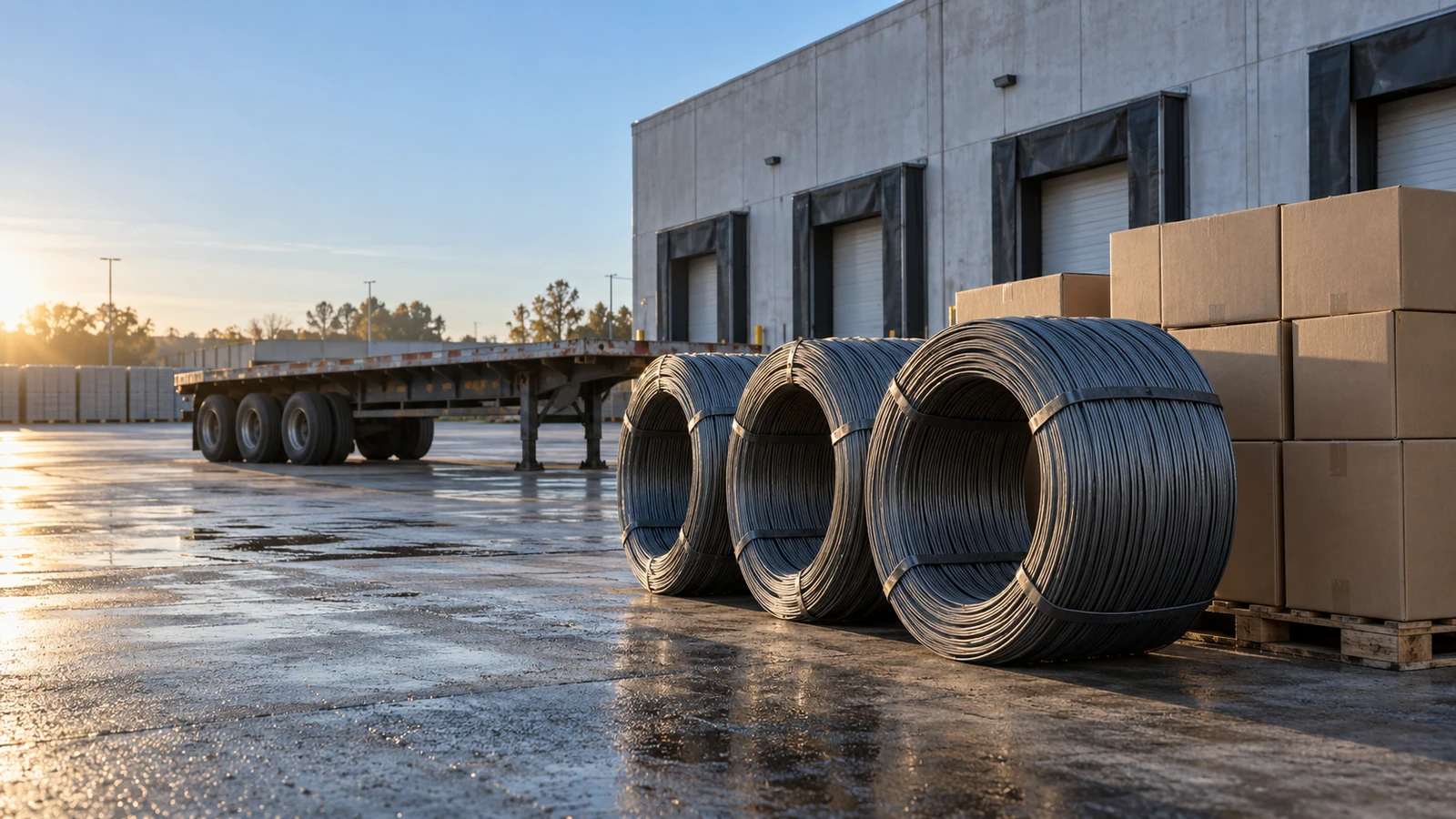
In industrial purchasing, wholesale often means supply in cartons, cases, or pallet quantities rather than retail packs. The product may be sold as collated strips for air-powered nail guns, or as staples for staplers and staple guns. In either case, the buying logic is similar: reduce unit cost, avoid line stoppages, and keep a stable inventory for repetitive work.
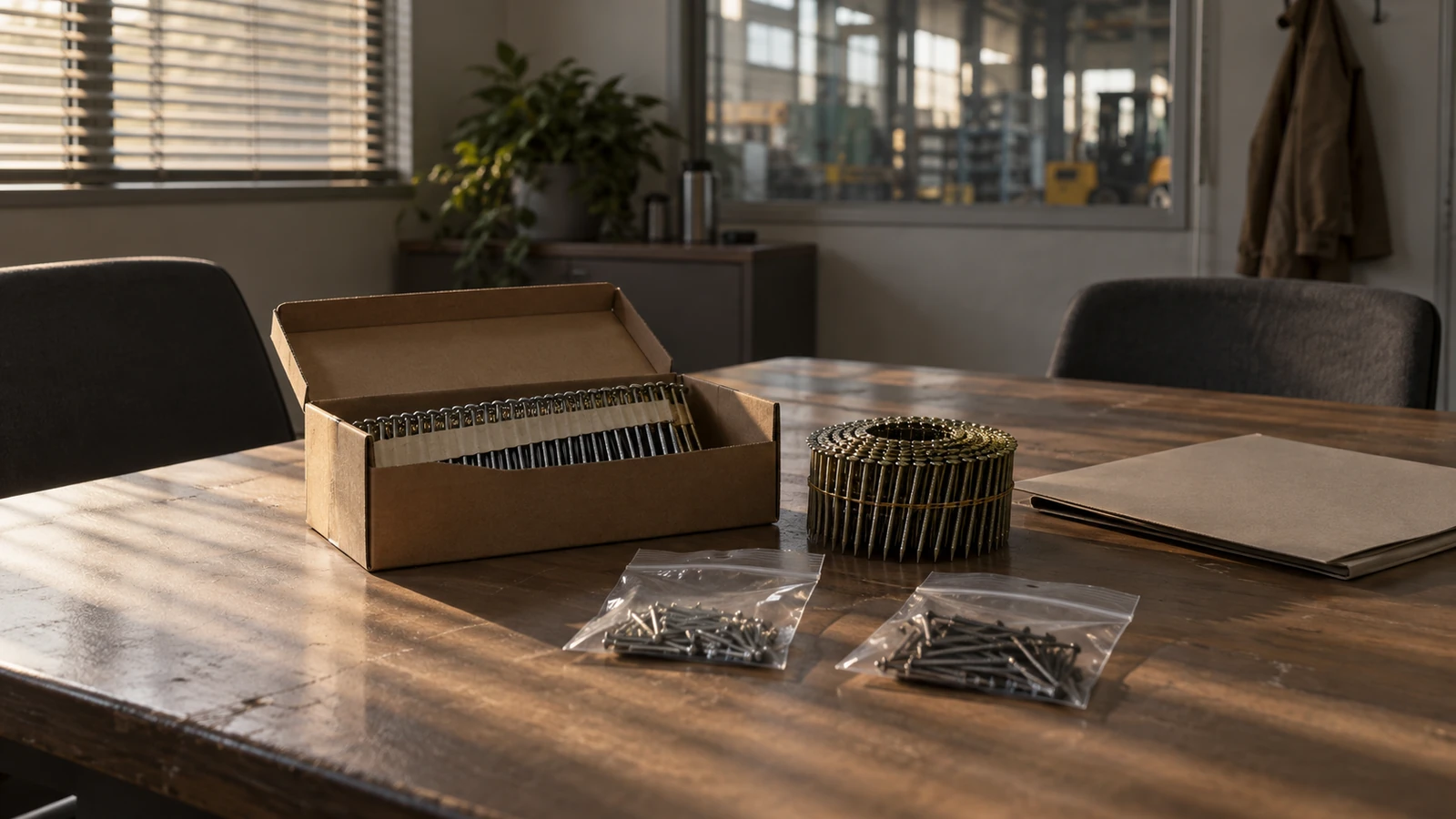
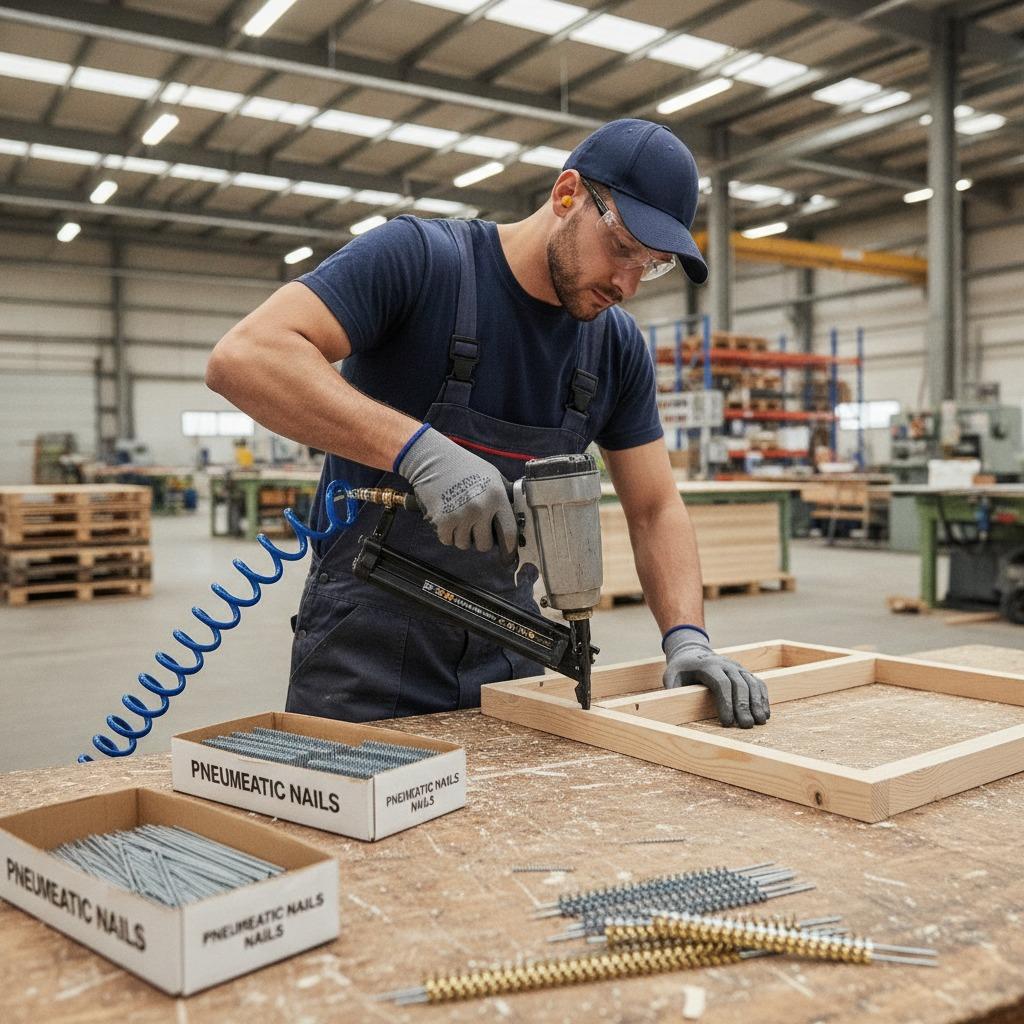
The product details available here describe metal nails arranged in straight collated strips, likely steel, with visible silver and yellow/gold-toned finishes on different strips. They are made for pneumatic feeding, and the packaging indicates 34° CLIPPED HEAD. That suggests compatibility with a 34-degree angled nailer. The precise coating, shank style, and length are not confirmed, so those should be verified before ordering.
Why galvanized finishes matter in production use
For wood products, crate assembly, panel building, and similar shop-floor work, corrosion resistance is often the reason buyers ask for galvanized fasteners in the first place. Galvanized finishes help fasteners hold up better than plain steel in storage, transport, and service environments where moisture may appear. That does not make them universal. A fastener that is fine in indoor assembly may be the wrong choice for outdoor exposure, chemical contact, or food-related packaging lines.
Buyers should still be careful with assumptions. “Galvanized” is a useful shorthand, but it is not a complete specification. If corrosion performance matters to the end product, ask what coating is actually being used and what environment the fastener is intended for. It is a small question that can prevent a costly rework later.
FAQ: How do I know whether I need staples or collated nails?
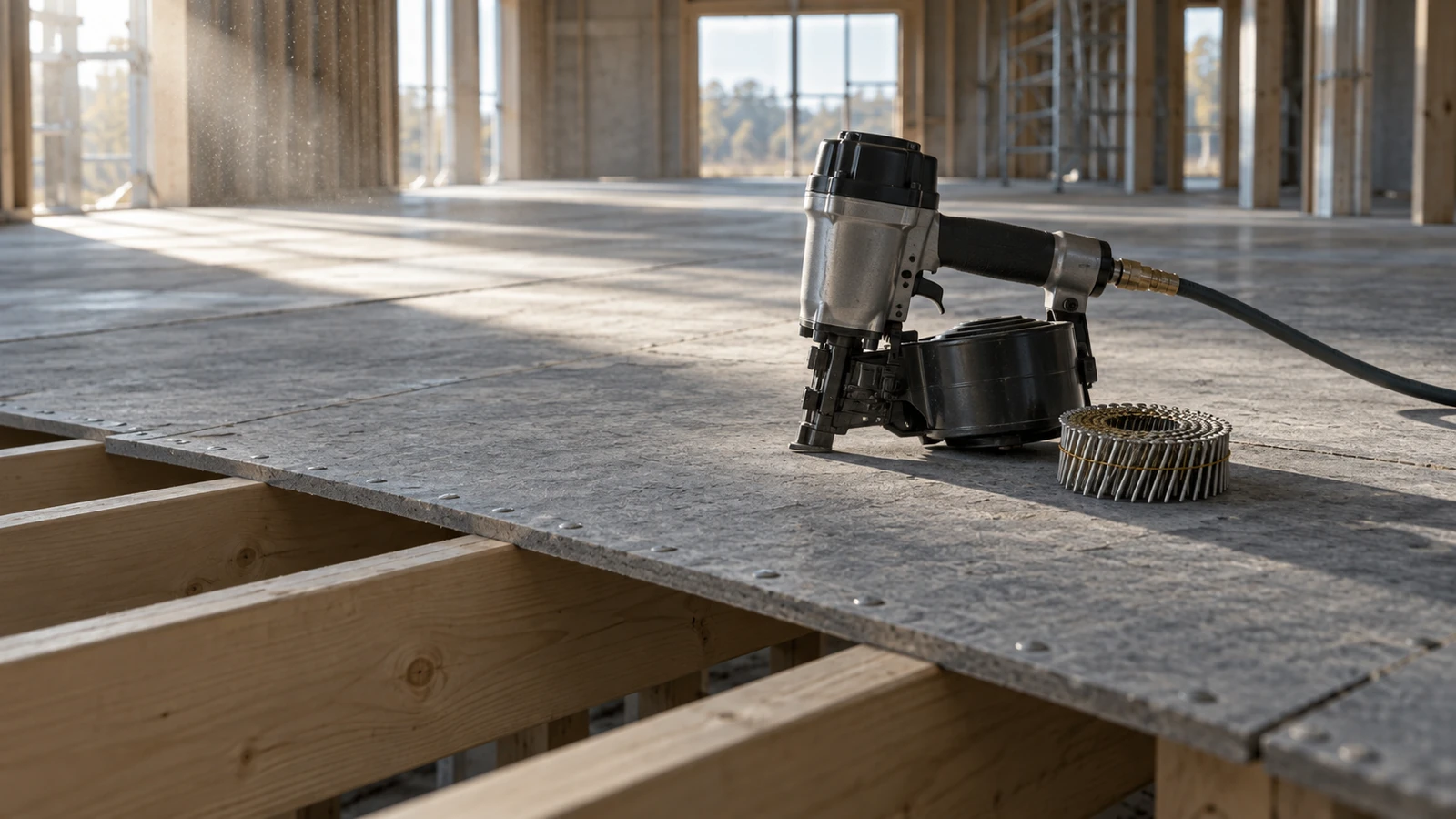
Start with the tool and the joint. Staples are commonly used when a wide crown and two legs suit the material, while collated nails are used where a slender shank and deeper structural hold are preferred. The visible product data here is clearly in the nail category, not a staple strip. It is intended for a pneumatic nailer, especially an angled model that accepts 34° clipped-head strips.
If your line uses a framing or finish nail gun, the fastener must match the magazine geometry, collation type, and angle. If your process uses a stapler, the same supplier may still help, but you need a different product family. This is one of those sourcing details that sounds minor until the first carton arrives and does not feed.
FAQ: What should I check before placing a bulk order?
Tool compatibility
Confirm the nailer angle, head style, and collation format. A 34° clipped-head strip is not a universal fit.
Application fit
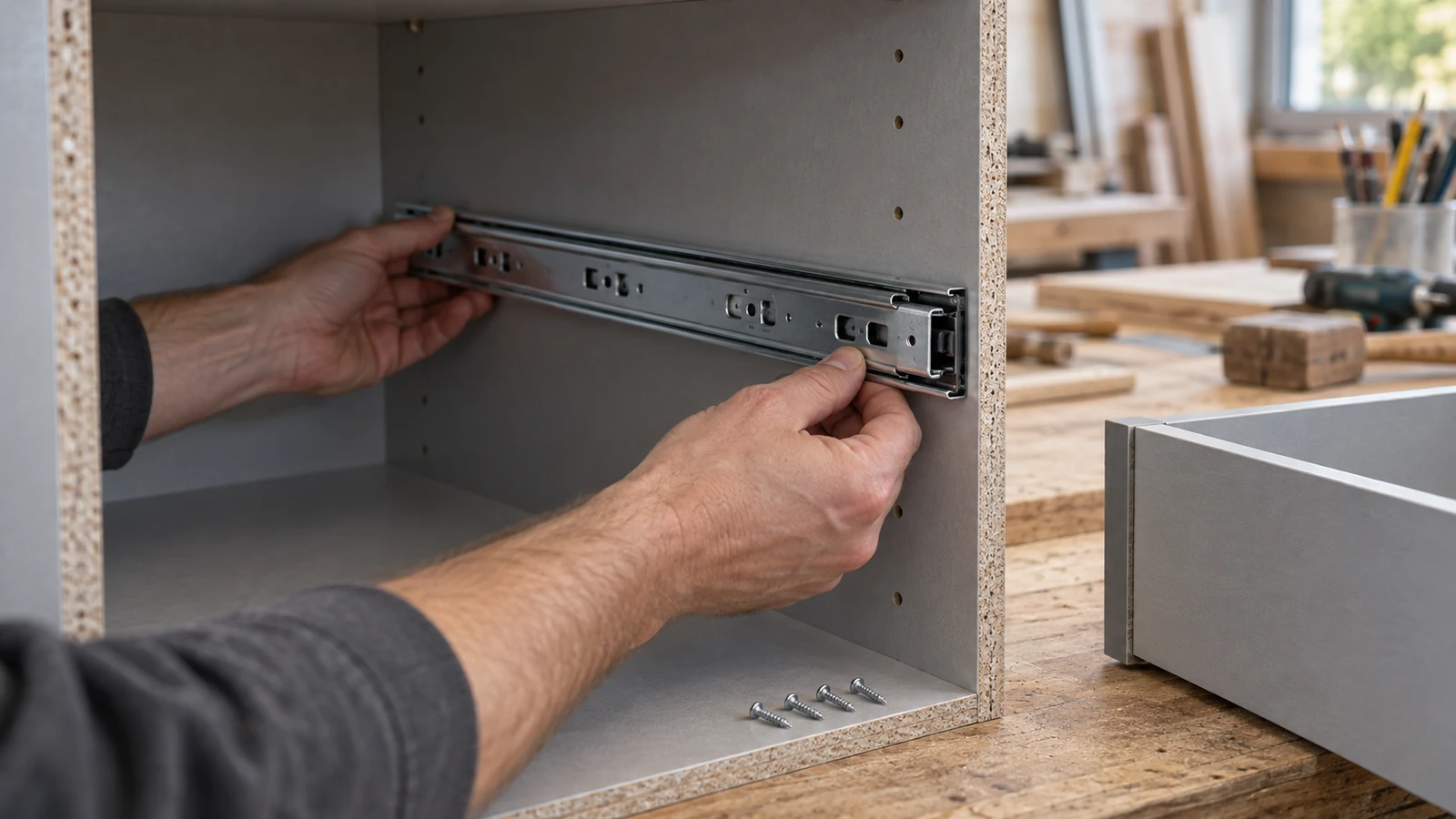
Match the fastening method to the job: framing, cabinetry, pallet repair, crate assembly, or general carpentry each has different load and appearance needs.
Finish and environment
Do not assume one galvanized finish suits every location. Indoor assembly and outdoor exposure are not the same service conditions.
Packaging and consumption rate
Bulk buying only works when the line can consume the product consistently. Otherwise, case quantity becomes dead stock.
FAQ: What mistakes do buyers make most often?
The most common mistake is treating all collated fasteners as interchangeable. The second is reading “galvanized” and stopping there. Buyers also sometimes underestimate how much speed matters on the floor. Pneumatic fastening exists because repetitive manual fastening is slow and inconsistent; once production volume rises, feeding reliability becomes part of product quality.
Another practical caution: do not rely on the visible finish alone to decide suitability. Silver and yellow/gold tones can indicate different treatments or coatings, but the exact process is not confirmed here. Ask for the full product specification rather than inferring from color.
FAQ: How should sourcing teams evaluate a supplier?
Look for clear answers on format, compatibility, and consistency. A good wholesale quote should identify whether the fastener is a staple or a collated nail, the angle, the head style, and the intended tool family. For the product described here, the clearest known points are the 34° angle and clipped-head design, both relevant to pneumatic nailer compatibility.
For production buyers, the real decision is not only price per carton. It is whether the fastener will feed cleanly, arrive in a usable format, and support the assembly line without surprise substitutions. That is the difference between a commodity purchase and a production-ready supply.
FAQ: What is the practical next step?
If you are sourcing galvanized staples wholesale or a related collated nail product, collect three things before requesting a quote: the tool model or angle requirement, the application, and the expected environment. Then ask the supplier to confirm whether the product is a staple strip or a 34° clipped-head collated nail strip.
That small step saves time, and more importantly, it keeps the shop floor from discovering a mismatch after the cartons are opened.