
How to Evaluate a Coil Nails Manufacturer for Production and Workshop Use
Choosing a coil nails manufacturer is not simply a matter of comparing carton prices. The real question is whether the manufacturer can supply the right fastener format, wire quality, dimensions, and packaging for the nailer and application you intend to use. That matters because a mismatch between nails and tool can lead to feeding problems, inconsistent driving, damaged workpieces, and avoidable downtime. This guide explains what to check before buying bulk coil nails or specifying construction coil nails for a production environment.
Start with the Fastener and Tool Combination
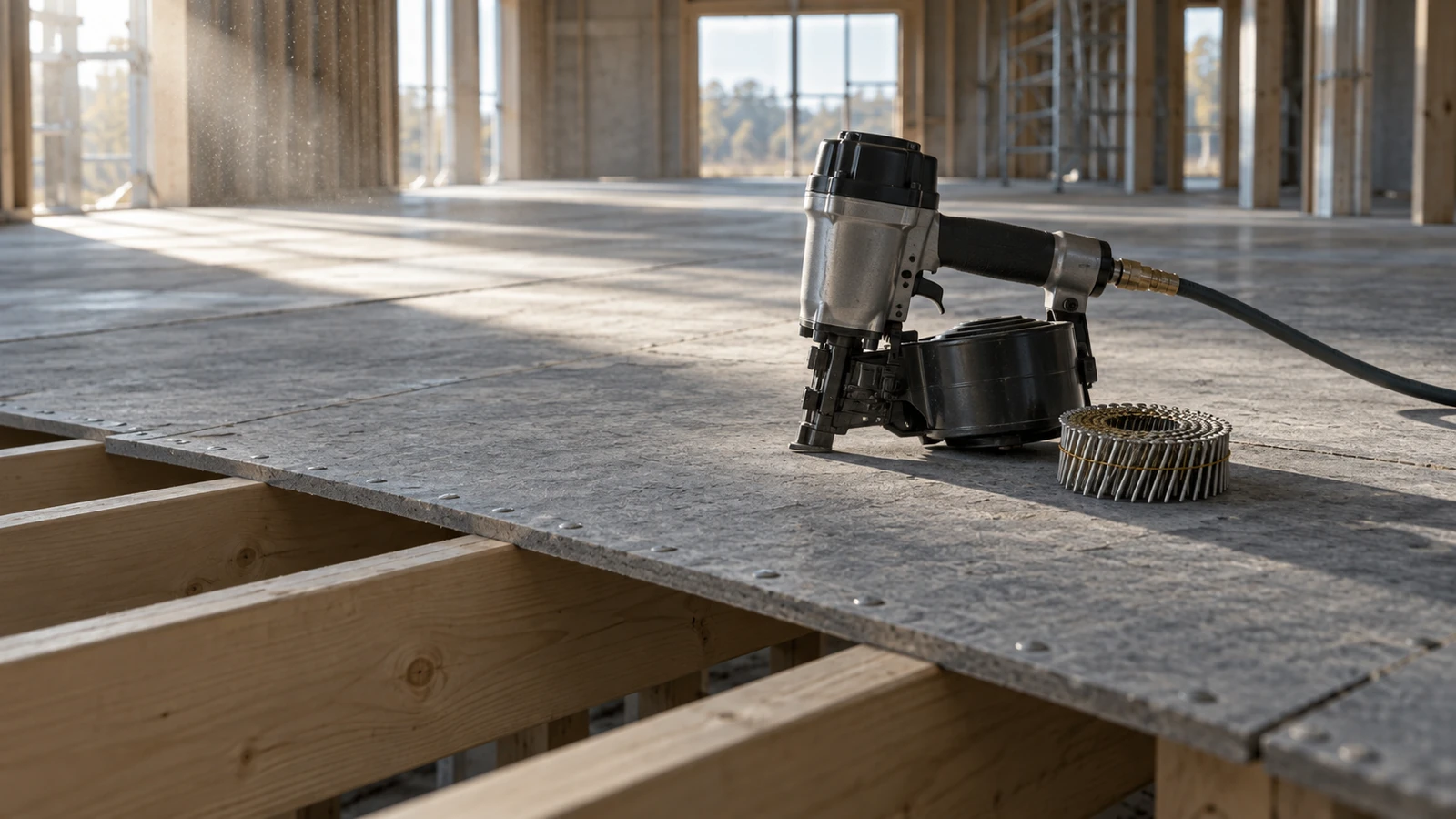
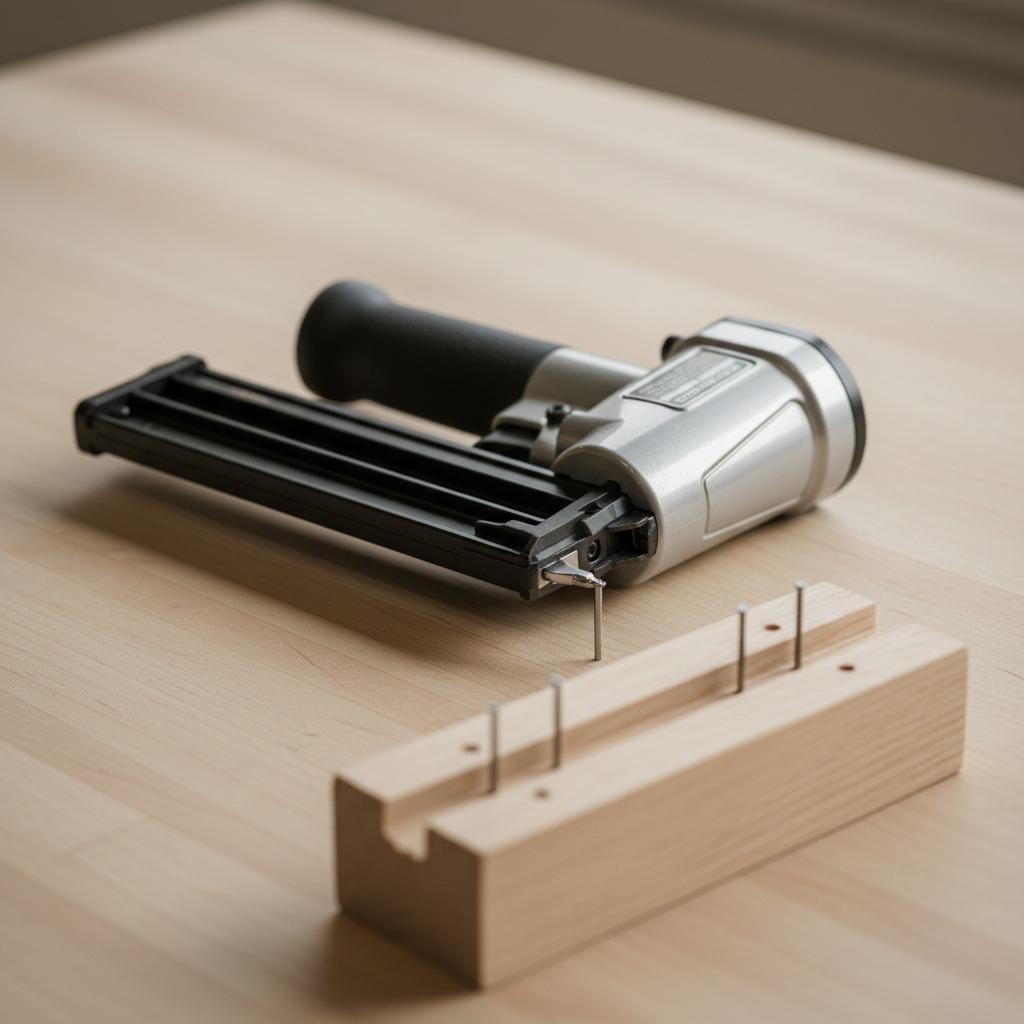
The available product information shows a compact handheld fastening tool positioned over a wooden assembly. It has a black cylindrical housing, a separate grip, a silver-colored front section, and an integrated magazine leading to a narrow nose. A thin fastener is visible at the firing point. The tool appears intended for light woodworking, cabinet assembly, trim, furniture work, or temporary fixture applications.
That description does not confirm that the tool accepts coil nails. It may instead be a narrow-crown stapler, brad nailer, or micro-pin nailer. The visible magazine appears linear rather than a round or drum-style coil magazine. Fastener size, collation method, power source, operating pressure or voltage, magazine capacity, and firing rate are not identifiable from the available information.
This is an important buyer warning: do not order coil nails based on the general appearance of a handheld nailer. First confirm the tool model, fastener specification, collation angle, wire diameter, head style, length range, and magazine design. A capable coil nails manufacturer should be able to review those requirements before recommending a product.
Quick Reference: What to Confirm Before Ordering
- Tool compatibility: Confirm whether the nailer uses collated coils, strips, brads, pins, or staples.
- Fastener geometry: Check nail length, diameter, head profile, point style, and collation angle.
- Material and finish: Specify whether plain steel, galvanized, stainless, or another finish is required for the environment.
- Application: Separate light woodworking requirements from structural or outdoor fastening demands.
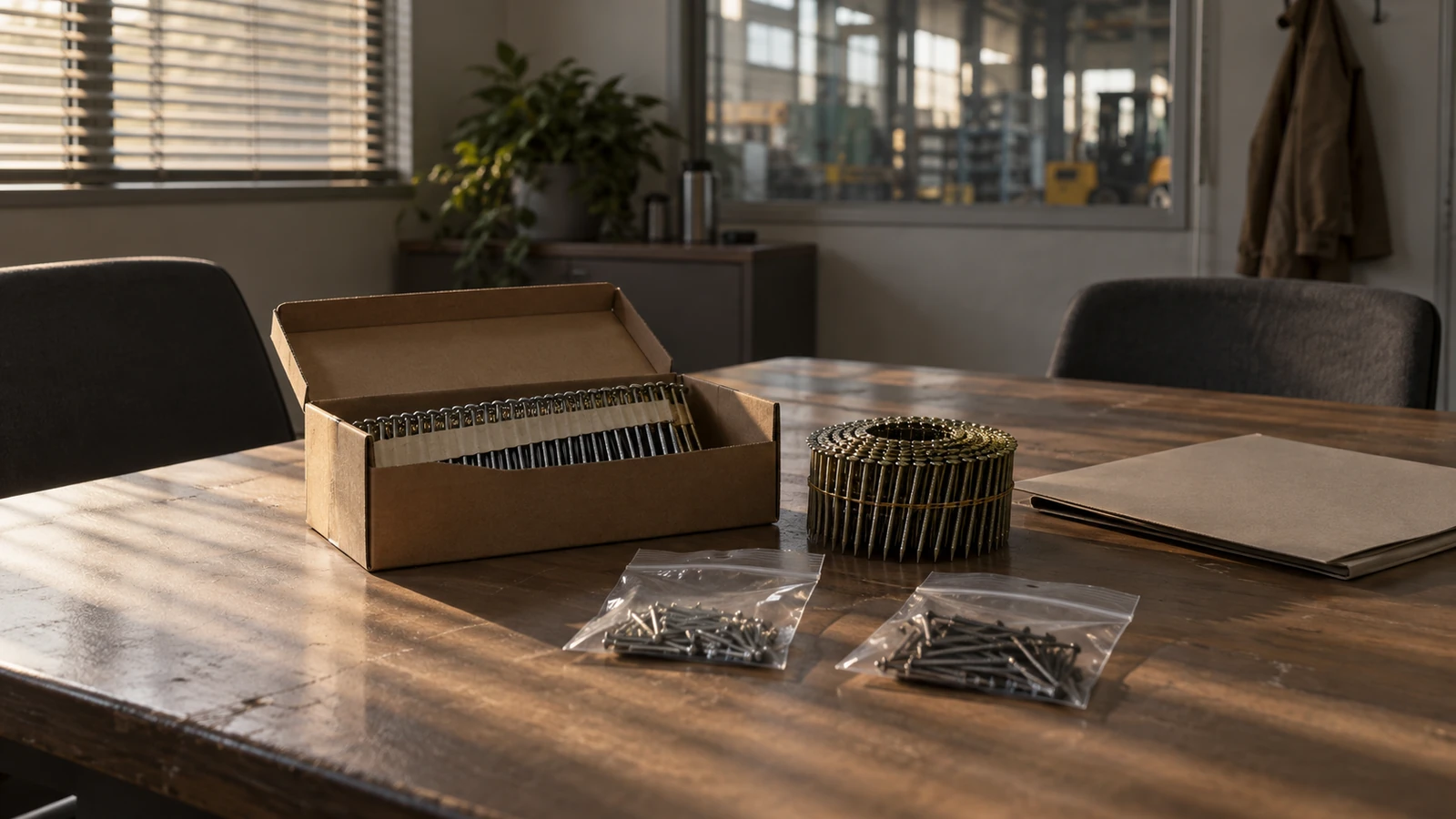
- Packaging: Review carton quantity, coil count, labels, and traceability needs for bulk purchasing.
- Quality controls: Ask how the supplier checks wire consistency, weld or collation integrity, dimensional stability, and feeding performance.
Where Coil Nails Typically Make Sense
Coil nails are commonly selected when an operation needs a high nail count with fewer magazine changes than a strip-fed system allows. Depending on the nail design and tool, they may be used in pallet and crate assembly, fencing, decking, roofing-related work, siding, sheathing, and other construction or industrial applications. The appropriate product depends heavily on substrate, exposure, holding requirements, and the nailer used.
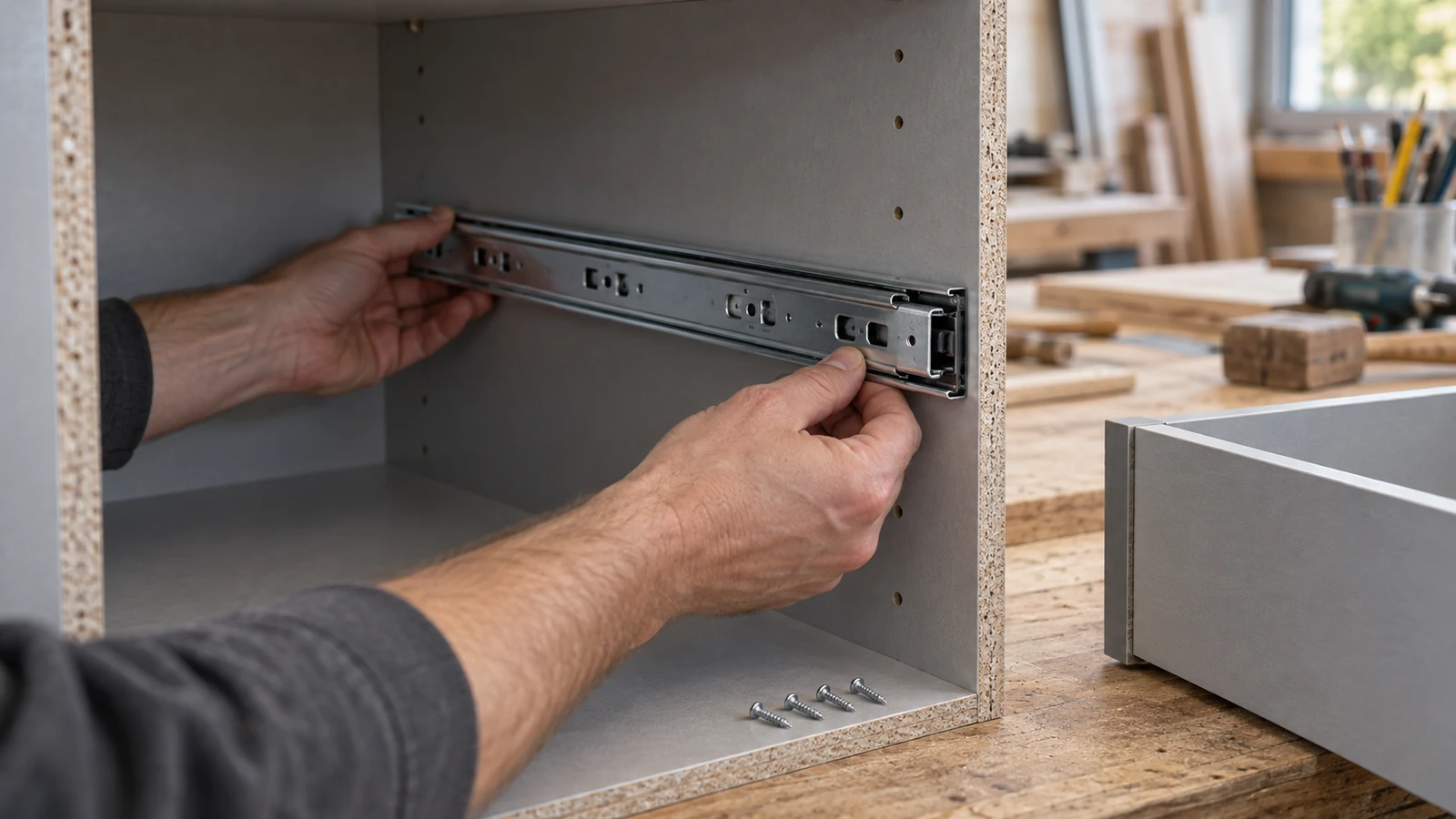
For furniture, cabinets, narrow trim, and small wood assemblies, a thin fastener may be preferable because it leaves a smaller entry mark. The pictured tool appears more consistent with this light-duty category than with a conventional high-capacity coil nailer, although the image alone cannot establish its exact function. If the job involves positioning parts while adhesive cures, a small pin or brad can be useful. If the joint must carry structural load, the fastener and tool need a much more careful engineering review.
What a Reliable Manufacturer Should Explain
Material selection
Ask the manufacturer which wire materials and surface finishes are available, and where each is appropriate. Plain steel may suit controlled indoor conditions, while corrosion-resistant finishes may be needed for moisture exposure. Stainless options can be relevant in more demanding environments, but the correct grade and availability must be confirmed rather than assumed.
Dimensional control
Consistent diameter and length affect penetration, holding power, and tool feeding. The manufacturer should explain its inspection process and how it manages variation through forming, pointing, collation, and packaging. Exact tolerances should be requested directly; they should not be inferred from a product photograph or a general catalogue description.
Collation and feeding
For bulk coil nails, collation quality is just as important as the nail itself. Poorly aligned nails, weak joining points, or inconsistent spacing can cause stoppages. Ask whether samples can be tested in the actual nailer, particularly when changing supplier or moving to a new nail size.
Common Purchasing Mistakes
The most common mistake is treating “construction coil nails” as one universal product. Nail length, shank profile, head style, finish, and collation vary widely. Another mistake is specifying only the wood species and quantity while leaving the tool interface vague. Even a well-made nail can perform poorly if it is not matched to the magazine and driver.
Buyers also sometimes focus on unit cost while overlooking packaging damage, line stoppages, and rejected assemblies. For a production line, a slightly lower purchase price is not attractive if feeding reliability is poor. Request representative samples, define the application, and record the tool settings used during evaluation.
A Practical Supplier Evaluation Process
Prepare a short technical brief containing the tool make and model, fastener type, required dimensions, substrate, indoor or outdoor exposure, expected order volume, and packaging preference. If the tool shown is the one under consideration, first identify whether it uses pins, brads, staples, or another narrow fastener rather than assuming it is a coil nailer.
Then ask potential suppliers for product drawings, available material options, packaging details, inspection information, and test samples. Compare performance in the real assembly: feeding, drive depth, surface marking, holding, and ease of clearing a jam. Keep the evaluation practical. A laboratory statement is useful, but it does not replace a controlled trial in the intended equipment.
Frequently Asked Questions
Is the pictured tool compatible with coil nails?
Compatibility cannot be confirmed from the available image. Its narrow, linear magazine and compact nose suggest it may use brads, pins, or staples rather than a coil. Verify the model and manufacturer’s fastener chart.
Should I buy bulk coil nails for furniture assembly?
Only if the nailer is designed for them and the application benefits from their capacity. For delicate cabinet or trim work, brads or pins may be more suitable.
What should I send to a coil nails manufacturer?
Provide the tool specification, fastener dimensions, substrate, environment, required finish, annual or batch volume, and packaging needs. A sample of the current nail is helpful when replacing an existing supplier.
Next Step for Buyers
Before requesting a quotation, verify the fastener system used by the tool and define the actual service conditions. A manufacturer that asks detailed questions about the nailer, material, and application is generally more useful than one that quotes immediately from a vague description. Once the specification is clear, sample testing can establish whether the proposed fastener is suitable for your production or workshop process.