
Choosing a Coil Nails Manufacturer When the Tool and Fastener Must Work Together
Choosing a coil nails manufacturer is not simply a matter of comparing nail prices. The more important question is whether the fastener, collation format, and tool form a reliable working system for the intended assembly. That matters especially when the application involves trim, frames, cabinet parts, or other wood components where a jam, proud fastener, or damaged surface can slow production and create rework.
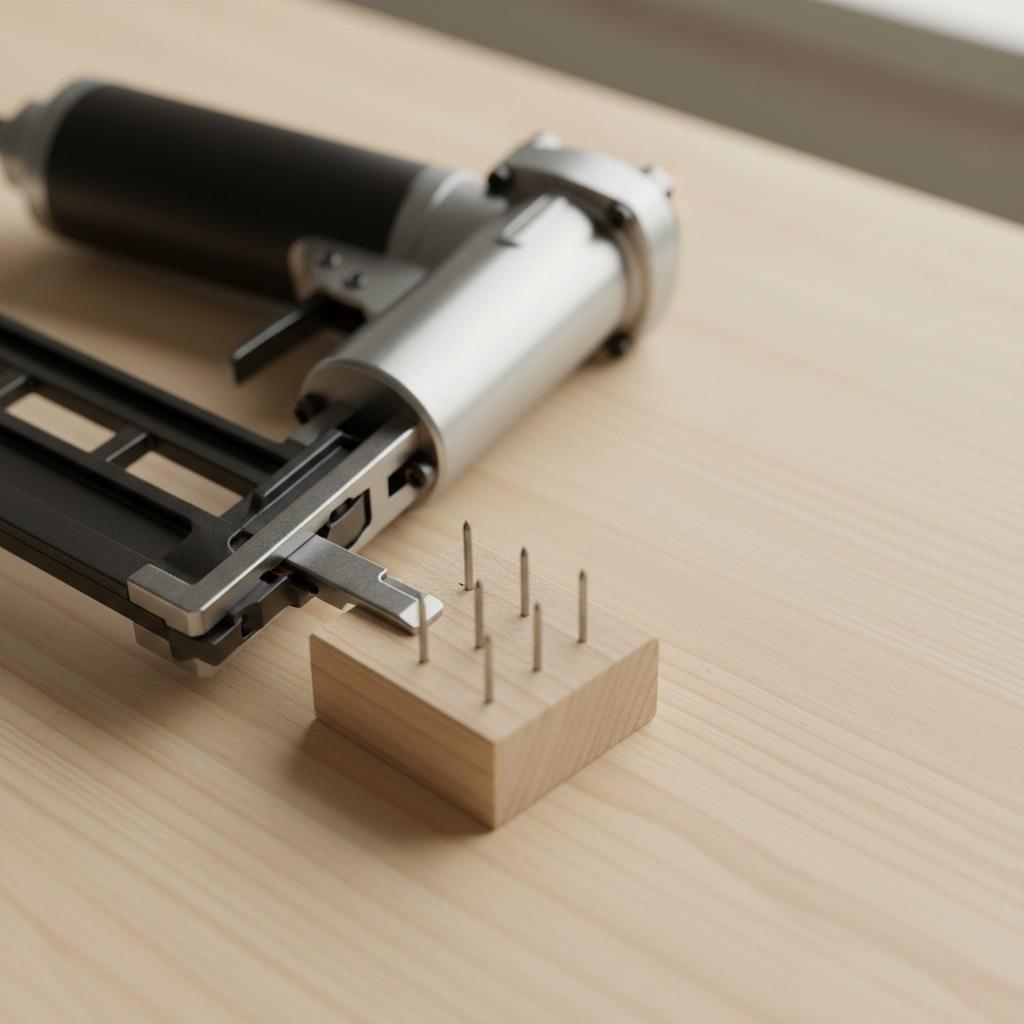
The product shown appears to be a compact handheld powered fastening tool positioned over a wooden workpiece. Its narrow magazine and small front nose suggest an application involving thin fasteners, such as pins, brads, or narrow staples, but the exact fastener type cannot be confirmed from the image. It should therefore not be treated automatically as a coil nailer. For a sourcing manager, that distinction is the starting point rather than a minor technical detail.
First separate coil nails from small-format fastening tools
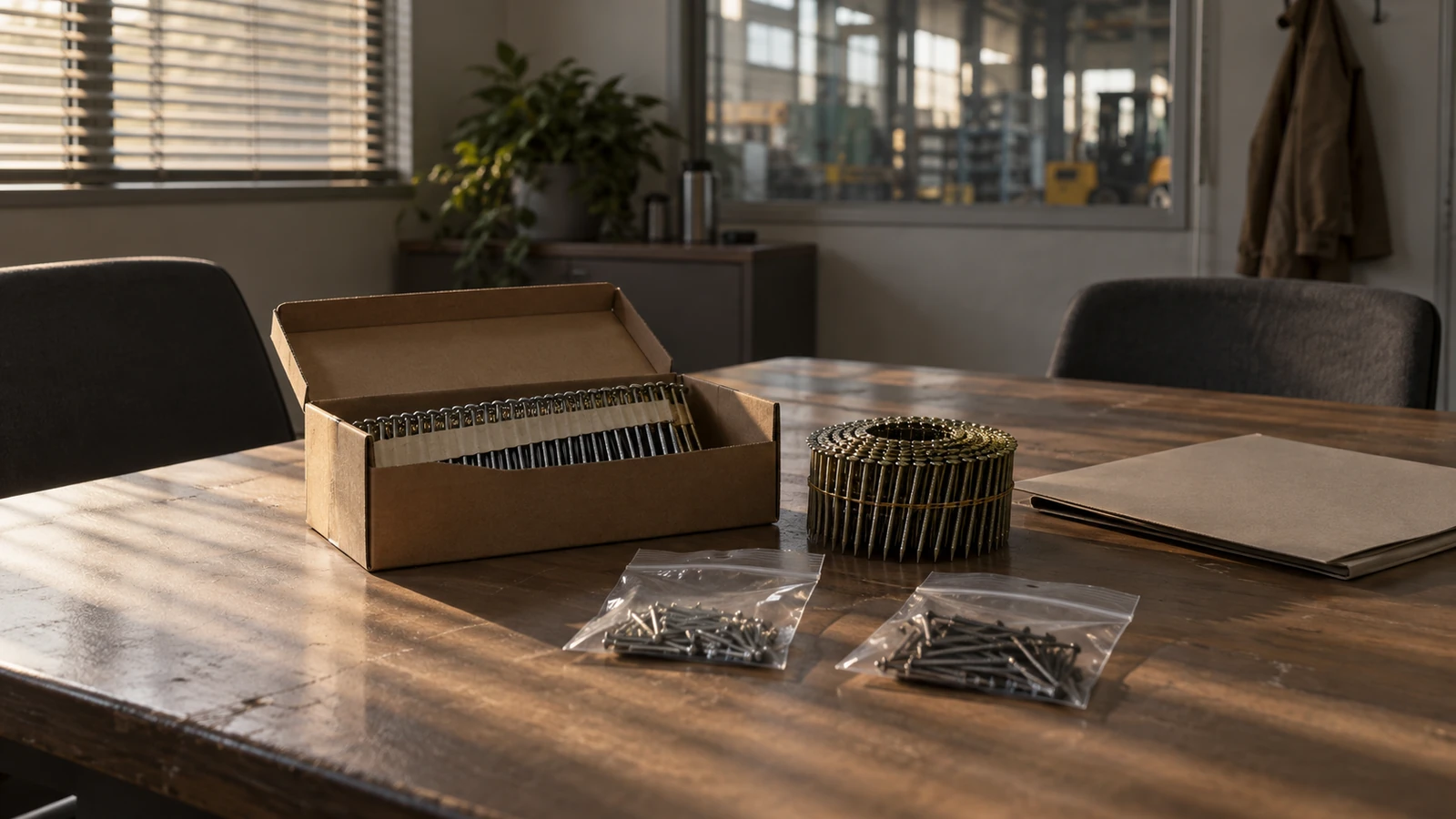
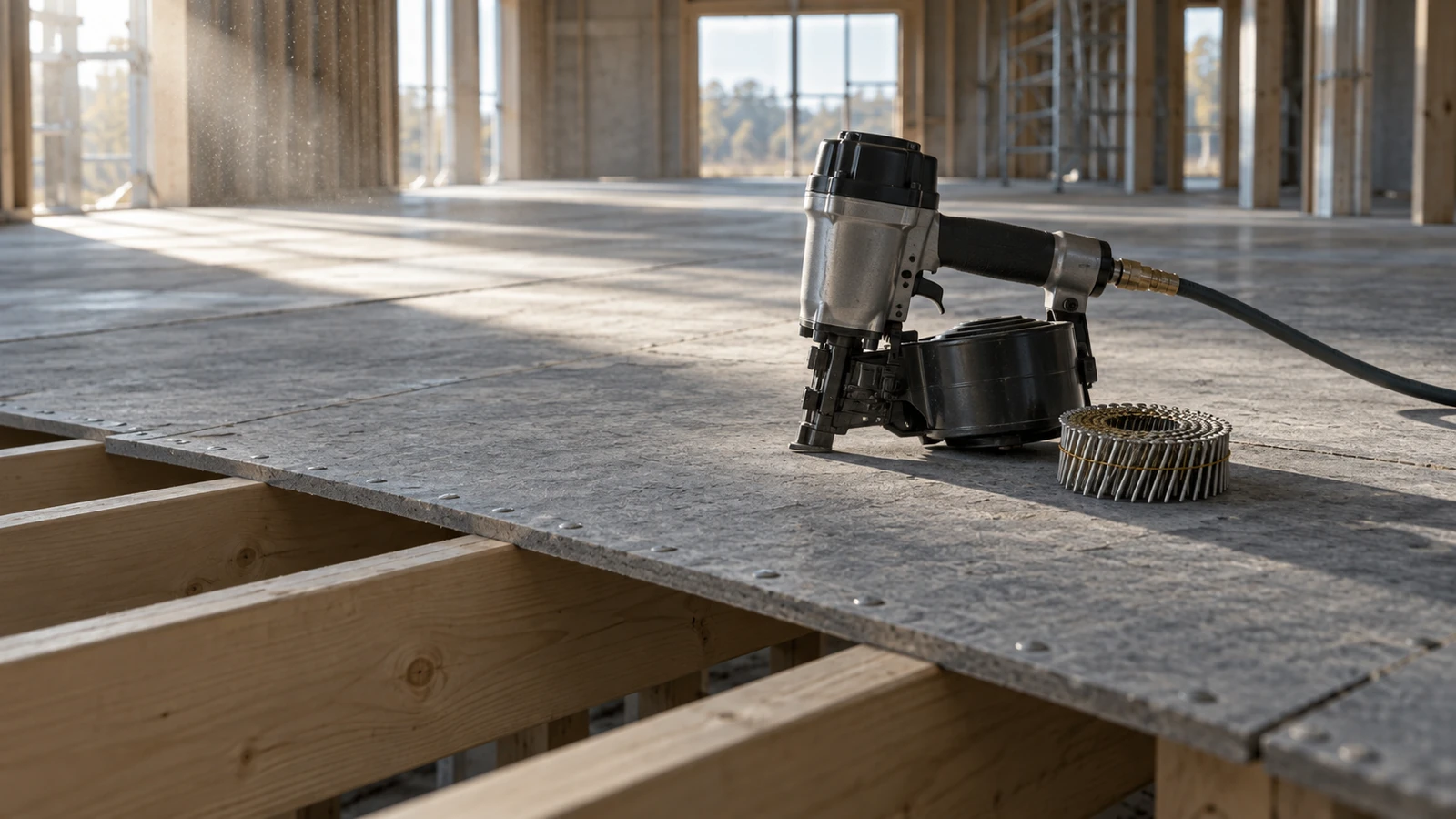
Coil nails are typically supplied in a wound or collated strip designed for a compatible magazine. They are commonly used where a tool must hold a relatively large quantity of fasteners for repeated work. Depending on the nail and tool design, applications may include construction, pallets, crates, roofing-related work, fencing, and other assembly tasks that require more substantial fastening than delicate trim work.
By contrast, the pictured tool has a slim feed rail and a compact driver area. Those visible features are more consistent with a pin nailer, brad nailer, or narrow-staple tool than with a conventional heavy-duty coil nailer. The likely uses include securing thin wood strips, moldings, frames, cabinet components, and light-duty joinery. The wooden fixture beneath the workpiece also suggests repeatable positioning during assembly, although the image does not establish the production volume or operating conditions.
This is a practical warning for buyers: do not approve a fastener source based only on the word “coil.” Confirm the tool’s magazine geometry, driver, nosepiece, and approved fastener range first. A coil format that looks compatible on paper may still produce poor feeding or inconsistent driving.
What to compare when evaluating a manufacturer
A useful supplier comparison should begin with technical compatibility, then move to production controls and commercial fit. The following questions are more useful than a general claim of quality:
- What exact fastener type does the tool accept: coil nails, pins, brads, or staples?
- What shank diameter, length range, head style, and collation arrangement are required?
- Does the supplier understand the relationship between nail geometry and the tool’s driver and feed mechanism?
- Can the supplier provide consistent wire, coating, collation, and straightness specifications?
- How are samples identified and approved before a larger order is released?
- Can packaging protect the fasteners from deformation, moisture, and mixed-lot confusion?
When sourcing bulk coil nails, buyers often focus on unit cost because the quantities are large. That is understandable, but a low purchase price is not useful if the nails arrive with inconsistent collation or cause repeated stoppages. Ask for a clear specification sheet and a representative sample. If the fasteners will be used with an existing tool fleet, test them in the actual tool rather than relying only on dimensional data.
Materials, finish, and manufacturing considerations
The image does not confirm the materials used in the tool or the fasteners. It does show black molded or coated housing surfaces, silver-colored metal at the front housing, and dark metal components around the magazine and feed area. A tool of this general type may involve molded housing parts, machined or stamped metal components, spring-loaded feed parts, and final mechanical assembly. Those are reasonable industry possibilities, not verified specifications for the pictured product.
For the nails themselves, the important questions usually concern the base wire, surface treatment, collation adhesive or material, and resistance to the environment in which the finished product will be used. Indoor furniture assembly and exposed construction work do not impose the same requirements. A finish suitable for a dry workshop should not automatically be assumed suitable for outdoor or high-moisture service.
Construction coil nails may need a different balance of penetration, holding power, corrosion resistance, and magazine capacity than fasteners used for cabinet trim. The correct selection depends on the substrate, joint design, tool, and expected service conditions. Avoid asking a manufacturer for “the strongest nail” without describing the application; that phrase rarely produces a useful specification.
Common sourcing mistakes
Assuming the image tells the whole story
A product photograph can show the nose, magazine, and general handling format, but it cannot establish operating pressure, voltage, firing rate, fastener capacity, depth adjustment, safety mechanisms, or durability. None of those values should be added to a purchase specification unless the supplier confirms them.
Testing only one sample
One successful fastening cycle proves very little. A better evaluation uses enough samples to check feeding, driving depth, surface marking, and jam frequency across a normal work sequence. The test should use the production material where possible, since soft trim, dense hardwood, plywood, and engineered board can behave differently.
Ignoring the collation and packaging
Fastener performance depends on more than the nail itself. Damaged strips, loose coils, poor labeling, or mixed lengths can create avoidable line problems. Packaging should make lot identification straightforward and keep the product protected during storage and transport.
A practical buyer’s decision path
Start by documenting the tool currently in use, including the magazine, driver, nosepiece, and the fastener loaded into it. Record the application, substrate, joint type, visible surface requirements, and whether the work is occasional or repetitive. Then request a manufacturer response that identifies the proposed fastener by type and dimensions rather than by a broad product name.
For a tool resembling the pictured assembly, ask the supplier to confirm whether the correct product is a pin, brad, narrow staple, or another small-format fastener. If coil nails are genuinely required, request confirmation that the tool is designed for that coil format and not merely a visually similar magazine-fed design.
Once compatibility is established, compare sample performance, packaging, documentation, and communication quality. A manufacturer that asks for the tool model, substrate, and application is generally giving the evaluation the attention it deserves. A supplier that offers a generic fastener without checking those details may create more risk than the initial quotation suggests.
FAQ
Is the pictured tool definitely a coil nailer?
No. The image shows a compact magazine-fed fastening tool, but the exact fastener type is not legible. It may be a pin nailer, brad nailer, or narrow-staple tool.
Are bulk coil nails suitable for trim and cabinet work?
Not automatically. Suitability depends on the tool, nail dimensions, material, joint design, and the required surface appearance. Small-format fastening is often more appropriate for delicate trim, but the final choice requires confirmation.
What should be sent to a potential supplier?
Provide the tool details, fastener dimensions, application material, expected use pattern, finish requirements, and any existing sample. Clear input produces a more meaningful quotation and compatibility review.
Next step for sourcing teams
Before requesting a production quotation from a coil nails manufacturer, build a short technical brief around the actual tool and application. Include photographs of the magazine and driver area, the current fastener, the workpiece, and the finished joint. Ask for samples and written confirmation of compatibility. That modest preparation can prevent a costly mismatch—and it is especially important when a compact woodworking tool is being mistaken for a construction fastening system.