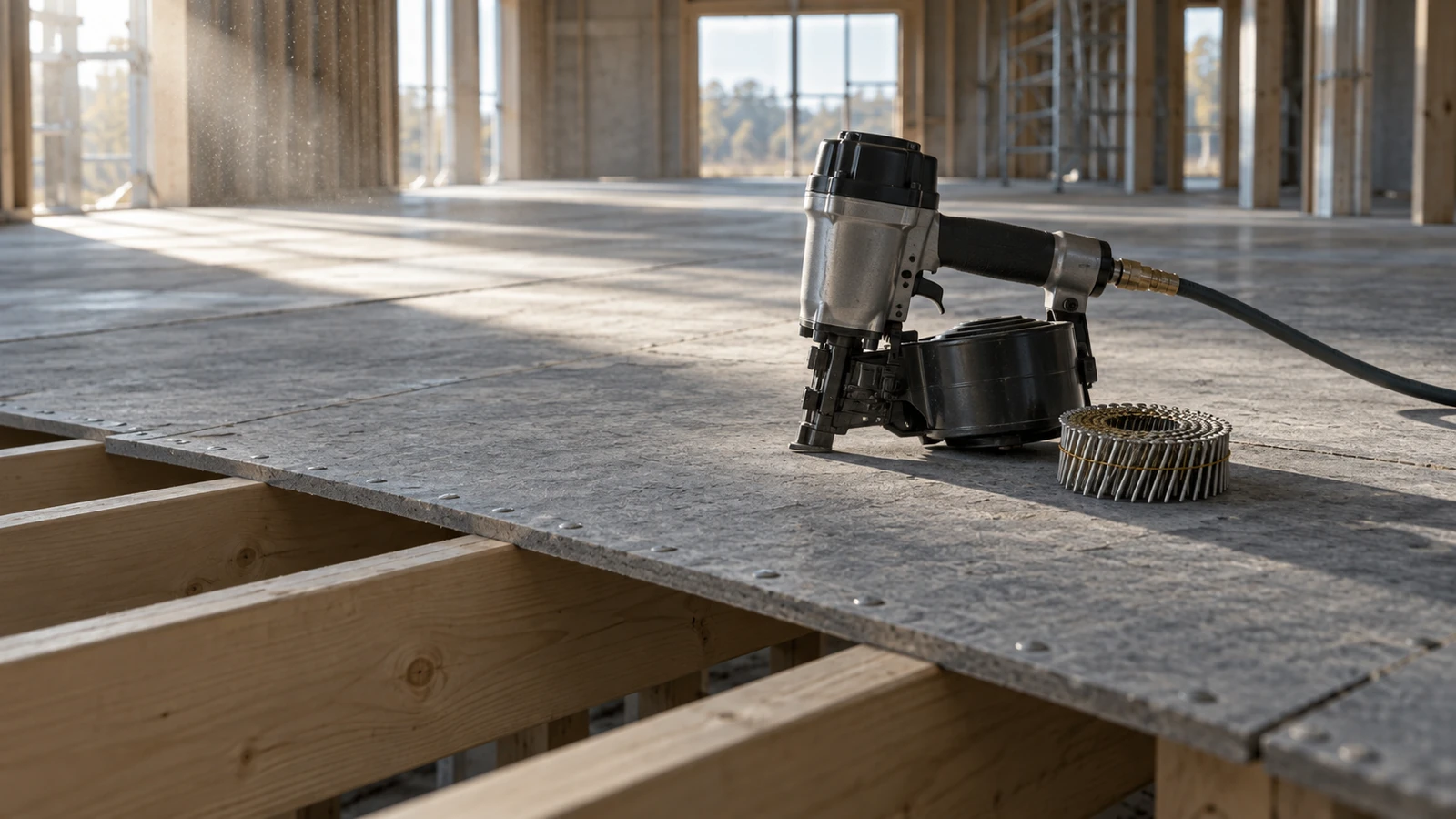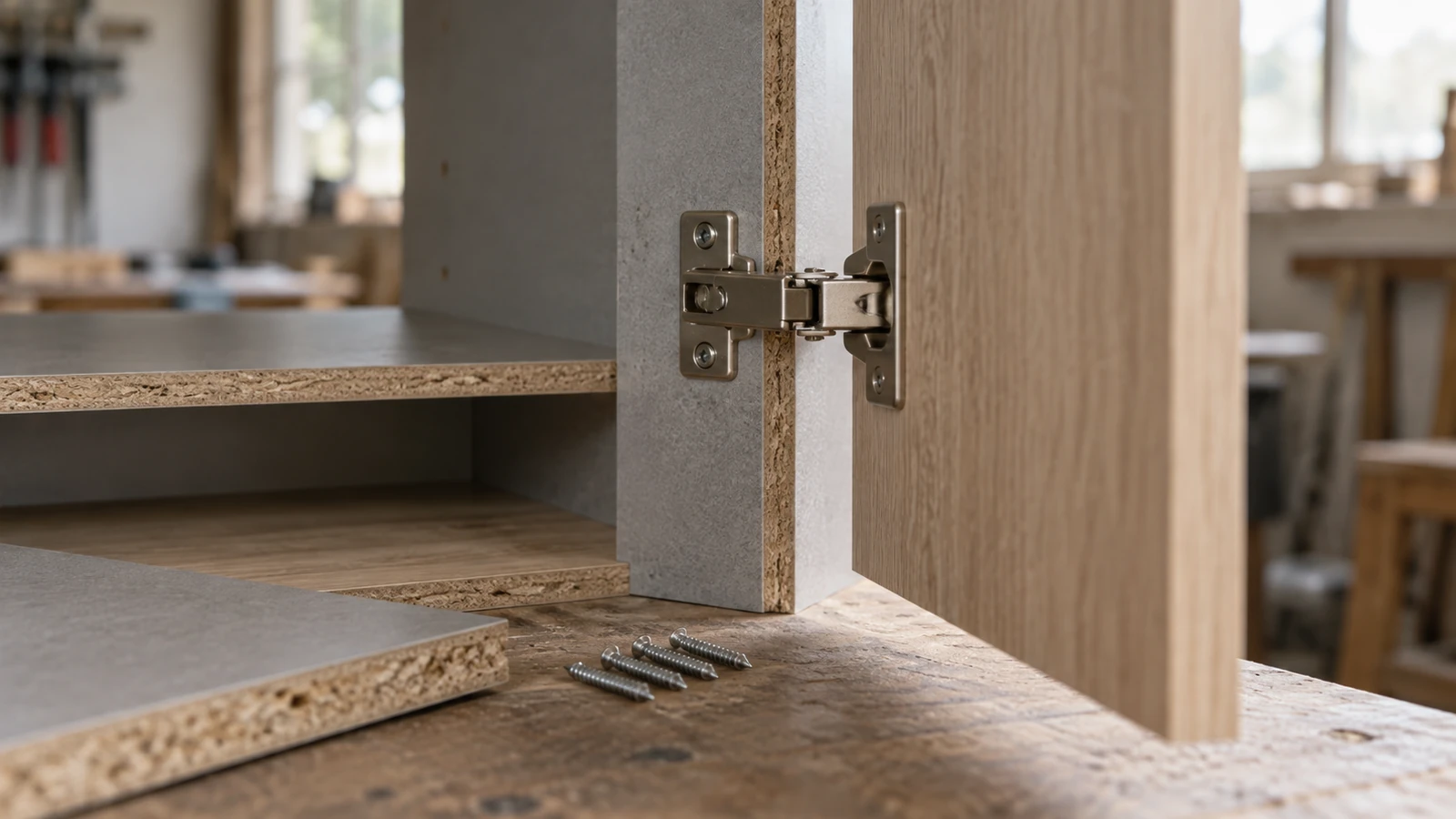

Choosing a coil nails supplier is rarely just a procurement exercise. For shops that run pneumatic fastening tools every day, the supplier affects feed reliability, fastening speed, and how much time gets lost to jams, bent nails, or mismatched coils. That matters whether you are building cabinet frames, attaching trim, or running repetitive assembly with a handheld air-powered nail gun on the bench.

Why the supplier matters more than the box price
On paper, coil nails can look interchangeable. In practice, small differences in coil winding, shank consistency, adhesive coating, and packaging can change how smoothly a tool feeds. A low-cost batch may work fine for a short run and then create nuisance stops once the pace picks up. That is where a steady supplier becomes more valuable than a one-time discount.
For buyers comparing a coil nails factory with a trading company, the real question is not only who sells the nails, but who can keep dimensional consistency over repeated orders. In woodworking assembly, the operator often works one-handed while positioning parts. If the fasteners do not feed cleanly, production slows immediately.
Quick checklist for buying coil nails
- Match the fastener to the tool - Confirm the coil format, wire or paper collation style, and nail type your pneumatic tool accepts before you ask for samples.
- Check feed behavior - Ask how the nails are packaged and whether the supplier has seen feeding issues with similar finish nailer or framing tool setups.
- Review material options - Common wood-fastening applications may call for different coatings or corrosion resistance depending on indoor shop use or more exposed assemblies.
- Ask for lot consistency - A reliable spiral coil nails manufacturer should be able to explain how it controls coil shape, shank straightness, and coating coverage.
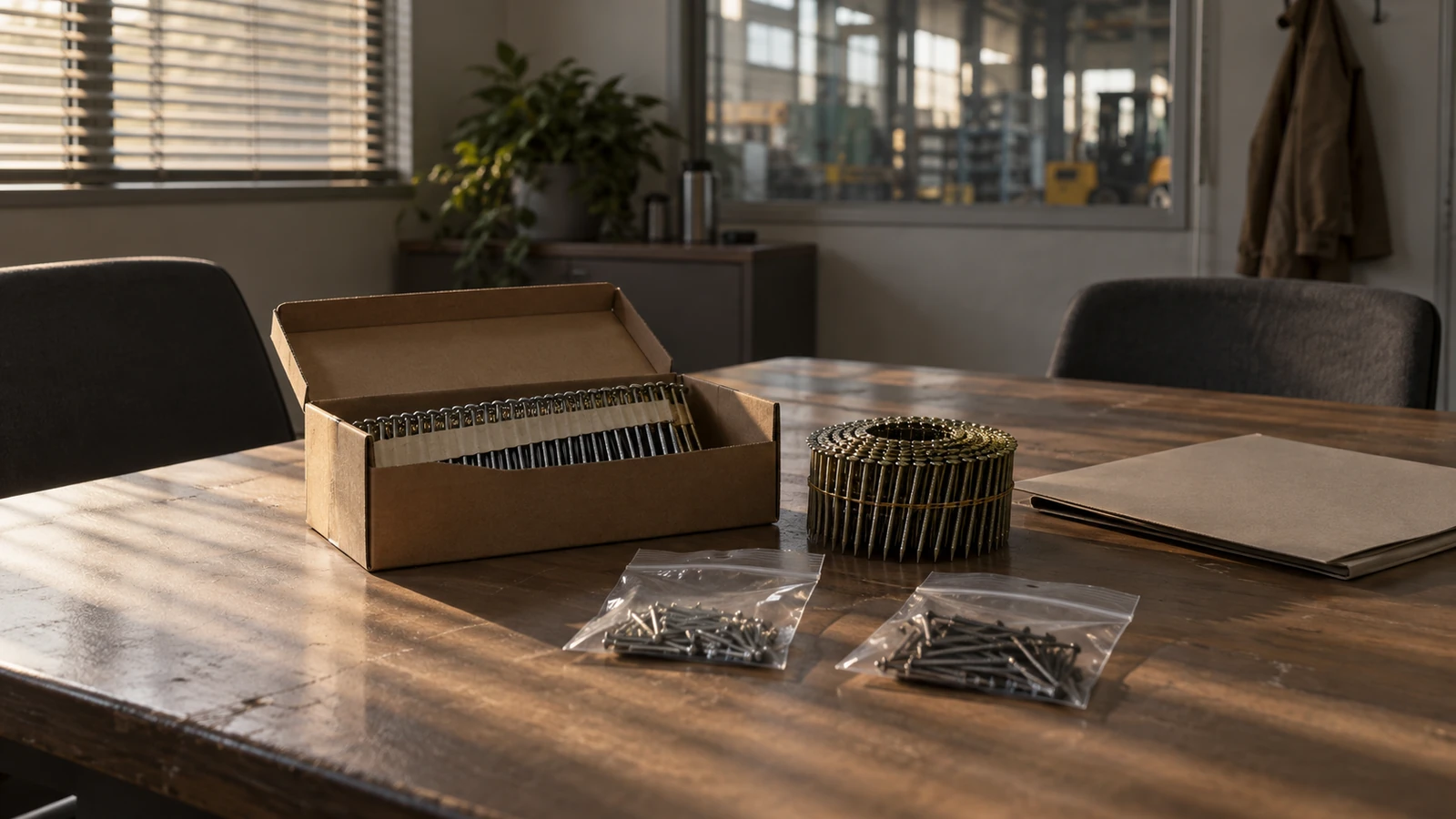
- Inspect sample packs early - Trial a small order in the actual workshop, not just on paper, because shop conditions reveal problems faster than specifications do.
What to look for in a supplier relationship
1. Clear product identification
Buyers should expect straightforward descriptions of gauge, length range, head style, and collation. If a supplier is vague here, that is usually a warning sign. For repeat production, unclear naming causes ordering mistakes long after the first shipment is forgotten.
2. Stable packaging and labeling
In a busy shop, packaging is not a minor detail. If boxes are poorly labeled or coils are damaged in transit, the cost shows up on the line. Good packaging helps operators move from storage to tool loading with less confusion and fewer interruptions.
3. Realistic technical support
A good coil nails supplier should be able to talk through compatibility in plain language. They do not need to overpromise. In fact, a cautious answer is often better than a flashy one. If the supplier understands pneumatic fastening tools used for woodworking assembly, they can usually help you avoid unnecessary returns.
How to compare suppliers without overcomplicating the process
Many buyers try to compare too many variables at once. That makes the decision slower, not better. A cleaner method is to rank suppliers against the same small set of criteria:
- Product fit with your nail gun or finish nailer application
- Consistency across sample and repeat orders
- Communication speed when questions come up
- Packaging quality and shipment protection
- Ability to support ongoing woodworking or assembly work
This is especially useful when speaking with a coil nails factory directly. Factory sourcing can be efficient, but only if the factory is responsive and can keep the product definition stable from one order to the next. Otherwise, the lower unit price may disappear into downtime and sorting.
Common mistakes buyers make
- Buying by price alone - The cheapest coil is not always the least expensive once feed issues are included.
- Skipping tool verification - Not every fastening job uses the same nail format, even if the tools look similar.
- Ignoring the work environment - Indoor cabinet work and rougher shop assembly may have different durability needs.
- Not testing with actual operators - The person holding the pneumatic tool will spot feed problems long before a purchasing sheet does.
A practical aside: if your team runs repetitive fastening tasks, even a small inconsistency in coil nails can become a habit-forming nuisance. Operators learn to compensate, and once they do, the process gets harder to standardize later.
FAQ for sourcing teams
Do all suppliers need to be manufacturers?
No. Some buyers work well with distributors, especially when they need flexibility or smaller orders. Others prefer a direct spiral coil nails manufacturer for tighter control. The right choice depends on volume, technical support needs, and how quickly your specs may change.
Should I request samples every time?
Yes, at least when changing suppliers or moving to a new product line. A short in-house test often reveals more than a long specification sheet.
What is the biggest risk in sourcing coil nails?
The biggest risk is assuming all coils feed the same way. Even small differences can affect performance in a pneumatic fastening setup used for woodworking, trim, or cabinet assembly.
Next step for buyers
If you are shortlisting a coil nails supplier, start with a sample request and a simple compatibility check against your current tool setup. Ask for product identification, packaging details, and a straightforward explanation of how the nails are made and collated. That is usually enough to separate a dependable source from one that only looks good on paper.