
How to choose a coil nails wholesale distributor for shop-floor fastening jobs
If you are comparing a coil nails wholesale distributor, you are probably not shopping for a one-off box of fasteners. You are trying to keep production moving. Upholstery benches, furniture assembly lines, packaging stations, and light woodworking shops all run on the same basic logic: the right consumable has to be available, consistent, and compatible with the tool in the hand. Miss that, and the cost shows up fast in stoppages, rework, and wasted labor.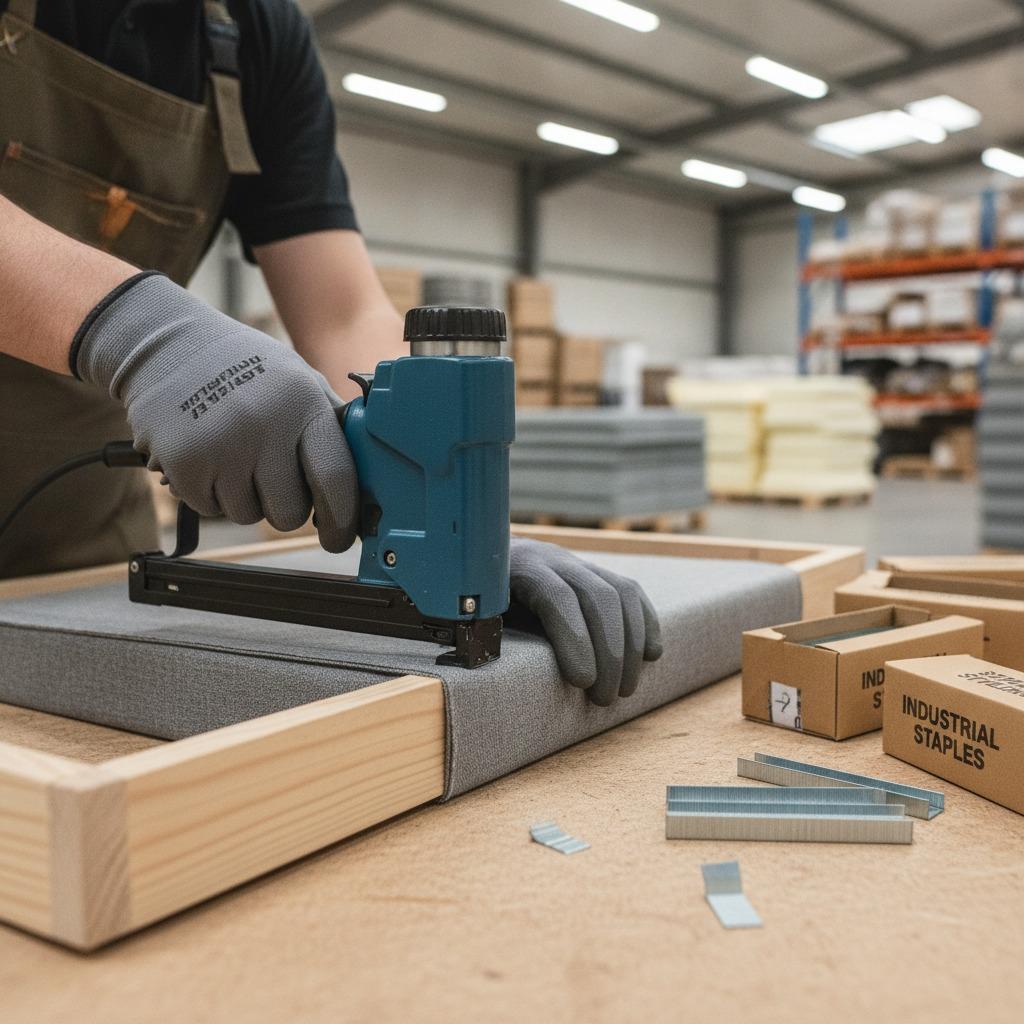
That is why buyers often look beyond price per box and ask a more practical question: which supplier can keep the fasteners flowing without creating headaches on the floor?
What these fasteners do, and why the details matter
The product shown in the preparation data is a strip-style metallic staple used with a pneumatic stapler or nailer. The application is straightforward but demanding. It fastens soft materials such as fabric, foam, upholstery backing, or similar layers to wood and comparable substrates. In a busy shop, that means hundreds or thousands of repetitive trigger pulls, and every misfeed or inconsistent staple can slow the job.
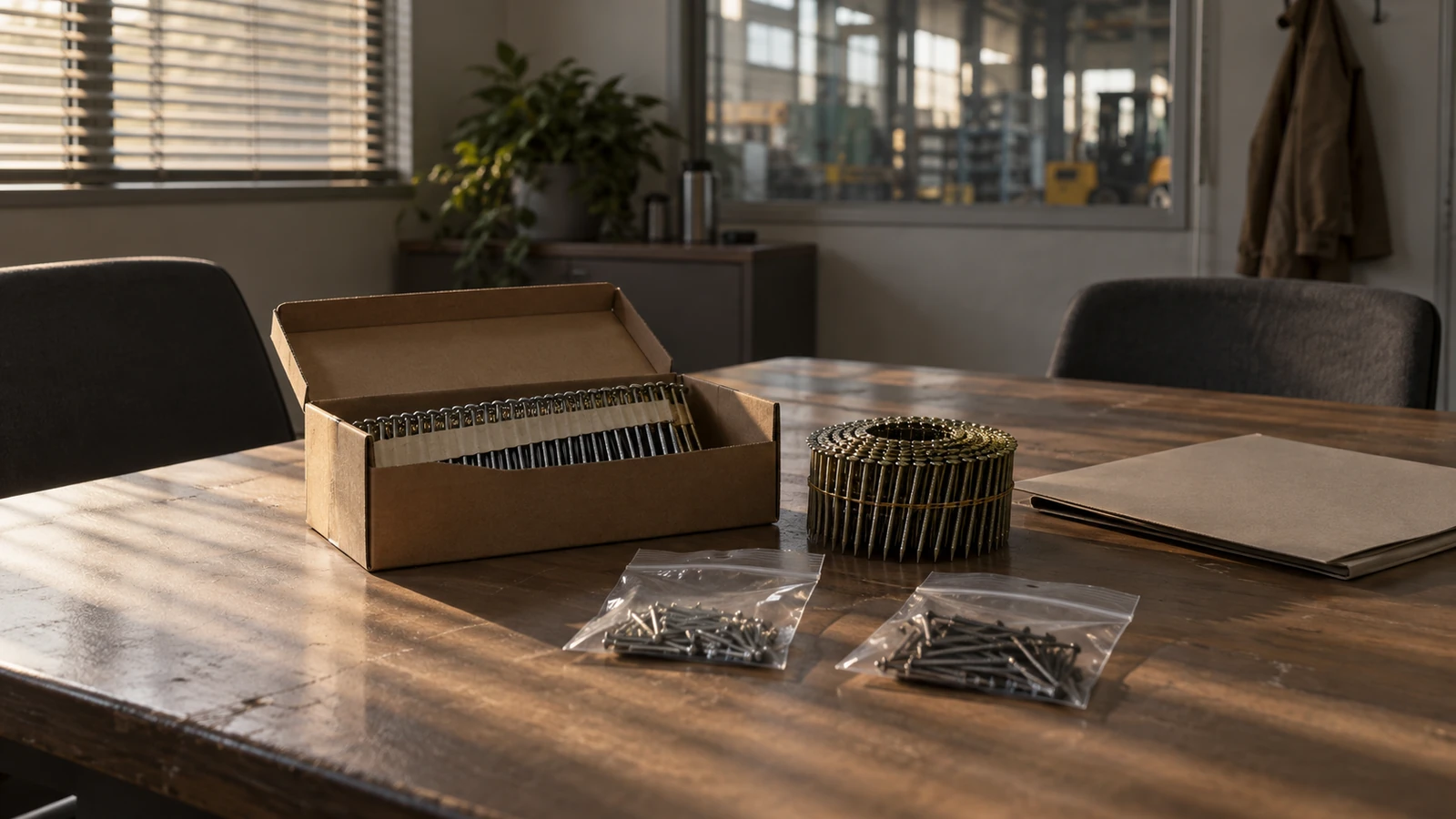
A few visible details matter immediately. The box label shows a 1/2-inch crown and 10,000 pieces per box. That crown width tells you something about the holding area across the material, while the box count gives purchasing teams a quick way to estimate consumption and order frequency. The staples appear to be bright silver steel with a straight strip format and a wide crown, which is common in upholstery and other fastening work where the goal is secure attachment without overcomplicating the process.
What is not visible should stay unknown. Wire gauge, leg length, coating, hardness, and tool compatibility cannot be assumed from the image alone. That caution is not a footnote; it is the difference between a clean receiving decision and a warehouse return.
What buyers should compare before placing a wholesale order
When sourcing wholesale coil nails or related strip fasteners, the first filter is compatibility. The second is consistency. The third is packaging and supply reliability. That order matters.
1. Tool and fastener match
A pneumatic stapler is only as good as the consumable it accepts. Buyers should verify crown width, leg length, wire profile, and any other fitment requirement before committing. A fastener that looks close enough on paper can still jam, bridge, or feed poorly in the field.
2. Application fit
Upholstery work is not the same as general woodworking. Softer materials, layered assemblies, and fabric-facing surfaces usually demand a fastener that drives cleanly and holds without distorting the material. If your team is fastening foam or backing to frames all day, repeatability matters more than almost anything else.
3. Pack size and handling
The 10,000-piece box format is practical for high-volume users, but it also raises simple logistics questions. Can the packaging survive handling and storage? Is the count easy for line-side replenishment? Does your receiving team want master cartons or smaller issue packs? These are mundane questions, yet they decide whether the shop runs smoothly.
4. Supplier communication
A dependable coil nail distributor should be able to answer the unglamorous questions quickly: what exactly is in the box, how is it packed, what variations are available, and what documentation comes with the order? If a supplier is vague before the sale, that usually does not improve afterward.
Common mistakes when buying wholesale fasteners
One frequent mistake is assuming all wide-crown staples are interchangeable. They are not. Another is ordering based on a photo or a single marketing phrase without confirming the dimensions the tool actually needs. Buyers also sometimes overlook how much fastener consumption can vary by operator technique, material thickness, and production rhythm.
A smaller but costly mistake: underestimating the value of standardization. If one department uses a different staple format from another, purchasing may save a little on paper and lose much more in inventory complexity.
Practical buying advice for sourcing teams
If you are building a supply shortlist, ask for the product dimensions in writing, not just a part name. Request confirmation of crown width, packaging count, and any available options for your application. If your use case is upholstery or frame assembly, it is worth testing a sample lot on your actual substrate rather than relying on a generic compatibility claim.
For repeat buyers, the real metric is not simply unit cost. It is the total effect on uptime, feed reliability, and labor efficiency. A slightly better fastener can save more money than a cheaper box that causes jams or inconsistent fastening.
Quick reference for shop-floor buyers
The boxed staple product described here fits the needs of high-volume fastening work where compressed-air tools improve speed and consistency. The visible indicators are a 1/2-inch crown and 10,000 pieces per box, both useful for procurement and planning. The unknowns still need to be verified before purchase: exact leg length, wire gauge, coating, corrosion performance, and stapler compatibility.
FAQ
Is a coil nails wholesale distributor only for construction buyers?
No. Wholesale fastener sourcing also matters in upholstery, furniture assembly, packaging, and other light industrial operations that use pneumatic fastening tools.
Why is crown width important?
Crown width affects how the staple contacts and holds the material. In soft-material fastening, it is one of the first dimensions buyers should confirm.
Should I buy purely on price?
Not if the fasteners are going into production. Price matters, but fit, feed consistency, and packaging reliability often matter more once labor is involved.
Next step for buyers
Before you place a wholesale order, line up the exact tool requirements, the substrate you are fastening, and the volume you expect to run each week. Then compare distributors on product clarity, pack size, and responsiveness, not just the headline price. That approach usually saves more money than the lowest quote on the page.