
If you are comparing an industrial nails exporter, the real question is not just who can quote a carton price. It is who can keep fasteners consistent, packed for transit, and ready for warehouse handling without turning a simple order into a damage claim. For buyers in construction, timber packaging, and general industrial assembly, that difference matters more than a polished sales sheet.
This list is meant to help engineers, sourcing managers, and product teams decide what to look for before placing a bulk order. In practice, a good exporter is also part manufacturer, part packer, and part logistics operator. If any one of those pieces is weak, the shipment tends to show it.
1. Start with the way the nails are packed
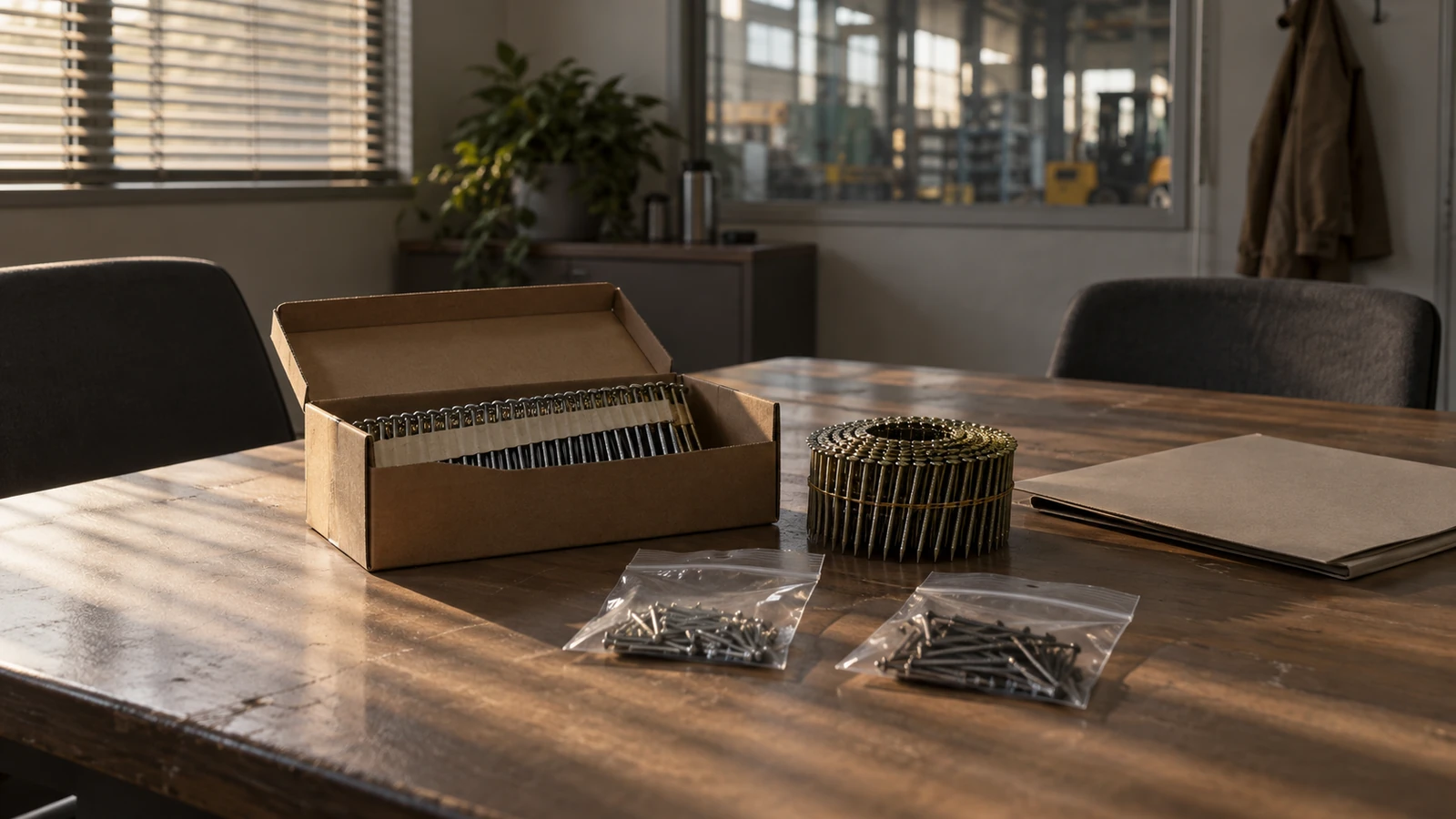
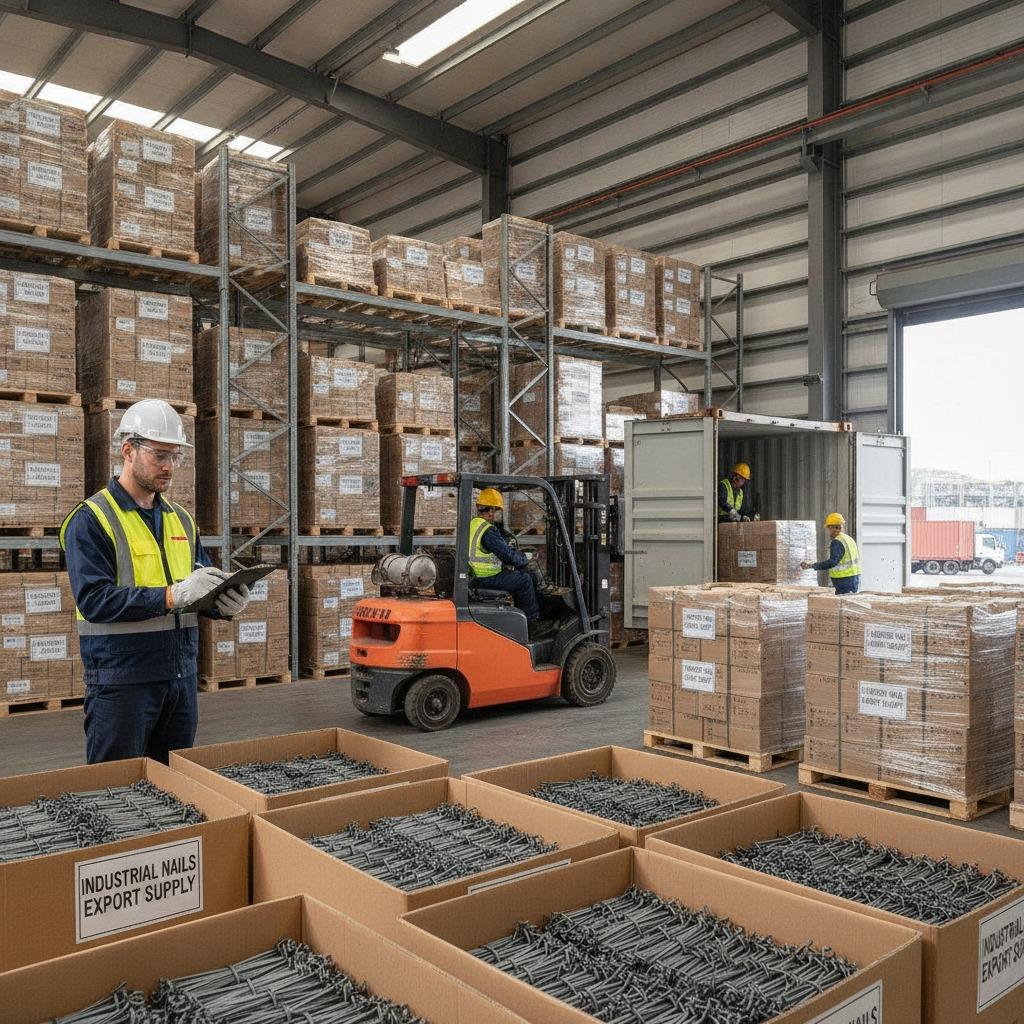
The visible product setup here shows nails boxed for export, with some cartons palletized and others bundled for warehouse shipment. That matters because packaging is not a side detail. It affects how well the product survives container loading, storage, and downstream handling.
A reliable bulk nails supplier should be able to explain whether the order is packed loose, collated, bundled, or arranged in another export-friendly format. The important point is not the label; it is whether the packaging matches the buyer’s receiving process and the way the nails will be used on site.
2. Clarify the nail type before you compare prices
The product image suggests straight-shank metal nails, likely steel, with a silver-gray finish. Some bundles appear to include a yellow-gold band or coating, but the exact nail subtype is not clear. That is not unusual in preliminary sourcing, but it is a problem if buyers assume too much from a photo.
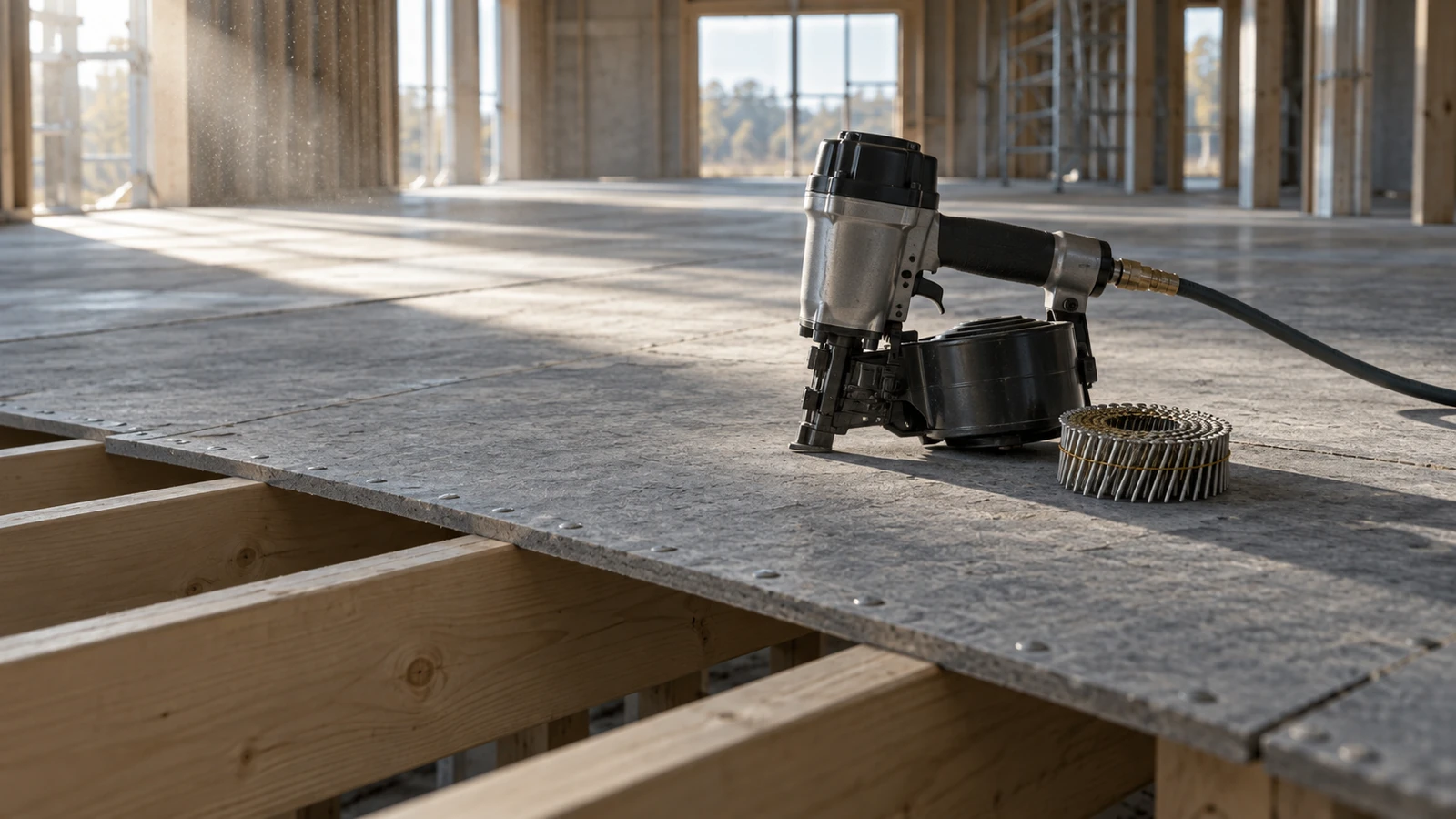
Ask the nail manufacturer to confirm the subtype, the intended application, and whether the product is meant for general wood fastening, timber framing, pallet production, crate building, or another industrial use. Do not rely on appearance alone. Two nails can look similar in a warehouse image and behave very differently in service.
3. Match the supply model to your application
Some customers need high-volume supply for recurring construction work. Others need a steady stream for pallet and crate production. A few need mixed export shipments that support several plants or distributors. The right industrial nails exporter should understand these different use cases rather than forcing every buyer into the same order pattern.
If your operation values consistency over occasional spot buying, ask whether the supplier can support repeat shipments and stable warehouse stock management. That is one reason many buyers prefer a long-term bulk nails supplier instead of chasing the lowest quote each time.
4. Check warehouse discipline, not just manufacturing claims
Industrial fasteners are simple products, which is exactly why poor handling stands out. Bent bundles, crushed cartons, wet pallets, and careless stacking are not minor issues once the goods are in transit. They can slow receiving, create rework at the plant, and waste labor before the first nail is ever used.
Look for signs that the exporter treats packing and palletizing as part of the product. In export work, that usually means cartons that are ready for container loading, organized pallet placement, and stock flow that can support warehouse pickup without confusion. A clean shipment often tells you more than a smooth sales presentation.
5. Ask how export readiness is handled
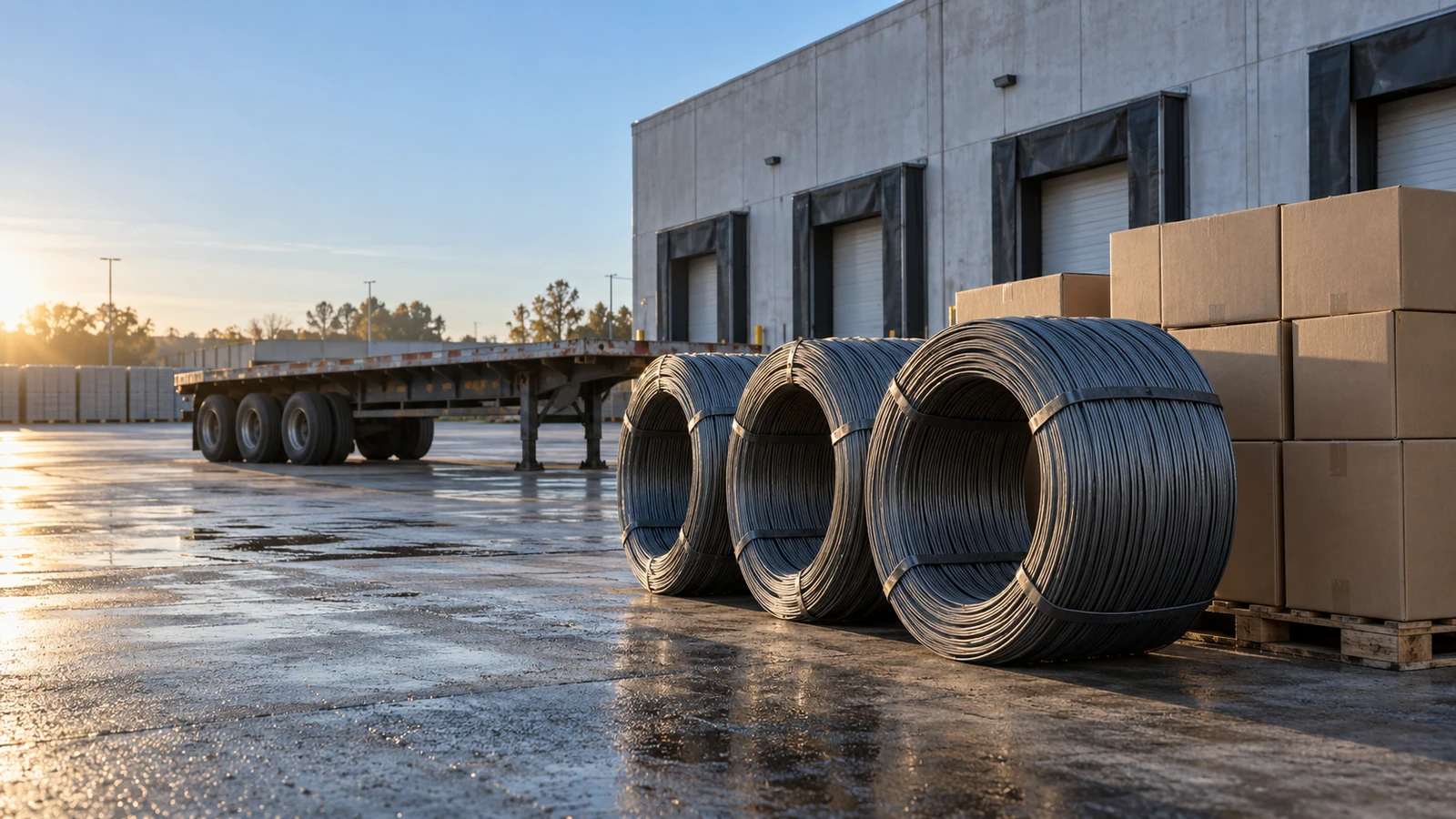
An industrial nails exporter is not just shipping within one local market. Export work adds another layer of responsibility: packing stability, container efficiency, and clear shipment coordination. The image provided suggests preparation for warehouse shipment and export logistics, which is a good sign, but buyers should still ask direct questions.
For example, how are cartons labeled? Are pallets used for all orders or only some? How is loading planned to reduce damage during transit? Even a capable nail manufacturer can stumble if the export process is improvised. This is especially important when you are moving large volumes across borders and cannot inspect every box on arrival.
6. Separate manufacturer capability from trading capability
Some suppliers primarily manufacture, while others focus on export coordination. Many do both, but the balance matters. A nail manufacturer may control product consistency well, while a trading-focused exporter may be stronger on shipping coordination and documentation. Buyers often need both strengths.
If you are sourcing as a factory, distributor, or procurement team, ask who actually controls production, packing, and final shipment release. That simple question can reveal whether the supplier can solve problems quickly or only pass messages between different departments.
7. Watch for the usual sourcing mistakes
The most common mistake is buying on photos alone. The second is assuming every steel nail shipment is interchangeable. The third is ignoring the packaging standard until the goods arrive damaged or difficult to count.
Another practical warning: do not over-specify what the supplier has not confirmed. Coating, corrosion performance, dimensions, hardness, and exact counts per box should be verified before you lock in a purchase. If you need a certain performance level for exterior or high-moisture use, say so clearly and ask for written confirmation.
Quick buyer checklist before you place the order
Use this short list to compare suppliers without getting lost in sales language:
Does the exporter provide clear product identification for the nail type and intended use?
Is the packing method suitable for warehouse handling and export transit?
Can the supplier explain palletizing and container loading practices?
Does the supplier look more like a one-off trader or a repeatable bulk nails supplier?
Can the manufacturer or exporter support the volume pattern your plant or distribution channel needs?
FAQ for industrial fastener buyers
Is an industrial nails exporter always the same as a manufacturer?
Not always. Some exporters also make the product, while others coordinate supply and shipping. If you need tighter control over product consistency, ask which role the supplier actually plays.
Why does palletizing matter for nails?
Because fasteners are dense, heavy for their size, and easy to damage if cartons shift. Good palletizing reduces handling problems and makes receiving faster.
What should I verify first if the nail subtype is unclear?
Start with the application, packing format, and material description. Then ask for the exact nail specification before comparing price on a like-for-like basis.
If you are evaluating an industrial nails exporter, the best next step is to request a product breakdown, packing description, and export shipment plan in the same conversation. That makes it much easier to compare a real manufacturer or bulk nails supplier against a seller who only has a nice warehouse photo.