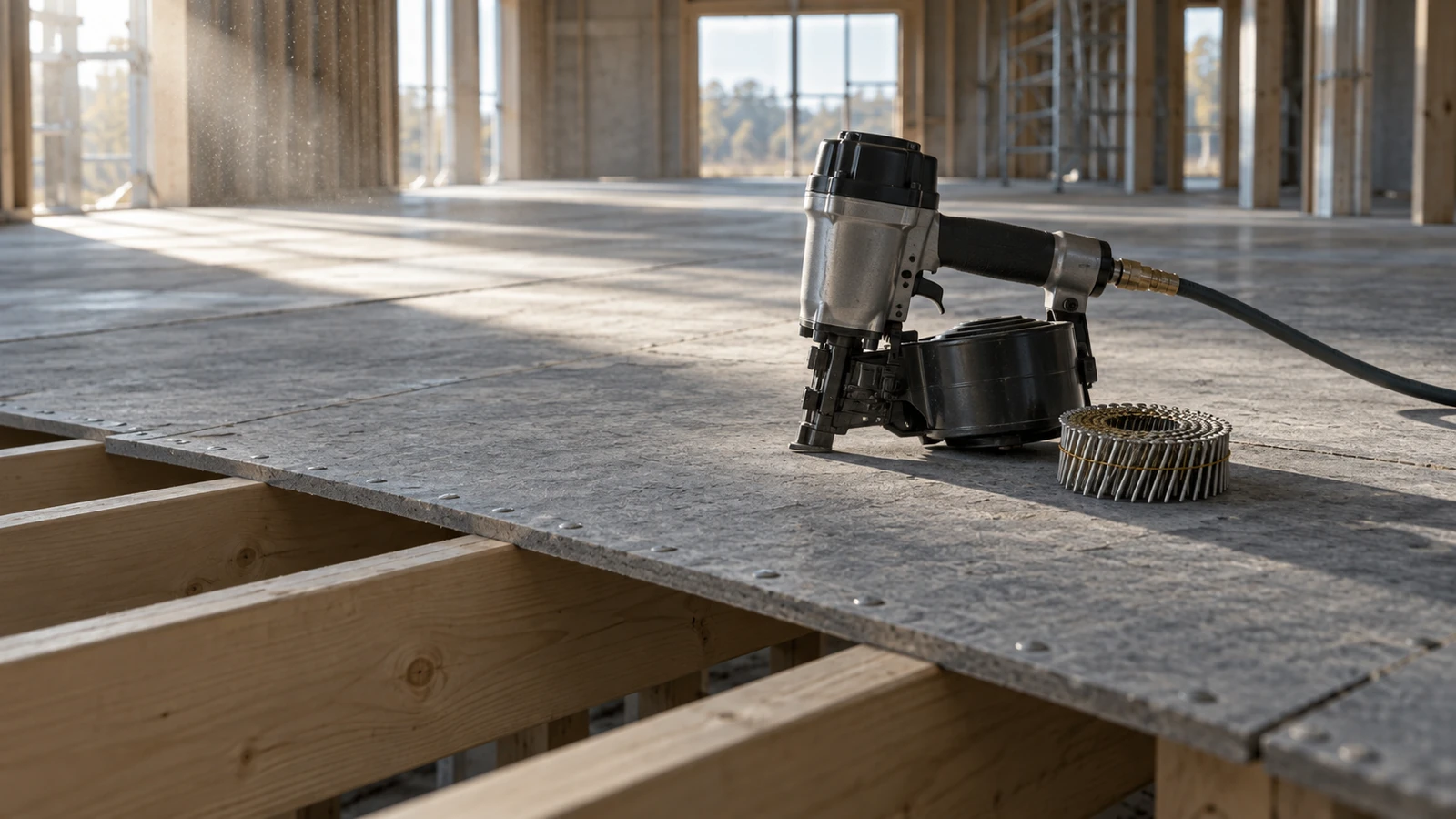

If you are evaluating an industrial nails exporter, the first question is not price; it is whether the supplier can match the nail to the job. In construction, pallet building, crate assembly, and industrial packaging, a small mismatch in nail style or finish can turn into loose joints, damaged timber, or avoidable rework. Buyers usually want a supplier who can ship in bulk, keep inventory moving, and answer basic product questions without hedging.
This listicle breaks down what engineers, sourcing managers, and product teams should look for before placing a purchase order. It is less about chasing a perfect brochure and more about separating a practical bulk supplier from a shipment that only looks ready on paper.
1. Start with the end use, not the carton label
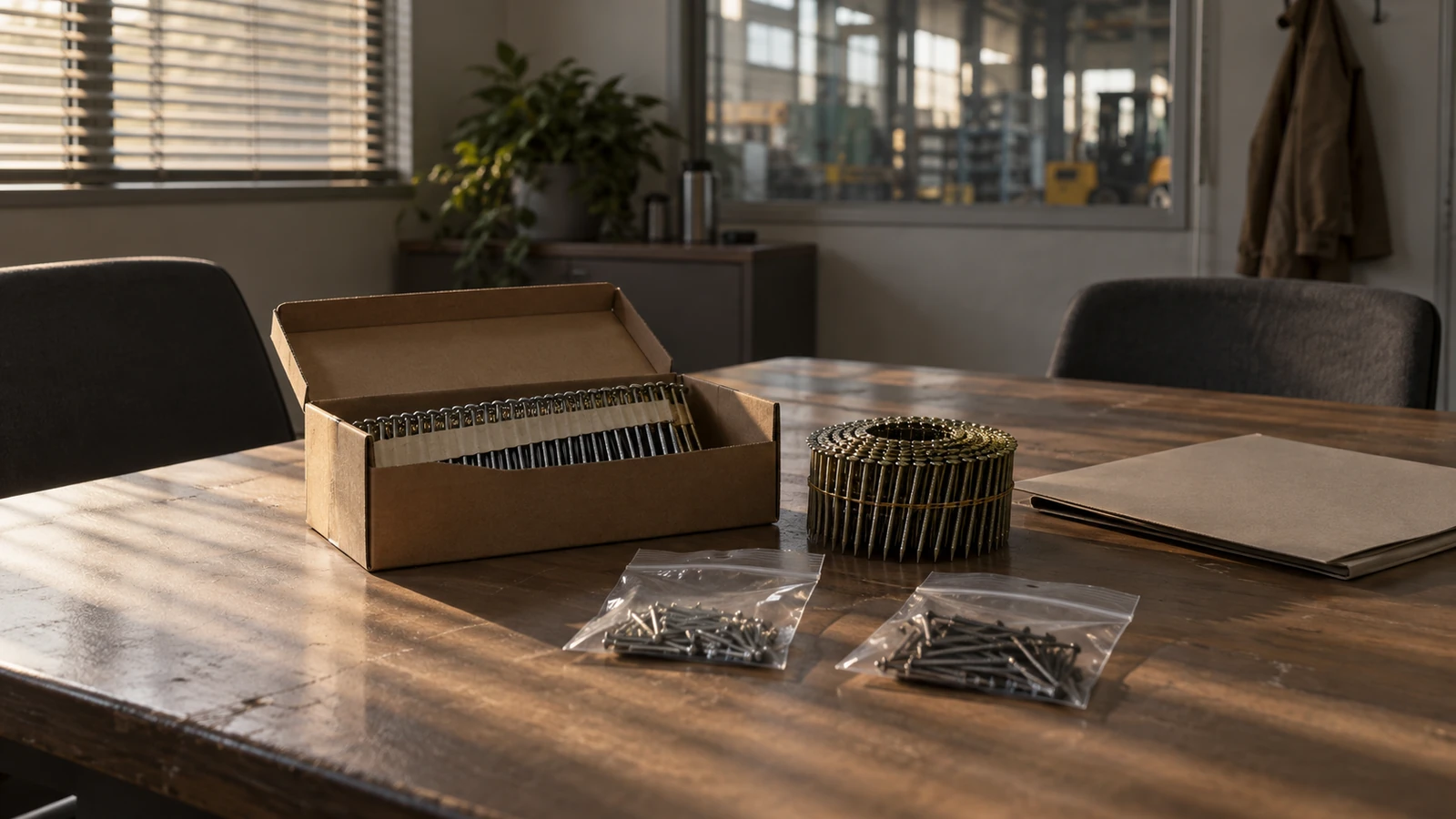
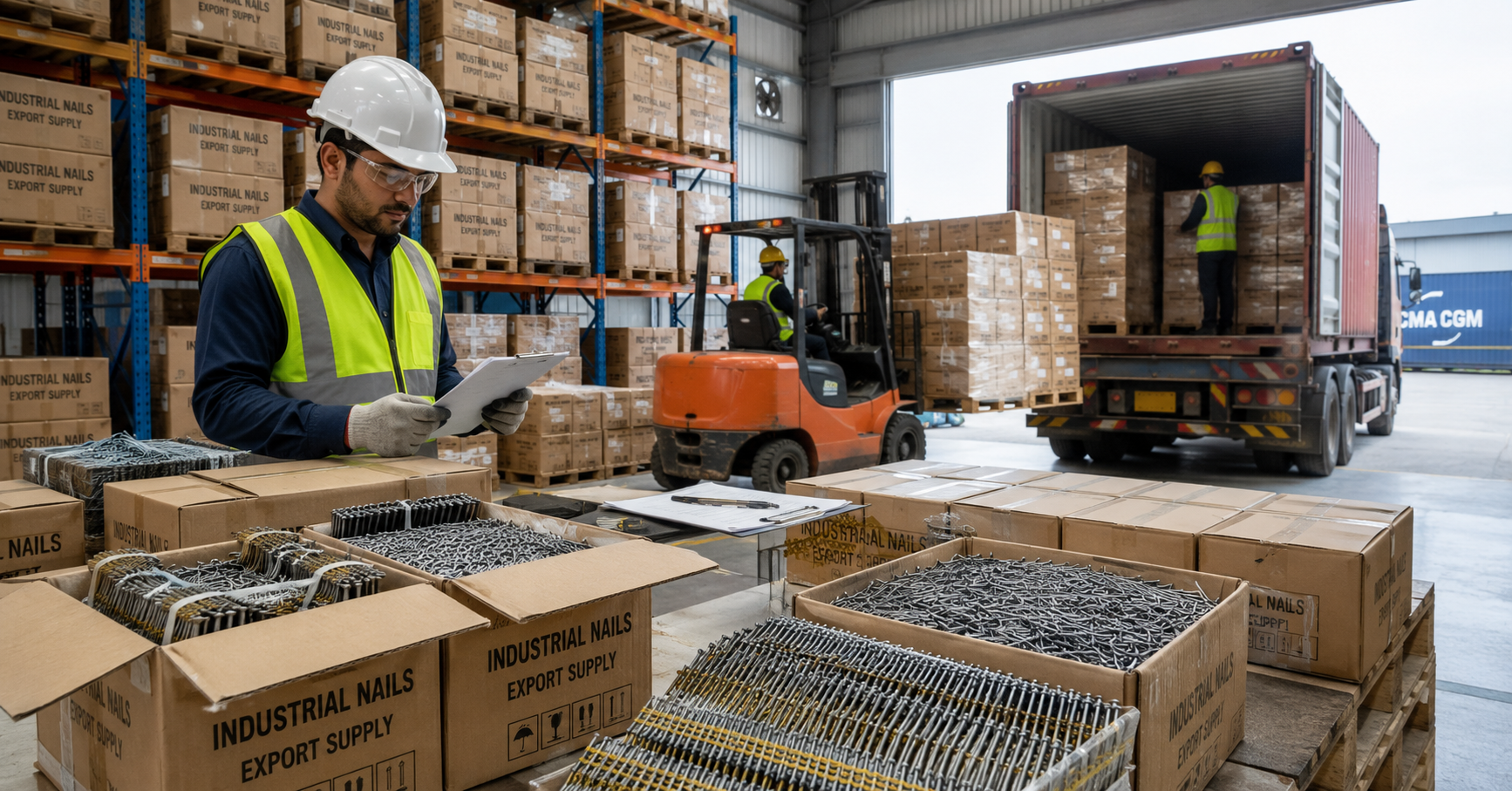
Industrial nails are used in more than one buying channel, so the application matters. Framing and general carpentry have different expectations from pallet and crate production. Industrial packaging also places different demands on fasteners than building work does. The nails shown in warehouse export inventory are long, slender, pointed, and packed for bulk shipment, which makes them suitable for heavy-duty fastening jobs where volume and speed matter.
A good exporter should be able to discuss the intended use in plain language. If the answer is vague, that is usually a sign to slow down. A nail manufacturer worth working with will not force every buyer into the same standard answer.
2. Check the format of supply, because it affects handling and waste
There is a practical difference between loose cartons, bundled stacks, and palletized loading. The visible cartons and open boxes in export stock suggest a logistics-ready setup, which is helpful for buyers who need container loading and direct warehouse dispatch. That matters more than many teams expect, especially when the receiving department is working against a tight production schedule.
Ask how the nails are packed and whether the format matches your line or jobsite workflow. Some teams prefer cartons that are easy to issue in smaller lots; others want larger bulk packs for immediate use in fabrication or packaging bays. A bulk nails supplier should be able to explain the packing logic without making it sound complicated.
3. Confirm the material and finish before discussing price
The product visible here appears to be metal, likely steel, with a bright silver-gray finish and some yellow-tinted coating or banding on certain bundles. That is enough to suggest a standard industrial fastener supply, but not enough to assume a specific coating system. Buyers should be cautious with any offer that skips the finish discussion entirely, because corrosion performance and appearance can matter even in basic construction work.
If the nails will be used in packaging, pallets, or construction supply inventory, ask whether the exporter can clearly identify the coating or treatment. If the supplier cannot confirm details, treat that as an open question rather than filling in the blanks yourself.
4. Look for export readiness, not just production volume
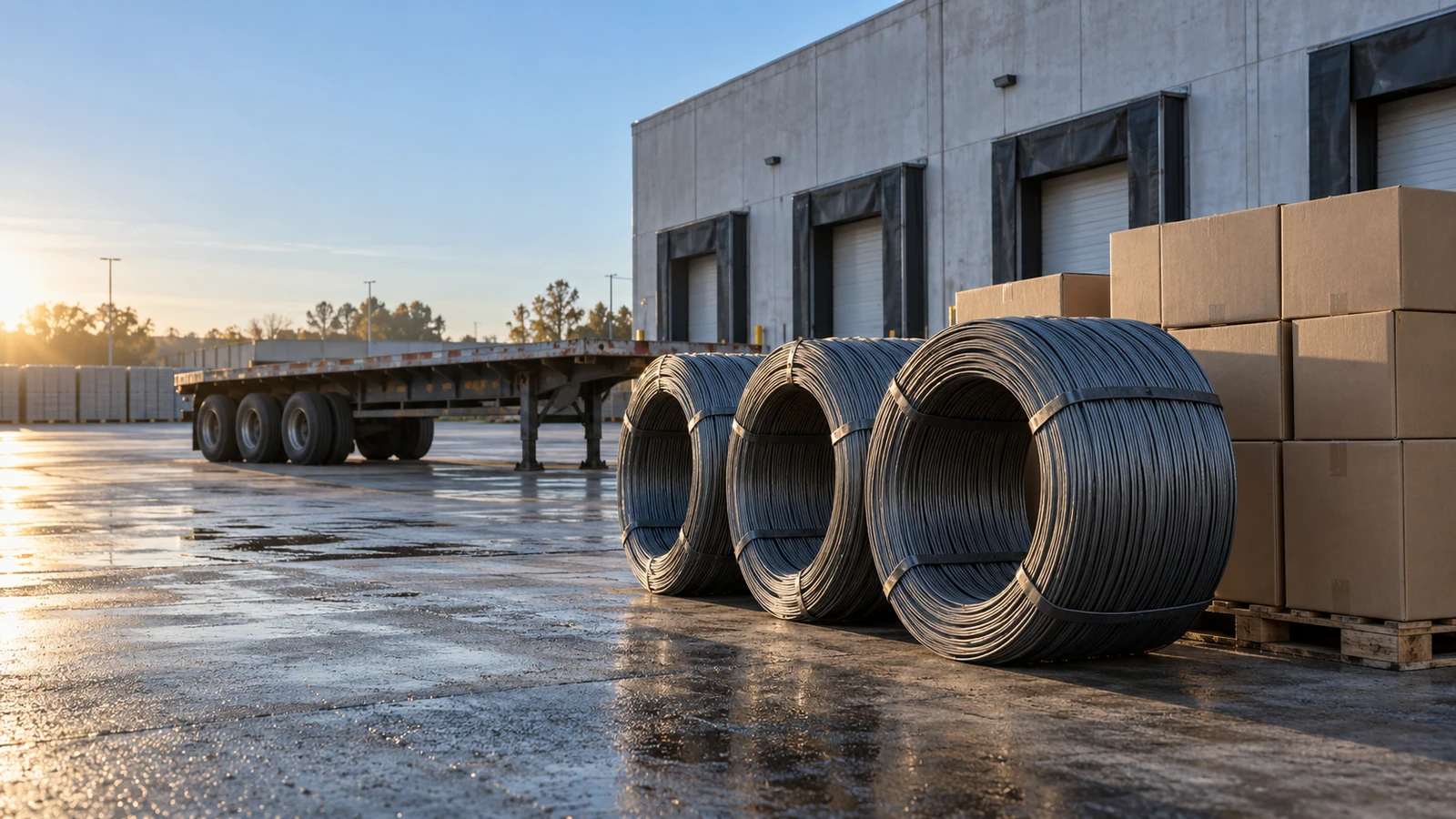
Large stock in a warehouse is useful, but export readiness is broader than pile height. It includes carton stability, pallet loading discipline, and the ability to move goods cleanly from storage into shipping containers. The cartons marked for export and the visible loading area are signs that the operation is set up for outbound trade, which is what most overseas buyers want to see.
Still, buyers should ask the practical questions: Are the goods already staged for shipment? Can mixed orders be consolidated? How does the supplier handle documentation and transit packing? A strong industrial nails exporter usually has a routine for this, not an improvised answer.
5. Separate product capability from sales language
Many suppliers can say they export nails. Fewer can explain how they make them and where the limits are. Basic nail manufacturing typically involves wire drawing, heading, pointing, and sometimes galvanizing or another coating step. That does not mean every plant does all of it in-house, so it is fair to ask where the process starts and where it ends.
For buyers, the point is simple: if the supplier is acting as both a nail manufacturer and exporter, you want enough visibility to know whether they control the product or only move cartons. That distinction can affect consistency, traceability, and how quickly issues get resolved.
6. Watch for the questions that save money later
A short buyer checklist often prevents the biggest headaches:
- What nail style is being supplied for this application?
- Are the nails intended for framing, crates, pallets, or general construction?
- What is the material and finish, and is it consistent across the lot?
- How are cartons, bundles, and pallets arranged for export?
- Can the supplier support repeat bulk orders with the same packing format?
These questions may sound basic, but they filter out weak offers fast. They also help the exporter understand whether you need ongoing supply or a one-time shipment.
7. Avoid the usual sourcing mistakes
The most common mistake is buying only on appearance. A bright metal nail can still be the wrong fit if the shank style, head shape, or finish does not suit the job. Another mistake is assuming that all industrial nails are interchangeable because they are sold in bulk. They are not. Even for buyers who only need general construction fasteners, the difference between a clean, usable lot and a frustrating one often comes down to simple specification control.
There is also a habit of over-focusing on unit cost. That can be expensive if the supplier ships in a packing format that slows receiving, or if the nails are not suited to the actual work. Small procurement errors tend to become shop-floor problems very quickly.
Quick takeaway for buyers comparing suppliers
Choose the supplier that can do three things well: explain the product in plain terms, support bulk logistics, and supply consistent export packaging. If they also understand the operational side of framing, pallet building, and industrial packaging, you are probably looking at a more useful long-term partner than a one-off shipment seller.
In other words, the best industrial nails exporter is not always the one with the loudest sales pitch. It is the one that can move a proper carton, answer direct questions, and keep the order aligned with how your team actually uses the fasteners.
FAQ: common buyer questions
Are these nails only for construction?
No. They are also commonly used for pallet and crate production, shipping support, and industrial packaging work.
Should I ask for exact nail details?
Yes. Length, shank style, head style, and finish all matter, even when the supplier is selling bulk inventory.
Does warehouse stock guarantee a good export offer?
Not by itself. It helps, but you still need clear product identification and reliable packing practice.
If you are shortlisting suppliers, start with one sample inquiry and ask for product identification, packing format, and export handling details. That simple test usually tells you more than a long sales brochure ever will.