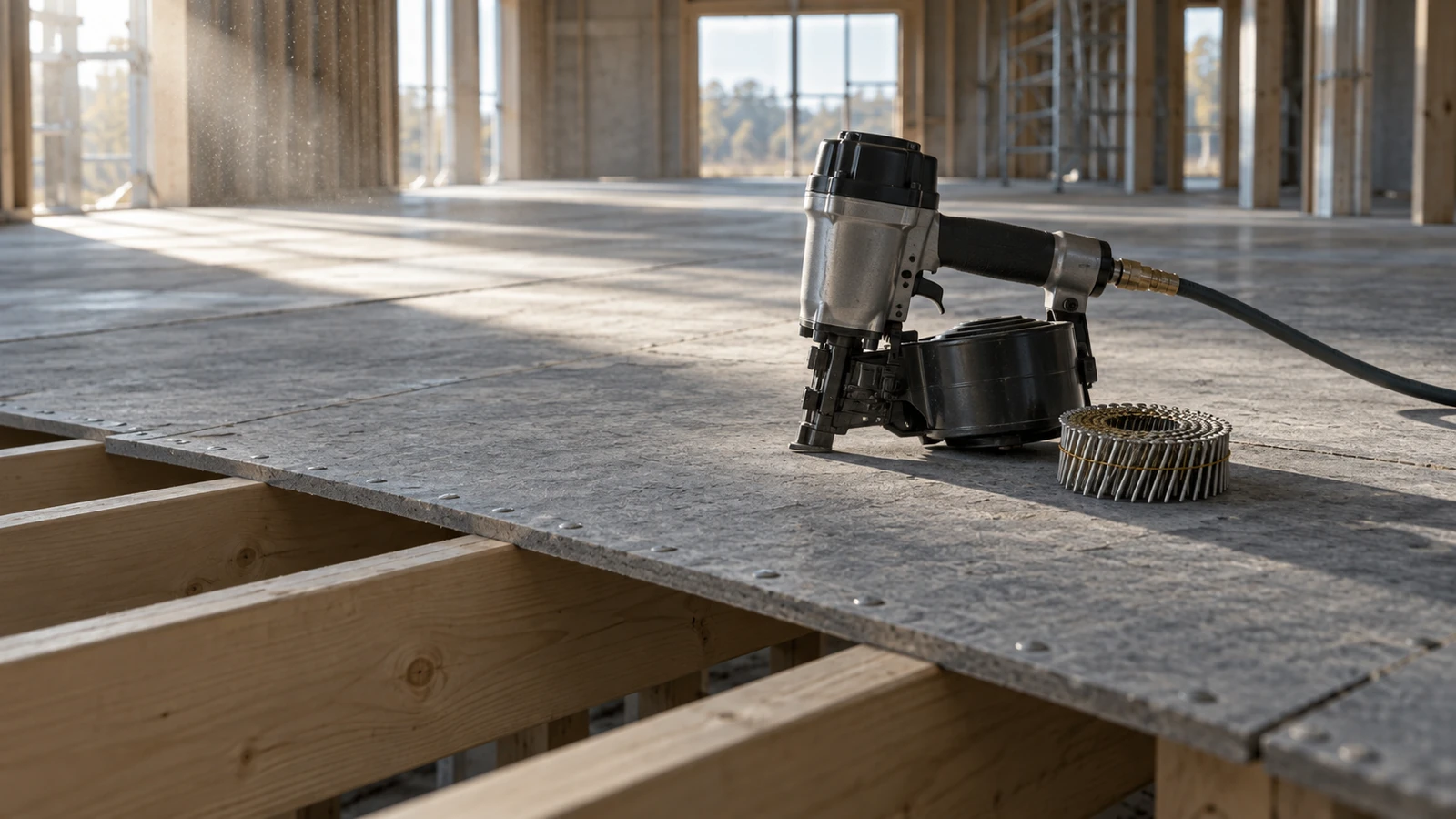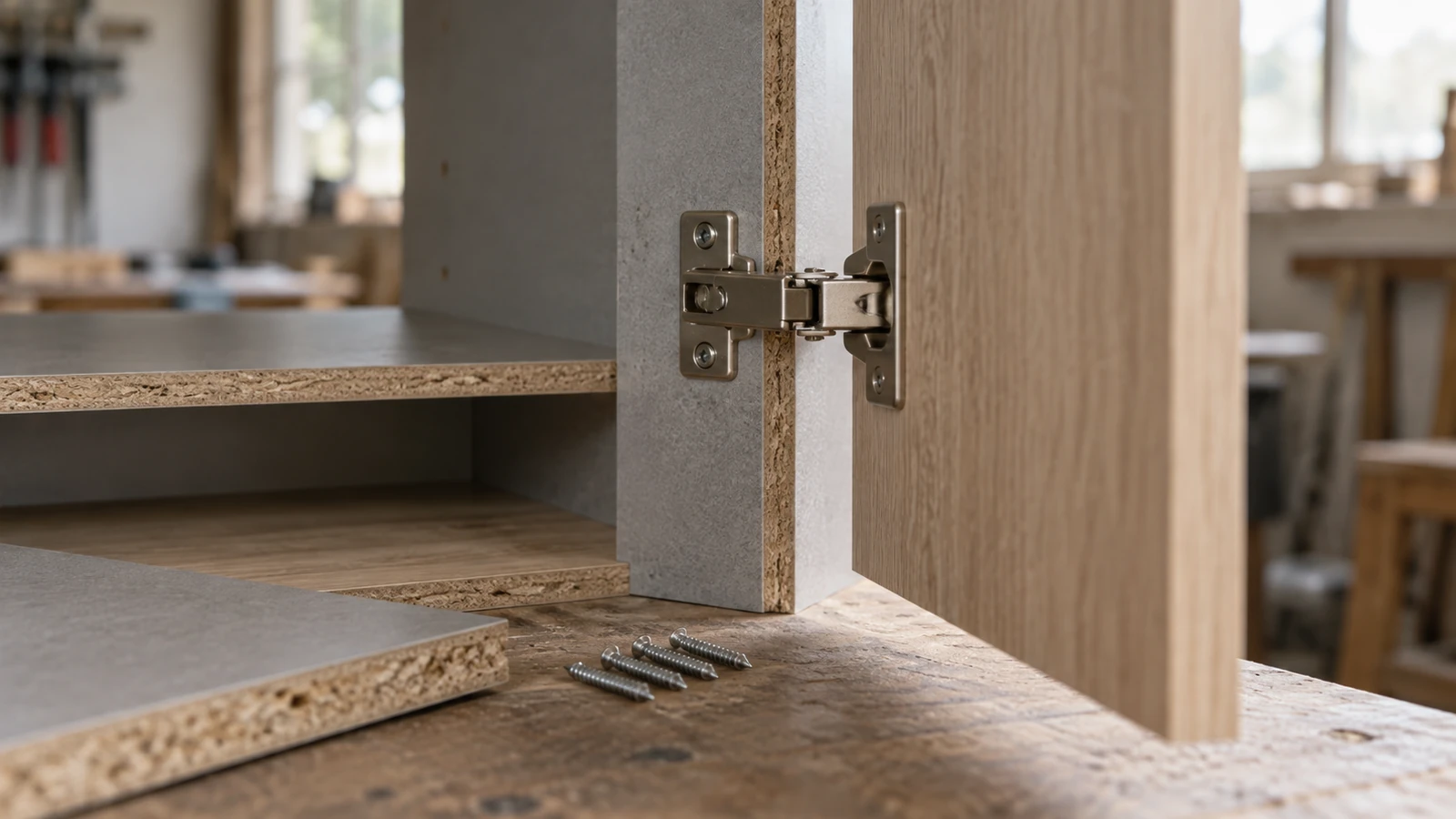

Why buyers look for an industrial nails exporter in the first place
An industrial nails exporter is usually not just a fastener seller. For engineers, sourcing teams, and woodworking buyers, the real question is whether the supplier can keep production moving without creating avoidable variability in the shop. If you are fitting cabinets, assembling furniture, or running trim and frame work, the fastener choice affects cycle time, joint consistency, and the amount of rework you see at the bench. That is why buyers often start with the exporter, then work backward to the fastener type, packaging, and delivery format they actually need.
In practice, many buyers are not only comparing nails. They are comparing the supplier’s understanding of application. A nails exporter that also understands pneumatic fastening tools, such as finish nailers and brad nailers, tends to be easier to work with because the conversation gets past basic product names and into usable detail: what the tool is doing, how the fastening behaves near edges, and what the production line needs from the fastener.
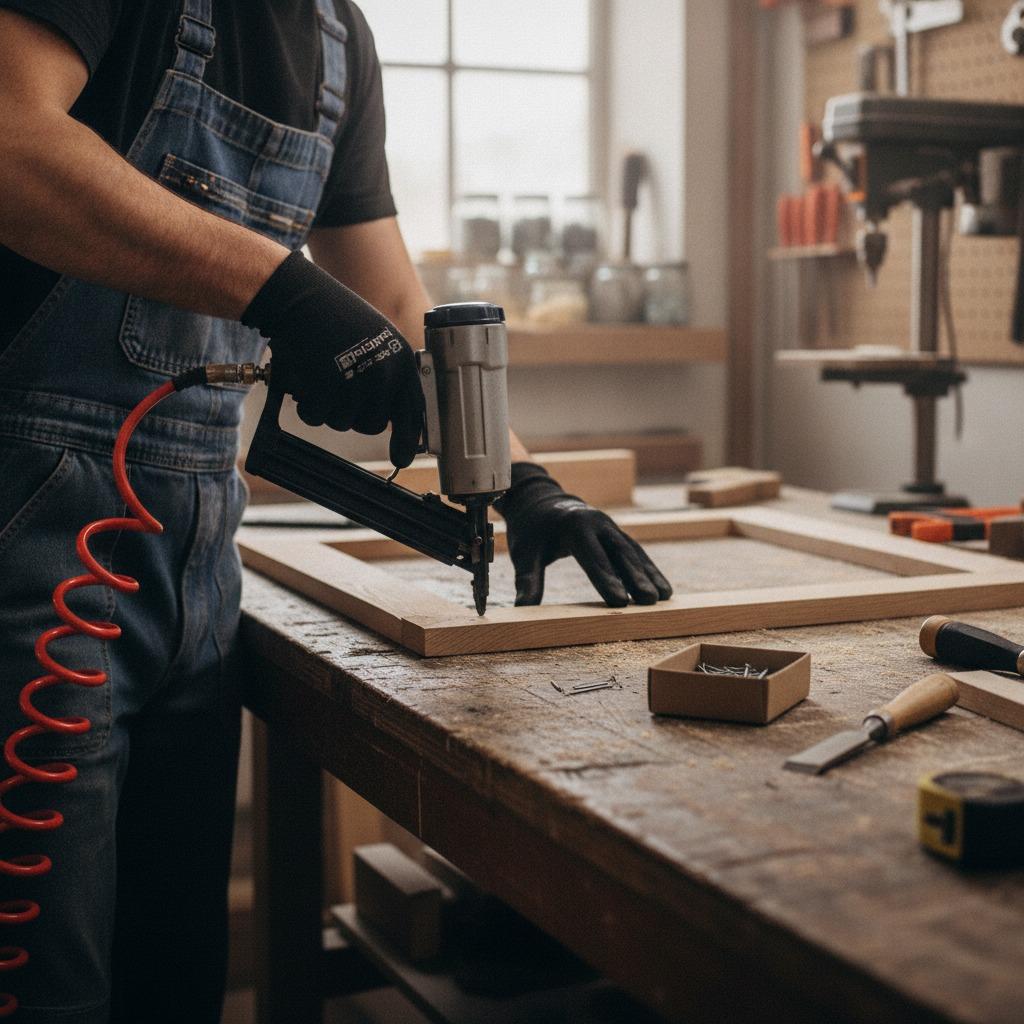
What the shop-floor scene tells you
The application data here points to a pneumatic nail gun or finish nailer being used on a light-colored wooden frame or panel. The tool has a metal body with a silver housing and black magazine, and it is fed by a red coiled air hose. That setup is common in woodworking because it gives operators fast, repetitive fastening with good control near the joint line. The operator’s gloved hands suggest a working environment where speed and grip matter, but so does precision.
For buyers, that matters because it connects the export conversation to the actual end use. A supplier who ships industrial nails into cabinet making or furniture assembly should understand how the fastener interacts with the tool, the substrate, and the visible face of the product. A misplaced nail in a frame or trim piece can become a cosmetic defect, and cosmetic defects are expensive in furniture and interior joinery. Sometimes the issue is not the nail itself but the way it feeds, seats, or holds under repetitive use.
Fastener sourcing is more than comparing a catalog line
When a buyer evaluates an industrial nails supplier, the decision is usually built around a few practical questions: Will the nails run cleanly in the tool? Will they suit the wood being used? Can the exporter maintain consistent supply? And can the packaging support the way the factory actually consumes product? Those questions sound basic, but they are where many sourcing mistakes begin.
In woodworking, the fastening process is often dictated by speed and appearance. Finish nailers and brad nailers are used because they allow quick attachment without the slower setup of screws or the mess of overclamping. That makes the nail choice important even when the fastener is hidden. If the export partner does not understand the application, the buyer may end up with a product that is technically a nail but operationally a nuisance.
Key selection points for buyers
Match the nail to the job
Cabinet assembly, furniture framing, trim installation, and general woodworking do not all need the same fastening behavior. A nails exporter should be able to discuss the intended use without overpromising on exact specs that were never supplied. If the application is edge fastening on panels or frame members, the buyer will usually want dependable seating and clean handling in the tool.
Look at consistency before volume
Large order capacity matters, but consistency matters first. A supplier that can ship a lot of product is less helpful if lot-to-lot variation creates feed issues or inconsistent fastening. For production teams, a small variation in fastener behavior can slow down a line more than a delayed pallet.
Ask about packaging and handling
This is an easy detail to overlook. Good packaging reduces bent nails, moisture exposure, and shop-floor damage during transport. It also affects how quickly operators can load the tool and keep moving. That is especially important in repetitive assembly work, where a few seconds lost at each reload adds up over a shift.
Common mistakes buyers make
One common mistake is treating all industrial nails as interchangeable. Another is assuming the tool, compressor, and fastener will automatically cooperate if the product is broadly described as “for woodworking.” In reality, the fit between nail, gun, and substrate is where performance is won or lost. Buyers also sometimes focus only on price per box and ignore how much labor is wasted when fasteners jam or arrive in inconsistent condition.
A more subtle mistake is failing to separate general fastener purchasing from application-specific sourcing. If the exporter cannot discuss finish work, cabinet assembly, or trim installation in plain terms, that is a signal to keep asking questions.
Practical advice for sourcing teams
If you are shortlisting an industrial nails exporter, start with the actual use case. Share the end application, the fastening tool type, the type of woodwork being assembled, and any packaging or loading preferences you have. You do not need to overspecify every detail on day one, but you do need enough context for the supplier to respond like a manufacturing partner rather than a generic trader.
It also helps to request samples and observe how they behave in the real workcell. In a woodworking shop, the best test is often simple: does the fastener feed smoothly, seat cleanly, and support a clean finish without slowing the operator down? If not, the buying decision is not finished yet.
FAQ: what buyers usually want to know
Is a nails exporter different from an industrial nails supplier?
Often, yes. A supplier may sell domestically, while an exporter has to manage shipping, packaging, and international order handling. That extra layer can matter when reliability and documentation are part of the purchase decision.
Why mention the tool if the purchase is for nails?
Because the tool and the fastener work as a system. A pneumatic nailer used in furniture or cabinet assembly places different demands on fastener geometry and packaging than a general hardware sale would.
What should be clarified before placing an order?
Use case, tool type, material being fastened, packaging format, and expected replenishment pattern. Exact sizes and performance targets should be confirmed with the supplier before any production commitment.
Next step for buyers
If you are evaluating an industrial nails exporter, do not start with the broadest possible product list. Start with the production task. Share the woodworking application, the fastening tool in use, and the kind of assembly line pressure you are under. That gives the supplier something real to work with, and it usually separates a true industrial partner from a catalog seller quickly.