
Why the choice of an industrial staples manufacturer matters
If you buy fasteners for upholstery, furniture assembly, packaging, or light production work, an industrial staples manufacturer is not just a commodity source. The wrong staple length, finish, or wire quality can slow the line, damage the substrate, or create a service issue that shows up long after the job leaves the shop. For engineers and sourcing teams, the real task is to find a supplier that can support repeatable fastening, not just ship boxes of metal parts.
That distinction matters more than it first appears. Staples look simple, but in production they are part of a system: the fastener, the pneumatic stapler, the material being joined, and the operator’s pace. If one part is off, the whole process becomes less reliable. A good industrial staple supplier understands that relationship and can help buyers narrow the field before they commit to a volume order.
What these staples are used for on the shop floor
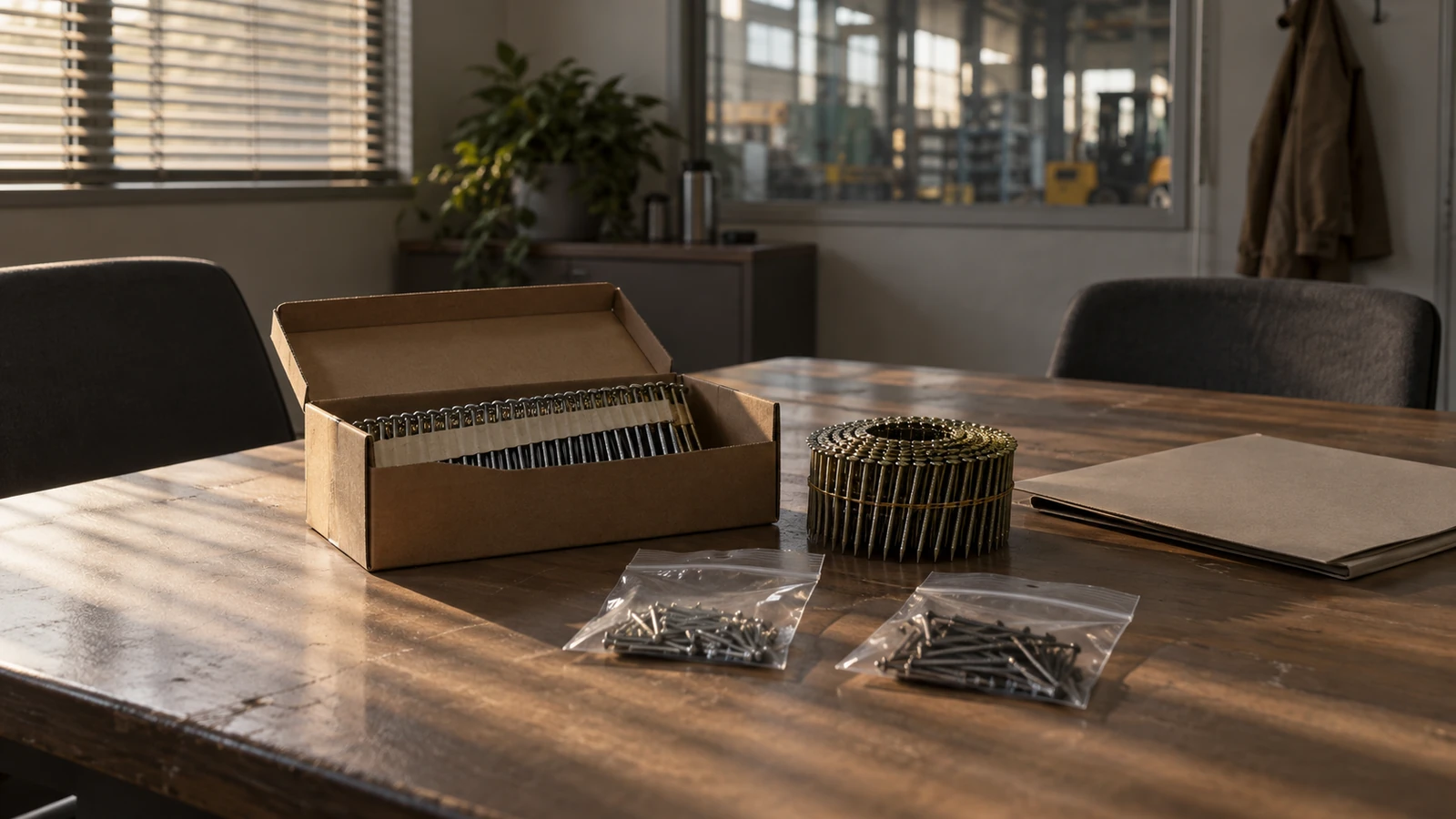
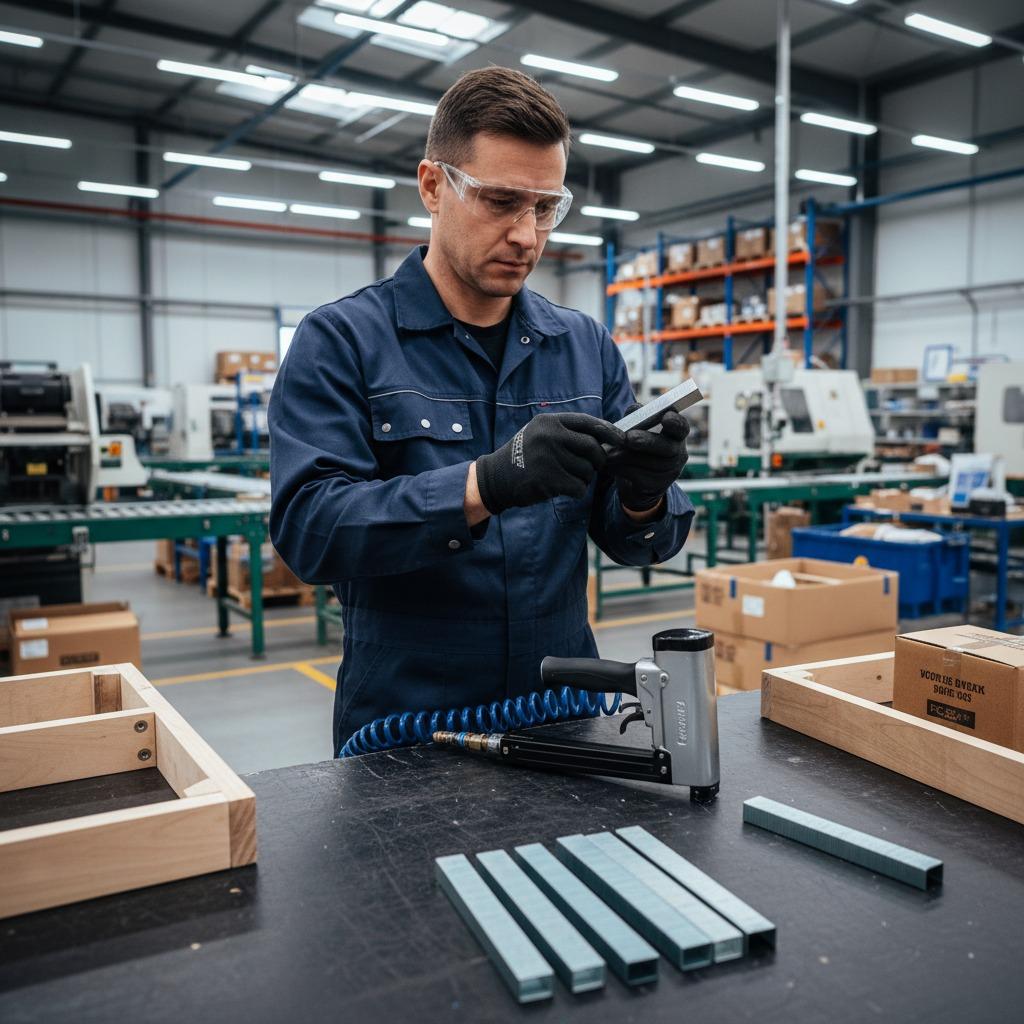
The product category here covers upholstery and industrial staples plus the pneumatic stapler used to drive them into wood or other substrates. In practical terms, these are narrow U-shaped fasteners laid out in different lengths, with a handheld air-powered tool feeding them into a workpiece through a magazine and front nose. The visible setup points to repeated-use fastening rather than one-off hand stapling.
Typical uses include attaching upholstery fabric, securing webbing or backing, assembling wooden frames, fastening cardboard or packaging components, and general shop-floor production where speed matters. The silver-colored finish suggests steel with a zinc-like or galvanized look, which is common in fastening hardware. That said, buyers should be careful here: finish appearance alone does not tell you everything about corrosion performance or wire quality.
Quick buyer view: what to compare before you place an order
When comparing upholstery staples wholesale options, the first questions are usually the simplest ones: What leg lengths are available? What crown width is needed? Does the staple profile match the stapler already on the line? Those details matter more than a glossy product photo.
A useful short list for sourcing teams looks like this:
Staple geometry
Different leg lengths are shown in the product view, which is exactly what buyers expect when matching fasteners to different material stacks. Thin fabric, webbing, and backing boards rarely use the same staple length.
Tool compatibility
The stapler shown is a pneumatic fastening tool with a hose connection, black grip, and magazine/base. That tells you it is meant for repeated production use, but not which staple family it accepts. Compatibility should always be confirmed against the tool spec sheet or a sample run.
Finish and material
Steel staples with a galvanized-style finish are common, but buyers should ask whether the finish is intended mainly for appearance, handling, or basic corrosion resistance. Small differences here can matter if products are stored in humid conditions or shipped long distances.
Common mistakes buyers still make
The most frequent mistake is treating every staple as interchangeable. They are not. A staple that looks close on paper may misfeed, sit proud, or drive too deep. Another common issue is buying only to price. That can work for low-risk packaging, but in upholstery or furniture assembly, inconsistent feeding can create more labor loss than the fastener saved in cost.
Another trap is over-specifying when the application does not require it. Some buyers ask for heavy duty staples by habit, even when the substrate is soft enough that a lighter wire would reduce splitting and operator effort. A better approach is to match the staple to the joint and the tool, then test for holding strength and appearance.
What to ask an industrial staple supplier
Before you switch vendors, ask for the staple sizes available, the packaging format, and the intended applications. If you are buying for production, also ask whether samples can be run through your current pneumatic stapler. A short line trial often reveals more than a spec sheet.
For sourcing managers, the bigger question is consistency. Can the supplier hold the same geometry across orders? Are the staples packed in a way that protects the strip from bending or contamination? Does the supplier understand whether the job is furniture assembly, crate building, or general fastening? Those answers often separate an industrial staples manufacturer from a reseller.
Practical selection advice for engineers and product teams
Start with the substrate, not the fastener. Wood density, fabric thickness, backing material, and production speed all affect the right staple choice. Then check the tool. A pneumatic stapler can be an efficient production asset, but only if the staple format and magazine design are aligned with the line’s workflow.
If your operation spans several uses, it may be worth standardizing a small family of staple lengths rather than chasing every possible size. That can simplify purchasing and reduce changeover mistakes. Still, keep one caution in mind: standardization should not come at the expense of joint quality. A few extra millimeters of leg length can be the difference between a secure joint and a loose one.
FAQ: staple sourcing in production environments
Are heavy duty staples always better?
Not necessarily. They are useful when the material stack demands more holding power, but they can be excessive for light upholstery or thin backing materials.
Do all industrial staples fit all pneumatic staplers?
No. Buyers need to confirm the staple family, crown width, and leg length against the tool they plan to use.
Why buy from a manufacturer instead of a general distributor?
A direct industrial staple supplier is more likely to help with size selection, repeat supply, and format consistency. That matters when fastening is part of a repeatable process, not a one-time purchase.
Next step
If you are reviewing suppliers, collect two things first: the exact staple dimensions your process needs and the stapler model currently in use. With those in hand, you can compare manufacturers on fit, finish, and production suitability instead of guessing from a catalog image. That is usually where the better buying decision starts.