
What buyers really mean when they search for an industrial staples manufacturer
When sourcing from an industrial staples manufacturer, most buyers are not just looking for a box of fasteners. They are trying to match staple form, material, coating, and tooling compatibility to a real production task, whether that is upholstery, mattress assembly, wooden frames, packaging, or light industrial fastening. The wrong staple can jam a pneumatic stapler, split a substrate, or simply fail to hold under repeated handling. That is why the buying decision is less about price per carton and more about consistency, fit, and application control.
The product family in question is usually a metal U-shaped staple made for a pneumatic stapler or upholstery stapler. In workshop and production settings, these are consumables, but they are hardly generic. Different leg lengths, crown shapes, wire thicknesses, and finishes can change how the fastener behaves in wood, fabric, webbing, leather, or thin composite materials. For teams that need reliable repetitive fastening, the staple is part of the process, not an afterthought.
Quick takeaway for sourcing teams
If you are comparing an industrial staple supplier shortlist, the first question is compatibility with your tool and substrate. The second is how stable the staple feed and forming quality are from batch to batch. The third, and often overlooked, is whether the supplier can support a size range that fits your different jobs without forcing you to mix mismatched products on the shop floor.
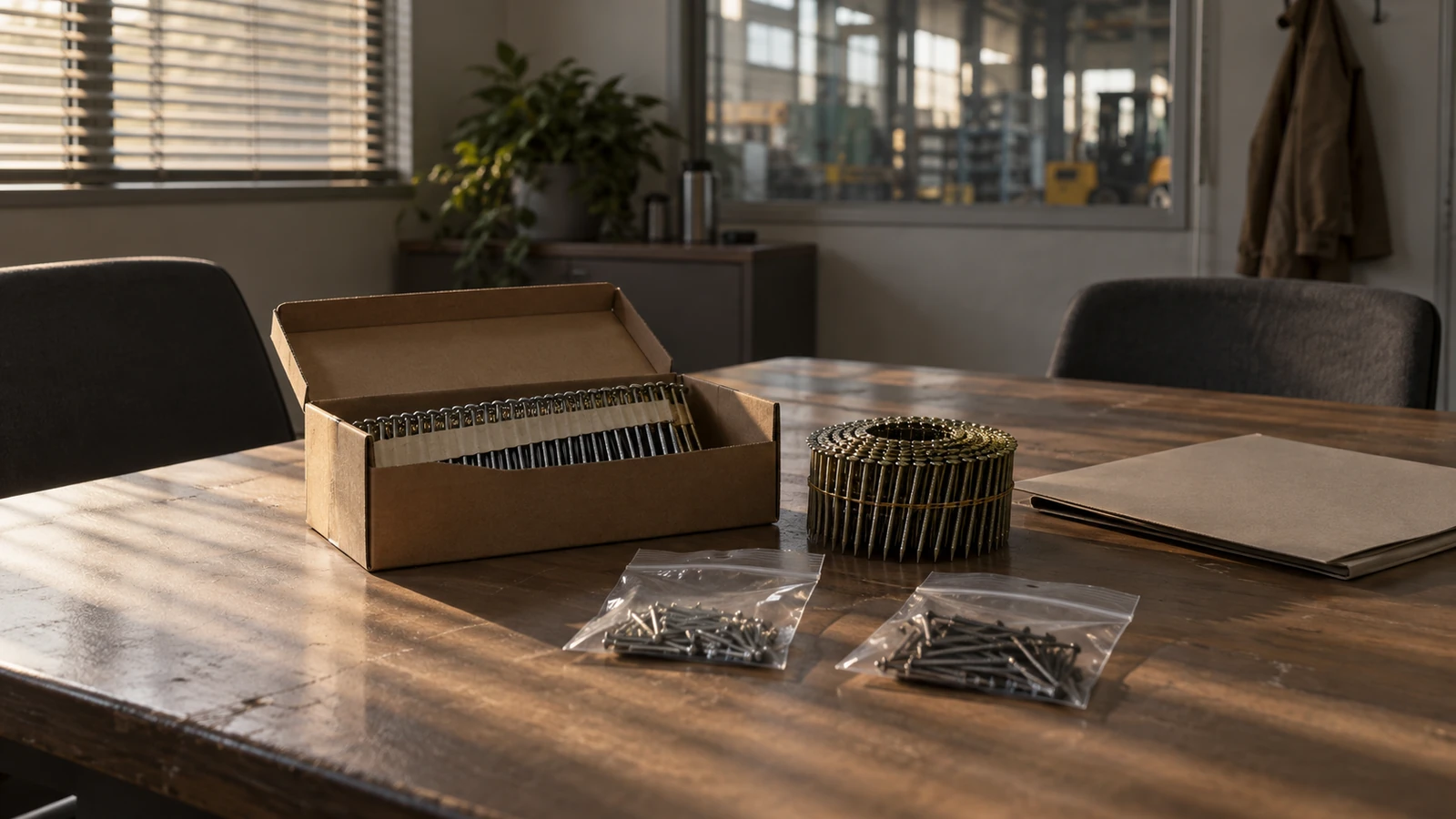
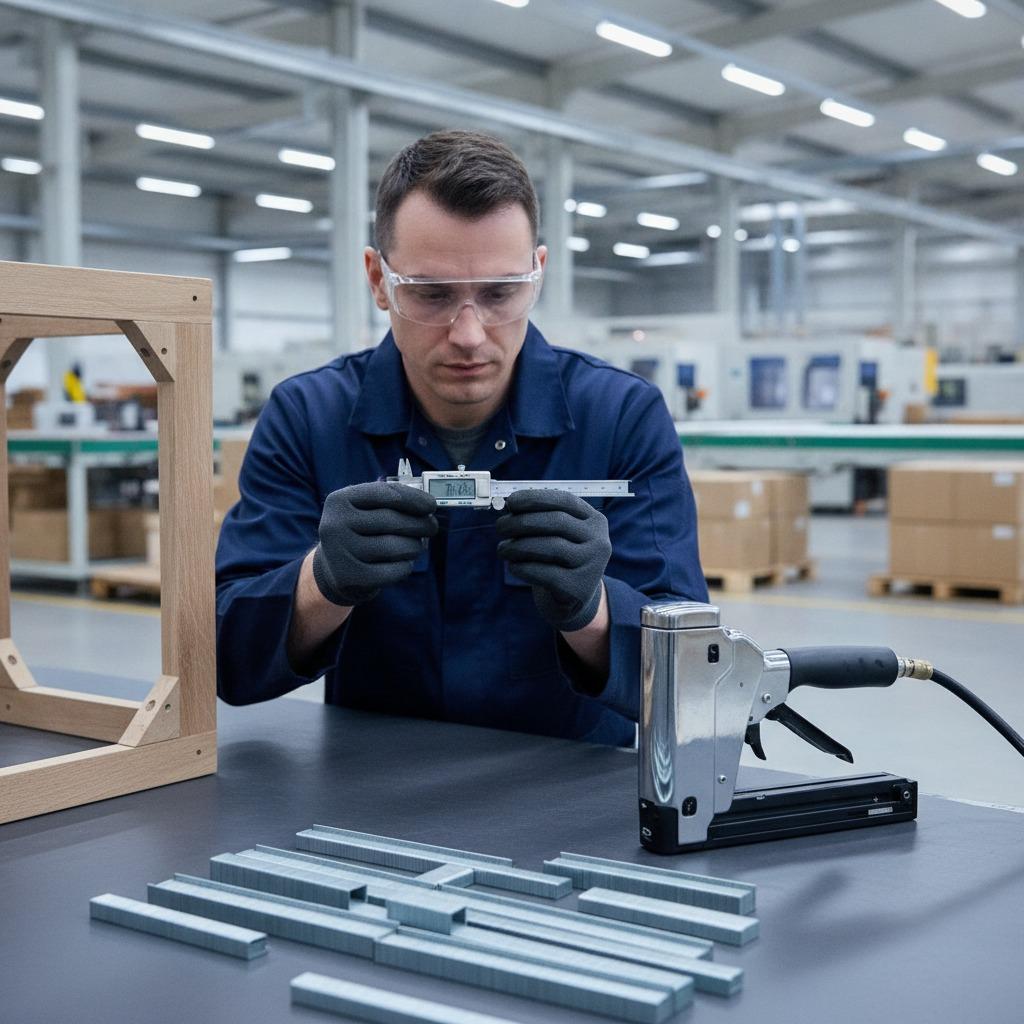
The staples shown here appear as bright silver-gray metal fasteners in multiple sizes, which suggests a size assortment or at least a range of configurations. That is useful in production, but only if the supplier can clearly identify each staple series and confirm the stapler family it is meant to fit. An unlabeled assortment may look convenient; in practice, it can create more downtime than it saves.
How these staples are typically made and used
Industrial staples are generally formed from metal strip or wire stock that is cut and bent into a U shape. The visible product in this category has a rectangular crown and two parallel legs, which is the standard geometry for fast attachment. In use, a pneumatic stapler drives the staple into the material stack at speed, making the fastener suitable for repetitive work where hand nailing would be slow or uneven.
That speed is the point. Upholstery lines, cushion assembly, furniture production, and packaging operations often need thousands of fastenings with predictable placement. In those environments, a staple that feeds cleanly and penetrates consistently is worth more than a slightly cheaper alternative that creates jams or inconsistent drive depth. The same logic applies to workshops handling wooden frames or light assembly tasks.
Common applications buyers ask about
These staples are often used for fabric, webbing, leather, foam-backed materials, thin wood sections, and other substrates that need rapid mechanical fastening. They may also be used in crating or packaging work where speed matters more than decorative appearance. For upholstery staples wholesale purchases, the real requirement is usually not just quantity, but the ability to match different leg lengths to different material stacks.
What to evaluate before placing an order
Start with the staple series and tool compatibility. A staple that looks correct can still be the wrong feed geometry for your pneumatic stapler. Then ask for the leg length, crown width, wire gauge, and coating description in plain terms. If the seller cannot provide those details, that is a warning sign, especially for production users who need repeatability.
Material and finish matter too. The staples in the image appear to have a plain metallic or lightly galvanized, bright-plated look, but the exact coating cannot be confirmed. That kind of caution is important. If corrosion resistance matters, do not assume a surface finish is adequate just because it looks shiny. Ask how the fastener is intended to perform in the environment where the product will live.
Another practical detail is strip consistency. Industrial staples feed through a pneumatic tool in strips, so dimensional variation can cause misfeeds, misfires, or partial drives. A reliable staples manufacturer should be able to discuss feeding behavior, not just dimensions on paper. Engineers and production managers know this problem well: a fastener that is nominally correct but mechanically inconsistent can slow an entire line.
Common mistakes in staple sourcing
One common mistake is buying only on price. Another is treating all heavy duty staples as interchangeable. They are not. Crown width, leg profile, and hardness can change how the staple sits in wood or fabric and how well it holds under load. A third mistake is ignoring packaging and labeling. If cartons are not clearly marked, warehouse staff and line operators can easily mix sizes, and that is how the wrong staple ends up in the wrong gun.
It is also easy to overlook the difference between an upholstery staple and a general fastening staple. Upholstery work often needs clean penetration and enough holding power without tearing visible materials. For that reason, a supplier who understands upholstery staples wholesale requirements may be more useful than a broad industrial catalog seller with no practical application knowledge.
Questions worth asking a supplier
Before you commit to an order, ask whether the supplier can confirm the staple series, the compatible stapler family, and the available size range. Ask how they control forming quality during mass production. Ask whether they can support repeat orders with the same specification rather than “close enough” replacements. If you need heavy duty staples for demanding work, ask what materials and finishes are available, and what is not suitable for your environment.
Also ask for sample packs when possible. In fastener sourcing, a sample can tell you more than a specification sheet. Feed behavior, penetration, and holding performance are easier to judge in a real pneumatic tool than in a product description. It is a small step that can save a larger production headache later.
FAQ: industrial staple buying basics
Are all industrial staples the same?
No. The crown, leg length, wire thickness, and finish all affect performance and tool compatibility.
Can I use one staple for upholstery and packaging?
Sometimes, but it is not ideal. Upholstery and packaging can have different material stacks and holding requirements, so one size rarely suits everything.
What matters most: price or consistency?
For production users, consistency usually matters more. A low-cost staple that jams a pneumatic stapler can become the most expensive option very quickly.
A practical next step
If you are evaluating an industrial staples manufacturer, build your shortlist around three things: verified compatibility, stable forming quality, and clear size identification. That simple filter will eliminate most of the risky options. From there, compare sample performance in your actual tool and substrate, not just in a catalog. For engineering teams and sourcing managers, that is usually the difference between a smooth fastening process and a constant stream of small, annoying stoppages.