
Why the supplier choice matters in wood fabrication
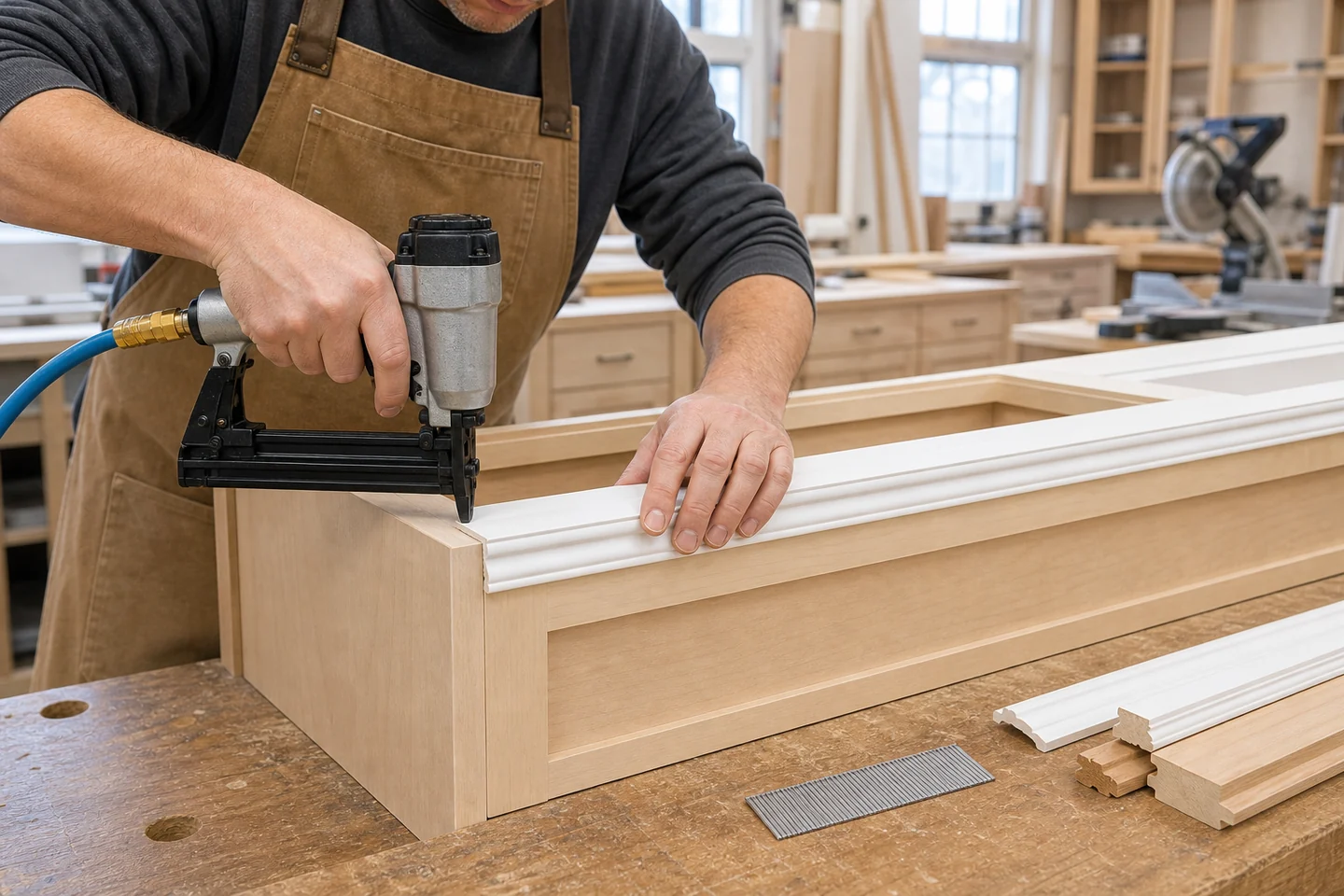
An OEM pneumatic fasteners supplier is not just a vendor for small consumables. For shops that build timber assemblies, cabinetry, interior joinery, or custom wood components, the fastener determines how cleanly the line runs, how often the tool jams, and how much rework lands back on the bench. In a workshop where a long timber beam sits on stands, a worker is running a pneumatic nailer, and lumber is moving through an active production area, the fastening system has to support speed without sacrificing control.
That is why sourcing teams should treat fasteners as part of the production process, not an afterthought. A nail that is slightly wrong for the tool or the wood can split an edge, leave a visible mark, or force an operator to stop and clear a jam. On a busy floor, those small interruptions add up fast.
What the right fastener supplier should help you solve
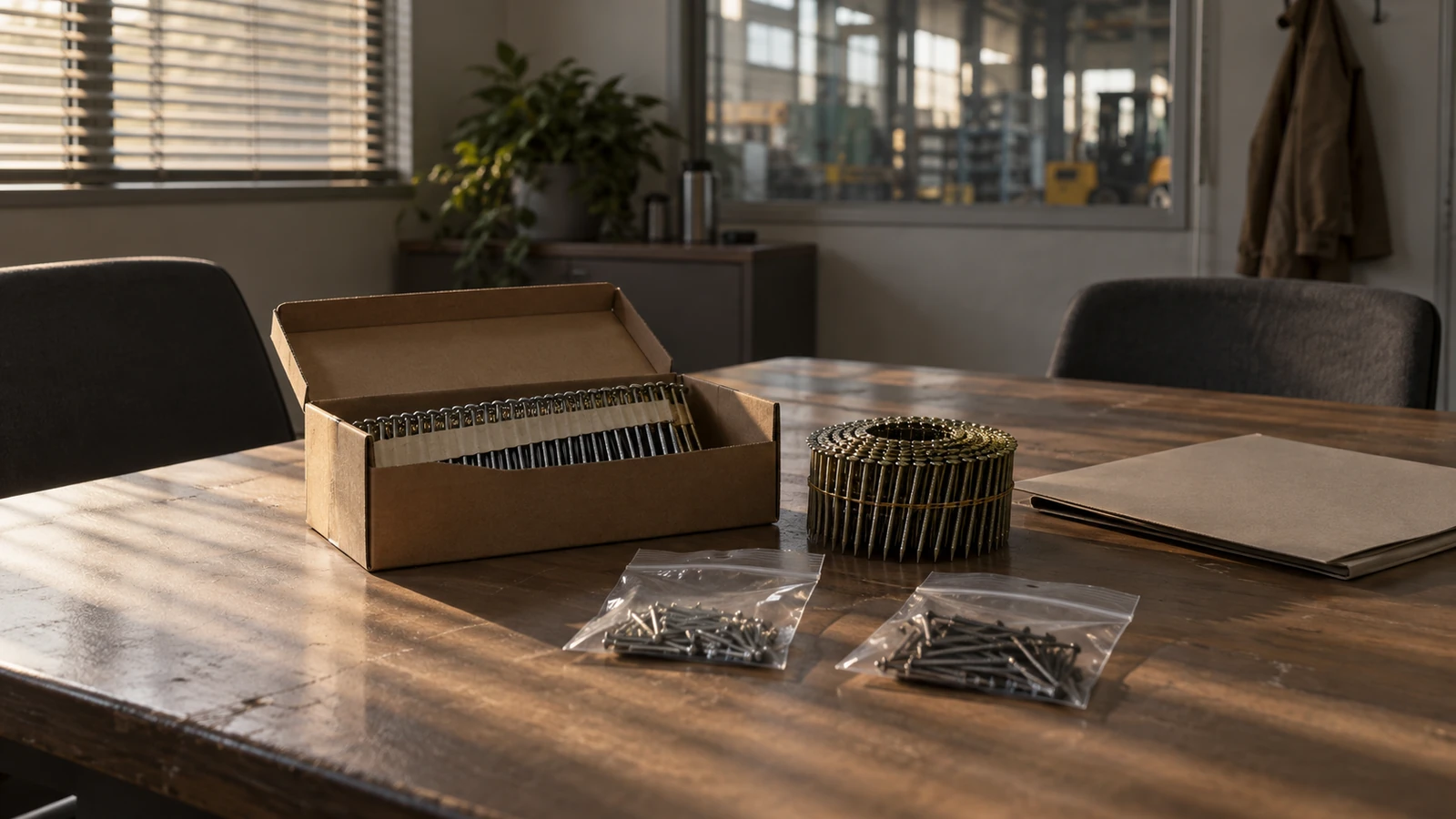
The best OEM partner helps you match fastener geometry, collation format, and intended use to the actual job. For example, if the work involves trimming, joinery, or light assembly, a supplier should be able to support pneumatic finishing nails OEM programs and also guide buyers who need an OEM brad nails supplier for finer work. Those are not interchangeable choices.
Finishing nails are generally chosen when a stronger hold is needed and the hole can be filled or hidden later. Brad nails are usually preferred for more delicate material, thin moldings, or visible surfaces where splitting and surface damage matter more than raw holding power. In practice, the right answer depends on the substrate, the thickness of the member, and the tool being used. That sounds obvious, but it is exactly where many orders go wrong.
Finishing nails vs. brad nails
For heavy wooden structural members or large fabricated beams, the nail is often doing temporary positioning, face fixing, or assembly support rather than final structural duty. In those cases, a finishing nail may be better suited if the joint needs more grip. Brad nails are often the cleaner option for smaller cross-sections, decorative parts, or final trim where appearance matters more than pull-out resistance.
Buyers should ask a practical question before they compare price sheets: what does the operator need the fastener to do in the real shop, not on paper? If the answer is “hold parts in place while glue cures” or “avoid visible damage on a finished face,” that leads to a different product choice than “provide more bite in a heavier assembly.”
Selection criteria that matter in the shop
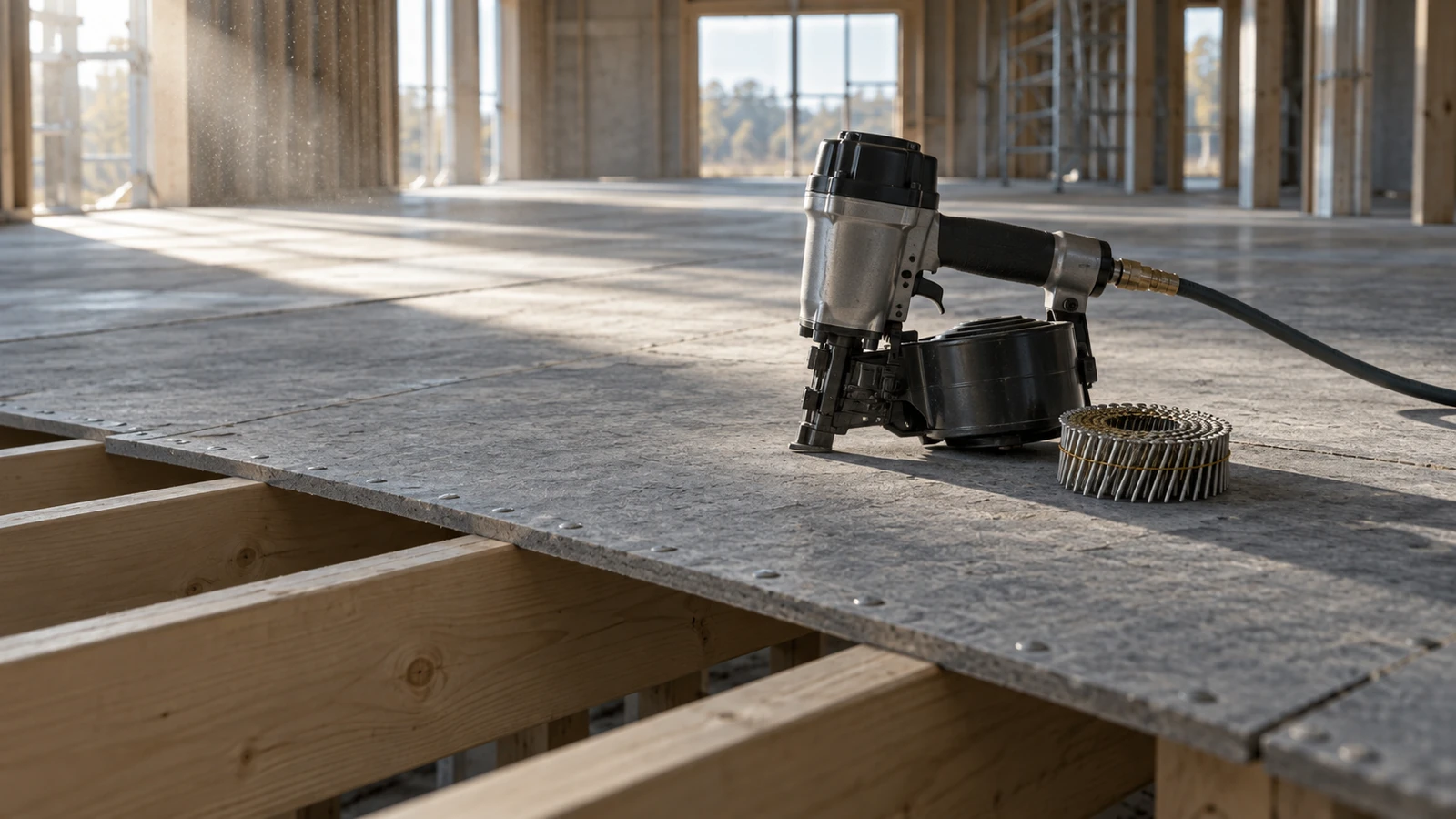
Start with tool compatibility. A fastener can look close enough and still behave badly if the gauge, length range, collation type, or head design does not match the nailer. That is especially important in production settings with air hose and compressor setups, where operators expect consistent feeding and predictable drive depth.
Next, look at the wood itself. The workshop image tells the story: a long straight beam with a rough-sawn or planed surface, squared edges, and a custom fabrication environment. In that kind of work, grain direction, hardness variation, and edge distance all affect fastening performance. A supplier who understands woodworking should be able to discuss those variables without turning the conversation into vague marketing language.
Surface finish matters too. If a part is still unfinished, you may tolerate a more visible fastener head. If the component is moving into visible interior work, trim, or architectural woodwork, a cleaner drive and easier concealment become more important. That is where OEM brad nails supplier capability can be useful, because consistency in smaller fasteners often shows up immediately in the quality of the finished surface.
Common mistakes buyers still make
The first mistake is buying only by price. Fasteners are small, so it is easy to treat them as a commodity. But a low-cost box that feeds poorly costs more once you factor in stoppages, rejects, and operator frustration.
The second mistake is assuming one fastening format covers every task. Shops often try to force the same product into framing, assembly, and finishing jobs. That tends to create either overpowered fastening on delicate parts or underpowered fastening on heavier members.
The third mistake is skipping sample testing. Before any large order, a serious OEM pneumatic fasteners supplier should be willing to support trial use in the actual tool and the actual wood. That small step can reveal feeding issues, inconsistent drive depth, or surface damage long before the full shipment arrives.
What a practical buyer should ask
Ask for the exact fastener specifications that matter to your process: gauge, length range, collation style, head type, and packaging format. Then ask how the product performs in the intended application, not just whether it is “suitable for woodworking.”
You should also ask whether the supplier can support repeat orders with the same dimensions and forming quality. For production users, consistency is often more valuable than chasing a slightly cheaper unit cost. A good supplier should understand that a line running custom timber fabrication cannot afford surprise variations.
If your work includes both heavier assemblies and lighter visible trim, it may be worth sourcing a narrow range of related products from the same partner, as long as each one is clearly separated by use case. That can simplify procurement without blurring the technical differences between products.
FAQ
Can one supplier cover both finishing nails and brad nails?
Yes, but only if the supplier understands the difference between the two product families and can keep the specifications clear. A broad catalog is useful only when it is organized by application, not just by part number.
Are pneumatic fasteners only for finishing work?
No. In woodworking and custom carpentry, they can support assembly, temporary positioning, trim attachment, and other shop tasks. The key is matching the fastener to the job and the tool.
What should a sourcing team prioritize first?
Compatibility with the nailer, then consistent feed and drive behavior, then appearance on the finished wood. If those three are right, the procurement decision becomes much easier.
Next step
If you are building a supplier short list, start with a sample test in your actual workshop conditions. Use the same air setup, the same tool, and the same wood species or panel stock you plan to run in production. That is the fastest way to tell whether an OEM pneumatic fasteners supplier can support your operation or only fill a purchase order.
For buyers supporting timber fabrication, framing, furniture work, or interior joinery, the right choice is usually the supplier that asks better questions before the first shipment goes out. That is the sign they understand how a real shop runs.