
Why buyers keep looking for an OEM pneumatic fasteners supplier
When a plant, distributor, or private-label brand starts sourcing an OEM pneumatic fasteners supplier, the real question is usually not just who can make nails or staples. It is who can make the right fasteners consistently, in the formats your tools and customers already use, without creating jams, inconsistent drives, or packaging headaches downstream. In woodworking and light construction especially, a small problem in fastener quality can slow an entire line. That matters whether you are assembling timber components, building furniture, or supporting contractors who rely on pneumatic nailers every day.
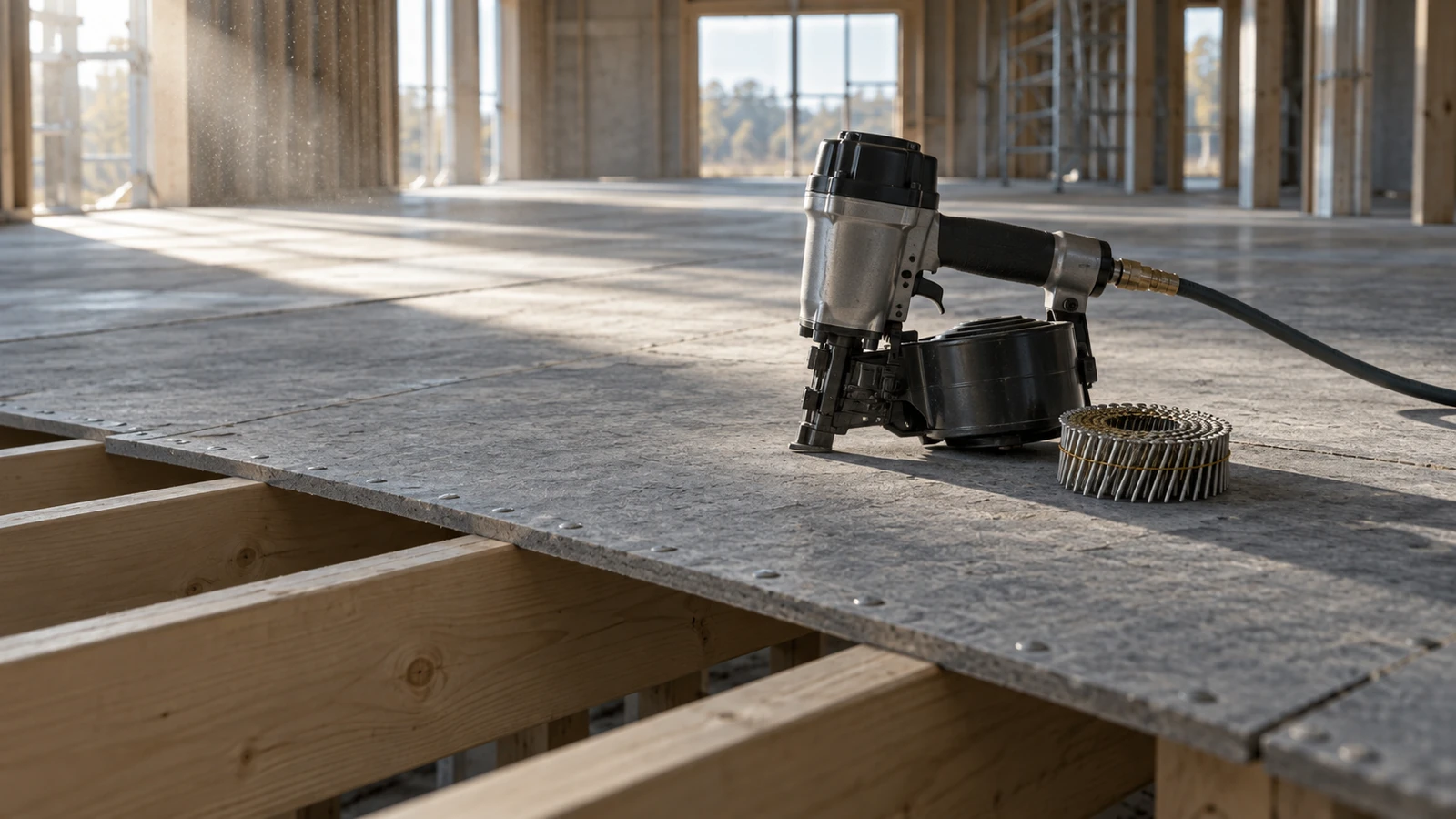
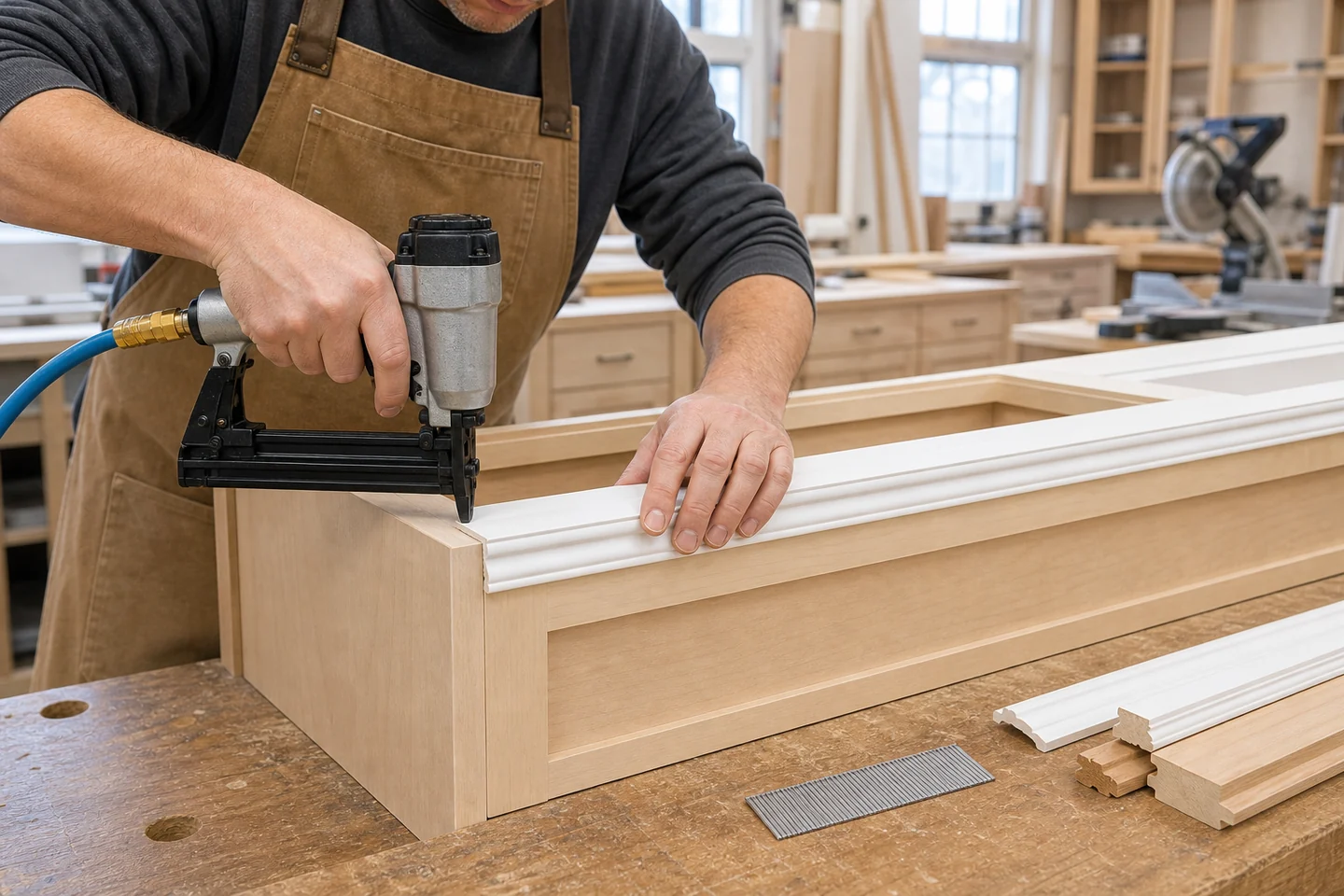
The photo context here points to a working woodshop: long timber pieces, air hoses, and operators using pneumatic tools around unfinished wood. That is a familiar environment for OEM fasteners. The tool is fast, but the fastener still has to be correct. Length, shank style, collation, coating, and strip integrity all influence how the fastener performs in the gun and how the finished joint holds up. Buyers often discover that the cheapest source is not the lowest total cost once misfires, returns, and downtime are counted.
What an OEM buyer is really comparing
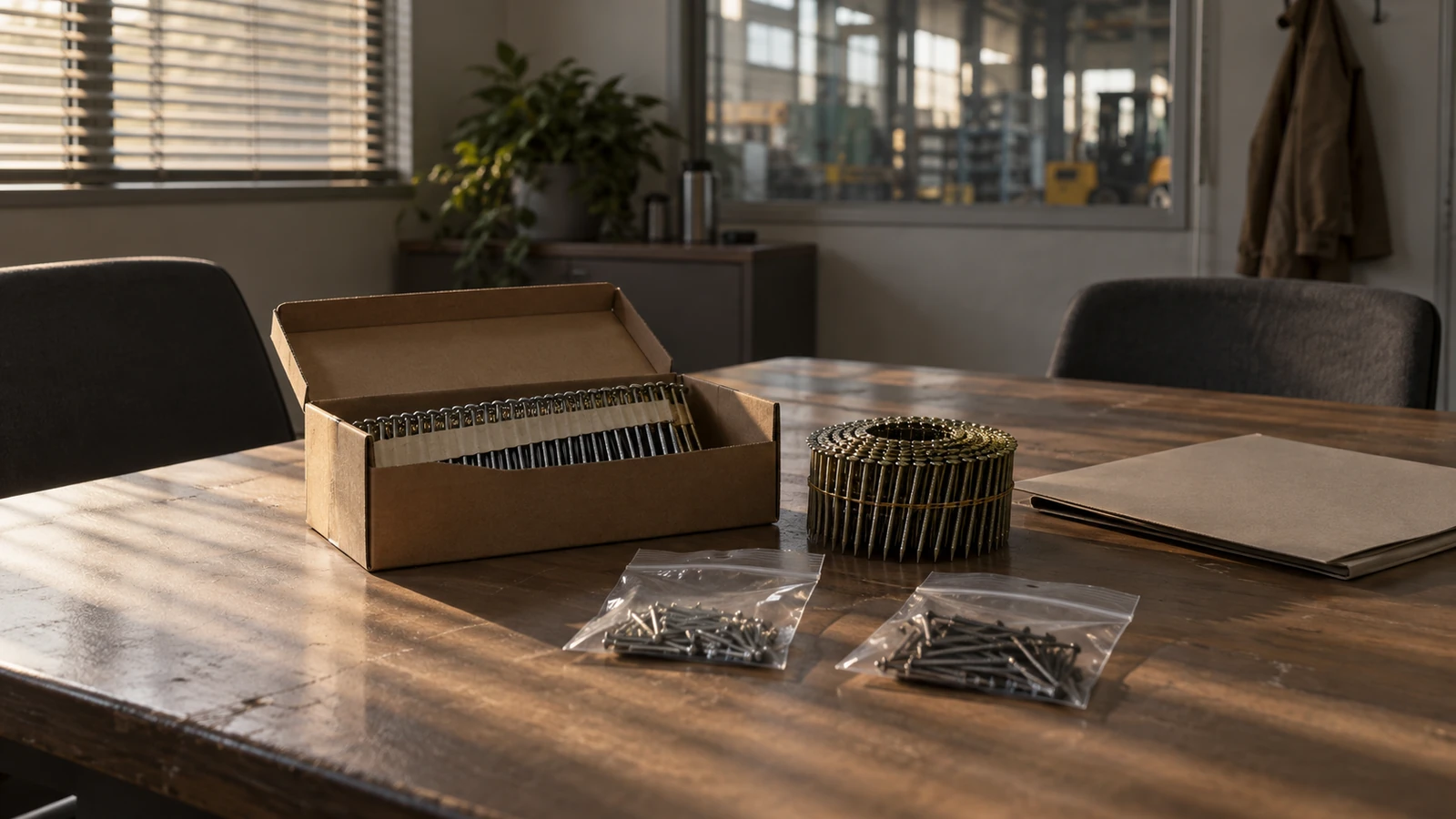
For procurement and product teams, the comparison is rarely only about unit price. It is about fit for application, repeatability, and how well the supplier can support your label or channel requirements. In practice, that often means asking whether the factory can produce pneumatic finishing nails OEM programs with stable dimensions, reliable collation, and packaging that survives shipping and handling.
For some buyers, the need is a general-purpose fastener line. For others, it is a narrower requirement such as an OEM brad nails supplier for trim, cabinetry, or interior finishing. Those are not interchangeable categories. Brad nails are typically chosen for lighter, cleaner work where splitting and surface damage must be minimized, while larger pneumatic fasteners may be used for framing or heavier assembly. A supplier that understands those distinctions is usually easier to work with than one that treats every fastener as the same commodity.
Quick reference: what to look at before you place an order
Product fit
Match the fastener to the tool platform and the job. A fastener that looks close enough on paper can still feed poorly if the collation or strip geometry is off.
Material and finish
Raw steel may be appropriate in some indoor applications, but coatings matter when the product will face moisture, handling, or longer service life expectations. If the use case is unclear, ask the supplier how they handle corrosion resistance and packaging protection.
Consistency
Uniform length and straightness are not nice-to-have details. They are what keep pneumatic tools running smoothly and reduce rework. In an industrial shop, a few bad strips can interrupt far more than a few minutes.
Private-label support
OEM programs often live or die on labeling, carton design, barcode accuracy, and the ability to keep reorder specs stable. If the supplier cannot repeat the same item months later, that is a warning sign.
Why the workshop setting matters
The timber beam shown in the background is a useful reminder that fasteners are not bought in the abstract. They are used on real substrates, often in busy shops where workers are moving between cutting, assembly, and finishing tasks. In that kind of setting, a fastener that drives cleanly and predictably can save more time than a dramatic discount ever will.
It also helps explain why some buyers prefer to build long-term supplier relationships instead of hopping between vendors. Once a team has tuned its nailers, air pressure, and work methods around a known fastener, even a small change in strip behavior can upset the line. That is easy to overlook during sourcing, especially if the sample order looks fine in a controlled test but behaves differently in daily production.
Common mistakes when sourcing OEM pneumatic fasteners
The most common mistake is spec ambiguity. Buyers ask for “nails” and assume the supplier will infer the rest. That is risky. Fastener type, gauge, head style, collation angle, length range, finish, and pack count should all be spelled out. Another frequent issue is treating tooling compatibility as an afterthought. If the fastener does not feed reliably, the rest of the sourcing work becomes academic.
A second mistake is ignoring the end user. Contractors and shop teams care about drive performance, visible finish quality, and whether the strips stay intact in transport. If the product is going into retail or distribution, those concerns become part of the brand promise whether or not they appear on the purchase order.
Practical buyer advice
Ask for samples, but test them in the actual tools and on the actual wood or assembly material whenever possible. A clean sample board in a sales office tells you less than a few hours on the shop floor. If your business sells multiple fastener sizes, keep the labeling system simple and consistent. Confusing cartons are a quiet but expensive problem.
It is also worth confirming what the supplier can and cannot say with confidence. In a field like this, a careful answer is often more useful than an overconfident one. If the factory does not know the wood species, moisture content, or load requirement for the application, then the buyer should not pretend those variables are settled either. That kind of discipline saves trouble later.
FAQ
Are pneumatic finishing nails and brad nails the same thing?
Not exactly. They can overlap in some light finishing work, but they are used differently and should be selected based on tool compatibility and the appearance or holding requirement of the job.
What should OEM buyers ask first?
Start with feed compatibility, coating or surface treatment, packaging format, and the supplier’s ability to repeat the same specification over time.
Why does private-label packaging matter so much?
Because the carton is part of the product in the channel. If it is unclear, weak, or inconsistent, buyers and end users notice quickly.
Next step
If you are building or reviewing an OEM fastener program, start with the actual application rather than the catalog category. Define the tool platform, the wood or substrate type, the finish expectations, and the packaging format, then compare suppliers on consistency and support. That is the fastest way to separate a real OEM pneumatic fasteners supplier from a generic commodity source.