
Why sourcing an OEM pneumatic nails supplier matters more than most buyers expect
Choosing an OEM pneumatic nails supplier is not just a packaging decision or a line item in procurement. For engineers, sourcing managers, and product teams, it affects assembly speed, joint appearance, tool reliability, and how much rework ends up in the shop. In woodworking and light assembly, a fastener that is a fraction off in feed consistency can create more trouble than its size suggests.
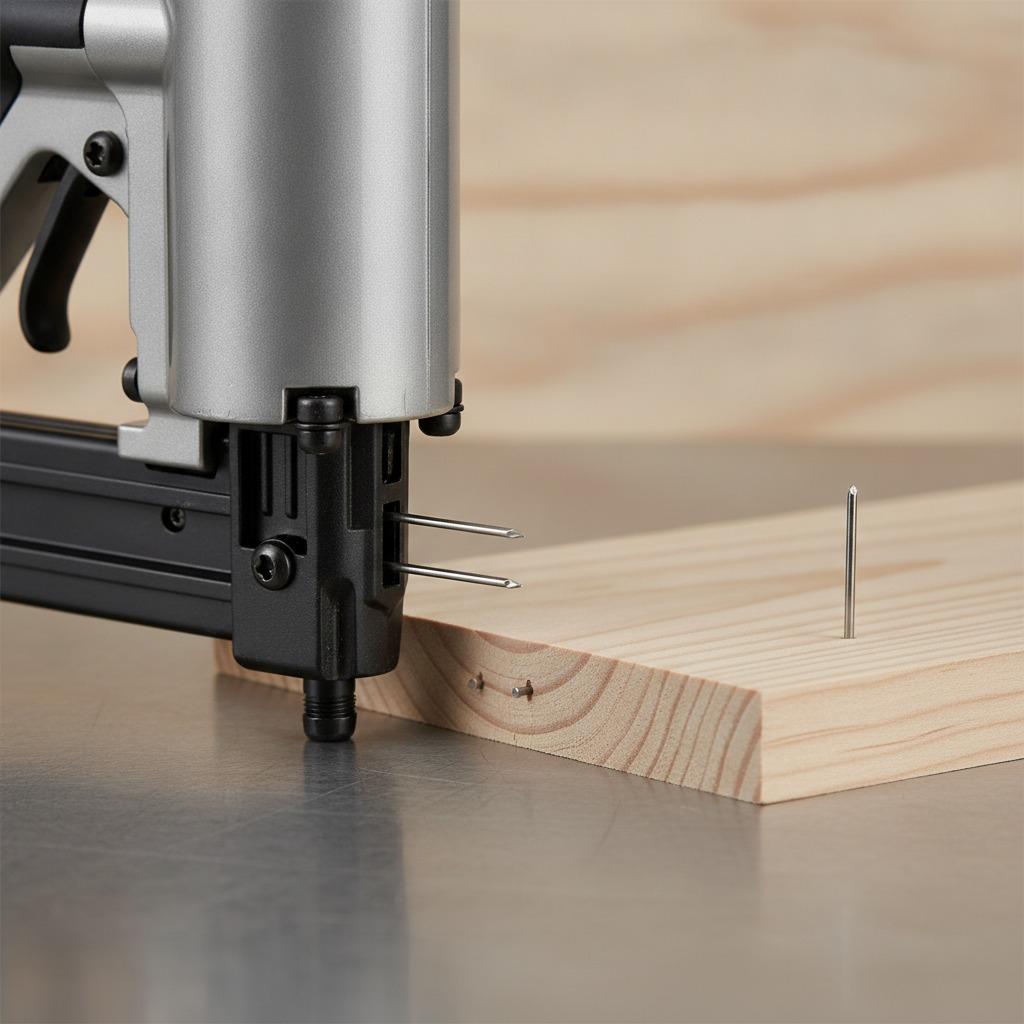
That matters especially when the job calls for a nail gun nails supplier that can support delicate trim, cabinet parts, moldings, or light panels. The image behind this topic shows a compact pin-nailing tool with a narrow magazine and very small fasteners staged at the outlet. That kind of setup tells you something practical: this is about precision fastening, not brute force. Buyers need suppliers who understand that difference.
What this type of fastening tool is used for
A pneumatic or air-powered pin nailer style tool is built to drive very small pins into wood with minimal surface damage. The visible workpiece in the reference image is a light-colored wood board with a stepped edge profile, the kind of part often found in trim work, cabinet interiors, and decorative joinery.
In real production settings, tools and fasteners like these are chosen when the joint has to stay discreet. A larger nail can split thin stock, leave a noticeable head, or require extra finishing. Small pins are often preferred when the goal is temporary positioning, low-visibility attachment, or support during glue cure. That does not make them universal; it just makes them useful in the right assembly sequence.
Quick buyer takeaway: what to look for in a supplier
If you are comparing an air nails supplier against a broader fastener source, start with the basics that affect production, not brochure language.
Feed consistency
The tool in the image shows two pins staged at the outlet, which suggests a magazine and feed system designed to hold multiple fasteners in order. For the buyer, that means the supplier should be able to support fasteners that feed cleanly and predictably in compatible tools.
Fastener size and finish
Very small-diameter pins are the point here. The smaller the fastener, the more important dimensional consistency becomes. If the pin is even slightly out of spec, it can jam, misfeed, or bend in the nose assembly. That is a production headache, not a minor inconvenience.
Application fit
A proper OEM pneumatic nails supplier should understand whether the fasteners are for trim assembly, cabinet components, light decorative parts, or bench work. Those use cases are similar on paper but not identical on the floor.
How the tool design affects sourcing decisions
The visible tool construction combines a metal housing with darker coated or molded sections, plus a long narrow guide rail and a compact rectangular nose. That design is typical of a precision fastening tool where access and placement matter.
For sourcing teams, tool geometry matters because fastener compatibility is not only about size. It is also about how the nail is guided, how the strip is fed, and how much resistance the nose assembly can tolerate before performance drops. In other words, the tool and the fastener are a pair. Buying one without considering the other is how product teams end up with avoidable downtime.
A practical caution: small fasteners are often treated as commodities, but in actual use they are closer to a system component. If a supplier cannot describe the intended tool category clearly, that is worth a second look.
Common mistakes buyers make
One common mistake is assuming all small pins or nails are interchangeable. They are not. Head style, strip format, length range, and material choice can all affect driving performance and final appearance.
Another mistake is buying only on price and discovering the feed is inconsistent in production. With a nail gun nails supplier, the real cost often shows up later in jams, rejects, or hand-finished touch-ups.
A third issue is over-specifying the purchase. Some buyers ask for features they do not actually need while missing the basics, such as whether the fastener works cleanly in the target tool. The result is a technically impressive part that does not run smoothly on the line.
Selection criteria that actually help
If you are narrowing down OEM options, ask for information that supports production use:
- What fastener type is supported for the intended tool family
- Whether the supplier can keep dimensions and strip format consistent
- What wood applications the fasteners are intended for
- Whether the product is suited to low-visibility fastening
- How the supplier handles packaging and feed protection during transit
These are not glamorous questions, but they are the ones that save time later.
FAQ for sourcing and product teams
Is a pin nailer the same as a brad nailer?
Not necessarily. They overlap in some light woodworking applications, but the fastener format and visible finish can differ. Buyers should verify compatibility rather than assume.
Why choose small pins at all?
Because some assemblies need holding power without a large visual mark. That is especially useful in trim, cabinet work, and decorative components.
Should I evaluate the supplier by tool performance or fastener quality first?
Both. In practice, the fastener quality and tool compatibility are linked.
What to do next
If your team is sourcing for precision woodworking or light assembly, start with the actual application, not the catalog category. Compare fastener size, feed behavior, and the intended tool style before committing volume. An OEM pneumatic nails supplier worth working with should be able to discuss those details plainly and without overselling them.
For buyers building a shortlist, that is usually the fastest path to fewer jams, cleaner joints, and less finish work at the end of the line.