
Why sourcing an OEM pneumatic nails supplier matters in pallet production
If you build wooden pallets at scale, the fastener supply is not a small procurement detail. An OEM pneumatic nails supplier can affect line speed, joint consistency, nail gun reliability, and even how much rework your crew sees at the end of a shift. That matters whether you are running a pallet shop, a packaging line, or a contract manufacturing operation that depends on clean, repeatable assembly.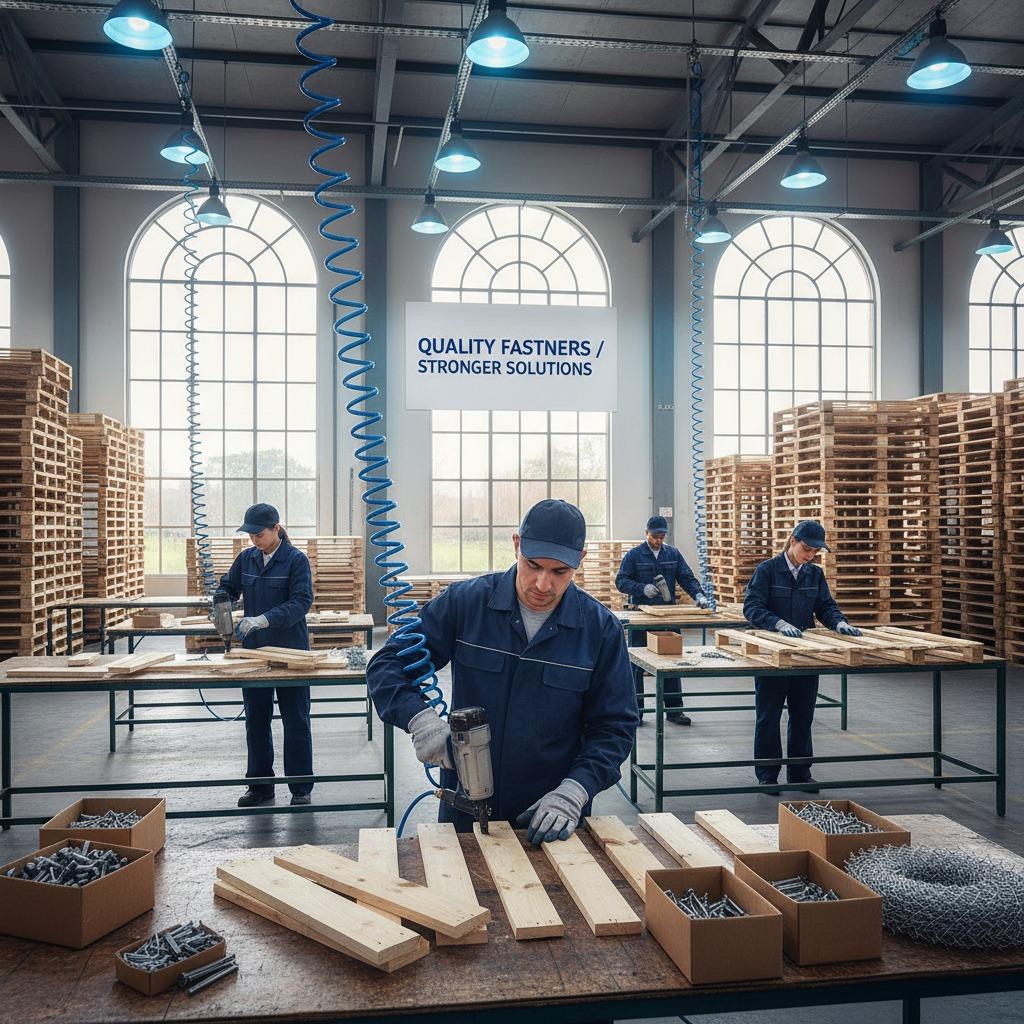
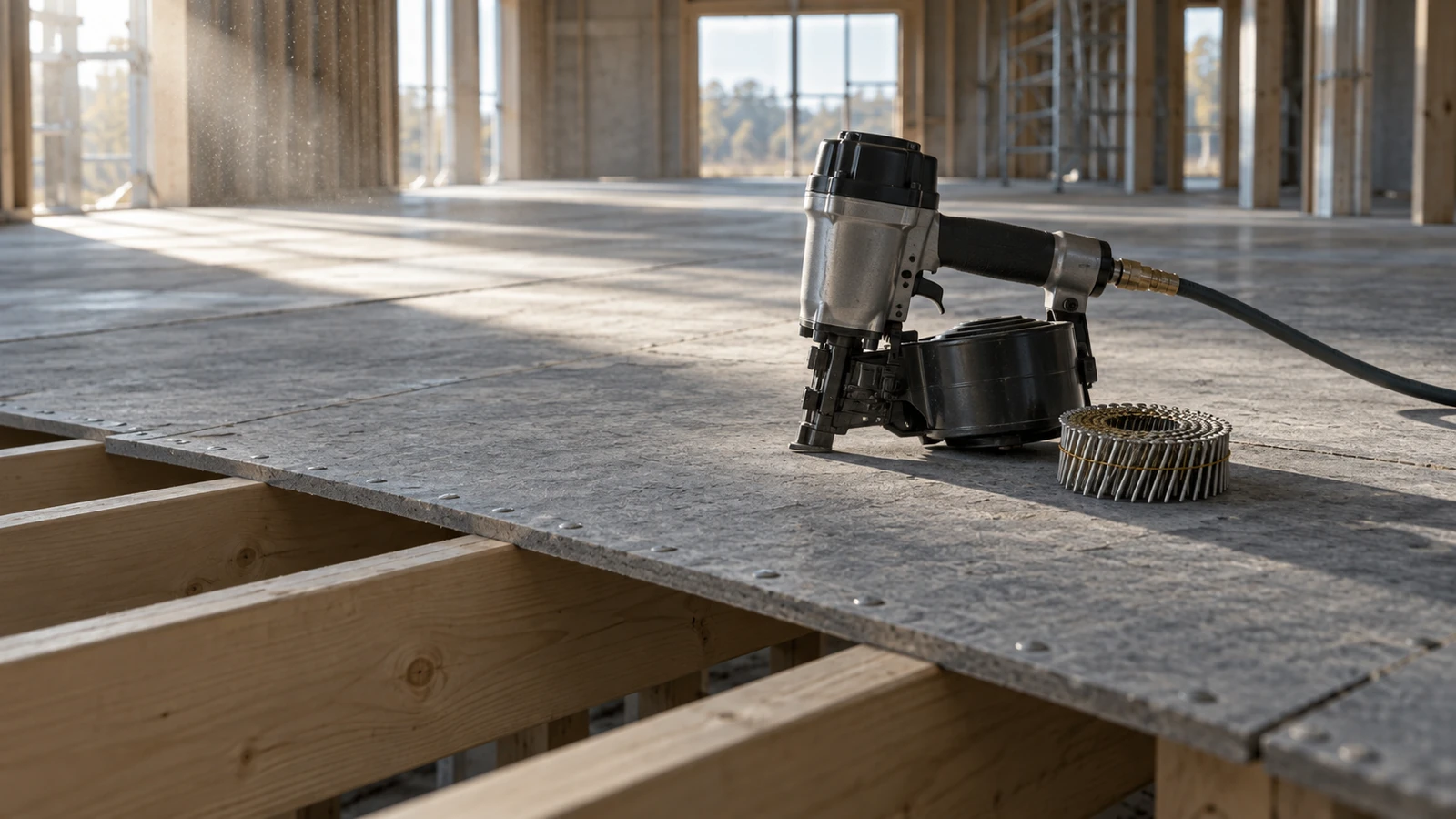
In pallet fabrication, the work is usually simple to describe and unforgiving to execute. Softwood boards, blocks, or stringers are brought together, then fastened with pneumatic nail guns so the finished unit can move goods through storage, freight, and distribution without falling apart halfway through the chain. The tools are fast; the system only works if the nails are suited to the gun, the lumber, and the production pace.
What buyers are really trying to solve
Most sourcing teams are not just hunting for “nails.” They are trying to avoid stoppages, jams, bent fasteners, inconsistent drive depth, and weak holding power. In a pallet plant, those problems show up quickly. A board that splits on the line, or a fastener that doesn’t seat properly, can slow an entire bay of workers.
That is why many buyers look beyond a generic fastener vendor and ask whether the supplier can function as a true pneumatic nails manufacturer or at least support OEM specifications. For high-volume production, the question is not only price. It is compatibility, repeatability, and whether the supplier can keep the toolroom and production floor supplied without constant adjustment.
Quick reference: what to check before you place a purchase order
Tool compatibility
The nails must match the pneumatic nail guns used on the floor. Even when the lumber looks ordinary, feed geometry and collation style can make a big difference in how cleanly the nailer runs.
Wood application fit
Pallet assembly uses standard dimensional lumber, but the exact lumber mix varies. Light softwood boards, blocks, and stringers do not all behave the same under a nail. If the fastener is too aggressive, splitting becomes a real risk; too mild, and the joint may not hold as intended.
Production consistency
A reliable air nail supplier should support steady feed and consistent dimensions across batches. In a factory setting, inconsistency becomes scrap, downtime, or both.
How pneumatic nails fit pallet manufacturing
The photo tells a familiar story: unfinished wooden pallets being assembled on an industrial floor, with coiled air hoses overhead and loose nails nearby. This is a classic use case for air-powered fastening because it lets operators move quickly while keeping assembly labor practical.
For pallet builders, pneumatic nailing is attractive because it supports throughput. Workers can place boards, hit the joint, and move on. That speed is useful in:
Warehousing and shipping operations
When pallets are built internally for outgoing freight, the plant often needs immediate replacement capacity rather than waiting on outside supply.
Industrial packaging supply
Manufacturers and logistics providers may need pallets for stacking, consolidation, and transport. A steady nail supply keeps the fabrication area from becoming the bottleneck.
Custom pallet work
Even when pallet dimensions are not standard, pneumatic fastening still makes sense. The caution here is simple: custom sizes can expose fastener weaknesses faster than uniform production does.
Selection criteria that deserve more attention than they usually get
One practical mistake is treating all nails as interchangeable because the pallet itself looks basic. In reality, the nail selection should reflect the wood, the line speed, and the type of joint being built. Buyers should ask for details on collation format, machine compatibility, and whether the supplier supports OEM or private-label requirements.
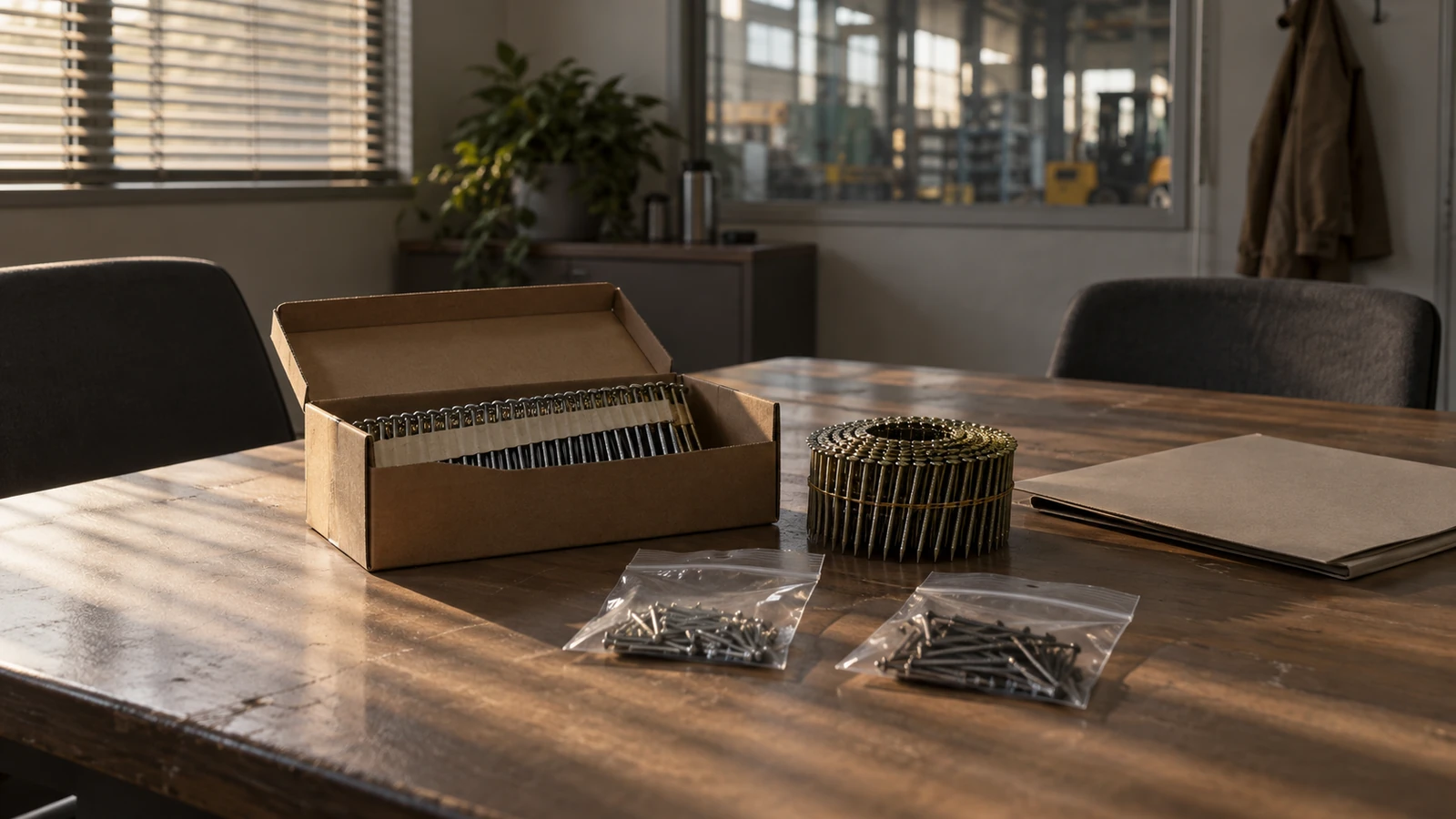
If you are comparing an OEM pneumatic nails supplier against a general hardware source, look at packaging discipline too. Bulk packaging that works in a warehouse may be awkward on a fast-moving production floor. Small operational frictions add up.
Another point worth saying plainly: do not assume the same nail will behave well across every pallet design. One-way export pallets, reusable shop pallets, and custom carrier bases can all demand different fastening behavior, even when the wood appears similar.
Common buyer mistakes
The most common mistake is buying on unit cost alone. A cheaper nail that jams a gun, fractures wood, or slows assembly is not cheap for long.
A second mistake is not validating fit with the actual tool used on the line. “Compatible” on paper is not enough; production crews care about how the nail runs after the third box, not the first.
A third is overlooking the realities of unfinished lumber. Raw wood varies more than people like to admit, especially in pallet shops where material supply changes and workers are expected to keep pace.
What to ask a supplier before you commit
Ask whether the fasteners are intended for pallet assembly, what machines they are designed to run in, and whether the supplier can support OEM or private-label supply. If your operation serves export logistics, it is also worth confirming whether the fastener package fits your downstream compliance process, though exact export requirements depend on the final pallet program and should not be guessed at.
You should also ask for samples and run them under real shop conditions. That is usually more useful than a polished product sheet.
Choosing a supplier for the next production cycle
The best sourcing decision is the one that protects throughput as well as quality. For pallet manufacturers and industrial packaging teams, an OEM pneumatic nails supplier should be judged by how well the nails support your actual process: the gun, the lumber, the operators, and the pace of work.
If you are reviewing suppliers now, start with tool compatibility, production consistency, and packaging format. Then test the product on the floor, where the real answer usually appears within a few shifts.