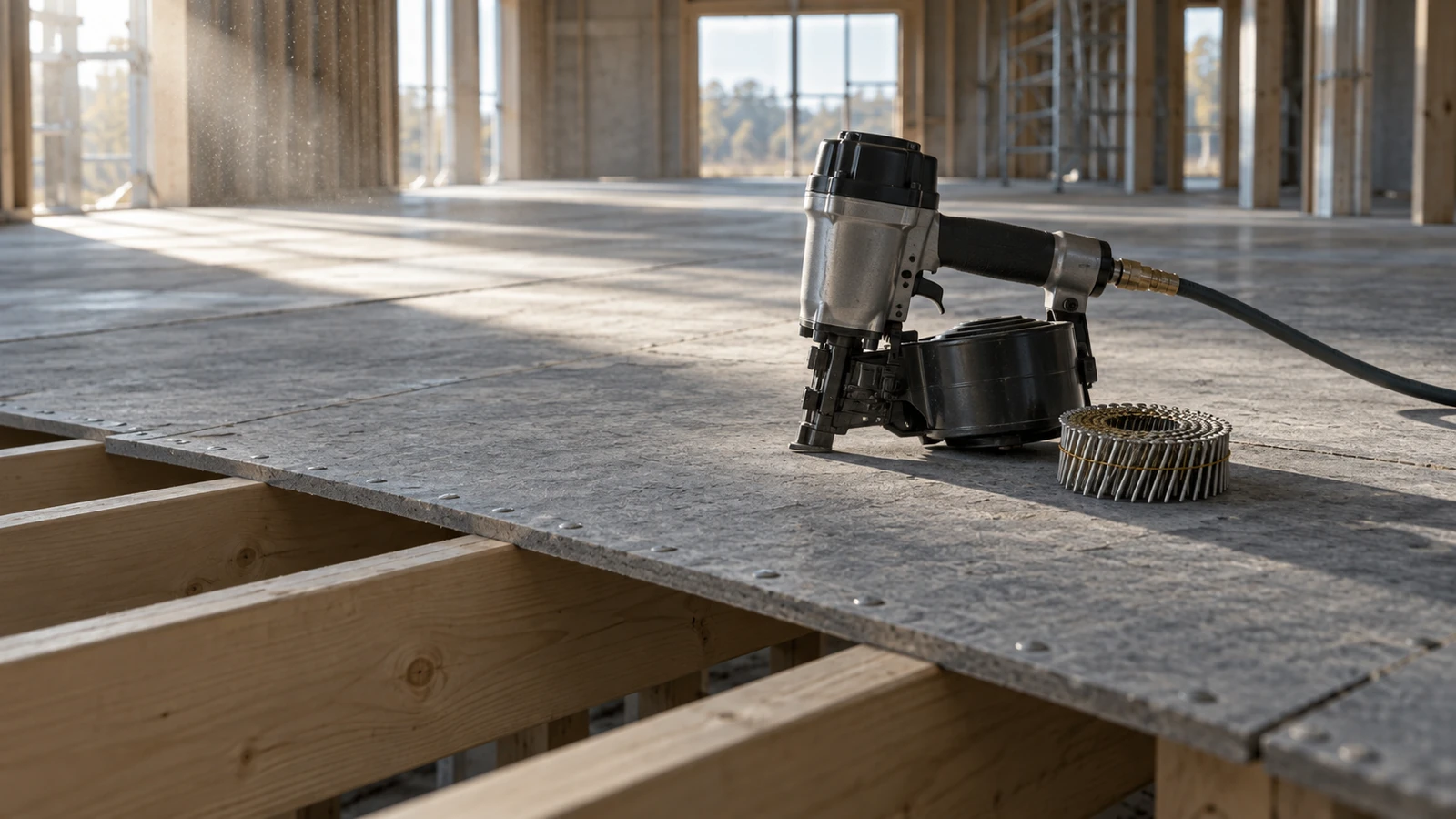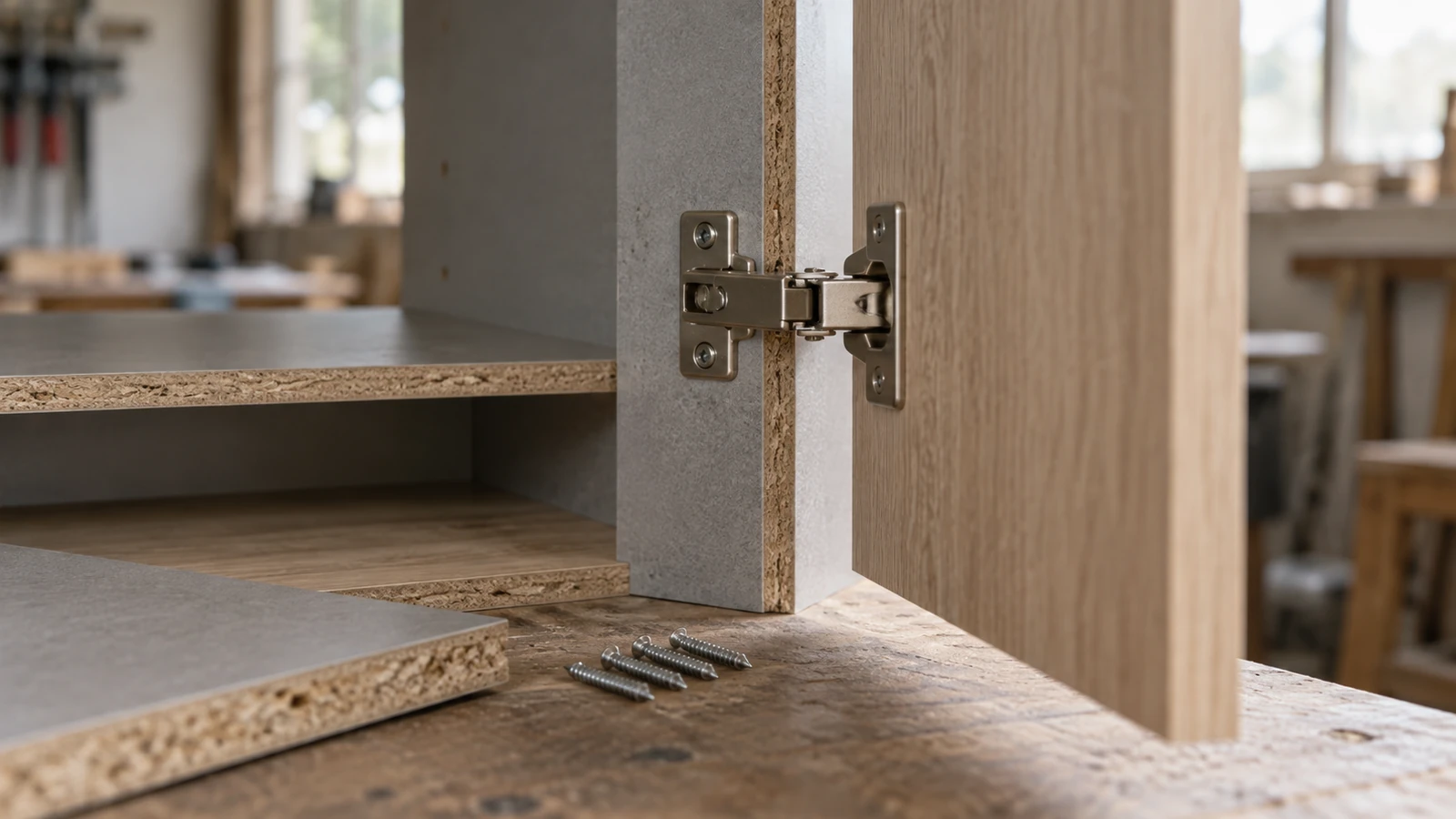

Why a pneumatic fasteners factory matters to timber shops
When a framing crew or timber fabricator starts looking at a pneumatic fasteners factory, the real question is usually not about air pressure or tool branding. It is about consistency. In a shop joining beams, posts, or other structural wood members, a fastener that lands cleanly and repeatedly is not a convenience; it is part of the process control. Missed drives, slow reloads, and poor collating all show up later as rework, delays, or awkward conversations on the jobsite.
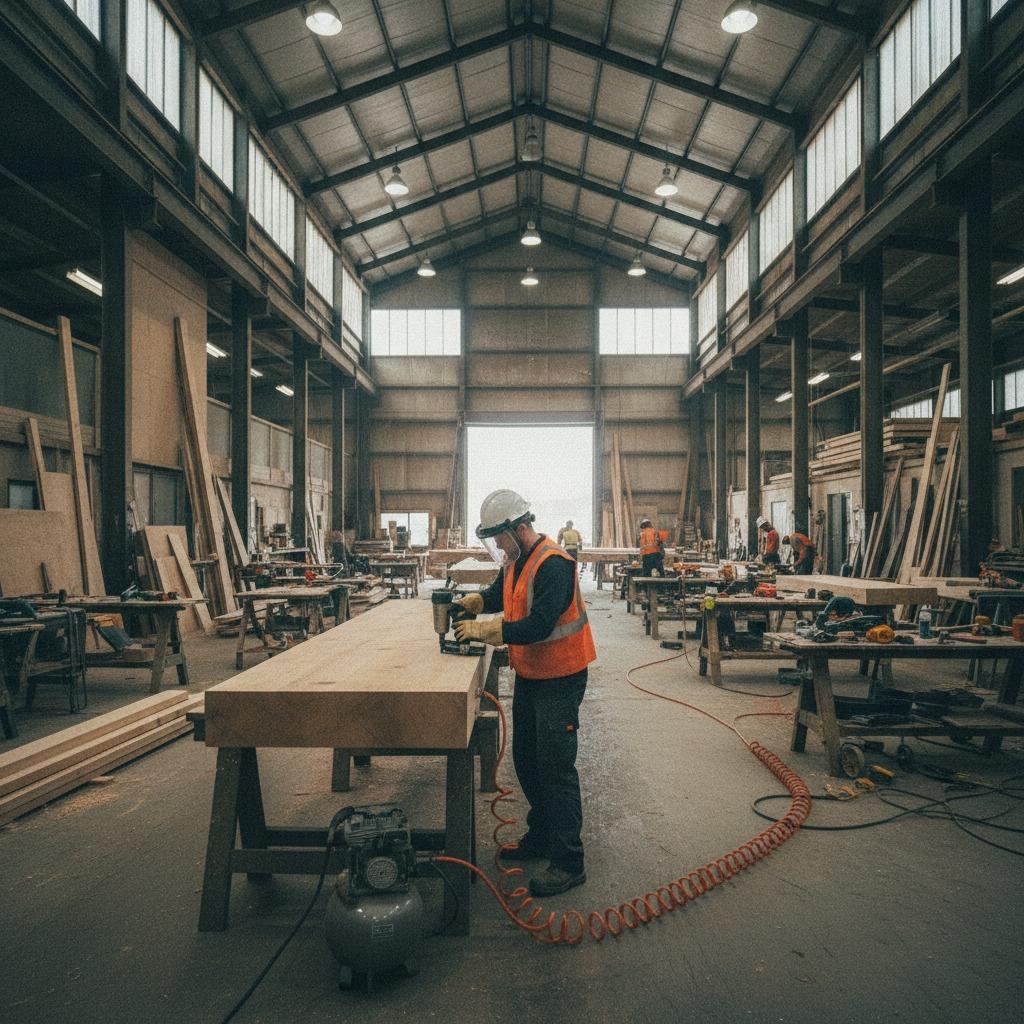
The scene is familiar: large wood members on sawhorses, an operator working with a pneumatic nailer or stapler, and an air hose feeding the tool from a compressor on the floor. That setup is simple, but it tells you a lot about what buyers should care about. Shops producing structural timber assemblies need fasteners that keep pace with assembly, hold alignment during glue-up or fitting, and suit the way crews actually work under time pressure.
What buyers are really comparing
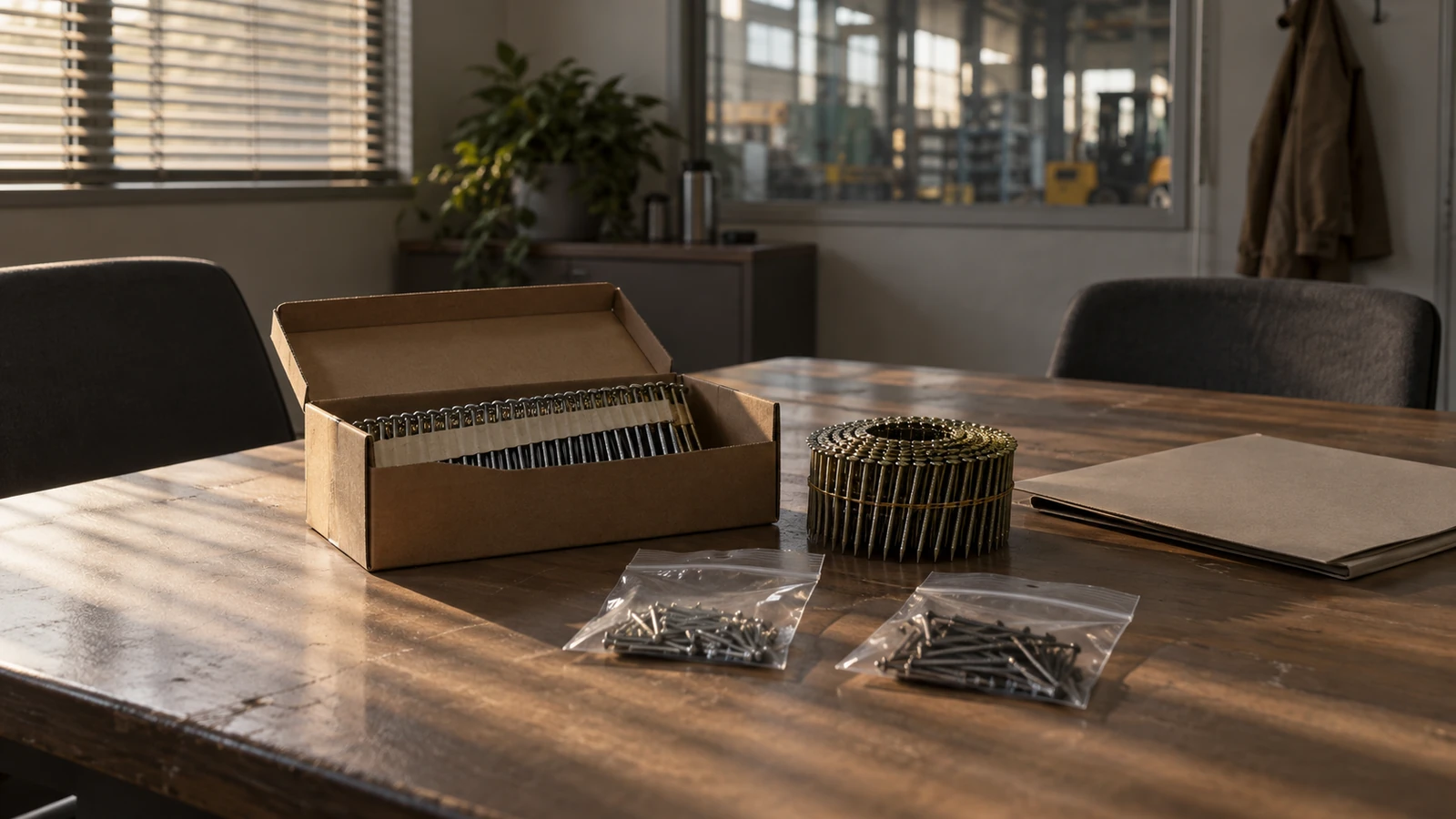
For sourcing managers, the first comparison is often less about the tool itself and more about the fastening ecosystem. A coil nails manufacturer may be supplying high-volume collated nails for repetitive nailing, while a framing nails supplier may focus on sizes and coatings that match construction framing practices. In a timber fabrication shop, the fastener format has to fit the production style. If the line moves fast and reloads are costly, coil-fed supply can be attractive. If the work changes often, the shop may favor a broader range of framing fasteners.
That is the practical lens: what reduces stoppage, what keeps operators moving, and what fits the exact assembly sequence. The wrong choice is often not catastrophic, just inefficient. And in a fabrication environment, inefficiency compounds quickly.
How pneumatic fastening fits structural wood assembly
Pneumatic fastening is used because compressed air gives a shop a dependable burst of driving force with minimal fatigue for the operator. In beam or frame assembly, that matters. Long members are awkward to handle, alignment can shift, and the team may need to tack, position, and secure pieces in quick succession. A pneumatic nailer or stapler is well suited to that rhythm.
For construction contractors and woodwork fabricators, the value is not only speed. It is repeatability. A consistent fastening cycle helps crews build a rhythm, especially when they are assembling large wooden framing members indoors or in a prefab environment. Still, a buyer should be cautious here: speed on paper means little if the air system is undersized or the fastener supply is inconsistent. The shop ends up slowing down for a problem that looked minor during purchasing.
Selection criteria that matter more than marketing claims
Fastener compatibility
Check whether the tooling and collated fastener format match the production flow. Shops often discover too late that a fastener line is technically acceptable but awkward in daily use. That is where downtime starts.
Feed reliability
In high-volume work, feeding problems are more disruptive than most people expect. A tool that jams occasionally may seem manageable in a sample test, yet become a real bottleneck once a crew is assembling multiple beams or posts in sequence.
Shop conditions
Indoor fabrication, stack handling, and sawhorse-based assembly are all visible in this kind of work. Those conditions favor a fastening setup that is easy to maneuver and not overly delicate. Dust, vibration, and repeated loading all take their toll.
End-use demands
Structural wood members carry more responsibility than ordinary trim or light carpentry. Buyers should make sure the fastening choice matches the product’s intended service, whether that is residential framing, commercial timber work, or prefab assembly. Exact structural requirements are project-specific and should be verified by the builder or engineer, not assumed from the tool alone.
Common mistakes shops make
One common mistake is treating all nails as interchangeable because they look similar in a box. They are not. Coating, collation, length, and head style all affect how the fastener performs in a production setting. Another mistake is underestimating air demand. A pneumatic system that is fine for occasional work may struggle when a shop runs the tool continuously.
There is also a tendency to buy for the best-case demo instead of the worst-case workday. A tool that behaves beautifully on a clean bench may not hold up when the line is busy, the lumber is heavy, and the operator is wearing gloves. Buyers who have spent time in a real shop tend to notice this quickly.
Practical advice for sourcing teams
If you are sourcing for a timber frame builder, prefab manufacturer, or woodworking fabricator, start with the production problem, not the catalog. Ask what is being assembled, how often, and where the fastening step sits in the workflow. Then match the fastener type, the compressor setup, and the tool ergonomics to that process.
When evaluating a pneumatic fasteners factory, ask for the basics that affect production: collating style, packaging consistency, compatibility notes, and whether the fasteners are intended for framing-style use or another application. Keep the conversation grounded in shop realities. The best supplier is not always the one with the longest spec sheet; it is the one whose product arrives ready to keep a production line moving.
FAQ for buyers
Is pneumatic fastening only for light carpentry?
No. It is widely used in construction framing and timber fabrication as well, provided the fastener and tool are matched to the work.
Should I choose coil nails or framing nails?
That depends on the production setup. Coil-fed systems can support high-volume work, while framing nails may suit broader framing applications. The shop workflow usually decides this more than any trend does.
What is the first thing to verify before placing an order?
Verify compatibility with the tool, the assembly method, and the end use. If that part is vague, the rest of the purchase will be, too.
Next step
For teams buying fasteners for timber assembly or framing production, the smartest next move is a short, practical review of the current fastening setup: tool model, air supply, fastener format, and the exact job the shop is trying to do. That small audit usually reveals whether the bottleneck is the tool, the fastener supply, or the process itself.