
A quote tells you what a supplier charges. An audit tells you whether that price survives a second order. Ask only the first question and you will meet the rest of the answer in shipment three, when the wire grade has quietly drifted and nobody on the sales side can explain it.
Watch who answers the furnace question on a factory visit. If the sales manager gets there first, before the production manager has opened his mouth, the plant is telling you something. Just information, and it is free.
What follows is the pneumatic nails manufacturer audit checklist we walk through with buyers before a first order. It is what we would want to see if we were the ones wiring the money, and a day is about right to do it properly.
What a quote leaves out
Prices aren't dishonest. They describe a destination and skip the road, and two factories can put identical numbers in front of you while only one of them can still hold those numbers next June.
You find out which is which when something moves. Coil prices jump. A coating line goes down. A die sails past its limit and nobody notices until the nails start cupping at the head. A plant that catches those things keeps your specification intact. A plant that doesn't sends its best guess and hopes you never buy a micrometer.
So the day has two jobs. Confirm the spec can actually be made on the machines standing in front of you, and find out what happens on the day it can't. Most buyers prepare hard for the first and forget the second. The second is the reason to go at all.
Five processes, one roof
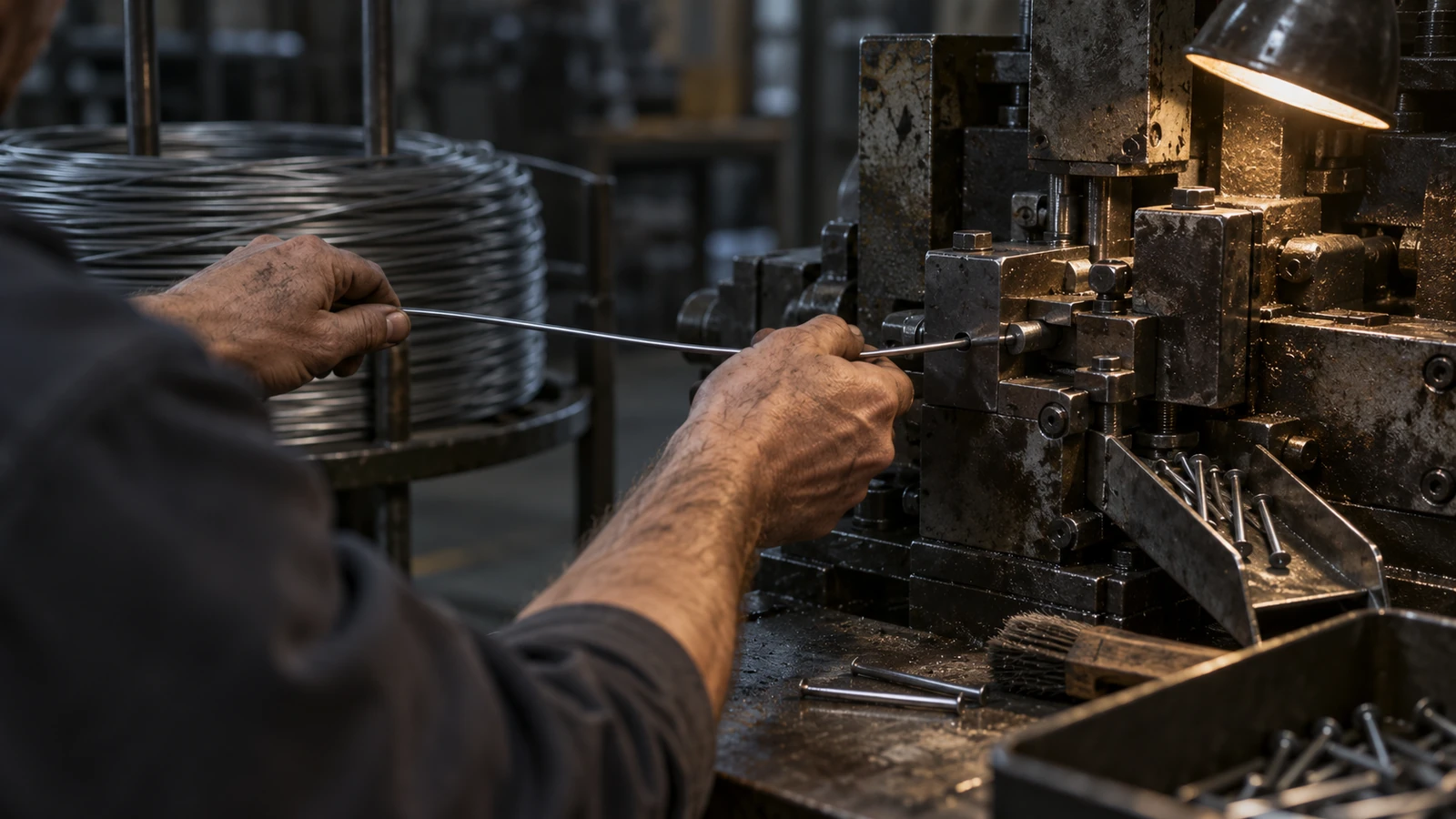
Wire drawing, forming, heat treatment, coating, collation. In that order, before a single carton gets sealed. Run the first four yourself and you own your quality. Buy finished nails and re-box them and you own the carton. No third option, whatever the brochure suggests.
Ask for a walk that starts at the wire store and ends at the packing line without leaving the site. When somebody reaches for car keys halfway round, the coating or the heat treatment is being bought in. Those two steps are where a specification drifts first. Who does the work? Has that changed recently? How does a finished carton trace back there? ProAirNails keeps all five under one roof, so we answer those questions instead of dodging them, and it is how the pneumatic nails we ship get made.
The pneumatic nails manufacturer audit checklist, station by station
Five places to stand on a pneumatic nails manufacturer audit checklist, and at each one there's a result you want and a result that should make you stop and ask.
| Station | What to look at | Result you want | Stop and ask |
|---|---|---|---|
| Wire store | Coil labels, grade segregation, issue records | Grade and diameter recorded per coil and traced to a lot | Loose coils with no lot identity, mixed on one rack |
| Forming | Die condition, scrap bin, run rate | Dies tracked with a change-out counter and a worn-die bin | Dies run until nails visibly deform, scrap not separated |
| Heat treatment | Furnace or quench line, temperature record | Chart or log kept per batch, hardness sampled | No batch records, or hardness accepted on appearance |
| Coating | Line, thickness control, salt spray history | Coating weight or thickness specified and tested | Coating described only as galvanized, with no figure |
| Collation and packing | Strip strength, count checks, carton line | Counts checked at the line, strips pull-tested by hand | Counts corrected in the warehouse after packing |
Two plants can walk the same pneumatic nails manufacturer audit checklist and be nothing alike a year later. It's whether the numbers were written down by whoever took the readings, or copied off last month's sheet because the shift was ending.
Paper that proves a lot, and paper that proves nothing
Anyone can hand you a folder. The question worth asking is whether a document was written about a real lot, so skip the visitor file and ask for records from the last fortnight.
| Document | What it proves | What it does not prove |
|---|---|---|
| Quality management certificate | That a system exists and has been audited | That the system was followed on your order |
| Wire lot certificate | Grade and diameter of the steel that went in | That the coil in the rack is the coil on the paper |
| Heat treatment log | Batch temperature and time were recorded | That hardness was measured rather than assumed |
| First-article inspection record | How the specification was verified at the start of a run | That every hour of the run was checked |
| Pre-shipment inspection report | What was pulled and measured before the container loaded | Anything about cartons that were never opened |
Stop at the certificate folder and you've missed half of that table. ISO 9001 is a floor, not a finish line. So ask for the most recent internal audit findings, then watch how the answer arrives. A factory that volunteers its own corrective actions doesn't usually mind showing you yours.
The questions a broker answers with a story
Most of the verification is asking things that only the production floor can answer. Trading companies are fluent in price, packing and freight, and for twenty minutes that fluency sounds a lot like competence.
So: what is the drawing die reduction schedule for the gauge we are buying? Which furnace did Tuesday's nails go through? What happens to a coil that arrives off-grade? Who signs the coating thickness figure, and is that a minimum, an average, or a wish? For a production manager it is a sentence. For a middleman it is a story.
While you are at it, stop treating gauge numbers as measurements. A 16 gauge nail is a convention rather than a diameter, so the spec should carry both. Check the conversion against the NIST metric reference, not a supplier's memory.
Samples lie. First-article records don't.
Any nail in a sample box can be the good one. A first-article record is harder to fake, because it shows the whole tolerance band instead of the best piece in the bin.
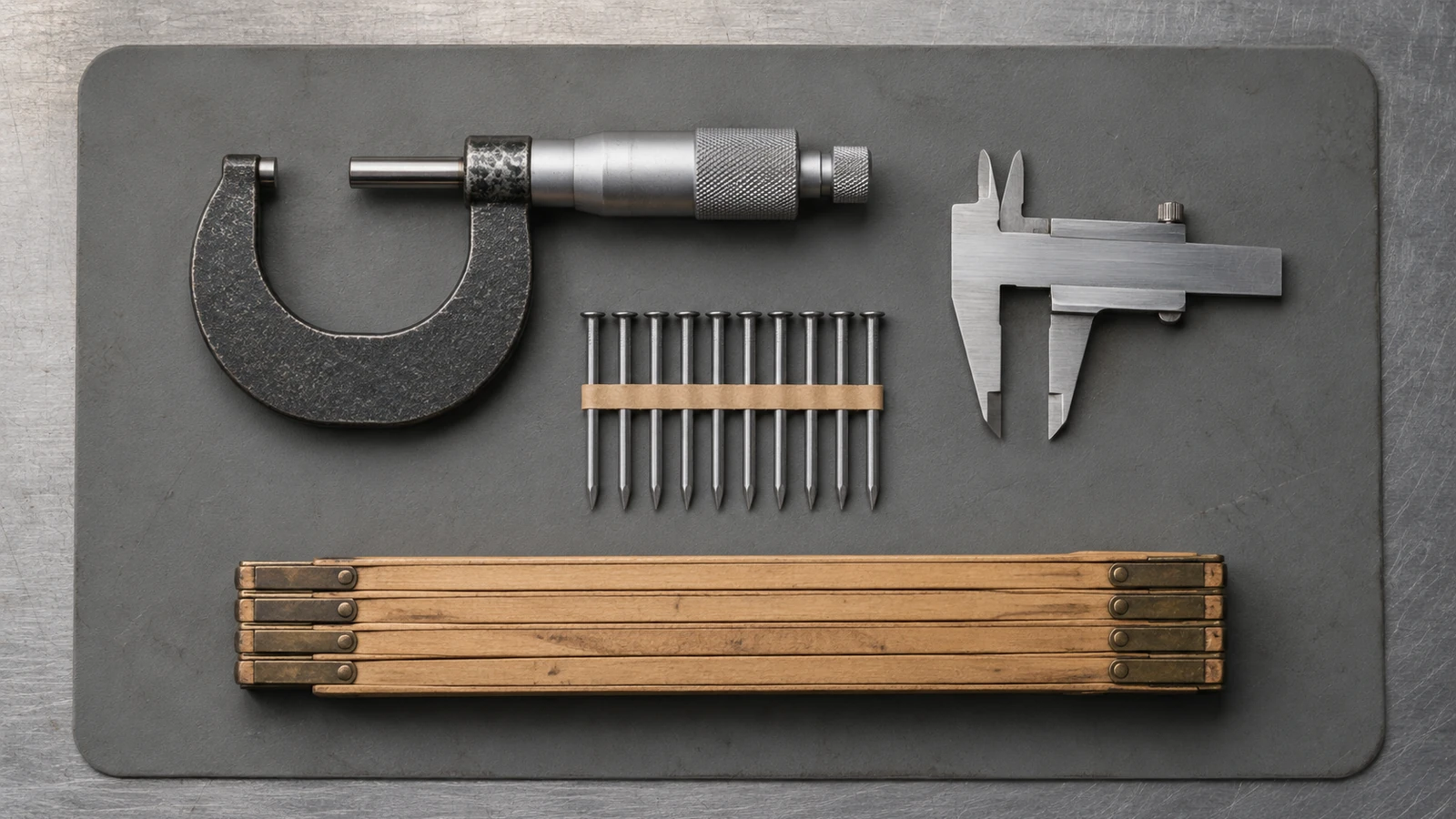
Ask for three readings on the same feature. Shank diameter at three points. Head or crown width across two axes. Length over ten nails from one strip. Then look at the spread rather than the average, because the spread is the thing you're buying. That step is the one most buyers leave off the pneumatic nails manufacturer audit checklist, and it's where the money sits. A 2.9 mm shank quoted as an average and the same shank quoted as a minimum are two different products, and only one of them feeds through your tooling.
Do the same with the coating before you sign off a heat-treated lot. The corrosion classes live in the ASTM F1667 driven fastener specification. An adjective from your supplier isn't a substitute for it.
Capacity, cartons, and the mixed container
Ask a factory how much it makes and you'll get a number. Ask what the number means and you'll get a pause. Three hundred tonnes a month is a fact about nothing until somebody tells you how many shifts it assumes, how much is already spoken for, and what a container of your item actually weighs.
So ask for the daily output of the one line that will run your product, then ask the question that spoils the mood. What happens when a rush order lands from a customer who's been buying since before your sales rep had a job? Nine years of history beats a new enquiry every time, and it's better to hear that on the visit than to watch it happen mid-launch.
Packing is the other half, and it's where a careful visit and a quick tour stop looking alike. Your customer opens the carton long before they touch a nail, and the carton spec usually gets agreed by email at eleven at night by somebody who's stopped reading. Board grade. Count, and whether the count gets verified on the line or corrected later in the warehouse. Where the label sits. If the order mixes products, ask for a container plan and picking list, because mixed packing goes wrong as an information problem long before it goes wrong as a warehouse problem. ProAirNails runs coil nails and brad nails through mixed containers most weeks, and the clean loads are always the ones where the picking list was written before the pallets moved.

Scoring it, and how many suppliers to keep
Score every station pass, pass with a condition, or fail, then write the condition the way you'd say it to the factory's face. Nothing on a pneumatic nails manufacturer audit checklist is worth a tick you can't explain out loud to somebody who disagrees with you.
After that comes the part buyers find harder than the visit itself. Deciding how many suppliers to keep.
- Two suppliers for whatever carries your production, working from one written spec.
- One supplier for anything that shares tooling with a bigger item. A second source costs more in consistency than it saves in price.
- Conditions in the purchase order, not the email thread, so the coating figure and the count check travel with the order.
- A review date. The plant you audit today isn't the one you'll be buying from in two years.
What one day still can't tell you
An audit is a photograph, and photographs don't show you a bad month. They can't tell you that a wire supplier quietly swapped a grade in March, or that a coating line ran cold one Friday.
What the day can tell you is whether the plant would have noticed, and no pneumatic nails manufacturer audit checklist substitutes for that. A factory with lot traceability and a first-article habit catches its own drift long before it reaches your dock. One without them catches nothing, and that's the week you become the inspection department. That's what the day buys. Not a score. An answer to one question: who finds the problem first?
Buyers' questions before a first order
How long does a pneumatic nails manufacturer audit checklist take?
"A day," the production manager told me on the last visit, "and you'll want to eat first." He wasn't joking. Wire store, press floor, furnace, coating line, packing, and one trip back to the office to hunt for Tuesday's log.
Do I have to visit in person?
Not for the first conversation. Sit in on a video walk instead: one continuous run from the wire store to the packing line, no edits. Somebody always forgets the camera is on, and that's when you learn things.
Which documents should I ask for first?
Five, and I want the recent ones rather than the tidy ones. Quality certificate. Wire lot certificate. Heat treatment log. First-article record. Last pre-shipment inspection report. Papers you meet for the first time in a factory office are papers you can't think about properly.
How do I know the wire grade matches the quote?
Walk the rack yourself and match the coil number to the lot certificate, then take three shanks out of a single strip and measure them. Not the average. The spread. Then ask what the plant does with a coil that lands off-grade.
What should a first-article sample prove?
That the factory can measure its own work, which is a different skill from making one good nail on a good morning. Get the recorded values, the band and a signature. One reading is a hope. A range is a process.
How do I compare two factories quoting the same price?
Ignore the total and read the assumption underneath it. Coil grade. Coating thickness. Count per carton. Board grade. Lead time. The cheaper quote is usually the one with a soft word buried in the small print.
Can a trading company supply pneumatic nails well?
Yes, and more often than the trade press admits. What matters is whether the trader will name the factory running your order and let you walk it. Trouble starts the day the production site turns into a secret.
What does a coating check involve?
Three numbers and a method. The specified coating weight or thickness. How it gets tested. What a recent lot measured. Galvanized on its own is a mood rather than a specification.
How many suppliers should I keep after the visit?
Two for whatever carries your line and one for everything else, until volume earns a second source. Keep the spare ticking over with a small order each year. Nobody wants to build a relationship mid-crisis.
What disqualifies a supplier fastest?
Refusing a continuous walk. Records that cannot be tied to a lot. A specification whose wording drifts between the quote and the order confirmation. Two of the three and I would not spend the flight.
ProAirNails has been making pneumatic fasteners since 1997, drawing, forming, treating and coating under one roof and working to ISO 9001. The pneumatic nails manufacturer audit checklist above is the one we answer against when a buyer visits, and we're happy to walk it with you. Staple pins and quotation requests reach the same team that owns the production schedule.