
What buyers really mean when they search for a pneumatic nails manufacturer
When engineers, sourcing teams, or distributors look for a pneumatic nails manufacturer, they are usually not chasing a generic hardware listing. They are trying to solve a practical problem: finding fasteners that feed reliably, drive cleanly, and match the nailer on the line or jobsite without constant jams and rework. That matters because a bad fastener choice slows production, damages wood, and creates avoidable downtime. In woodworking, pallet assembly, and carpentry, the cost of a cheap bundle of nails often shows up later in labor, not at purchase.
The phrase also carries a bit of ambiguity. Some buyers mean the nails themselves. Others mean an air nail manufacturer that can supply compatible collated fasteners for a pneumatic nailer. The difference is worth clearing up early, because the nail type, collation angle, shank style, coating, and strip format all affect tool compatibility.
Quick takeaways before you compare suppliers
If you are evaluating a nail gun nails manufacturer, focus first on fit and consistency rather than just price. A batch that is dimensionally inconsistent can cause misfeeds even when the tool is in good condition. The second thing to check is application: framing, trim, furniture assembly, pallet work, and crate building do not all call for the same fastener geometry.
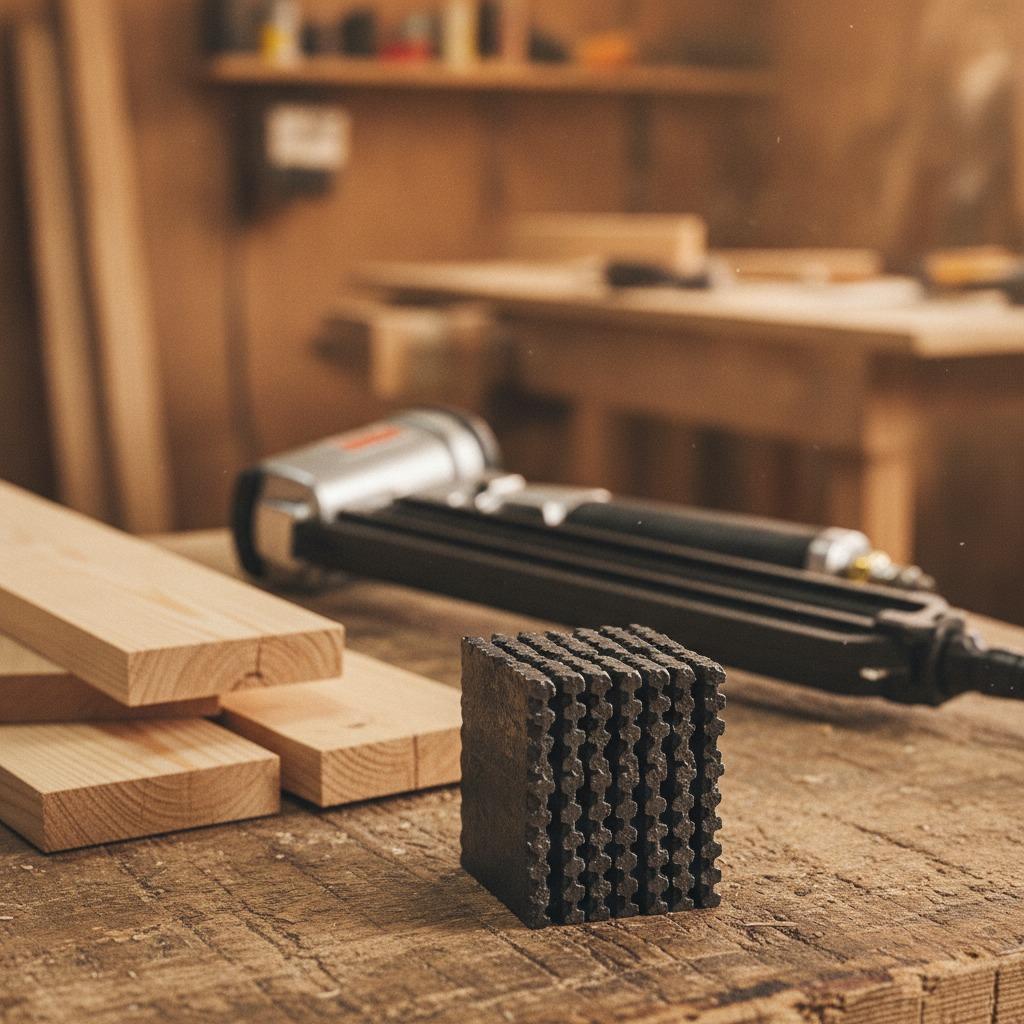
The product image suggests a strip-feed pneumatic nailer with a long magazine and a visible bundle of wire-collated nails. That points to high-speed repetitive fastening, the kind of work where a stable supply of pneumatic fastening nails is more important than a flashy product claim. The tool itself appears compact and handheld, with a metal housing and a black grip, which is consistent with workshop and jobsite use.
How pneumatic fastening nails are typically organized
A practical supplier will usually separate its offerings by use case rather than by a broad “nail” label. Buyers will see categories such as:
Framing-oriented nails
These are commonly used where holding power matters more than a cosmetically discreet head. They are associated with structural or semi-structural wood assembly, though the exact nail pattern depends on the nailer type.
Finishing and trim nails
These are smaller, cleaner-looking fasteners used where the surface appearance matters. Furniture work and cabinetry often lean this way, but the nailer must match the fastener format.
Pallet and crate nails
These are built for speed and repeatability. In that market, feed reliability is a very practical selling point, because a line stoppage over a bent strip of nails is frustrating and expensive.
What a serious buyer should inspect
A pneumatic nail manufacturer is not just selling metal wire and pointed shafts. The hidden value is in how well the nails run through the tool.
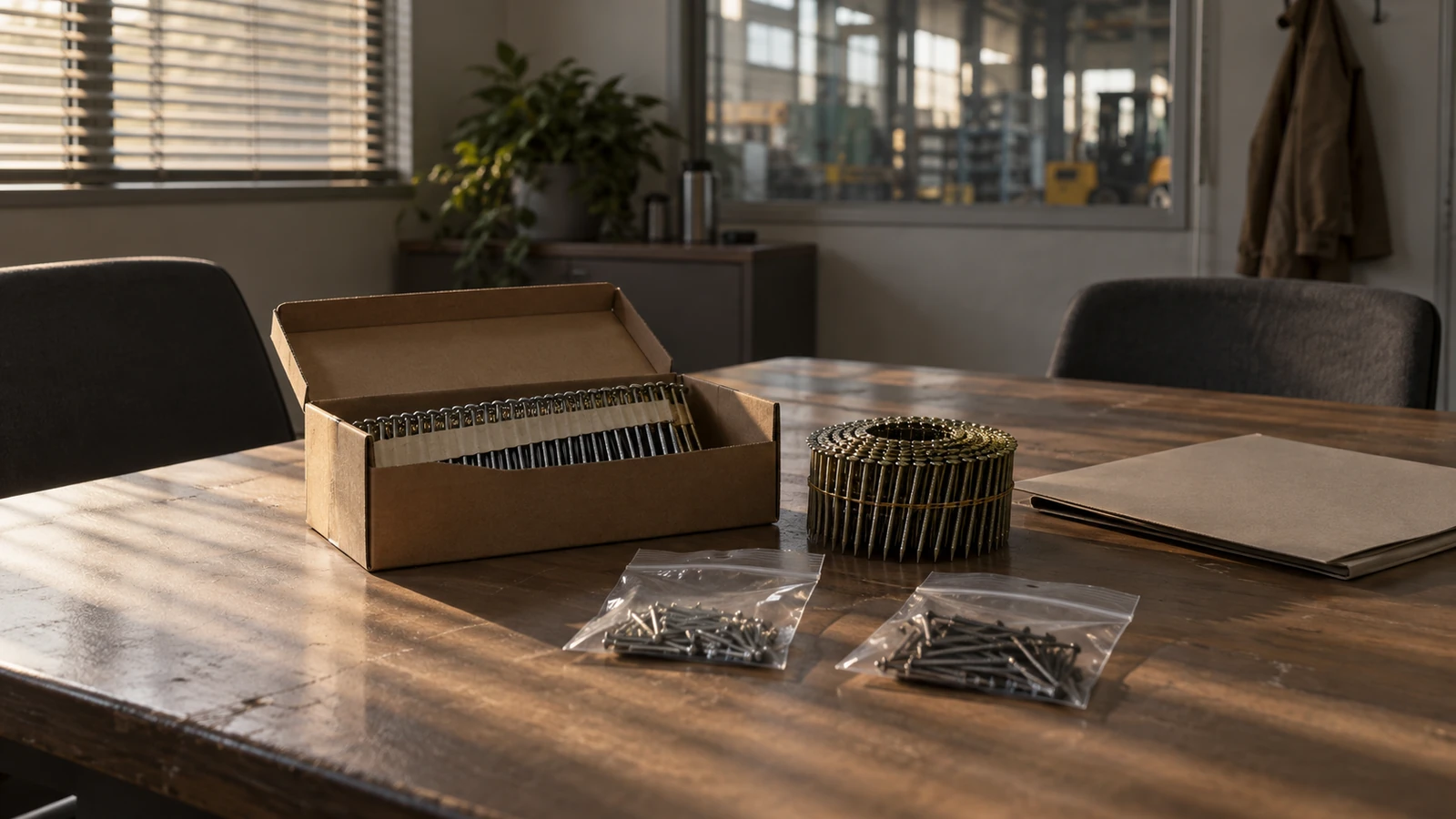
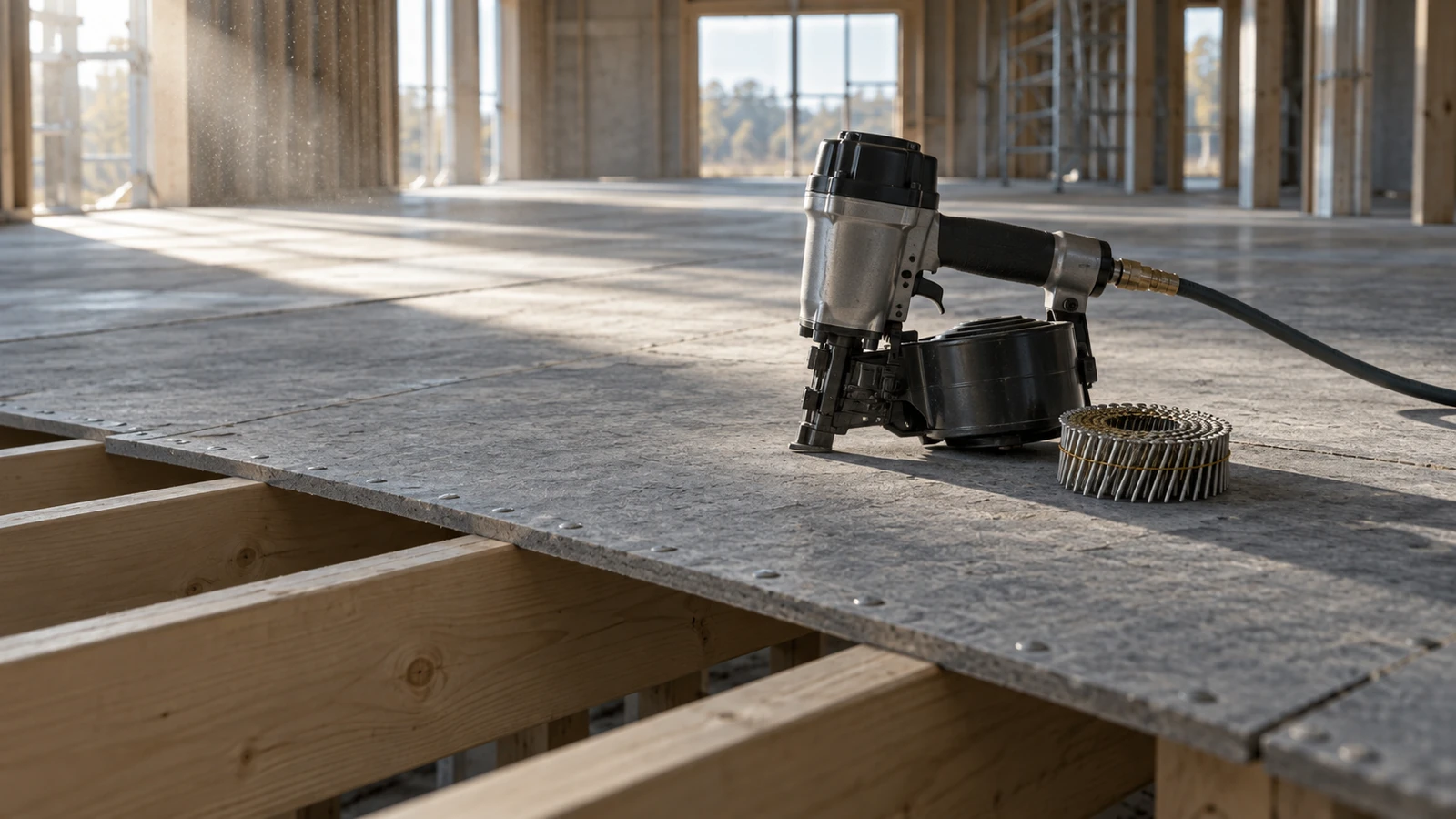
Check the collation method first. Wire-collated nails, like the bundle shown in the image, are common for strip-feed tools. Then verify the angle and strip layout. Even small mismatches can make a supposedly compatible nail unusable. Also look at finish and coating. For woodworking, coating influences feed smoothness and holding behavior, while the wrong surface treatment can create unnecessary drag in the magazine.
Shank design matters too. Smooth, ring, and other specialty shanks serve different holding requirements. It is tempting to treat all nails as interchangeable, but anyone who has dealt with split stock or a loose joint knows better. For production buyers, consistency across batches may matter more than one impressive sample.
Common mistakes in sourcing pneumatic nails
One frequent mistake is buying by length alone. Length is only one part of the specification. Another is assuming that any air nail manufacturer can supply a universal product. In reality, nail gun nails manufacturer listings often hide important details in the fine print: collation angle, strip count, coating type, and compatibility limits.
Another quiet problem is overbuying without a compatibility trial. If the nails run fine in a sample pack but not in a full carton, the issue may be tolerances in the collating process or storage damage from transit. That is not dramatic, but it is common enough to deserve caution.
Practical advice for sourcing teams and shops
For shops running a pneumatic nailer daily, ask for a sample that matches the exact tool model, then test it under real production conditions. Do not just fire a few nails into scrap. Watch feeding, strip breakage, nail seating depth, and whether the tool stays consistent over a longer run. If you are buying for pallet or crate production, test with the wood species and density you actually use.
For broader sourcing, it helps to ask a pneumatic nails manufacturer about the intended application first. A vendor that listens closely to framing versus cabinetry needs is usually more useful than one that pushes a single all-purpose answer.
FAQ buyers usually ask
Are pneumatic fastening nails all the same?
No. They vary by collation, angle, shank type, coating, and intended application.
Can one nailer handle every strip of nails?
Usually not. Tool compatibility is specific, and the magazine design is part of that equation.
Why do nails jam even when the tool is fine?
Often the issue is the fastener itself: inconsistent collation, damaged strips, or a mismatch with the nailer.
What to ask before you place an order
Before you commit to a supplier, ask for the exact fastener format, compatibility guidance, and packaging details. If the nails will be used in furniture, framing, or general carpentry, make sure the supplier understands the working environment as well as the product size. That simple check can save a lot of back-and-forth later.
If you are comparing options now, narrow the field by tool compatibility and end use first, then evaluate supply stability and sample performance. That is usually the fastest route to a dependable source of pneumatic fastening nails.