
What buyers usually want to know first

In a shop or on a jobsite, the first question about a pneumatic nails manufacturer is rarely about catalog language. It is more practical than that: can this supplier give me a fastening system that keeps pace with the crew, matches the material, and does not create avoidable rework? For roofing, siding, underlayment, and general construction fastening, that question matters because one mismatched nail or one finicky feed system can slow down a whole installation.
I put that question to a product engineer who works around pneumatic fastening tools: what separates a useful supplier from a merely available one?
“The big difference is whether the tool and the fasteners are treated as a system,” he said. “A coil-style nail gun with matching collated nails is useful only if the feed path, collation, and nail geometry are consistent enough for real field work.”
That is the heart of the buying decision here. You are not just purchasing a nailer or a box of fasteners. You are deciding whether the fastening setup will support repetitive work without constant adjustment.
Why coil-style pneumatic fastening is still popular
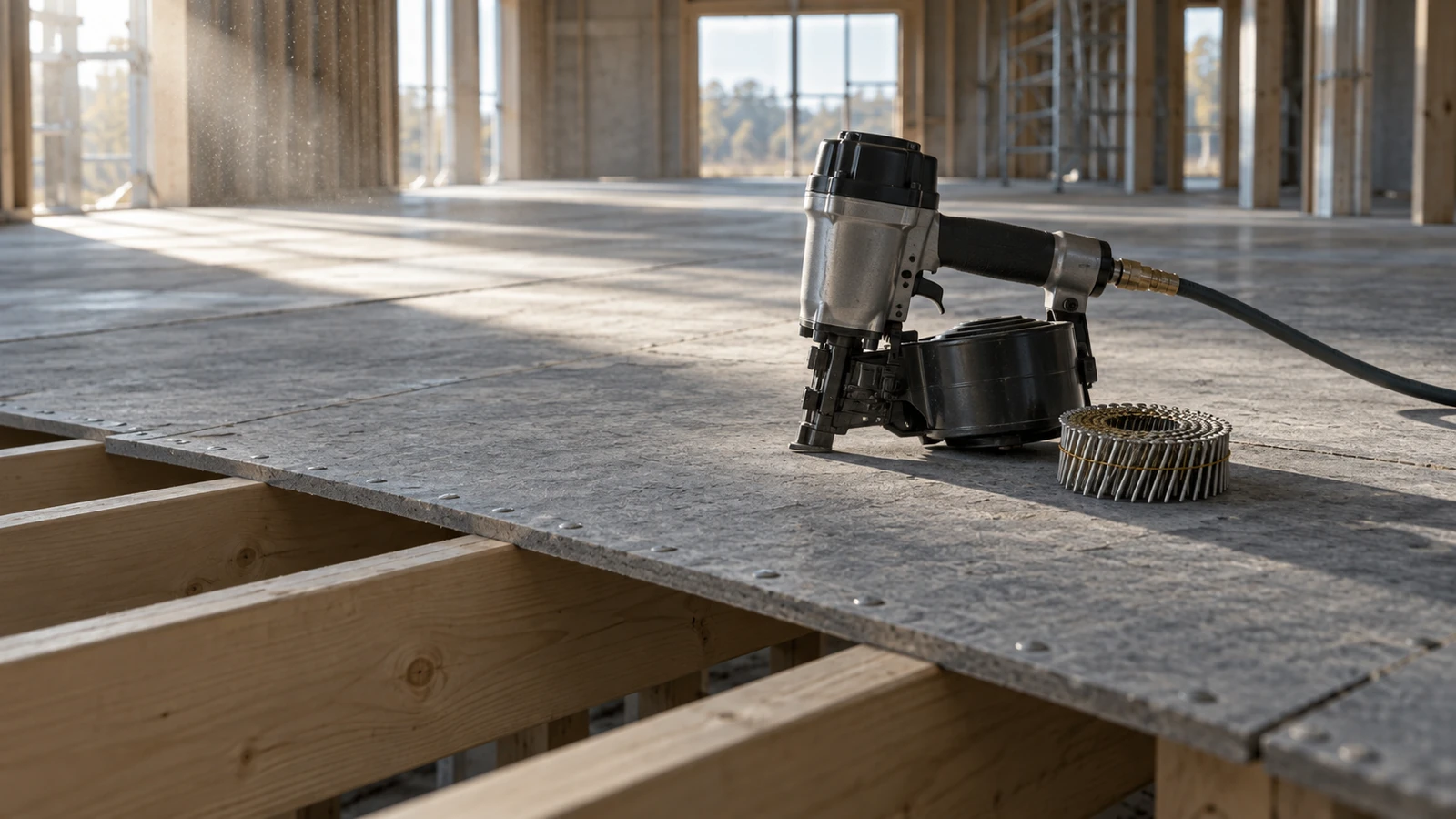
The product category here points to a coil-style pneumatic nailer with collated nails, which is a familiar setup for contractors who need a lot of fasteners on hand before reloading. Compared with stick-style loading, a coil magazine typically gives the operator more capacity and fewer interruptions. That is especially relevant in roofing and exterior work, where the crew wants to keep moving across a surface rather than stopping every few minutes.
A second practical point is compression-air operation. Pneumatic tools remain widely used because compressed air gives crews a controlled, repeatable drive force for repetitive fastening. That does not make them magically better in every scenario, but it does explain why they remain standard on many construction sites.
How the tool and fasteners work together
The product information suggests a fastening system rather than a single standalone item. The visible tool appears to combine a cast metal housing, black molded grip components, a red top cap, and a brass-colored air fitting. It also uses a large circular coil magazine, which tells you it is designed for collated coil nails rather than loose hand-fed nails.
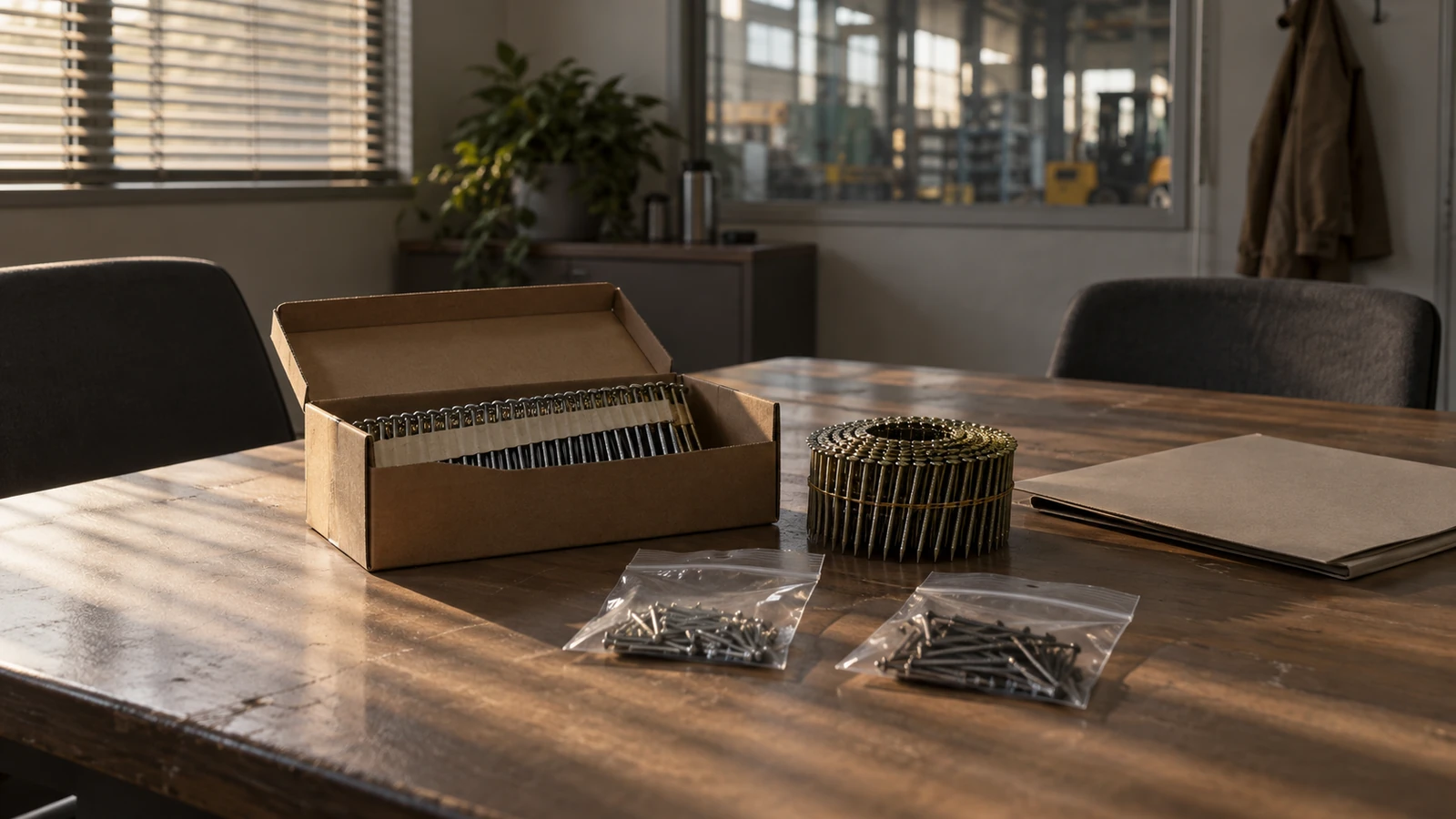
The matching fasteners shown alongside the tool matter almost as much as the nailer itself. In practice, buyers need to confirm that the nail collation, shank style, and length suit the job. Roofing pneumatic nails, for example, are not the same conversation as framing nails supplier selections, even if both are purchased through the same industrial channel. Roofing work usually emphasizes high-volume fastening into layered sheet or shingle materials, while framing work tends to involve structural lumber and different load expectations.
That sounds obvious, but it is where purchasing mistakes start. A contractor may choose a tool based on magazine capacity or price, only to discover the nail type does not suit the substrate or local code requirements.
Selection criteria that actually matter
A sensible buyer will usually look at four things before choosing a pneumatic nails manufacturer:
1. Fastener-tool compatibility
The nailer and nails need to work together cleanly. Collation angle, coil format, and feed consistency should all be checked before an order is placed.
2. Application fit
Construction pneumatic nails used for roofing, underlayment, membrane fastening, or siding are not interchangeable in a casual way. The substrate matters. So does the thickness of the material being fastened.
3. Reload frequency
If crews are doing repetitive fastening, coil capacity can reduce downtime. That is one reason coil systems remain common on bigger exterior jobs.
4. Air-system requirements
The tool is pneumatic, so the air setup matters. Even a well-made nailer will underperform if the supply is inconsistent or the hose arrangement is poor. I would treat that as a buyer-facing warning, not an afterthought.
Common mistakes buyers make
The most common mistake is assuming all collated nails are essentially the same. They are not. Another is buying the tool first and the fasteners later, with no check on compatibility. That can be a waste of time and money, especially if you are trying to standardize on one fastening platform across several crews.
A second mistake is focusing only on the gun and ignoring the nail supply chain. For production-minded buyers, the real value often sits in steady access to the right collated fasteners, not just the hardware in the box.
What to ask a supplier before you place an order
A good conversation with a pneumatic nails manufacturer should cover the intended application, the nail format, and the work environment. Ask whether the system is intended for roofing installation, siding, or broader construction fastening. Ask what collated nail styles are supported. Ask how the tool and fasteners are packaged and whether matching supplies are regularly available.
If you are comparing options for construction pneumatic nails, keep the discussion practical. The right supplier should help you avoid feed issues, material mismatch, and downtime. That is more valuable than a glossy feature sheet.
FAQ: short answers buyers usually need
Is a coil nail gun always better than a stick nailer?
Not always. Coil systems are attractive for capacity, but the best choice depends on the job and the fastener format your crew already uses.
Are roofing pneumatic nails the same as framing nails?
No. They serve different applications and should be selected with the substrate and fastening requirement in mind.
Should I buy the tool and nails from the same source?
Usually yes, or at least verify compatibility carefully. That is the simplest way to reduce surprises on-site.
Next step for procurement and production teams
If you are evaluating a pneumatic nails manufacturer, start with the application, then confirm the coil format, matching fasteners, and air-tool setup. A supplier that can speak clearly about compatibility is usually easier to work with when the job turns busy, which is when these details stop being theoretical."}