
When a Buyer Says “Pneumatic Nails,” They May Mean Two Very Different Things
The phrase pneumatic nails manufacturer usually sends procurement teams in one direction: fasteners for nail guns, framing tools, finishing tools, and all the loud, efficient gear that keeps job sites moving. But in real sourcing conversations, the term can get messy. Sometimes buyers are talking about a traditional fastener supplier. Sometimes they are looking at an industrial pin array or modular metal bed that belongs in a fixture, a holding system, or a fabrication jig. Different problem, different machine, different headache.
That matters because the wrong supplier category can waste time fast. A purchasing manager chasing a pneumatic nail manufacturer for construction fasteners does not need a precision pin matrix. And an engineer designing a workholding surface does not need a box of air nailer strips. Both are metal, both may be produced in high volume, and both can sit in the same family of search terms, which is how the confusion starts. A little industry literacy saves a lot of polite emails.

What the Product Appears to Be
The provided product information describes a dense square or rectangular array of thin metal pins or bristles arranged in a modular bed. The visible traits are straightforward: tightly packed vertical pins, a flat overall top, uniform spacing, and a dark matte or semi-matte finish. In other words, it looks less like a consumer product and more like a functional industrial component.
That kind of structure can serve several roles. Depending on how it is mounted and what the base is made from, a pin bed like this can be used for gripping, aligning, cleaning, texturing, or creating a controlled surface effect. It could appear in a jig, a fixture, a prototype station, or some sort of process aid where consistent contact matters more than appearance. The exact end use is not confirmed, so a careful buyer would treat it as a component with multiple possible applications rather than assume one fixed purpose.
Key Takeaways for Buyers
If you are sorting suppliers, the first job is classification. A pneumatic framing nails manufacturer or pneumatic finishing nails manufacturer will focus on fasteners for powered tools, with priorities like feed reliability, strip format, and compatibility with nailers. A factory producing a pin-array component is closer to a fabrication or assembly supplier, where spacing, pin density, base construction, and repeatability matter more than tool compatibility.
That distinction sounds obvious once written down. Yet people still send RFQs to the wrong desk because the word “nails” behaves like a mischievous intern with no supervision.
If You Mean Fasteners, What to Ask a Pneumatic Nails Manufacturer
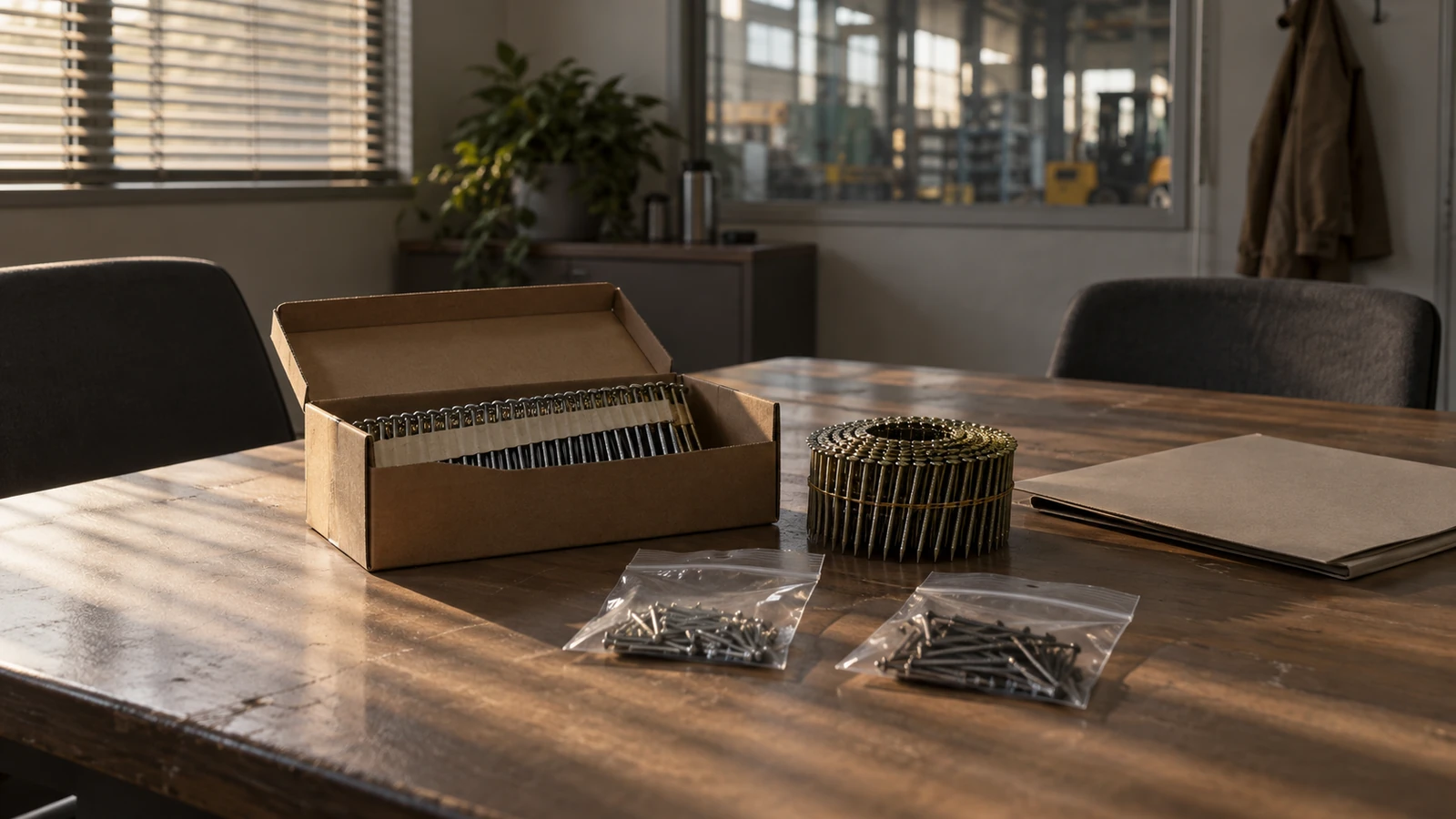
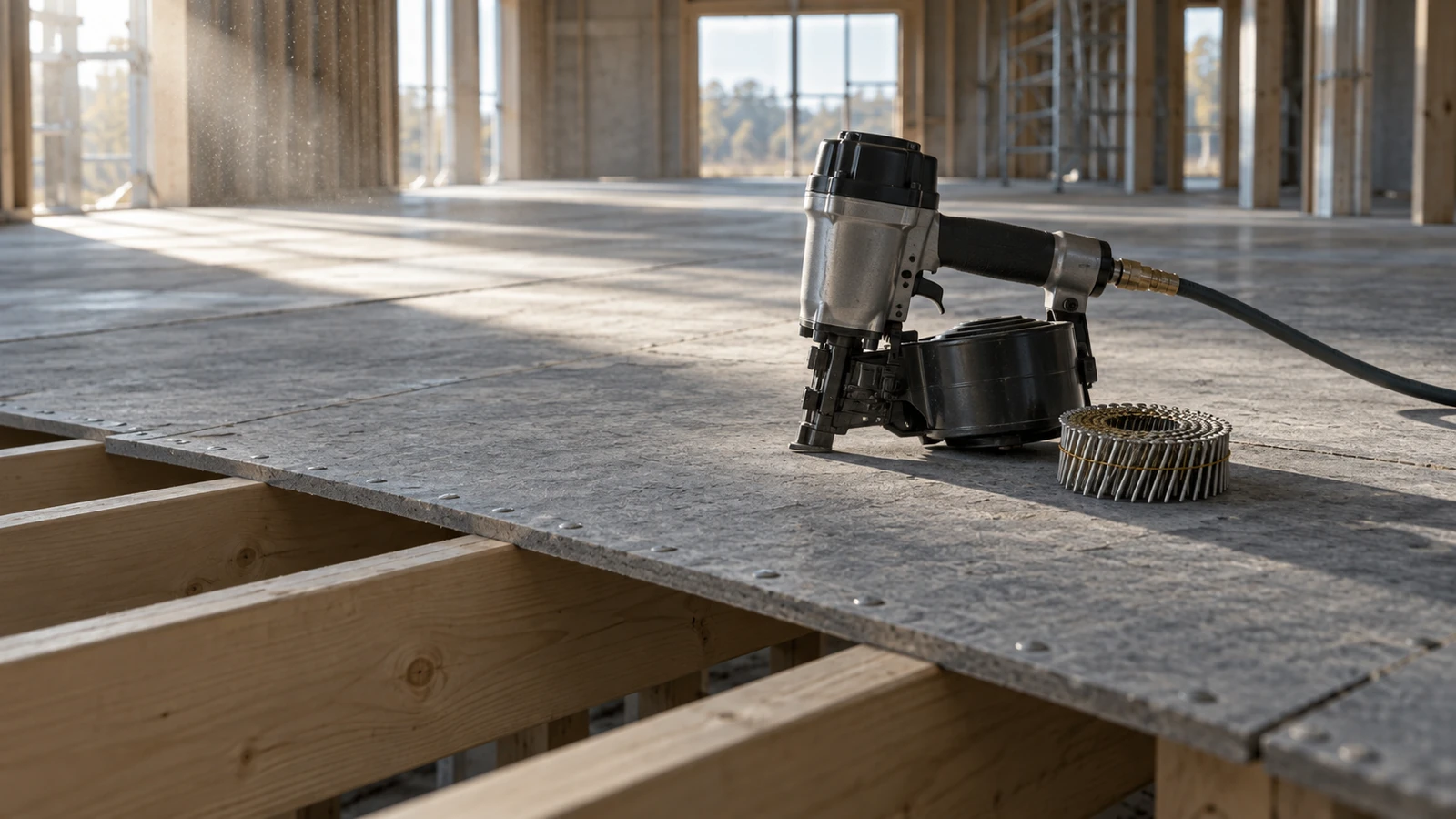
For construction and woodworking fasteners, the sourcing conversation should stay practical. Ask about nail type, strip format, collation style, coating or finish, and tool compatibility. If you are buying for framing work, the geometry and feed behavior must suit pneumatic framing nailers. If you are buying for trim, cabinets, or finishing applications, the head style and appearance become more important, especially where surface marking is a concern.
A good air nailer nails manufacturer should be able to explain how the product performs in the tool, not just how it looks in a carton. That includes whether the nails feed cleanly, whether the collation holds under normal handling, and whether the finish is appropriate for the environment. Buyers should be cautious about assuming all “pneumatic nails” are interchangeable. In practice, the details are annoyingly specific, which is why the parts end up in different bins.
If You Mean the Pin-Array Component, Focus on Structure First
For the visible modular pin bed described in the product data, the important buying criteria are different. Pin density, height uniformity, footprint, and spacing are the obvious visual indicators, but the real questions begin after that. What is the base material? How are the pins retained? Is the module meant for repeated contact, light guiding, surface interaction, or temporary setup? None of those answers should be guessed from a photo.
Because the component appears dense and regularly arranged, it likely depends on precision placement. Buyers should ask how uniform the field is across the full surface and whether the outer edges behave differently from the center. That may sound fussy, but anyone who has watched a “uniform” part reveal its personality on the production floor knows the value of asking early.
Common Sourcing Mistakes
The most common mistake is treating a search term as a specification. “Pneumatic nails” is not enough. Nor is “metal pin bed.” A real RFQ needs application, dimensions, mounting method, operating environment, and the performance outcome you want. Otherwise suppliers will answer with whatever they manufacture most often, which is how a fastener quote and a fixture component quote end up in the same inbox.
Another mistake is overfocusing on price before confirming form and function. In industrial products, a cheap mismatch is still a mismatch. The first sample should prove geometry, fit, and behavior before anyone argues about unit cost. That is not romantic advice, but it is how plants avoid small disasters that later become very expensive paperwork.
Buyer Questions That Clear Up the Confusion Fast
For fastener suppliers
Ask whether they produce framing, finishing, or general pneumatic nails; what tool systems the nails fit; and what finish or coating options are available for the intended environment.
For pin-array or fixture suppliers
Ask how the pins are manufactured and retained, what base material is used, whether the module can be made to a required footprint, and what consistency checks are used during production.
A Practical Next Step
If you are sourcing a traditional fastener line, start with a pneumatic nailer compatibility checklist and request samples that match your actual tool setup. If you are sourcing the pin-array component shown in the product data, define the use case first: gripping, alignment, cleaning, texturing, or another process role. That one sentence will save a week of back-and-forth.
And if the terminology still feels muddy, that is not unusual. Manufacturing loves terms that mean three things at once. The trick is to force the conversation back to geometry, function, and process. Everything else is just shop-floor folklore with a purchase order attached.